Choosing the right Jeep Wrangler for your adventures often comes down to understanding its key specifications, and among the most crucial is its wheelbase. The wheelbase is the distance between the center of the front wheels and the center of the rear wheels.
It’s a fundamental dimension that significantly impacts a vehicle’s handling, off-road capability, and overall driving experience. For enthusiasts who plan to tackle tough trails, navigate varied terrains, or simply want a capable daily driver, knowing the wheelbase of different Jeep Wrangler models is essential.
This dimension influences everything from approach and departure angles to stability on uneven ground.
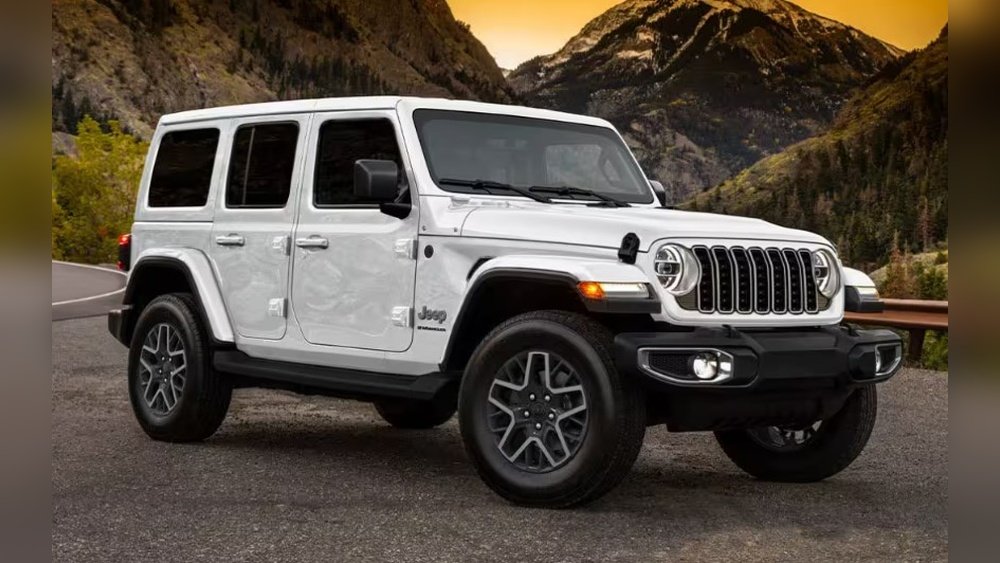
The Jeep Wrangler has a storied history, and over its various generations, the wheelbase has evolved, offering different configurations to suit diverse needs. Whether you’re looking at a classic CJ, a TJ, a JK, or the latest JL, each iteration comes with specific wheelbase measurements. Understanding these differences allows you to make an informed decision, whether you’re buying new, used, or modifying your current Wrangler. A longer wheelbase generally offers more stability and a smoother ride on highways, while a shorter wheelbase can provide better maneuverability in tight spaces and a more agile feel on challenging trails. This article will explore the Jeep Wrangler wheelbase dimensions across its popular models, explaining what each measurement means for your driving experience and off-road performance. We’ll break down how wheelbase affects critical off-road metrics and provide clear data for various Wrangler configurations, helping you understand which one best fits your adventuring style.
Understanding Wheelbase And Its Impact On A Jeep Wrangler
The wheelbase of a vehicle is a simple measurement, but its effects are complex and far-reaching, especially for an off-road icon like the Jeep Wrangler. It’s not just a number; it’s a design choice that dictates how the vehicle behaves on and off the pavement.
What Is Wheelbase?
At its core, the wheelbase is the horizontal distance between the centers of the front and rear axles. Imagine a straight line drawn from the center of your front tire to the center of your rear tire on the same side of the vehicle; the length of that line is the wheelbase. For a four-door vehicle like the Wrangler Unlimited, this measurement is taken from the center of the front axle to the center of the rear axle.
How Wheelbase Affects Driving Dynamics
The length of the wheelbase plays a significant role in several aspects of a vehicle’s performance:
- Stability: A longer wheelbase generally leads to greater vehicle stability, particularly at higher speeds and on rough terrain. It helps the vehicle track straighter and reduces the tendency to pitch forward and backward over bumps or during braking. Think of it like a longer boat being more stable in choppy water than a shorter one.
- Ride Comfort: Longer wheelbases tend to offer a smoother ride. The wheels are further apart, meaning that when one wheel encounters an obstacle, the vehicle has more time and distance to react before the other wheel hits it, reducing the jarring effect.
- Maneuverability: Conversely, a shorter wheelbase typically results in better maneuverability. A shorter distance between the axles means a smaller turning radius, allowing the vehicle to navigate tighter turns and more confined spaces with greater ease. This is a crucial advantage on tight, winding trails or in crowded parking lots.
- Off-Road Geometry: Wheelbase is a critical factor in off-road geometry. It directly influences breakover angle, which is the angle of a crest that a vehicle can drive over without its underside touching. A shorter wheelbase generally provides a better breakover angle because there’s less distance for the vehicle’s belly to drag. However, a longer wheelbase can sometimes offer better stability on steep ascents and descents.
Wheelbase And Off-road Performance Metrics
For a Jeep Wrangler, which is built for off-road adventures, wheelbase impacts specific metrics:
- Breakover Angle: As mentioned, a shorter wheelbase is advantageous for a better breakover angle. This allows the Wrangler to crest obstacles like rocks or logs without getting stuck in the middle.
- Traction: On uneven terrain, a longer wheelbase can sometimes help maintain better traction. With wheels spread further apart, it’s less likely that all four wheels will lose contact with the ground simultaneously when traversing a steep or uneven incline.
- Articulation: While not directly determined by wheelbase, how a vehicle’s suspension articulates (flexes) is influenced by the overall chassis design, which includes wheelbase. A well-articulating suspension is key for keeping tires on the ground over obstacles, and the wheelbase plays a role in how effectively the vehicle can adapt to terrain.
Understanding these principles is the first step to appreciating why different Jeep Wrangler models have different wheelbase dimensions and how those differences translate into real-world performance.
Jeep Wrangler Wheelbase Dimensions By Generation And Model
The Jeep Wrangler has evolved significantly since its inception, with different generations and configurations offering distinct wheelbase measurements. This section details the wheelbase dimensions for the most popular Wrangler models, from the classic CJ to the modern JL.
Cj Series (1945-1986)
The original Jeep, the CJ (Civilian Jeep), set the standard for compact, capable off-road vehicles. Its wheelbase was relatively short, prioritizing maneuverability.
- CJ-5 (1955-1983): Known for its iconic rounded fenders, the CJ-5 had a wheelbase of 81 inches. This short wheelbase made it incredibly nimble on tight trails.
- CJ-7 (1976-1986): A slightly larger evolution, the CJ-7 increased the wheelbase to 93.5 inches. This provided a bit more stability and interior space while retaining good off-road agility.
- CJ-8 Scrambler (1981-1986): This unique, long-wheelbase variant of the CJ-7 featured a pickup truck-style bed and a significantly extended wheelbase of 103.5 inches. This made it more stable and capable of carrying more gear.
Yj Wrangler (1987-1995)
The YJ generation marked the official introduction of the “Wrangler” nameplate. It retained the CJ-7’s basic chassis but featured squared-off headlights, a design element that remains controversial among Jeep purists.
- YJ Wrangler: The YJ model carried over the 93.5-inch wheelbase from the CJ-7. This provided a balance of on-road manners and off-road prowess that was well-received.
Tj Wrangler (1997-2006)
The TJ generation is celebrated for its significant upgrade in suspension technology, introducing coil springs instead of the leaf springs used in previous models. This greatly improved ride comfort and off-road articulation.
- TJ Wrangler (2-door): The standard TJ model maintained a wheelbase of 93.4 inches. This was a slight reduction from the YJ’s 93.5 inches, but the improved suspension made it feel more capable.
- LJ Wrangler Unlimited (2004-2006): The LJ, often referred to as the “long” TJ, was the first four-door Wrangler option. It featured a substantial wheelbase increase to 103.4 inches, offering much-improved ride comfort and stability, making it more suitable for longer trips and daily driving.
Jk Wrangler (2007-2018)
The JK generation was a major redesign, introducing the four-door Wrangler Unlimited as a mainstream model and offering more powerful engines. It also saw a significant increase in overall dimensions.
- JK Wrangler (2-door): The standard two-door JK model increased its wheelbase to 95.4 inches. This provided a slight improvement in stability and ride quality over the TJ.
- JK Wrangler Unlimited (4-door): The four-door JK Unlimited significantly extended the wheelbase to 116 inches. This was a substantial jump, making it much more stable on the highway and a comfortable family vehicle, though it slightly compromised breakover angle compared to the two-door.
Jl Wrangler (2018-present)
The current JL generation builds upon the JK’s success, offering improved aerodynamics, more technology, and a wider range of powertrains, including hybrid options. The wheelbase dimensions remain similar to the JK, with slight variations depending on the specific model.
- JL Wrangler (2-door): The standard two-door JL model features a wheelbase of 96.8 inches. This is a modest increase over the JK, contributing to a slightly more refined ride.
- JL Wrangler Unlimited (4-door): The four-door JL Unlimited continues with a wheelbase of 118.4 inches. This substantial length provides excellent stability and passenger comfort, making it a highly versatile vehicle.
Special Editions And Variants
It’s worth noting that certain special editions or aftermarket modifications can alter the effective wheelbase. However, the figures provided above represent the factory stock dimensions for the most common configurations.
For instance, modified Wranglers with stretched frames or custom suspension setups can have vastly different wheelbases.
Understanding these dimensions is crucial for anyone looking to buy a Wrangler, especially if they have specific off-road needs or preferences for on-road comfort. The progression from the short-wheelbase CJs to the longer-wheelbase Unlimited models clearly shows Jeep’s strategy to cater to a broader audience, from hardcore rock crawlers to families seeking an adventurous SUV.

How Wheelbase Affects Key Off-road Metrics
The wheelbase of a Jeep Wrangler is not just a number on a spec sheet; it directly translates into tangible performance differences when you venture off the beaten path. Understanding how wheelbase impacts critical off-road metrics can help you choose the right Wrangler for your intended use and appreciate its capabilities.
Breakover Angle
The breakover angle is the maximum angle of a ramp or obstacle that a vehicle can drive over without its undercarriage touching the ground. It’s measured from the point where the front tires touch the obstacle to the point where the rear tires touch it, with the vehicle’s lowest point in between.
- Shorter Wheelbase: A shorter wheelbase generally results in a larger breakover angle. This means a two-door Wrangler, with its more compact wheelbase, can more easily clear crests, humps, and obstacles without getting its belly hung up. This is a significant advantage when navigating rocky terrain or large undulations.
- Longer Wheelbase: A longer wheelbase, like that found on the Wrangler Unlimited models, inherently has a smaller breakover angle. This means the vehicle’s frame is more susceptible to scraping on obstacles that are positioned between the front and rear wheels. While manufacturers often design these vehicles with approach and departure angles in mind, the breakover angle remains a limitation dictated by the wheelbase.
For example, a CJ-5 with its 81-inch wheelbase would typically have a superior breakover angle compared to a JL Unlimited with its 118. 4-inch wheelbase.
This is why shorter-wheelbase vehicles are often favored by extreme rock crawlers who need to navigate very technical terrain.
Approach And Departure Angles
While wheelbase is the primary factor for breakover angle, it also indirectly influences approach and departure angles.
- Approach Angle: This is the maximum angle of an obstacle that the vehicle can drive up to without the front bumper or bodywork hitting it.
- Departure Angle: This is the maximum angle of an obstacle that the vehicle can drive down from without the rear bumper or bodywork hitting it.
These angles are more directly affected by the vehicle’s ground clearance and the design of the front and rear overhangs (the distance from the wheels to the ends of the vehicle). However, a longer wheelbase can sometimes mean longer overhangs are needed to maintain reasonable approach and departure angles, or it can position the wheels further from the extremes of the vehicle, potentially impacting these angles.
In general, Jeep engineers strive to maximize these angles across all Wrangler models. However, for vehicles with very long wheelbases, designers might have to make compromises on overhangs to achieve competitive approach and departure figures.
Stability And Traction On Uneven Terrain
The wheelbase significantly impacts how a vehicle behaves on uneven surfaces.
- Stability: A longer wheelbase provides greater stability on rough ground. When traversing side slopes or undulating terrain, the increased distance between the axles helps keep the vehicle more level and less prone to tipping. It also contributes to a more planted feel when climbing or descending steep inclines.
- Traction: On extremely uneven terrain where wheels might lift off the ground, a shorter wheelbase can sometimes lead to all wheels losing contact simultaneously, resulting in a loss of traction. A longer wheelbase, with its wheels spread further apart, can sometimes maintain better contact with the ground across multiple wheels, improving traction in challenging situations. This is particularly true when combined with a capable suspension system that allows for significant wheel articulation.
In my experience, when driving a long-wheelbase Wrangler Unlimited over rough terrain, it feels more planted and less “tippy” than its shorter-wheelbase counterpart. However, the Unlimited will require more careful line selection to avoid high-centering due to its reduced breakover angle.
Maneuverability Vs. Capability
The trade-off between wheelbase length is often framed as maneuverability versus stability and traction.
- Maneuverability: Shorter wheelbases excel in tight spaces. They allow for quicker turns on narrow trails, easier navigation around obstacles, and a more compact turning radius. This is why many dedicated rock crawlers opt for two-door Wranglers.
- Capability: Longer wheelbases offer increased stability and can sometimes provide better traction on challenging ascents and descents. They also typically offer a smoother and more comfortable ride on highways, making them more versatile for daily driving and long-distance adventures.
The choice between a shorter or longer wheelbase often depends on the primary use case. If your adventures are focused on technical, tight trails, a shorter wheelbase might be preferable.
If you balance off-roading with daily driving and want a more comfortable ride on longer trips, a longer wheelbase offers distinct advantages.
Comparing Wheelbase Across Key Wrangler Models
To provide a clear understanding of the differences, let’s compare the wheelbase dimensions of the most popular Jeep Wrangler models side-by-side. This comparison highlights the evolution and diversification of the Wrangler line-up.
Two-door Models
The classic Jeep Wrangler is the two-door model. Its shorter wheelbase has always been a hallmark of its agility.
| Model Year Range | Model Name | Wheelbase (inches) | Key Characteristics |
|---|---|---|---|
| 1976-1986 | CJ-7 | 93.5 | Iconic, leaf-sprung, good maneuverability |
| 1987-1995 | YJ Wrangler | 93.5 | Squared headlights, leaf-sprung |
| 1997-2006 | TJ Wrangler |