Understanding Jeep Wrangler Stock Wheel Backspacing
The Jeep Wrangler is an icon. Known for its off-road prowess and rugged design, it’s a vehicle many enthusiasts love to customize.
When you start looking at changing your wheels or tires, one term you’ll hear a lot is backspacing. It might sound technical, but understanding Jeep Wrangler stock wheel backspacing is crucial for making sure your new setup fits correctly, performs well, and looks great.
Getting the right backspacing prevents rubbing issues, ensures proper steering, and even affects your vehicle’s stance. For many, the stock setup is a great starting point, but knowing its specifications helps when you decide to upgrade.
This guide will break down what backspacing is, what the stock values are for different Wrangler models, and why it matters so much for your Jeep.
We’ll cover how it impacts your vehicle’s performance and appearance, and what you need to consider if you plan on changing your wheels.
What Is Wheel Backspacing?
Wheel backspacing is a measurement that tells you how far the wheel’s mounting surface is from the outer lip of the wheel. Think of it as the distance from where the wheel bolts to your Jeep to the very edge of the wheel. It’s typically measured in inches.
To understand this better, imagine your wheel. The mounting surface is the flat part where the studs of your Jeep’s hub go through and where the lug nuts tighten. The outer lip is the furthest point of the wheel from the center, where the tire bead seals.
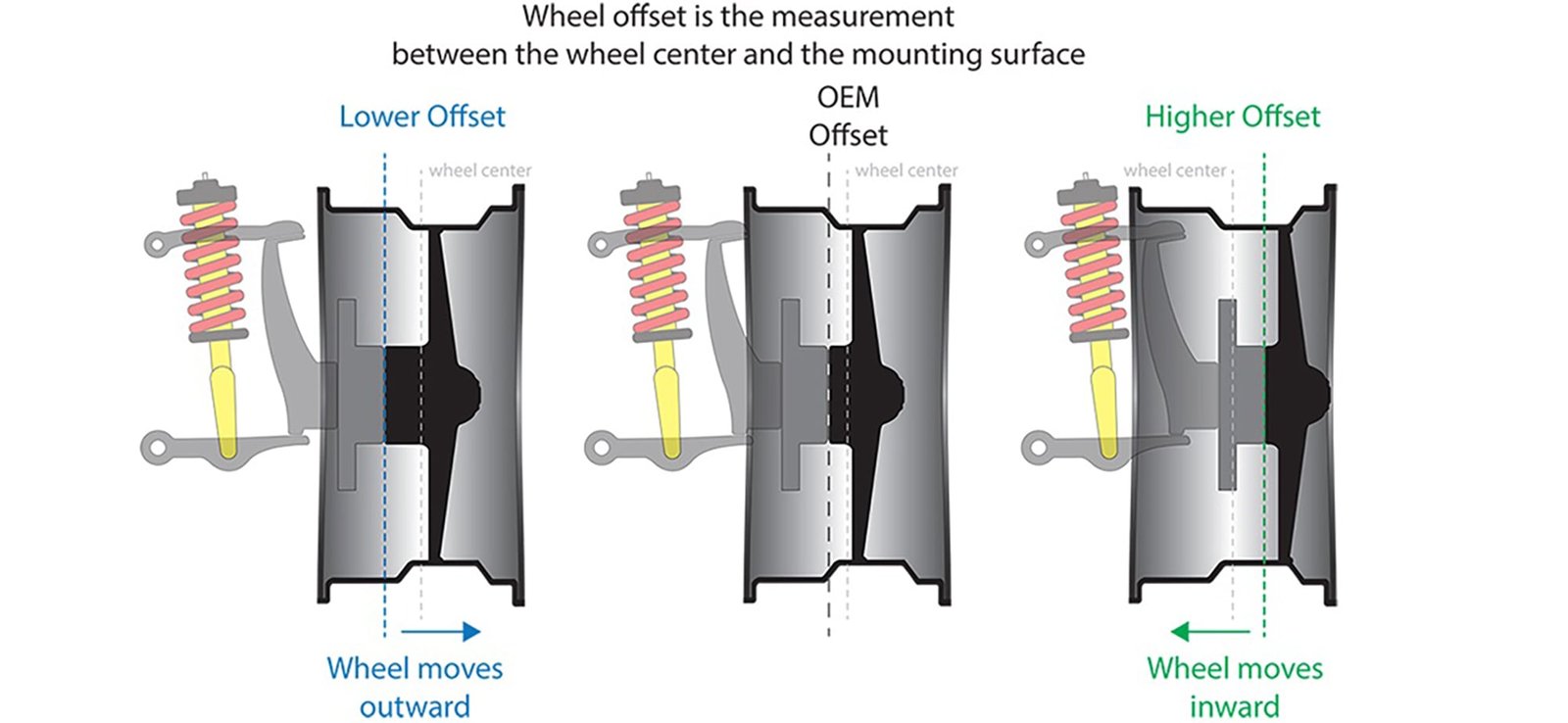
The measurement is taken from the mounting surface straight across to the outer edge of the wheel’s lip. This is different from offset, which measures from the wheel’s center line to the mounting surface. While related, backspacing is a more direct indicator of how much space the wheel will take up inside your fender well and how far it will stick out.
How Backspacing Affects Your Jeep
The amount of backspacing your wheels have directly influences several key aspects of your Jeep’s setup:
- Clearance: This is the most critical factor. Wheels with too little backspacing (meaning they stick out further) can rub against your fenders, suspension components, or brake calipers. Conversely, wheels with too much backspacing can cause the inner edge of the wheel to rub against suspension parts like control arms or the frame.
- Stance and Track Width: Backspacing affects how wide your Jeep appears. Wheels with less backspacing will push the tire outward, giving your Jeep a more aggressive, wider stance. This also increases your track width (the distance between the centerlines of the wheels on the same axle).
- Steering Geometry: While offset is more directly tied to steering, backspacing can indirectly affect how your steering feels and performs, especially concerning scrub radius.
- Tire Wear: Improper backspacing can lead to uneven tire wear because the tires might not be sitting at the optimal angle relative to the steering and suspension.
- Load Capacity: While not the primary function, extreme backspacing can sometimes affect how the wheel’s load is distributed.
Understanding your stock backspacing is essential because it represents the factory-engineered balance for your Jeep’s suspension, steering, and body. Any deviation from this can have consequences.
Jeep Wrangler Stock Wheel Backspacing By Model
Jeep has produced the Wrangler for many generations, and wheel sizes have varied. The stock wheel backspacing can differ slightly between models and even trim levels within a model year. However, there are general ranges that apply to most common Wranglers.
It’s important to note that wheel diameter and width also play a role. A wider wheel with the same backspacing will stick out further than a narrower wheel. For example, a 17×8 inch wheel will have a different backspacing than a 17×9 inch wheel, even if they are for the same Jeep model.
Here’s a look at typical stock backspacing for popular Jeep Wrangler generations:
Jk Wrangler (2007-2018)
The JK generation saw a shift towards larger wheels and wider tires compared to previous models.
- Common Stock Wheel Size: 17×7.5 inches or 17×8 inches.
- Typical Stock Backspacing: Around 5.5 inches (approximately 139.7 mm).
For a 17×7.5 inch wheel, the stock backspacing is often cited as 5.5 inches. If you have the 17×8 inch wheels, the backspacing might be slightly less, around 5.25 inches. This range allows the stock tires to fit comfortably within the fenders without rubbing during normal driving and moderate off-roading.
Jl Wrangler (2018-present)
The JL generation continued with similar wheel sizes but refined the overall design.
- Common Stock Wheel Size: 17×7.5 inches or 18×7.5 inches.
- Typical Stock Backspacing: Generally around 5.5 inches (approximately 139.7 mm).
Similar to the JK, the JL models typically come with wheels that have a stock backspacing of about 5.5 inches. This measurement is optimized for the factory tire sizes, which usually range from 31 to 33 inches in diameter.
Tj Wrangler (1997-2006)
The TJ Wrangler, especially the earlier models, often came with smaller wheels.
- Common Stock Wheel Size: 15×8 inches or 16×8 inches.
- Typical Stock Backspacing: Often around 4.5 inches (approximately 114.3 mm) for 15×8 wheels, and slightly more for 16-inch wheels.
For the popular 15×8 inch wheels found on many TJs, the stock backspacing is typically 4.5 inches. This is a significantly different measurement than the JK and JL, reflecting the smaller tire sizes and different suspension geometry.
Yj Wrangler (1987-1995)
The YJ generation, known for its rectangular headlights, also had distinct wheel specifications.
- Common Stock Wheel Size: 15×7 inches or 15×8 inches.
- Typical Stock Backspacing: Around 4.0 to 4.5 inches (approximately 101.6 mm to 114.3 mm).
YJ Wranglers often came with wheels that had about 4.0 inches of backspacing on 15×7 inch wheels. If equipped with 15×8 inch wheels, this could increase to 4.5 inches.
Cj Wrangler (1976-1986)
The classic CJ models have the oldest specifications among the Wrangler lineage.
- Common Stock Wheel Size: 15×6 inches or 15×7 inches.
- Typical Stock Backspacing: Around 3.75 to 4.0 inches (approximately 95.25 mm to 101.6 mm).
CJ models typically featured wheels with 3.75 inches of backspacing. These values are the smallest, reflecting the era’s wheel and tire technology and the vehicle’s narrower stance.
Why Stock Backspacing Matters For Your Jeep
The stock backspacing is not an arbitrary number. It’s carefully calculated by Jeep engineers to provide a balance of performance, safety, and aesthetics for the vehicle as it rolls off the assembly line.
Optimized Fit And Clearance
The primary reason stock backspacing is important is for optimal fit. Engineers consider the:
- Fender Flares: The distance from the tire to the edge of the fender flare.
- Suspension Components: Clearance for shocks, control arms, sway bars, and brake assemblies.
- Body Mounts: Ensuring the tire doesn’t hit the frame or body during articulation.
- Turning Radius: Allowing the wheels to turn fully without the tires hitting other parts.
When you stick with stock backspacing, you are using a setup that is guaranteed to work with your Jeep’s original design. This eliminates guesswork and potential problems.
Handling And Stability
Backspacing influences your Jeep’s track width. A wider track width (achieved with less backspacing) generally improves stability, especially when cornering or on uneven terrain. However, too wide a track can introduce other issues like increased stress on wheel bearings and potential for tire rub.
The stock backspacing provides a compromise that offers good stability for everyday driving and expected off-road use without compromising other aspects of the vehicle’s dynamics.
Maintaining Original Steering Geometry
While offset is more directly related to scrub radius, backspacing indirectly affects how the steering system interacts with the road. The factory setup aims for a specific scrub radius, which is the distance between the steering axis and the center of the tire’s contact patch.
Deviating significantly from stock backspacing can alter this, potentially affecting steering feel, tire wear, and the force required to turn the wheel.
Ease Of Tire And Wheel Upgrades
Knowing your stock backspacing is your baseline. When you decide to upgrade to larger tires or different wheels, you’ll need to understand how the new backspacing compares.
- Less Backspacing (e.g., 4.5 inches instead of 5.5 inches): This pushes the wheel outward. It can help clear larger tires and suspension components, and give a wider stance. However, it increases the risk of rubbing on fenders and requires careful consideration of tire size.
- More Backspacing (e.g., 6 inches instead of 5.5 inches): This pulls the wheel inward. It can help tuck larger tires away from fenders but increases the risk of rubbing on suspension components or the frame.
For example, if you have a JK Wrangler with stock 5. 5 inches of backspacing and want to fit 35-inch tires, you might look for wheels with less backspacing (like 4.
5 inches) or consider wheel spacers. This is because the larger tire needs more room, and pushing the wheel out helps achieve that.
Common Upgrades And Backspacing Considerations
Many Jeep owners choose to upgrade their wheels and tires. When you do, understanding how backspacing changes is key.
Tire Size Increases
The most common reason to change wheels is to fit larger tires. Larger tires, especially those wider than stock, will require adjustments to backspacing or the use of accessories like wheel spacers or adapters.
- Example: If you have a JL Wrangler with stock 5.5 inches of backspacing and want to fit 33-inch tires on 17×8.5 inch wheels, you might look for wheels with 4.75 to 5.0 inches of backspacing. This slight reduction in backspacing helps the wider tire clear suspension components and provides a slightly more aggressive stance.
Wider Wheels
Often, when you upgrade tires, you’ll also opt for wider wheels. A wider wheel means the tire will sit differently.
- Wider Wheel + Same Backspacing: The tire will bulge out more on the sides, potentially leading to rubbing.
- Wider Wheel + Less Backspacing: This combination pushes the tire outward significantly, increasing the chance of fender rub but potentially clearing suspension parts.
When choosing a wider wheel (e.g., 17×9 or 17×10), it’s often recommended to have less backspacing than stock to compensate for the increased width. For a JK/JL, moving from a 17×7.5 with 5.5″ backspacing to a 17×9 wheel might mean looking for a wheel with 4.5 to 4.75 inches of backspacing.
Wheel Spacers And Adapters
If you find a set of wheels you love that have too much backspacing (sticking too far inward) or not enough (sticking too far outward), you can use wheel spacers or adapters.
- Wheel Spacers: These are simple plates that bolt to your Jeep’s hub, and then the wheel bolts to the spacer. They effectively increase the backspacing (push the wheel inward) or decrease it (push the wheel outward), depending on their design and how they are installed. A common use is to push a wheel with too much backspacing out to clear suspension.
- Wheel Adapters: These are thicker and often change the bolt pattern. They are less common for simple backspacing adjustments.
Pro Tip: When using wheel spacers, especially on a Jeep, ensure they are high quality and properly torqued. They add a significant stress point and can be a safety hazard if they fail. Many off-roaders prefer wheels with the correct backspacing built-in rather than relying on spacers.
How To Measure Your Jeep Wrangler’s Wheel Backspacing
If you’re unsure about your current backspacing, or if you’ve bought a used Jeep and don’t know its history, you can measure it yourself. It’s a straightforward process.
What You’ll Need
- A tape measure
- A straight edge (like a ruler or a flat piece of metal)
- Your Jeep, parked on a level surface with the wheels straight.
The Measurement Process
- Remove the Wheel: This is the easiest way to get an accurate measurement. If you can’t remove it, you can try to measure with the wheel on, but it’s much harder and less precise.
- Place the Straight Edge: Lay the straight edge across the back of the wheel hub mounting surface. Ensure it’s flat and not tilted.
- Measure to the Outer Lip: Now, use your tape measure to measure from the flat surface of the straight edge to the outermost edge of the wheel rim. This is your backspacing.
Example Measurement
Let’s say you have a 17-inch diameter wheel.
- You place the straight edge across the hub mounting surface.
- You measure from the straight edge to the outside edge of the rim.
- Your tape measure reads 5.5 inches. This means your wheel has 5.5 inches of backspacing.
It’s important to measure accurately. Even a quarter-inch difference can be significant when dealing with tire clearance.

Calculating Wheel Offset From Backspacing
While the topic is backspacing, it’s useful to understand its relationship with wheel offset. Offset is another common measurement used for wheels, and it’s often what manufacturers list.
- Backspacing: Distance from the mounting surface to the outer lip of the wheel.
- Offset: Distance from the mounting surface to the centerline of the wheel.
The formula to convert between them (assuming standard wheel width) is:
Offset = Backspacing – (Wheel Width / 2)