Upgrade Your Jeep Wrangler Jk: The Ultimate Guide To Led Headlights
The Jeep Wrangler JK is an icon. It’s built for adventure, for tackling tough terrain, and for looking good while doing it.
But when the sun goes down, the standard factory headlights can feel… well, a bit dim. They might get the job done for city driving, but for off-roading or driving on dark, winding roads, you need more.
This is where Jeep Wrangler JK LED headlights come in.
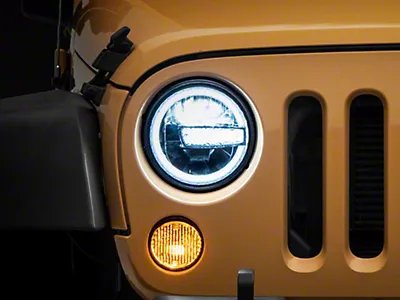
Swapping out your old halogen bulbs for modern LED units isn’t just about making your Jeep look cooler (though they certainly do that). It’s about significantly improving your visibility, your safety, and your overall driving experience. Better light means you can see obstacles sooner, react faster, and navigate challenging conditions with much greater confidence.
This guide will walk you through everything you need to know about Jeep Wrangler JK LED headlights. We’ll cover why you should make the upgrade, what to look for when buying, how to install them, and what kind of performance improvements you can expect.
By the end, you’ll be ready to choose the perfect LED headlights to transform your JK’s night-time performance.
Why Upgrade To Led Headlights For Your Jeep Wrangler Jk?
Halogen headlights have been the standard for decades, and while they work, they have several limitations. LED technology offers a leap forward in performance and efficiency.
Superior Brightness And Clarity
The most noticeable difference with LED headlights is their superior brightness. LEDs produce a much whiter, more intense light compared to the yellowish hue of halogens. This whiter light is closer to natural daylight, which makes it easier for your eyes to process details. You’ll see further down the road, and the beam pattern is often more focused, cutting through darkness and fog more effectively.
This improved visibility is crucial for safety. You can spot hazards like fallen branches, animals, or uneven terrain much earlier, giving you more time to react.
For off-roading, this is not just a convenience; it’s a necessity.
Better Beam Pattern And Reduced Glare
While some early LED conversions suffered from poor beam patterns, modern, well-designed LED headlights for the JK are engineered to use the existing headlight housing effectively. This means they project light where it’s needed most, down the road and to the sides, without creating excessive glare for oncoming drivers. A good LED headlight will have a sharp cut-off line, ensuring that the bright light doesn’t blind others. This is a critical factor for legal compliance and for being a considerate driver.
Increased Durability And Lifespan
LEDs are solid-state devices, meaning they have no delicate filaments like traditional bulbs. This makes them incredibly durable and resistant to vibration, which is a big plus for a vehicle like the Wrangler that’s often subjected to rough conditions. Furthermore, LEDs have an exceptionally long lifespan. While a halogen bulb might last 500-1000 hours, LEDs can last 50,000 hours or more. This means you’ll likely never need to replace them during your ownership of the Jeep.
Lower Power Consumption
LED headlights consume significantly less power than their halogen counterparts. A typical halogen headlight might draw around 55-60 watts, while a high-quality LED unit for a JK might only use 20-30 watts per low beam and slightly more for high beam.
This reduced power draw puts less strain on your Jeep’s electrical system. For JK owners who run many auxiliary lights, winches, or other accessories, this can be a welcome benefit, freeing up electrical capacity.
Modern Aesthetics
Let’s be honest, LED headlights just look modern and aggressive. The distinct halo or DRL (Daytime Running Light) features common on many aftermarket LED units give the JK a sharp, updated appearance that many owners find very appealing. They instantly give your Jeep a more premium and high-tech look.
Key Features To Look For In Jeep Wrangler Jk Led Headlights
Not all LED headlights are created equal. When shopping for your JK, keep these important features in mind to ensure you get a quality product that performs well and lasts.
Dot And Ece Compliance
This is perhaps the most important factor. Look for headlights that are DOT (Department of Transportation) approved for use in the United States and ECE (Economic Commission for Europe) approved for international markets. This certification means the headlights have been tested and meet strict standards for safety, performance, and beam pattern. Non-compliant headlights might not be legal to use on public roads and can have dangerous beam patterns that blind other drivers or provide insufficient illumination.
Beam Pattern Quality
As mentioned earlier, a good beam pattern is essential. Look for headlights that promise a sharp cut-off line on the low beam. This prevents light scatter and directs the light effectively onto the road. High beam performance should also be strong and focused, extending the light’s reach significantly. Reading reviews and looking at beam pattern photos is crucial here.
Brightness (lumens) And Color Temperature
Brightness is often measured in lumens. While higher lumens generally mean a brighter light, it’s not the only factor. The quality of the LED chips and the projector design play a huge role in how effectively that light is used.
Color temperature is measured in Kelvin (K). Halogen bulbs are typically around 3000K (warm white/yellow). Standard LEDs are often around 5000K-6000K (cool white/bluish). Many JK LED headlights fall into the 5500K to 6500K range, which provides that crisp, white light that improves visibility. Temperatures much higher than this can start to appear overly blue and can reduce visibility in fog or rain.
Durability And Build Quality
Look for headlights constructed with robust materials. A common choice is a die-cast aluminum housing for heat dissipation and a polycarbonate lens that is scratch-resistant and impact-resistant. IP ratings (like IP67 or IP68) indicate the level of protection against dust and water ingress, which is vital for off-road vehicles.
Daytime Running Lights (drls) And Turn Signals
Many aftermarket LED headlights come with integrated DRLs, often in the form of a halo or a light bar. These make your Jeep more visible during the day, which is a significant safety enhancement. Some also include integrated amber turn signals. Check if these features are compatible with your JK’s wiring and if they function as desired.
Plug-and-play Installation
Most JK LED headlights are designed as plug-and-play replacements for the factory halogen units. This means they use the standard H4 or H13 connectors, requiring no modifications to your Jeep’s wiring harness. Some models might require an anti-flicker harness or a CAN bus adapter to prevent flickering or error messages on the dashboard, especially on newer JK models. Always check the product description for compatibility and any necessary adapters.
Brand Reputation And Warranty
Stick with reputable brands known for producing quality automotive lighting. Brands like JW Speaker, Oracle Lighting, KC HiLiTES, and Auxbeam are popular choices among Wrangler owners. A good warranty (typically 2-5 years) is a strong indicator of a manufacturer’s confidence in their product’s quality and longevity.
Popular Types Of Led Headlights For Jeep Wrangler Jk
There are several styles and configurations of LED headlights available for the Jeep Wrangler JK, each offering different features and aesthetics.
Projector Style Led Headlights
These are arguably the most popular and effective type. Projector headlights use a lens to focus the LED light into a precise beam pattern. They typically offer excellent beam cut-off, superior brightness, and reduced glare. Many projector LEDs also include integrated halos or other DRL features.
- Pros: Excellent beam control, sharp cut-off, often very bright, good for on-road and off-road use.
- Cons: Can be more expensive, some cheaper models may have subpar projectors.
Reflector Style Led Headlights
These headlights use a reflector bowl to bounce and shape the light from the LED chips, similar to how halogen headlights work. While some reflector LEDs can be decent, they often struggle with achieving a sharp beam cut-off and can produce more scattered light and glare compared to projector style.
- Pros: Can be more affordable, simpler design.
- Cons: Often have less precise beam patterns, higher risk of glare for oncoming drivers, may not be as bright or focused as projectors.
Halo/angel Eye Led Headlights
These headlights feature a circular LED ring (halo) around the main headlight beam. The halo can function as a DRL or as a parking light. They offer a distinctive look that many Jeep owners love. The halo color can vary, with white and amber being common.
- Pros: Unique, aggressive styling, DRL functionality.
- Cons: Halo quality can vary; ensure it’s bright enough for DRL use and legal in your area.
Led Headlights With Integrated Turn Signals
Some advanced LED headlight units incorporate amber LED turn signals directly into the headlight assembly. This can simplify the front end of your Jeep by eliminating the need for separate fender-mounted turn signals or allowing for custom fender delete setups.
- Pros: Clean look, integrated functionality.
- Cons: Wiring can sometimes be more complex, requiring specific adapters.
Jeep Wrangler Jk Led Headlight Specifications: What The Numbers Mean
When you’re comparing different LED headlight models, you’ll encounter various specifications. Understanding these will help you make an informed choice.
Lumens (lm)
Lumens measure the total amount of visible light output from the source. A higher lumen count generally indicates a brighter light. For JK LED headlights, you might see low beam outputs ranging from 1,500 to 4,000 lumens and high beam outputs from 2,500 to 8,000 lumens per headlight. However, raw lumen numbers aren’t everything; the quality of the beam pattern is equally, if not more, important.
Watts (w)
Watts indicate the power consumption of the headlight. LEDs are highly efficient, so they produce more light per watt than halogens. A typical LED headlight might consume between 20W to 50W for the low beam and 30W to 75W for the high beam. Lower wattage means less draw on your Jeep’s electrical system.
Color Temperature (k)
As discussed, color temperature is measured in Kelvin (K) and describes the color of the light.
- 3000K: Warm white/yellow (similar to halogen)
- 4000K-5000K: Neutral white
- 5500K-6500K: Cool white/bluish white (most common for performance LEDs)
- Above 7000K: Bluish light
For optimal visibility and a modern look, 5500K to 6500K is generally preferred for Jeep JK LED headlights.
Ip Rating
The Ingress Protection (IP) rating indicates how well the headlight is sealed against dust and water.
- IP67: Protected against dust ingress and can withstand immersion in water up to 1 meter for 30 minutes.
- IP68: Offers even greater protection, suitable for continuous immersion in water under specified conditions.
For off-roading, IP67 or IP68 is highly recommended.
Lifespan (hours)
LEDs are rated for a very long lifespan, typically 30,000 to 50,000 hours or more. This is significantly longer than the 500-1000 hours of a typical halogen bulb.
Voltage Compatibility
Most JK LED headlights are designed to work with the Jeep’s standard 12V DC system. Some may also be compatible with 24V systems, but this is less common for JK-specific models. Ensure the headlights are rated for 12V DC.
Installation Guide: Swapping Your Jk Headlights
Upgrading your Jeep Wrangler JK headlights to LEDs is a relatively straightforward DIY project. Most kits are designed for plug-and-play installation, meaning you won’t need to cut or splice wires.
Tools You’ll Likely Need:
- Phillips head screwdriver
- Flathead screwdriver or trim removal tool
- Socket wrench set (usually 10mm)
- Gloves (to keep the new lenses clean)
- Anti-flicker harness or CAN bus adapter (if required by your headlights)
Steps:
- Prepare Your Jeep: Park your Jeep on a level surface and turn off the engine. It’s a good idea to disconnect the negative battery terminal for safety, though many find it unnecessary for just headlight replacement.
- Access the Headlights: The JK headlights are held in place by a trim ring. Unscrew the four screws holding the outer trim ring around the headlight. Gently pull the trim ring off.
- Remove the Headlight Retaining Ring: Once the trim ring is off, you’ll see the actual headlight assembly secured by another ring. This ring usually has four bolts. Loosen these bolts; you don’t need to remove them completely, just loosen them enough to allow the headlight to pivot or be removed.
- Disconnect the Factory Headlight: Carefully pull the headlight assembly forward. On the back, you’ll find the electrical connector. Press the release tab on the connector and pull it firmly away from the headlight housing.
- Connect the New LED Headlight: If your new LED headlights came with an adapter harness (like an anti-flicker or H13-to-H4 adapter), connect that first to the Jeep’s factory wiring harness. Then, plug the main connector from your new LED headlight into the adapter harness or directly into the Jeep’s connector if no adapter is needed.
- Test the New Headlights: Before fully reassembling, turn on your Jeep’s ignition and test the low beams, high beams, and any DRL or turn signal functions. Ensure they work correctly and don’t flicker.
- Mount the New Headlight: Place the new LED headlight assembly into the housing. Reinstall the headlight retaining ring and tighten the four bolts evenly.
- Reinstall the Trim Ring: Place the outer trim ring back around the headlight and secure it with the four screws.
- Repeat for the Other Side: Follow the same steps for the passenger side headlight.
- Adjust Headlights (If Necessary): After installation, you may need to adjust the aim of your headlights. Most JK headlights have adjustment screws accessible through the grille. Aim them so the beam hits the road effectively without blinding other drivers. A common guideline is to have the top of the low beam cut-off about 3.5 feet