When your Jeep Wrangler check engine light comes on, it can be a stressful experience. One of the most common culprits is a faulty oxygen sensor.
Specifically, understanding the Jeep Wrangler Bank 1 Sensor 2 location is crucial for diagnosing and fixing exhaust system issues. This sensor plays a vital role in your engine's performance and emissions control.
The exhaust system on your Wrangler, like most modern vehicles, is equipped with multiple oxygen sensors. These sensors measure the amount of oxygen in the exhaust gases.
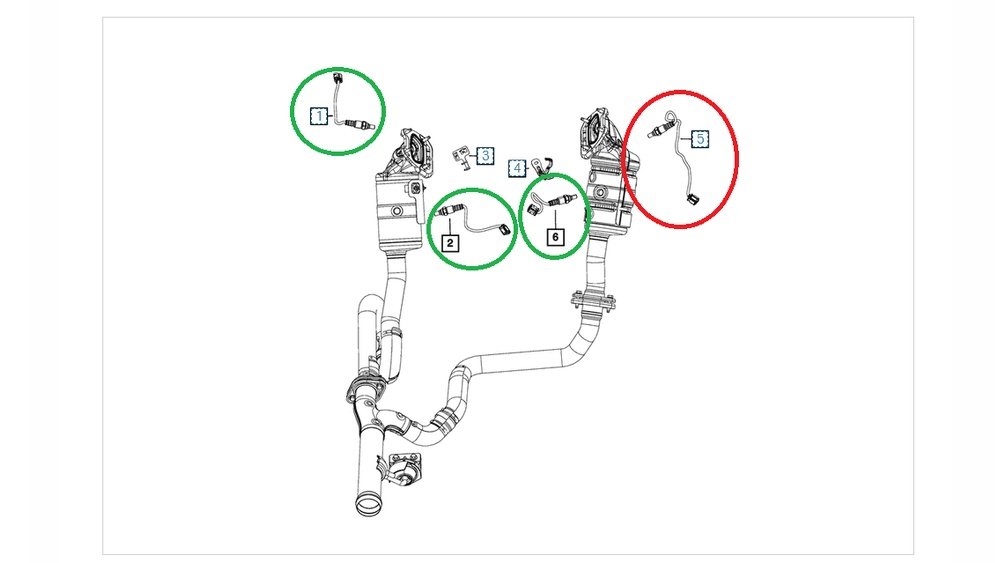
This data is sent to the engine control module (ECM), which then adjusts the air-fuel mixture for optimal combustion.
A malfunctioning sensor can lead to poor fuel economy, increased emissions, and rough engine performance.
Locating Bank 1 Sensor 2 might seem complicated, but with a clear understanding of your Jeep’s exhaust layout, it becomes a manageable task. This guide will walk you through identifying this specific sensor, explaining its function, and discussing common issues and replacement procedures.
Understanding Oxygen Sensors And Their Role
Oxygen sensors, often called O2 sensors, are critical components of your vehicle's emissions control system. They are essentially small, sophisticated sensors that monitor the oxygen levels in the exhaust stream.
The engine’s computer, the ECM (Engine Control Module), uses this information to fine-tune the air-fuel ratio.
How Oxygen Sensors Work
An oxygen sensor works by detecting the difference in oxygen between the exhaust gases and the outside air. It contains a ceramic element that produces a voltage signal based on this difference.
- Rich Mixture: If there’s too little oxygen in the exhaust, it means the engine is burning too much fuel (a rich mixture). The O2 sensor will signal the ECM to reduce fuel delivery.
- Lean Mixture: If there’s too much oxygen, the engine is burning too little fuel (a lean mixture). The O2 sensor will signal the ECM to increase fuel delivery.
This constant feedback loop allows the ECM to maintain the ideal air-fuel ratio, typically around 14. 7 parts of air to 1 part of fuel (stoichiometric ratio).
This precise ratio is essential for efficient combustion, maximum power, and minimal emissions.
Upstream Vs. Downstream Sensors
Oxygen sensors are typically found in pairs, before and after the catalytic converter.
- Upstream Sensor (Sensor 1): This sensor is located *before* the catalytic converter. It monitors the oxygen content in the exhaust directly from the engine. The ECM uses this sensor’s readings for primary fuel mixture adjustments.
- Downstream Sensor (Sensor 2): This sensor is located *after* the catalytic converter. Its main job is to monitor the performance of the catalytic converter. It checks if the converter is effectively cleaning the exhaust gases. While it can provide some feedback to the ECM, its readings are less critical for immediate fuel adjustments than the upstream sensor.
Bank 1 Vs. Bank 2
For engines with more than one cylinder bank (V6, V8 engines), the terms “Bank 1” and “Bank 2” become important.
- Bank 1: Refers to the side of the engine that contains cylinder #1.
- Bank 2: Refers to the opposite side of the engine.
Your Jeep Wrangler, especially models with a V6 engine, will have two banks. Therefore, you will have multiple oxygen sensors designated as Bank 1 Sensor 1, Bank 1 Sensor 2, Bank 2 Sensor 1, and Bank 2 Sensor 2.
Locating Jeep Wrangler Bank 1 Sensor 2
Identifying Bank 1 Sensor 2 on a Jeep Wrangler requires understanding the typical layout of its exhaust system. The exact position can vary slightly depending on the model year and engine configuration, but the general principles remain the same.
The Role Of Bank 1 Sensor 2
As mentioned, Bank 1 Sensor 2 is the downstream oxygen sensor on Bank 1 of the engine. Its primary function is to monitor the efficiency of the catalytic converter on Bank 1. It checks if the catalytic converter is doing its job of reducing harmful pollutants. If this sensor detects readings that indicate the converter isn’t working properly, it will trigger the check engine light.
Identifying Bank 1
On most Jeep Wrangler models, especially those with the Pentastar V6 engine, Bank 1 is the passenger side of the engine bay. This is where cylinder #1 is located. Bank 2 would then be the driver side.
Finding The Catalytic Converter
The catalytic converter is a large, often oval-shaped metal canister located in the exhaust system, typically between the exhaust manifold and the muffler. Your Wrangler may have one or more catalytic converters.
For Bank 1 Sensor 2, you need to focus on the catalytic converter associated with the passenger side exhaust manifold.
Pinpointing Bank 1 Sensor 2
Once you’ve identified the catalytic converter on the passenger side (Bank 1), look for an oxygen sensor after it in the exhaust flow. This is usually screwed into the exhaust pipe just downstream from the converter. You will see a wire harness connected to it.
Pro Tip: It’s often easier to locate the sensors by following the exhaust pipe backward from the engine. Start at the exhaust manifold on the passenger side, follow the pipe as it connects to the catalytic converter, and then look for the sensor immediately after the converter.
Differentiating From Other Sensors
It’s crucial not to confuse Bank 1 Sensor 2 with other sensors:
- Bank 1 Sensor 1: This is the *upstream* sensor on the passenger side, located *before* the catalytic converter.
- Bank 2 Sensor 1: This is the *upstream* sensor on the driver side, located *before* its respective catalytic converter.
- Bank 2 Sensor 2: This is the *downstream* sensor on the driver side, located *after* its respective catalytic converter.
Bank 1 Sensor 2 will typically have a different wire color or connector than Sensor 1, and it’s always positioned after the catalytic converter.
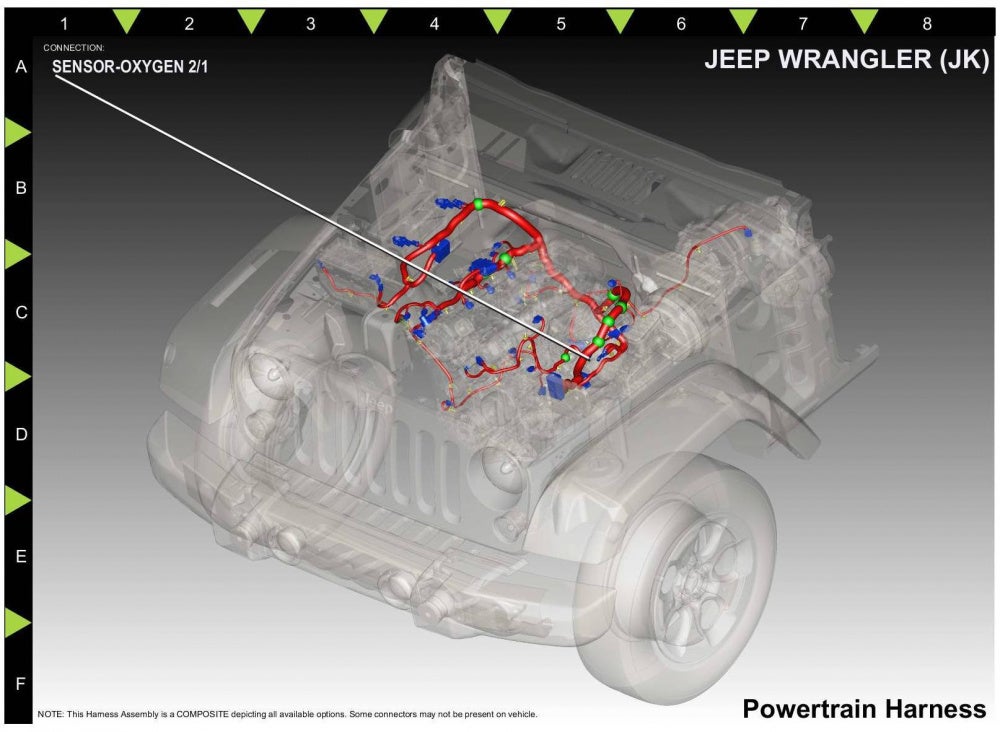
A failing Bank 1 Sensor 2 can manifest in several ways, often leading to diagnostic trouble codes (DTCs) that point directly to its malfunction or the catalytic converter’s performance.
Diagnostic Trouble Codes (dtcs)
When the ECM detects an issue with Bank 1 Sensor 2, it will store a DTC. Common codes include:
- P0430 – Catalyst System Efficiency Below Threshold (Bank 2): While this code mentions Bank 2, it’s a very common code that can be triggered by a faulty Bank 1 Sensor 2 if the system is designed to cross-reference or if there’s an issue with the Bank 1 catalytic converter itself. *Note: The code P0420 is for Bank 1, and P0430 is for Bank 2. However, a faulty sensor can sometimes lead to misinterpretation by the ECM, or the specific Wrangler setup might present unusual code behavior. *
- P0136 – O2 Sensor Circuit Malfunction (Bank 1 Sensor 2): This code indicates a problem with the electrical circuit of the sensor itself, such as an open circuit, short circuit, or signal out of range.
- P0137 – O2 Sensor Circuit Low Voltage (Bank 1 Sensor 2): The sensor is sending a voltage signal that is too low, suggesting it’s not functioning correctly or the catalytic converter is not working efficiently.
- P0138 – O2 Sensor Circuit High Voltage (Bank 1 Sensor 2): The sensor is sending a voltage signal that is too high.
- P0141 – O2 Sensor Heater Circuit Malfunction (Bank 1 Sensor 2): Oxygen sensors have a built-in heater element to help them reach optimal operating temperature quickly. This code means the heater circuit is not working.
Symptoms Of A Failing Sensor
Besides the check engine light, a failing Bank 1 Sensor 2 can cause:
- Reduced Fuel Economy: While the downstream sensor’s primary role isn’t fuel mixture adjustment, a faulty sensor can sometimes lead the ECM to make incorrect assumptions about the engine’s operating conditions, potentially affecting fuel efficiency.
- Failed Emissions Test: A P0430 code, often linked to Bank 1 Sensor 2 issues, directly indicates a problem with the catalytic converter’s efficiency, which will cause your vehicle to fail an emissions inspection.
- Rough Idling or Engine Performance: In some cases, although less common for a downstream sensor, erratic readings could contribute to slight performance issues.
- Smell of Rotten Eggs: This smell usually indicates a failing catalytic converter, which the Bank 1 Sensor 2 is monitoring. If the sensor is faulty, it might not correctly report the converter’s status, or a failing converter could be the root cause of sensor codes.
Replacing Bank 1 Sensor 2 On A Jeep Wrangler
Replacing an oxygen sensor is a common DIY repair for many vehicle owners. However, it requires some basic tools and safety precautions.
Tools And Materials Needed
- New Oxygen Sensor: Ensure you purchase the correct sensor for your specific Jeep Wrangler year, make, model, and engine. Using the wrong sensor can lead to incorrect readings and further issues.
- Oxygen Sensor Socket Wrench: This specialized socket has a slot for the sensor’s wire, allowing you to turn the sensor without damaging the wiring.
- Ratchet Wrench: To use with the oxygen sensor socket.
- Penetrating Oil (e.g., PB Blaster, WD-40): To help loosen a seized sensor.
- Safety Glasses: To protect your eyes from debris.
- Gloves: To keep your hands clean and protected.
- Jack and Jack Stands: If you need to lift the vehicle for better access.
- Torque Wrench (Optional but Recommended): For proper tightening.
- OBD-II Scanner: To read DTCs and clear codes after replacement.
Step-by-step Replacement Guide
- Safety First: Park your Jeep on a level surface. Engage the parking brake. If you need to lift the vehicle, use jack stands for support. Never work under a vehicle supported only by a jack.
- Locate the Sensor: As discussed earlier, identify Bank 1 Sensor 2. It’s the downstream O2 sensor on the passenger side, located after the catalytic converter.
- Disconnect the Electrical Connector: Carefully unplug the electrical connector from the oxygen sensor. There’s usually a small tab you need to press. Be gentle to avoid breaking the connector.
- Apply Penetrating Oil (If Needed): If the sensor is difficult to remove, spray some penetrating oil around the threads and let it soak for 15-30 minutes. This helps break down rust and corrosion.
- Remove the Old Sensor: Use the oxygen sensor socket and ratchet wrench to loosen and remove the old sensor. Turn it counter-clockwise. If it’s still very tight, you might need to apply steady pressure.
- Prepare the New Sensor: Most new sensors come with anti-seize compound pre-applied to the threads. If yours does not, apply a small amount of high-temperature anti-seize lubricant to the threads of the new sensor. Do not get anti-seize on the sensor tip.
- Install the New Sensor: Screw the new sensor into the exhaust pipe by hand to ensure it’s threaded correctly. Then, use the oxygen sensor socket and ratchet to tighten it. If you have a torque wrench, tighten it to the manufacturer’s specified torque (usually around 30-35 lb-ft, but check your service manual).
- Reconnect the Electrical Connector: Plug the electrical connector of the new sensor back in securely. Make sure it clicks into place.
- Clear the DTCs: Use your OBD-II scanner to clear the stored trouble codes.
- Start the Engine and Test Drive: Start your Jeep and let it run for a few minutes. Then, take it for a test drive, paying attention to engine performance and any warning lights. The check engine light should now be off.
Warning: If the check engine light returns, or if you are uncomfortable performing this repair, it is best to consult a professional mechanic.

Factors Affecting Sensor Lifespan And Performance
The lifespan of an oxygen sensor isn't infinite. Several factors can contribute to premature failure or affect its performance.
Understanding these can help you maintain your Wrangler's exhaust system.
Contamination
Oxygen sensors are sensitive to contamination. Common contaminants that can degrade or destroy a sensor include:
- Engine Coolant: Leaking head gaskets can allow coolant to enter the combustion chamber and exhaust system, coating the sensor.
- Oil: Burning oil, due to worn piston rings or valve seals, can also contaminate the sensor.
- Fuel Additives: Some aftermarket fuel additives, especially those containing silicone or certain metallic compounds, can damage O2 sensors.
- Rich or Lean Fuel Mixtures: Prolonged periods of running too rich or too lean can overheat or foul the sensor elements.
Exhaust Leaks
Leaks in the exhaust system *before* the oxygen sensor can skew its readings. If there's a leak, outside air can be drawn into the exhaust stream, or exhaust gases can escape before reaching the sensor.
This can cause the sensor to report an incorrect oxygen level, leading to the ECM making improper fuel adjustments or triggering false codes.
Always check for exhaust leaks before replacing an oxygen sensor.
Age And Mileage
Like most automotive components, oxygen sensors have a finite lifespan. They are exposed to extreme heat and harsh exhaust gases constantly.
While some sensors can last for over 100,000 miles, others may fail much sooner, especially if exposed to the contaminants mentioned above.
It’s common practice for mechanics to recommend replacing upstream O2 sensors around the 100,000-mile mark as a preventative measure, as they directly impact fuel mixture. Downstream sensors, like Bank 1 Sensor 2, often last longer but should still be inspected periodically.
Catalytic Converter Issues
As Bank 1 Sensor 2's primary role is to monitor the catalytic converter, a failing catalytic converter can cause the sensor to report consistently incorrect readings. This can lead to codes like P0430.
In such cases, replacing the sensor alone won't fix the problem; the catalytic converter will also need attention.
When To Seek Professional Help
While replacing an oxygen sensor is a manageable DIY task for many, there are situations where professional assistance is recommended.
Complex Diagnostic Issues
If you’re getting multiple DTCs, or if the codes don’t clearly point to a specific sensor, a professional mechanic has advanced diagnostic tools and expertise to accurately pinpoint the problem. Sometimes, a faulty sensor code can be triggered by a different issue, such as a vacuum