Jeep owners love the freedom of removing their vehicle’s top, especially in warm weather. But lifting and storing a heavy Jeep hardtop can be risky and tiring. That’s why many people choose a Jeep top hoist for garage storage. A good hoist makes this process easy, safe, and quick—saving your back and protecting your investment. If you’re considering a hoist for your garage, this article explains everything you need to know.
Why Use A Jeep Top Hoist?
Jeep hardtops are heavy. For example, a Jeep Wrangler 4-door hardtop weighs about 140 pounds (over 60 kg). Lifting it alone is not safe, and dropping it can cause costly damage. Here’s why a hoist is a smart upgrade:
- One-person operation: No need to call for help.
- Protects your hardtop: Reduces risk of dropping or scratching.
- Saves space: Stores the top overhead, freeing up garage room.
- Quick removal: Spend less time lifting, more time driving.
Enthusiasts often underestimate the weight and awkward size of a Jeep hardtop. Many who try to lift it without a hoist regret it after one season.
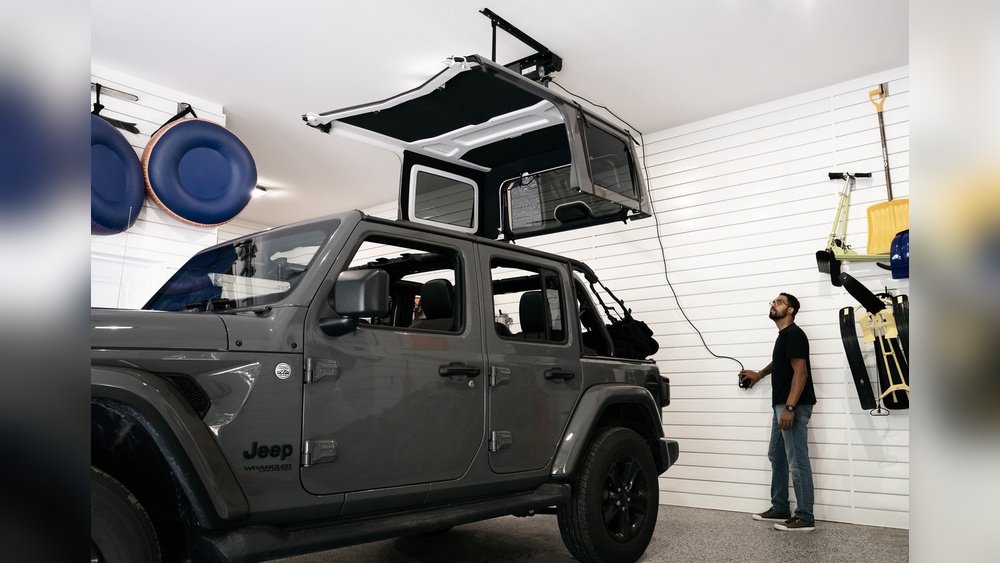
Types Of Jeep Top Hoists
There are several types of hoists, each with pros and cons. Choosing the right one depends on your budget, garage size, and how often you plan to use it.
| Type | Power Source | Effort Level | Average Price |
|---|---|---|---|
| Manual Pulley | Human | Moderate | $100–$200 |
| Hand Crank | Human (crank) | Low | $200–$350 |
| Electric Hoist | Motor | Very Low | $300–$700 |
Manual Pulley Hoists
These use a system of ropes and pulleys. You pull to lift the hardtop. They are the cheapest option and simple to install, but require muscle and can be slow.
Hand Crank Hoists
A hand crank gives better control and needs less strength. These are popular for two-door Jeeps. They are a bit more expensive but safer for solo use.
Electric Hoists
Just push a button and the motor lifts your top. Electric hoists are the most convenient and fastest, but they cost more. Some models can lift up to 220 pounds, making them perfect for heavier tops or regular use.
Key Features To Compare
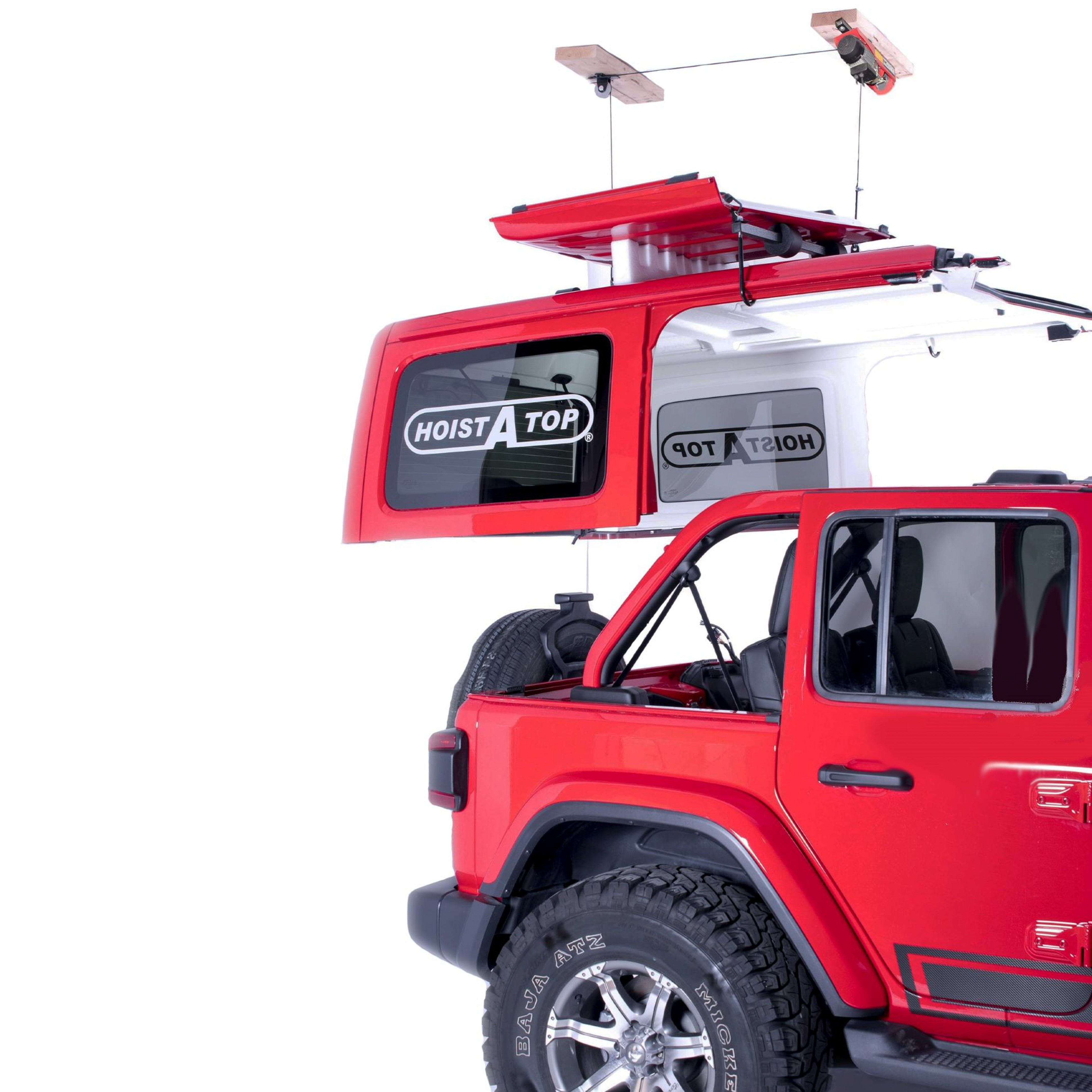
Not all hoists are equal. Here are the most important features to check before you buy.
| Feature | Why It Matters |
|---|---|
| Weight Capacity | Must handle your Jeep’s hardtop weight |
| Mounting System | Ceiling or wall mount, depending on garage layout |
| Ease of Use | Manual vs. electric operation |
| Safety Locks | Prevents accidental drops |
| Compatibility | Fit for Wrangler, Gladiator, etc. |
| Installation Difficulty | DIY friendly or need professional help |
A key mistake beginners make is ignoring weight capacity. If a hoist can only lift 100 pounds, it could fail with a 4-door top. Always check your Jeep’s specs.
How To Install And Use A Jeep Top Hoist
Most hoists are designed for DIY installation, but you’ll need the right tools and enough ceiling height. Here’s a simple process:
- Measure garage space: Make sure you have at least 8 feet of ceiling height for a Wrangler top.
- Find a ceiling joist: The hoist must mount to a strong beam, not just drywall.
- Assemble the hoist: Follow the manufacturer’s instructions. Use all hardware provided.
- Attach the straps or hooks: Most hoists come with adjustable straps or hooks to fit your Jeep’s top.
- Lift slowly: Raise the top evenly. Stop if you hear any strange sounds.
- Store safely: Once overhead, double-check the safety lock.
A surprising tip: Some owners add a soft blanket between the top and straps to prevent scratches. It’s a small step that protects the paint.
Top Jeep Top Hoist Brands
There are many brands, but a few stand out for reliability and safety. Here are three popular choices:
- Lange Originals Hoist-A-Top: Known for sturdy design and ease of use. Offers both manual and electric models.
- Smittybilt Hardtop Hoist: Affordable, with a simple hand crank system. Works well for most Jeep models.
- Harken Hoister: Uses a 4-point pulley system for even lifting. Trusted by Jeep and boat owners.
Many Jeep forums recommend Lange Originals for its durability, but Smittybilt is a common pick for those on a budget.
Common Mistakes To Avoid
- Underestimating the weight: Don’t try to lift a hardtop without help or the right tool.
- Poor installation: Failing to anchor into a ceiling joist can cause the hoist to fall.
- Skipping safety checks: Always use the safety lock and double-check straps before lifting.
- Ignoring compatibility: Some hoists fit only certain Jeep generations. Check before you buy.
People often forget the effect of garage clutter. Make space under the hoist area so you’re not reaching over bikes or boxes.

Cost Vs. Value: Is A Hoist Worth It?
Many wonder if a hoist is worth the money. Here’s a simple way to look at value:
- DIY hoist kits start around $120.
- Electric models can be $500 or more.
But consider the cost of a dropped hardtop—repairs can reach $1,000. Also, the time and effort saved each season adds up. In the long run, a Jeep top hoist for garage is a wise investment for regular hardtop removal.
For more advice on tools and installation, you can check the guidance on the official Jeep site.
Frequently Asked Questions
How Much Weight Can A Typical Jeep Top Hoist Lift?
Most hoists are rated for 100 to 220 pounds. Always check your hardtop’s actual weight and buy a hoist with at least 20% extra capacity for safety.
Can I Install A Jeep Top Hoist By Myself?
Yes, many kits are designed for DIY installation. You’ll need basic tools and a sturdy ceiling joist. For electric hoists, reading the manual is important.
Will A Hoist Damage My Jeep’s Hardtop?
Quality hoists use padded straps or coated hooks to protect your top. Placing a soft towel between the straps and the top adds extra protection.
How Much Garage Space Do I Need?
You need enough ceiling height (usually at least 8 feet) and clear space under the hoist. Measure before buying to make sure your garage fits.
Are Jeep Top Hoists Safe?
When installed correctly and used with the safety lock, hoists are very safe. Regularly check for wear on straps and hardware to ensure long-term safety.
Choosing the right Jeep top hoist for garage storage not only protects your Jeep but also saves time and energy. With careful selection and installation, you’ll enjoy the open-air Jeep life with less hassle and more confidence.