The Jeep Renegade has become a popular choice for drivers who want a small SUV with off-road capability and unique style. Like any modern vehicle, it relies on a complex electrical system to power everything from headlights to USB chargers.
When something electrical stops working, the fusebox is often the first place to check. Knowing your Jeep Renegade fusebox map can save time, money, and frustration.
This guide will help you understand the layout, identify key fuses, and avoid common mistakes.
Understanding The Jeep Renegade Fusebox
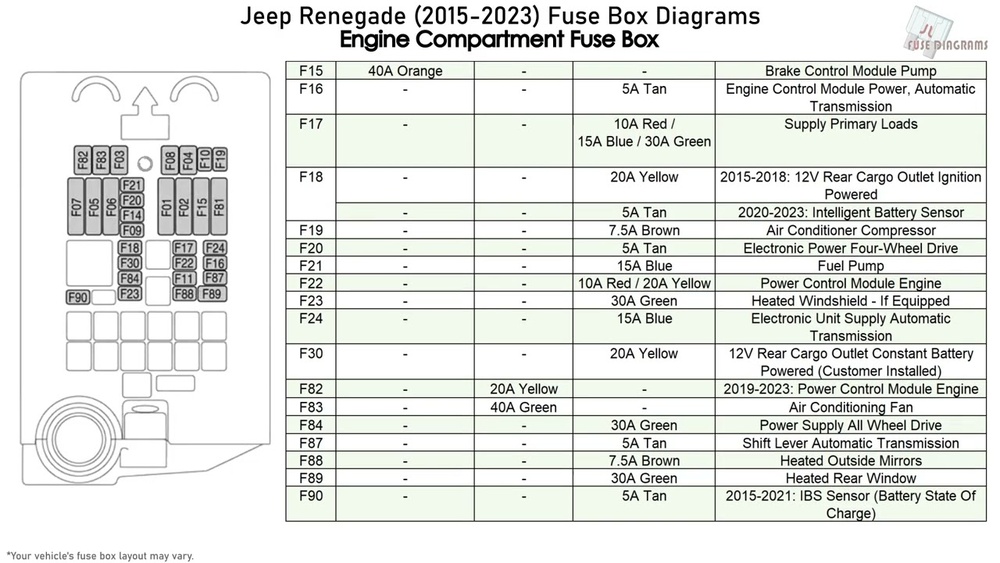
The Jeep Renegade has two main fuseboxes: one in the engine compartment and one inside the cabin. Each contains fuses and relays that protect different electrical circuits. If a circuit gets overloaded, the fuse breaks the connection, preventing damage or fire.
Most Renegade models built from 2015 onwards follow a similar fusebox layout, but always check your owner’s manual for differences. The fuseboxes use standard blade fuses, which are easy to replace.
Engine Compartment Fusebox
This is the primary fusebox and controls most of the vehicle’s major systems. You’ll find it on the right side, near the battery, under a protective cover.
Interior Fusebox
The cabin fusebox is under the dashboard on the driver’s side, near the pedals. It controls things like the radio, interior lights, and power windows.
Jeep Renegade Fusebox Map (2015–2026 Models)
Here’s a typical layout for the engine compartment and interior fuseboxes. Always confirm the exact layout for your year and trim, as some features may change.
| Engine Compartment Fuse | Amps | Protected Component |
|---|---|---|
| F10 | 15A | Horn |
| F20 | 20A | Fuel Pump |
| F30 | 30A | Front Wipers |
| F43 | 40A | Blower Motor |
| F85 | 10A | Headlights (Left) |
| F86 | 10A | Headlights (Right) |
| Interior Fuse | Amps | Protected Component |
|---|---|---|
| F6 | 7.5A | Heated Seats |
| F14 | 10A | Infotainment System |
| F20 | 15A | Power Outlet |
| F30 | 20A | Power Windows |
| F84 | 10A | Instrument Panel |
Some trims may have extra fuses for options like sunroofs, advanced audio, or trailer towing.
How To Read The Fusebox Map
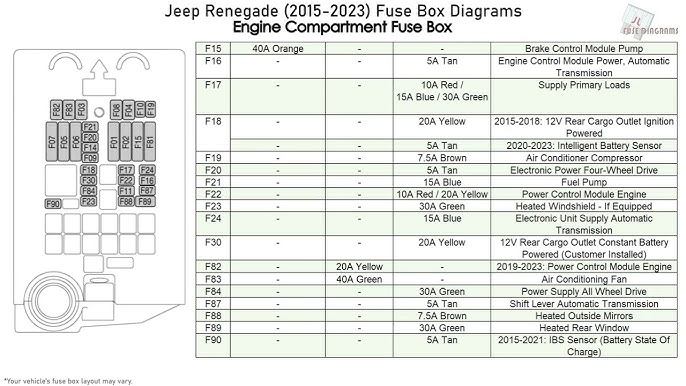
When you open the fusebox cover, you’ll see a diagram showing which fuse controls each function. The numbers (like F10 or F43) match the map above.
Fuse amperage is usually printed on top of the fuse and in the diagram.
If a feature in your Jeep stops working—like the radio or power outlet—check the map to find the right fuse. Use the fuse puller tool (usually inside the fusebox) to remove the fuse and inspect it. A blown fuse will have a broken metal strip inside.
Replacing A Fuse: Step-by-step
- Turn off the engine and remove the key.
- Find the correct fuse location using the map.
- Use the puller to remove the fuse.
- Check if the metal strip is broken.
- Replace with a new fuse of the same amperage.
- Test the function to see if it works again.
Never use a fuse with a higher rating, as this can damage wiring or cause a fire.
Many owners report similar issues that can often be traced to a blown fuse:
- Power windows stop working
- Headlights or taillights fail
- Heater or A/C fan won’t turn on
- Infotainment system is dead
- 12V power outlet has no power
Often, the problem is just a blown fuse. Replacing it is an easy fix, but if the new fuse blows again quickly, there may be a bigger electrical issue.
Two Key Insights Many Beginners Miss
- Check both fuseboxes: Some features (like power seats) use fuses in both locations, so always check both maps.
- Look for hidden relays: The engine compartment fusebox often has relays (small black cubes) that control high-power circuits. These can fail and cause symptoms similar to a blown fuse.

Simple Troubleshooting Tips
- If multiple systems stop working at once, look for a blown main fuse (usually 40A or higher).
- If you replace a fuse and it blows again, avoid further attempts—this could mean a short circuit or damaged wiring.
- For persistent problems, consult a professional mechanic or an authorized Jeep dealer.
Differences Across Renegade Model Years
While the basic fusebox layout remains similar from 2015 to 2026, some changes can happen:
| Model Year | Fusebox Location | Unique Features |
|---|---|---|
| 2015-2017 | Standard | Early infotainment options |
| 2018-2020 | Standard | Advanced safety systems |
| 2026-2026 | Standard | LED lighting, more USB ports |
Always double-check your year and trim, as some international models may use different layouts.
Where To Find More Details
For the most accurate and detailed fusebox map, refer to your owner’s manual or the official Jeep website. Some online forums and resources, like Jeep Official Owners Site, also provide diagrams and troubleshooting tips.
Frequently Asked Questions
What Happens If I Use The Wrong Fuse In My Jeep Renegade?
Using a fuse with higher amperage than recommended can overload circuits and risk fire. Always replace with the same type and rating.
How Do I Know If A Fuse Is Blown?
A blown fuse usually has a visible break in the metal strip inside. Some fuses also change color or have a small window to make this easier to see.
Can I Drive My Jeep Renegade With A Missing Fuse?
It depends on the circuit. Missing fuses for non-essential items (like a lighter socket) won’t stop you, but missing key fuses (like the fuel pump or engine control) will keep your vehicle from running.
Are Fuses Covered Under Jeep’s Warranty?
Fuses are generally considered wear items and not covered by the basic warranty. However, if an electrical fault damages the fusebox, repairs may be covered.
Where Can I Buy Replacement Fuses For My Renegade?
Replacement fuses are available at auto parts stores, online retailers, and Jeep dealerships. Always carry a few spares in your glovebox for emergencies.
Knowing your Jeep Renegade fusebox map can help you fix small problems quickly and keep your vehicle running safely. Checking and replacing fuses is a simple task anyone can learn with a bit of patience. If you ever feel unsure, don’t hesitate to consult a professional for help.