When you hear a squeaking noise from the front of your Jeep Liberty, especially when turning the steering wheel, it can be unsettling. This sound is often an early warning sign that something in your steering or suspension system needs attention.
Ignoring it can lead to more significant problems, potentially affecting your vehicle’s safety and handling.
This type of squeak is common across many vehicles, but understanding the specific components in a Jeep Liberty that could cause it is key to diagnosing and fixing the issue. It’s not just one single part; several elements work together to allow your wheels to turn smoothly.
When one of these parts begins to wear out, it can create friction, leading to that tell-tale squeak.
In this article, we'll explore the most common culprits behind a Jeep Liberty front-end squeak when turning. We'll break down the potential causes, explain how to identify them, and discuss the typical repair processes.
Whether you're a DIY enthusiast or planning a trip to the mechanic, this guide will help you understand what's happening and what steps to take.
Common Causes Of Front-end Squeaking When Turning
The front end of your Jeep Liberty is a complex system with many moving parts. When you turn the steering wheel, these parts are put under stress and articulate.
A squeak suggests friction, which can occur in various locations. Let's look at the most frequent sources of this noise.
Ball Joints
Ball joints are critical pivot points in your suspension system, connecting the control arms to the steering knuckles. They allow the wheels to move up and down and also pivot side-to-side when you steer. Over time, the protective boot around a ball joint can tear, allowing dirt and moisture in, or the lubricating grease inside can dry out.
When a ball joint wears out, the metal-on-metal contact can produce a distinct squeaking or creaking sound, particularly noticeable when the suspension is compressed or under load, like during a turn. This noise often gets louder as you turn the wheel further.
How to identify bad ball joints:
- Visual Inspection: Look for torn or damaged rubber boots on the ball joints. If you see grease leaking out or dirt packed around the joint, it’s a strong indicator of wear.
- Listening: The squeak is often most pronounced at low speeds when turning the wheel.
- Wiggle Test: With the vehicle safely supported on jack stands, a mechanic can check for excessive play in the ball joint by trying to move the wheel assembly. Significant looseness means the ball joint is worn.
Pro Tip: Ball joints are safety-critical components. If you suspect they are worn, it’s best to have them inspected by a qualified mechanic immediately. Driving with severely worn ball joints can lead to loss of steering control.
Tie Rod Ends
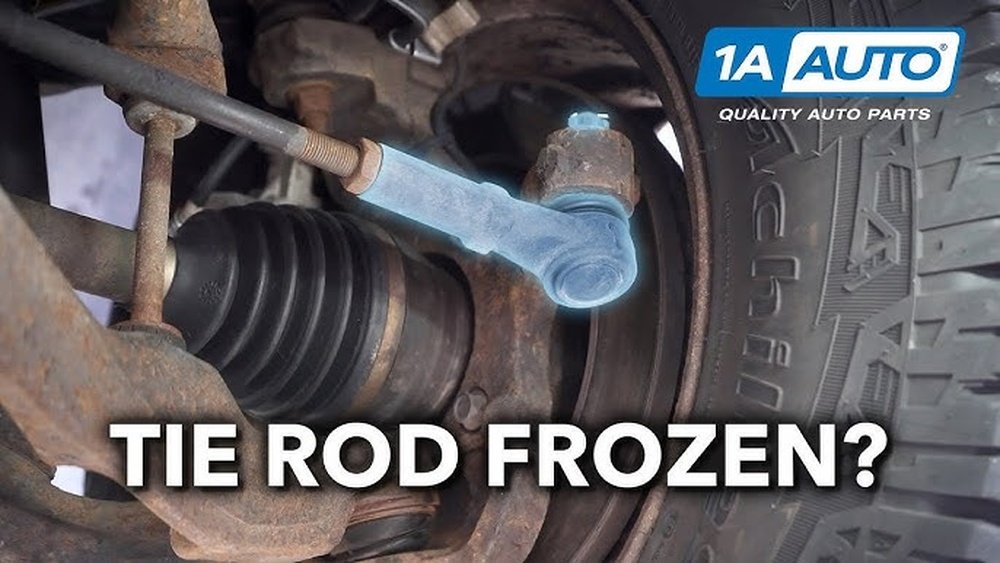
The tie rod ends are part of your steering linkage system. They connect the steering rack to the steering knuckles, transmitting the steering wheel’s input to the wheels. Like ball joints, tie rod ends have a ball-and-socket design and are protected by a rubber boot.
When the tie rod ends wear out, the joint can become loose, and the protective boot can fail, leading to contamination and a lack of lubrication. This wear can cause a clunking or squeaking noise, especially when turning the steering wheel.
The sound might be more of a popping or knocking if the joint is very loose, but a dry, worn tie rod end can definitely squeak.
How to identify bad tie rod ends:
- Visual Inspection: Check the rubber boots for tears or damage.
- Listening: A squeak or clunk when turning the wheel, particularly at low speeds or when maneuvering.
- Wiggle Test: With the vehicle on jack stands, a mechanic can grasp the tie rod and try to move it. Any significant play or looseness indicates wear.
Sway Bar Links And Bushings
The sway bar (also known as an anti-roll bar) helps reduce body roll when your Jeep Liberty corners. It’s a torsion bar that connects the left and right sides of the suspension. The sway bar is attached to the vehicle’s frame and to the suspension components (usually the control arms or struts) via sway bar links. These links have small bushings and ball joints at each end.
Sway bar bushings are rubber or polyurethane cushions that hold the sway bar to the frame. Sway bar links connect the sway bar to the suspension. Wear in either the bushings or the links can cause noise. When the bushings become worn or dry, they can squeak against the sway bar. Similarly, worn ball joints or bushings in the sway bar links can also produce squeaking or rattling sounds, especially when one side of the suspension is compressed more than the other, which happens during turns.
How to identify issues with sway bar components:
- Visual Inspection: Look for cracked or deteriorated rubber bushings on the sway bar where it mounts to the frame. Inspect the sway bar links for loose or damaged joints and bushings.
- Listening: The noise often occurs over bumps or uneven surfaces, but turning can also put stress on the sway bar system, making the squeak apparent.
- Pressing on the Vehicle: Pushing down on one corner of the Jeep can sometimes make the sway bar components flex and produce noise.
Steering Knuckle And Upper/lower Control Arm Bushings
The steering knuckle is a crucial part that holds the wheel hub, brake assembly, and connects to the suspension components like ball joints and tie rods. The upper and lower control arms are suspension components that attach the steering knuckle to the vehicle’s frame. These control arms pivot on bushings, which are typically made of rubber or polyurethane.
When these bushings wear out, crack, or dry out, they can cause friction and squeaking. This is especially true for the bushings that allow the control arms to pivot.
As you turn the steering wheel, the entire steering knuckle assembly moves, putting stress on these pivot points.
If the bushings are worn, they can rub against the metal components, creating a squeaking sound.
How to identify worn control arm bushings:
- Visual Inspection: Look for cracks, tears, or deterioration in the rubber bushings on the control arms where they attach to the frame.
- Listening: The squeak might be heard when turning, but also when the suspension moves over bumps.
- Wiggle Test: A mechanic can check for excessive movement in the control arms by trying to rock them.
Power Steering System Issues
While less common for a direct squeaking sound *when turning*, issues within the power steering system can sometimes manifest as noises. This is usually more of a whining or groaning sound, but a dry or failing power steering pump, or low power steering fluid, could potentially contribute to other noises.
The power steering system uses hydraulic fluid to assist in turning the wheels. If the fluid level is low, or if the pump is failing, it can cause strain.
Often, a low fluid level will cause a whining noise that gets louder as you turn the wheel, especially at full lock.
A dry power steering rack can also make noise.
How to check power steering:
- Fluid Level: Check the power steering fluid reservoir. If it’s low, top it off with the correct type of fluid specified in your Jeep Liberty’s owner’s manual.
- Fluid Condition: Examine the fluid. If it looks dark, burnt, or has debris in it, the system might need flushing and refilling.
- Listen: Pay attention to the type of noise. A persistent whine that increases with steering angle is a strong indicator of a power steering issue.
Warning: If your power steering fluid is consistently low, there’s likely a leak somewhere in the system that needs to be found and repaired.
Diagnosing The Squeak: A Step-by-step Approach
Pinpointing the exact source of a squeak can be tricky because multiple components are involved in steering and suspension. Here’s a methodical way to approach the diagnosis.
Step 1: Gather Information About The Noise
Before you even get under the vehicle, try to gather as much detail about the squeak as possible.
- When does it happen? Only when turning left, right, or both? At low speeds, high speeds, or all the time? When the car is cold or after it’s warmed up? Over bumps?
- What does it sound like? Is it a high-pitched squeak, a creak, a groan, or a clunk?
- Where does it seem to come from? Try to identify if it’s more from the driver’s side, passenger’s side, or center of the front end.
This information will help narrow down the possibilities significantly. For instance, a squeak that only happens when turning left might point to a component on the right side that’s being stressed.
Step 2: Visual Inspection (safely!)
With the Jeep Liberty parked on a level surface, perform a thorough visual inspection of the front suspension and steering components.
- Check for obvious damage: Look for anything that appears bent, cracked, or out of place.
- Inspect rubber boots: Pay close attention to the boots on ball joints, tie rod ends, and CV joints. Tears or cracks are a prime suspect for allowing contamination and leading to noise.
- Look for leaks: Check for any signs of fluid leaks around the power steering system or from the suspension components themselves.
- Examine bushings: Inspect all visible rubber bushings for signs of cracking, drying out, or separation.
Step 3: Test For Play (requires Jacking)
This is where you’ll need a good set of jack stands and a way to lift your Jeep safely. Never work under a vehicle supported only by a jack.
- Lift the front of the Jeep: Place jack stands under the frame or designated support points.
- Check wheel bearings: Grab the tire at the 12 o’clock and 6 o’clock positions and try to wiggle it. Any significant play could indicate a bad wheel bearing, though this typically causes a grinding or humming noise.
- Check steering components:
- Tie Rod Ends: With the engine off and wheels straight, try to turn the steering wheel back and forth slightly. Have a helper watch the tie rod ends for any visible movement or looseness in the joint. You can also try to physically wiggle the tie rod itself.
- Ball Joints: Try to rock the tire side-to-side (at the 3 o’clock and 9 o’clock positions). If there’s play in the ball joints, you might feel it here. A mechanic can use a pry bar to check for vertical play.
- Check Sway Bar Links: Try to wiggle the sway bar links. Any looseness in their joints or bushings can be felt.
- Control Arm Bushings: While harder to test without specialized tools, you can sometimes see if control arms are shifting excessively relative to their mounting points when significant force is applied.
Step 4: Listening Tests
Sometimes, the noise is easiest to reproduce when the vehicle is moving.
- Low-Speed Maneuvering: Drive the Jeep Liberty slowly in a parking lot or an empty area. Turn the steering wheel from lock to lock. Listen carefully for the squeak.
- Simulate Suspension Load: Have a helper stand near the wheel well while you push down firmly on the fender or step on the running board. Listen for squeaks as the suspension compresses. Repeat on the other side.

Specific Components And Their Squeaking Behavior
Let’s dive deeper into how specific components might manifest their squeaks.
Ball Joint Squeak Characteristics
A worn ball joint often produces a deep-pitched creaking or squeaking sound. It’s most noticeable when the suspension is loaded or unloaded, which happens during turns. As you turn the wheel, the angle of the ball joint changes, and if it’s dry or worn, the metal surfaces will rub. This is why the noise often intensifies the further you turn the wheel. In some cases, a failing ball joint can also lead to wandering steering or uneven tire wear.
Tie Rod End Squeak Characteristics
Tie rod end squeaks can be a bit more varied. A dry, slightly worn tie rod end might squeak, similar to a ball joint. However, as they wear further, they can develop into a clunking or knocking sound, especially when the steering is first moved off-center or when going over bumps. If the noise is a consistent squeak directly tied to steering input, the tie rod ends are a strong candidate.
Sway Bar Link/bushing Squeak Characteristics
Sway bar components often squeak when there’s a difference in suspension travel between the left and right sides. This is very common during turns. The rubber bushings can dry out and squeak against the metal bar or bracket. The links themselves, if they have ball-joint-like ends, can also squeak when worn. The noise might be more of a metallic squeak or a rubbery groan. It’s also very common to hear these noises when driving over uneven surfaces or when one wheel hits a bump before the other.
Control Arm Bushing Squeak Characteristics
Worn control arm bushings typically produce a rubbing or creaking sound. Since these bushings allow the entire control arm to pivot, they are stressed during turning and braking. If the rubber is degraded, it can create friction against the metal mounting points. This squeak might be more of a persistent groan that changes in pitch as you turn.
Power Steering Pump Whine Vs. Squeak
It’s important to differentiate a true squeak from a power steering pump whine. A power steering pump issue usually results in a high-pitched whine or groan that gets significantly louder as you turn the steering wheel, especially when you reach the limits of its travel (full lock). This whine is caused by the pump struggling to push fluid through the system, often due to low fluid levels or internal wear. If the noise is a distinct squeak, it’s less likely to be solely the power steering pump, though a very dry steering rack could potentially contribute.
Repairing The Squeak: What To Expect
Once the faulty component is identified, the repair process usually involves replacing the worn part.
Replacing Ball Joints
Replacing ball joints typically involves:
- Lifting the vehicle: Safely support the Jeep Liberty on jack stands.
- Removing the wheel: Take off the tire for better access.
- Disconnecting suspension components: The ball joint is usually pressed into the steering knuckle and/or control arm. It may need to be pressed out. This often requires specialized tools like a ball joint press or pickle fork.
- Installing the new ball joint: The new ball joint is pressed into place.
- Reassembling suspension: Reconnect all components.
- Wheel Alignment: This is crucial. After replacing ball joints (or any steering and suspension component