When you look at a Jeep Grand Cherokee, one of the first things you might notice, especially if you're thinking about changing the wheels, is the bolt pattern. This might sound technical, but it’s really important.
The bolt pattern tells you how the wheel attaches to the Jeep's axle. It’s like a special code that ensures the wheel fits correctly and safely.
Getting this wrong can lead to serious problems, like wheels coming loose or not fitting at all.
Many Jeep owners love to customize their vehicles, and changing the wheels is a popular way to do it. Whether you want bigger tires for off-roading, a different look for city driving, or just need to replace a damaged wheel, understanding the bolt pattern is the first step. This article will guide you through the Jeep Grand Cherokee bolt pattern for various model years. We’ll explain what it means, how to find it, and why it matters so much for your safety and your Jeep’s performance. We’ll also look at common Grand Cherokee models and their specific bolt patterns, helping you make the right choices for your vehicle.
Understanding Jeep Wheel Bolt Patterns
A wheel bolt pattern, also known as the lug pattern or PCD (Pitch Circle Diameter), is a crucial measurement that determines if a wheel will fit onto your vehicle’s hub. It’s essentially a set of numbers that describe the arrangement of the lug holes on the wheel and the studs on the axle.
What The Numbers Mean
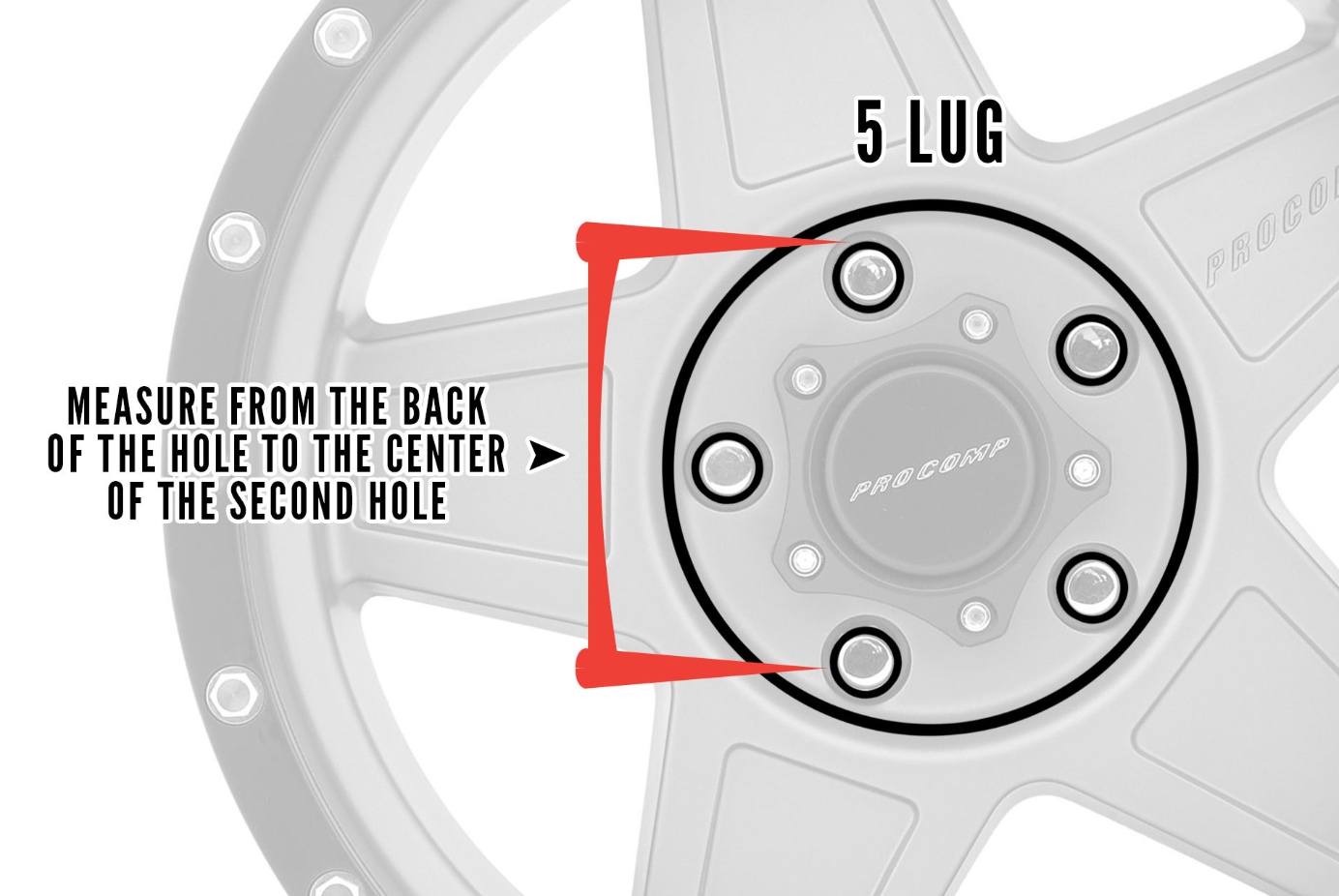
The bolt pattern is usually expressed in two numbers. The first number tells you how many lug holes there are. The second number tells you the diameter of the circle on which these lug holes are centered.
For example, a common bolt pattern is 5×127.
- The 5 means there are five lug holes.
- The 127 means the diameter of the circle that connects the centers of these five lug holes is 127 millimeters.
Sometimes, you might see the measurement in inches. 127 millimeters is approximately 5 inches. So, 5×5 is the same as 5×127. It’s important to know both metric and imperial measurements, as different manufacturers and aftermarket parts might use either.
Why Bolt Pattern Matters
The bolt pattern must match between the wheel and your Jeep’s hub for several reasons:
- Safety: If the bolt pattern doesn’t match, the wheel won’t sit flush against the hub. This can cause the wheel to wobble, vibrate, or even detach from the vehicle while driving. This is extremely dangerous and can lead to severe accidents.
- Fitment: Even if you can force a wheel onto the studs, an incorrect bolt pattern means the wheel won’t be centered properly. This puts uneven stress on the studs, lug nuts, and the wheel itself, leading to premature wear and potential failure.
- Performance: A properly fitted wheel ensures that the weight is distributed evenly. An incorrect fit can affect your Jeep’s handling, braking, and overall driving experience.
- Compatibility: When buying new wheels or swapping them between vehicles, knowing the correct bolt pattern is essential to avoid purchasing incompatible parts.
Finding Your Jeep Grand Cherokee’s Bolt Pattern
There are a few ways to find out the correct bolt pattern for your specific Jeep Grand Cherokee model:
- Owner’s Manual: This is the most reliable source. Your owner’s manual will list the precise specifications for your vehicle, including the wheel bolt pattern.
- Stamping on the Wheel: Sometimes, the bolt pattern is stamped directly onto the wheel itself, often on the back side near the hub. You might need to remove the wheel to see it clearly.
- Online Resources: Many automotive websites and forums provide detailed specifications for different vehicle models. However, always double-check this information with your owner’s manual or a trusted mechanic.
- Measure It: If you can’t find the information elsewhere, you can measure it yourself.
- For 4 or 6-lug wheels: Measure the distance from the center of one stud hole to the center of the next stud hole. Then, multiply that distance by 2. This gives you the PCD.
- For 5-lug wheels: Measure from the center of one stud hole to the center of the stud hole directly across from it (this is the PCD). Another method for 5-lug wheels is to measure from the outside edge of one stud hole to the inside edge of a stud hole next to it, then add twice the diameter of a stud hole. This can be tricky, so measuring from the center of one stud to the center of another *not* directly across is also common, and then you’d use a specific formula. The easiest way for 5-lug is to measure the diameter of the circle passing through the center of all studs.
Jeep Grand Cherokee Bolt Patterns By Model Year
The Jeep Grand Cherokee has been around for many years, and the bolt pattern has remained consistent for most of its generations. However, there are slight variations, especially when looking at older models versus newer ones.
It's crucial to identify your specific generation and model year.
Wk Generation (2005-2010)
The WK generation of the Jeep Grand Cherokee, which includes models from 2005 to 2010, uses a 5x127mm bolt pattern. This is also commonly referred to as 5×5.
- Wheel Size: These models typically came with 17-inch or 18-inch wheels.
- Offset: The wheel offset for this generation is generally around +44mm.
- Hub Bore: The hub bore diameter is usually 71.5mm.
When looking for aftermarket wheels for a WK Grand Cherokee, ensure they have the 5x127mm bolt pattern and are designed to fit the vehicle’s hub bore. Using wheels with the correct bolt pattern and an appropriate offset is vital for proper fitment and safe operation.
Wk2 Generation (2011-2026)
The WK2 generation, spanning from 2011 to 2026, continues to use the 5x127mm (5×5) bolt pattern. This consistency is a benefit for owners looking to upgrade or swap wheels within this range.
- Wheel Size: WK2 Grand Cherokees came with a variety of wheel sizes, commonly ranging from 17 inches up to 20 inches, depending on the trim level and options.
- Offset: The wheel offset for the WK2 generation is typically around +45mm.
- Hub Bore: The hub bore remains consistent at 71.5mm.
This generation saw significant updates in design and technology, but Jeep maintained the 5×5 bolt pattern for wheel compatibility. This means many wheels designed for the earlier WK generation might fit the WK2, but always verify the exact specifications, especially the offset and tire size, to ensure proper clearance and avoid rubbing.
Wl Generation (2026-present)
The latest generation, the WL Grand Cherokee (introduced for the 2026 model year), also sticks with the 5x127mm (5×5) bolt pattern. This continuity makes it easier for owners to find compatible wheels across different model years within the Grand Cherokee lineage.
- Wheel Size: The WL generation offers wheel sizes typically from 18 inches to 20 inches.
- Offset: The offset for the WL generation is generally around +45mm.
- Hub Bore: The hub bore remains 71.5mm.
The 5x127mm bolt pattern has been a reliable standard for the Jeep Grand Cherokee for a long time. This makes finding aftermarket wheels straightforward. When upgrading, always consider not just the bolt pattern but also the wheel diameter, width, and offset to ensure they work well with your suspension and bodywork.
Older Generations (pre-2005)
Before the WK generation, Jeep Grand Cherokees had different bolt patterns. It’s essential to know which model you have if it’s from before 2005.
- WJ Generation (1999-2004): These models use a 5x127mm (5×5) bolt pattern. So, if you have a WJ, the bolt pattern is the same as the WK and WK2 generations.
- ZJ Generation (1993-1998): The ZJ Grand Cherokee also features a 5x127mm (5×5) bolt pattern.
- SJ/ZJ First Generation (1984-1993): The original Grand Wagoneer and early Grand Cherokees (often referred to as SJ or early ZJ) typically used a 5×139.7mm (5×5.5) bolt pattern. This is a significantly different pattern than the later models.
This historical look shows that while the 5×5 bolt pattern has been dominant for many years, older models, particularly those from the mid-80s to early 90s, might have a different standard. Always confirm the specific year and model to avoid confusion.
Common Wheel Bolt Patterns For Jeep Models
While this article focuses on the Jeep Grand Cherokee, it’s helpful to know how its bolt pattern compares to other Jeep models. This can be useful if you’re considering swapping wheels or understanding Jeep’s general approach to wheel fitment.
Here’s a look at common bolt patterns across the Jeep lineup:
- Jeep Wrangler (JK Generation, 2007-2018): Uses a 5x127mm (5×5) bolt pattern. This is the same as most Grand Cherokees.
- Jeep Wrangler (JL Generation, 2018-Present): Also uses a 5x127mm (5×5) bolt pattern.
- Jeep Cherokee (KL Generation, 2014-2026): Uses a 5x110mm bolt pattern. This is different from the Grand Cherokee and Wrangler.
- Jeep Renegade (BU/551, 2015-Present): Uses a 5x110mm bolt pattern, similar to the KL Cherokee.
- Jeep Compass/Patriot (MK/MP, 2007-Present): Typically use a 5×114.3mm (5×4.5) bolt pattern.
- Jeep Commander (XK/XH, 2006-2010): Uses a 5x127mm (5×5) bolt pattern, same as the Grand Cherokee of the same era.
- Jeep Liberty/Cherokee (KJ/KK, 2002-2012): Uses a 5×114.3mm (5×4.5) bolt pattern.
This comparison highlights that while 5×5 (5x127mm) is very common, especially for larger Jeep SUVs like the Grand Cherokee and Wrangler, smaller models like the Cherokee (KL) and Renegade use different patterns.
Why Different Patterns Exist
Different bolt patterns exist for several reasons, including:
- Vehicle Size and Weight: Larger, heavier vehicles like trucks and full-size SUVs often use larger bolt patterns with more studs (like 5×5 or 5×5.5) to handle the increased load and stress. Smaller vehicles can get away with smaller patterns (like 5×4.5 or 5×110).
- Manufacturer Standardization: Companies often standardize bolt patterns across certain platforms or vehicle classes to simplify manufacturing and parts supply.
- Design and Engineering: The overall design of the suspension, braking system, and chassis can influence the choice of bolt pattern.
Understanding these differences is crucial if you ever plan to interchange wheels between different Jeep models.
Factors Beyond Bolt Pattern When Choosing Wheels
While the bolt pattern is the most critical factor for ensuring a wheel fits, it’s not the only one. Several other specifications need to match or be considered when selecting new wheels for your Jeep Grand Cherokee.
Wheel Diameter And Width
- Diameter: This refers to the size of the wheel from one edge to the other. It’s usually measured in inches (e.g., 17-inch, 18-inch, 20-inch). You need to choose a diameter that fits your Jeep’s wheel wells and is compatible with your tire size.
- Width: This is the measurement across the wheel from bead seat to bead seat, also in inches. The wheel width affects how the tire sits on the wheel and can influence tire size options. A wider wheel can accommodate a wider tire, which might be desirable for off-roading or a more aggressive stance.
Offset
Wheel offset is the distance from the hub mounting surface to the centerline of the wheel. It’s crucial for ensuring the wheels don’t rub against the suspension components or the fenders.
- Positive Offset: The hub mounting surface is outboard of the wheel’s centerline. Most modern front-wheel-drive cars and many SUVs have positive offset.
- Negative Offset: The hub mounting surface is inboard of the wheel’s centerline. Common on rear-wheel-drive trucks and performance cars.
- Zero Offset: The hub mounting surface is exactly at the wheel’s centerline.
For most Jeep Grand Cherokees (WK, WK2, WL generations), the stock offset is typically around +44mm to +45mm. When choosing aftermarket wheels, staying close to this specification is recommended. Going too low (more negative) can cause the wheel to stick out further, potentially leading to rubbing on the fenders, while going too high (more positive) can cause the wheel to hit suspension components.
Backspacing
Backspacing is similar to offset but measured differently. It’s the distance from the back of the wheel (the mounting surface) to the outer lip of the wheel. A higher backspacing means the wheel sits further inward. For a 5×5 bolt pattern on a Grand Cherokee, you’ll typically find backspacing around 6 inches, but this can vary with wheel width.
Hub Bore
The hub bore is the diameter of the hole in the center of the wheel that fits over the vehicle’s hub. If the hub bore of the wheel is smaller than the vehicle’s hub, the wheel won’t fit. If it’s larger, the wheel might not be centered correctly, leading to vibrations.
- Most Jeep Grand Cherokees (WK, WK2, WL) have a hub bore of 71.5mm.
- Aftermarket wheels often come with a larger hub bore and use hub-