The Jeep Grand Cherokee Won't Start But Has Power is a frustrating problem many owners face. You turn the key, hear lights come on, the radio plays, but the engine remains silent.
This situation can happen for various reasons, from simple fixes to more complex mechanical issues. Understanding the potential causes is the first step to getting your Jeep back on the road.
This guide will walk you through the common culprits, diagnostic steps, and potential solutions for a Jeep Grand Cherokee that has power but won't crank.
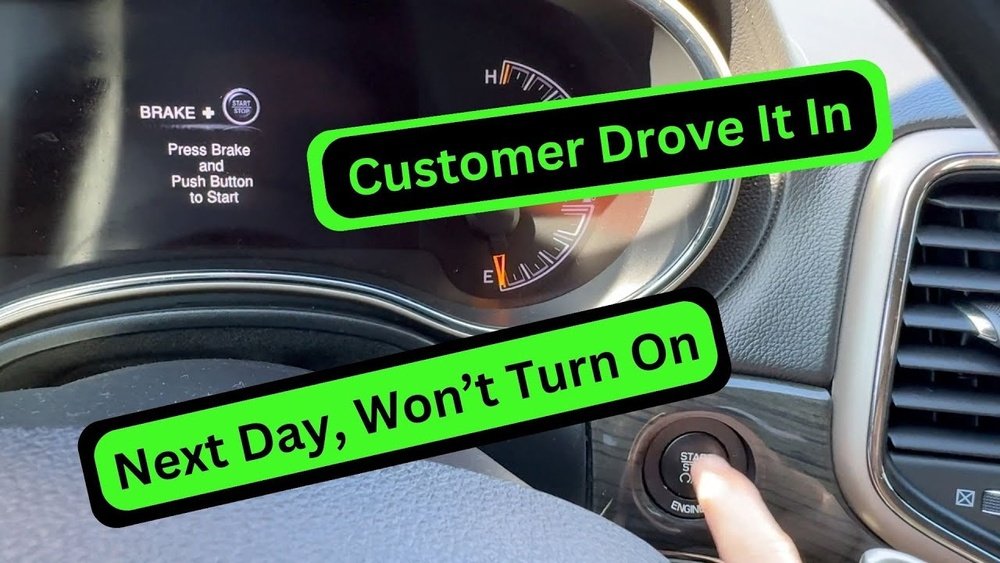
Understanding The Starting System
Before diving into specific problems, it’s helpful to understand how your Jeep Grand Cherokee starts. When you turn the ignition key, a sequence of events occurs:
- Power to the Ignition Switch: The key activates the ignition switch, sending a signal to various systems.
- Battery Power: The battery is the core power source. It supplies electricity to the starter motor, fuel pump, ignition system, and all electrical components.
- Starter Solenoid: This is an electromagnet that engages the starter motor. When activated, it pushes a gear to mesh with the engine’s flywheel and simultaneously completes the circuit for the starter motor.
- Starter Motor: This powerful electric motor spins the engine’s flywheel, causing the engine to start.
- Fuel System: The fuel pump delivers gasoline to the engine.
- Ignition System: The spark plugs ignite the fuel-air mixture.
If your Jeep has power (lights, radio work), it means the battery is supplying electricity. The problem likely lies in the components responsible for translating that power into engine rotation.
Common Causes For A No-start Condition With Power
When your Jeep Grand Cherokee has lights and sounds but won’t crank, several components could be at fault. Let’s explore the most frequent issues.
1. The Battery And Its Connections
While you have power, a weak battery might not have enough *cranking amps* to turn the engine over. Cranking amps are the high current needed by the starter motor. A battery can power lights and accessories but still be too weak to start the engine.
- Symptoms: Dimming lights when trying to start, slow cranking, or no cranking at all.
- Diagnosis:
- Check the battery terminals. Are they clean and tight? Corrosion (a white or bluish powder) on the terminals can prevent good electrical contact.
- Use a multimeter to check the battery voltage. A healthy battery should read around 12.6 volts when the engine is off. If it’s below 12.4 volts, it might be weak or discharged.
- Test the battery under load. Most auto parts stores can perform this test for free.
- Fixes:
- Clean the battery terminals with a wire brush and a mixture of baking soda and water.
- Tighten any loose terminal clamps.
- If the battery is old (typically 3-5 years) or fails a load test, replace it.
2. Faulty Starter Motor Or Solenoid
The starter motor is responsible for physically turning the engine over. The starter solenoid acts as a switch, sending power to the starter motor. If either of these fails, the engine won’t crank, even with a good battery.
- Symptoms: A single, loud click sound when you turn the key, followed by silence. Sometimes, no sound at all. The engine doesn’t turn over. Lights and accessories still work.
- Diagnosis:
- Listen carefully when you turn the key. A distinct “click” often points to the solenoid trying to engage but the starter motor not spinning.
- You can try gently tapping the starter motor with a hammer (ensure the car is in park and the parking brake is on). Sometimes, a stuck starter can be temporarily freed this way. This is a temporary fix, indicating the starter is failing.
- Check the wiring going to the starter motor for damage or loose connections.
- Fixes:
- Replace the starter motor and/or solenoid. These are often integrated into a single unit.
3. Ignition Switch Issues
The ignition switch is what you turn with your key. It sends signals to various components, including the starter. If the switch is worn or damaged, it might not send the signal to the starter circuit.
- Symptoms: Turning the key results in no sound or action from the starter, but the dashboard lights and accessories still work. Sometimes, the accessories might also cut out when you try to start.
- Diagnosis:
- Check if the steering wheel lock is engaging properly. If it’s stuck, it can sometimes affect the ignition switch.
- Test the electrical contacts within the ignition switch. This usually requires a multimeter and knowledge of the vehicle’s wiring diagram.
- Fixes:
- Replace the ignition switch assembly.
4. Neutral Safety Switch / Park/neutral Position (pnp) Sensor
For automatic transmissions, a neutral safety switch (or PNP sensor) prevents the engine from starting unless the transmission is in Park or Neutral. If this switch fails or is misadjusted, it might think the car is in gear even when it’s in Park.
- Symptoms: The engine won’t crank, but all power is present. Wiggling the gear shifter might sometimes allow it to start. The “P” or “N” indicator on the dashboard might flicker or not illuminate correctly.
- Diagnosis:
- Try starting the Jeep in Neutral instead of Park. If it starts, the switch is likely the issue.
- Check if the indicator light for Park/Neutral on the dash is working correctly.
- Fixes:
- Adjust or replace the neutral safety switch.
5. Fuel Pump Problems
If the engine cranks but doesn’t start, it could be a fuel issue. However, if it doesn’t crank *at all*, a fuel pump problem is less likely to be the *direct* cause of the no-crank symptom, but it’s worth considering if other symptoms arise.
A failing fuel pump might cause the engine to crank normally but not fire up due to lack of fuel.
- Symptoms: Engine cranks but doesn’t start. You might not hear the usual whirring sound of the fuel pump priming when you turn the key to the “ON” position (before cranking).
- Diagnosis:
- Listen for the fuel pump sound. It typically runs for a few seconds when the ignition is turned on.
- Check the fuel pressure at the fuel rail using a fuel pressure gauge.
- Fixes:
- Replace the fuel pump.
6. Clogged Fuel Filter
Similar to the fuel pump, a clogged fuel filter prevents fuel from reaching the engine. While this usually causes a “crank, no start” scenario, a severely restricted filter *could* theoretically contribute to starting issues if the engine struggles immensely to draw fuel.
- Symptoms: Engine cranks but doesn’t start, or starts and immediately stalls. Reduced engine power.
- Diagnosis:
- Check fuel pressure.
- Inspect the fuel filter for signs of blockage or debris.
- Fixes:
- Replace the fuel filter.
7. Security System / Immobilizer Issues
Modern Jeeps have sophisticated security systems that can prevent the engine from starting if they detect an unauthorized key or a fault in the system.
- Symptoms: The engine may crank briefly and then shut off, or it may not crank at all. A security light on the dashboard might be flashing or illuminated.
- Diagnosis:
- Check the owner’s manual for the specific security system warning lights.
- Try using a spare key to rule out a faulty key fob.
- The system might need to be reset by a dealership or a qualified mechanic.
- Fixes:
- Reprogramming the key fob.
- Repairing or replacing components of the security system.
8. Blown Fuse Or Faulty Relay
Several fuses and relays control the starter motor, fuel pump, and ignition systems. A blown fuse or a bad relay can interrupt the starting circuit.
- Symptoms: No cranking, but power is present. The specific issue depends on which circuit is affected.
- Diagnosis:
- Consult your Jeep Grand Cherokee’s owner’s manual to locate the fuse box(es) and identify the fuses/relays related to the starter, ignition, and fuel pump.
- Visually inspect fuses for a broken filament.
- Test relays using a multimeter or by swapping with a known good, identical relay.
- Fixes:
- Replace blown fuses or faulty relays.
9. Wiring Harness Issues
Damaged, corroded, or loose wires in the wiring harness can disrupt electrical signals to critical starting components. This is especially common in older vehicles or those exposed to harsh environments.
- Symptoms: Intermittent starting problems, no crank, or partial power. Often accompanied by other electrical gremlins.
- Diagnosis:
- Visually inspect the wiring harness, particularly around the engine bay, starter, and battery. Look for signs of chafing, melting, or corrosion.
- Use a multimeter to trace electrical signals and check for continuity.
- Fixes:
- Repair or replace damaged sections of the wiring harness.
Diagnostic Steps For A Jeep Grand Cherokee That Won’t Start
When faced with this issue, a systematic approach is best.
Step 1: Check The Obvious (battery & Connections)
- Visual Inspection: Look at your battery terminals. Are they clean? Are the cables tight? If you see white or blue powdery buildup (corrosion), clean it off with a wire brush and a baking soda/water paste. Ensure the cable clamps are securely fastened.
- Listen: Turn the key to the “ON” position (not start). Do you hear the fuel pump hum for a few seconds? This is a good sign the battery has enough power for basic systems.
- Lights: Check your headlights and interior lights. Are they bright? Do they dim significantly when you try to crank the engine? If they dim drastically or go out, your battery is likely the culprit.
Step 2: Listen For Specific Sounds
- Single Click: If you hear a single, loud click when you turn the key, it often means the starter solenoid is engaging, but the starter motor isn’t turning the engine. This points to a faulty starter motor or solenoid, or a severely weak battery that can’t power the starter.
- Rapid Clicking: A rapid clicking sound usually indicates a very weak battery that doesn’t have enough power to engage the starter motor fully.
- No Sound: If you turn the key and hear absolutely nothing, and the dashboard lights don’t even flicker, it could be a completely dead battery, a faulty ignition switch, a blown main fuse, or a problem with the anti-theft system.
Step 3: Check Fuses And Relays
Consult your owner’s manual to locate the fuse box diagrams. Identify fuses and relays related to the starter motor, ignition system, and fuel pump.
- Fuses: Pull out each relevant fuse and hold it up to the light. Look for a broken wire inside. If you find one, replace it with a fuse of the *exact same amperage*.
- Relays: Relays are harder to test without specific tools. A common trick is to swap a suspect relay with an identical one from a non-essential system (like the horn or fog lights, if they are the same type). If the Jeep starts after swapping, the original relay was bad.
Step 4: Test The Neutral Safety Switch (automatic Transmission)
- Ensure the gear shifter is firmly in the Park (P) position.
- Try shifting into Neutral (N) and attempt to start the engine. If it starts in Neutral but not Park, the neutral safety switch is likely the problem.
- Wiggle the gear shifter gently while holding the key in the start position. Sometimes, this can make a faulty switch temporarily connect.
Step 5: Check For Anti-theft System Activation
- Look for a security light on your dashboard. If it’s flashing or stays on when it shouldn’t, the vehicle’s security system might be preventing it from starting.
- Try using your spare key. Sometimes, the transponder chip in the key can fail.
Step 6: Consider The Starter Motor
If you’ve confirmed the battery is good, connections are clean, fuses are intact, and the neutral safety switch is okay, the starter motor itself is a prime suspect, especially if you heard a single click.
- Pro Tip: Sometimes, a failing starter can be coaxed into working temporarily by gently tapping on its casing with a hammer while someone else tries to start the Jeep. This is not a repair, but it can help confirm a bad starter and get you to a mechanic.
When To Call A Professional
While some of these issues can be diagnosed and fixed by a DIYer, others require specialized tools and expertise.
- Complex Electrical Diagnostics: Tracing wiring faults or testing complex electronic modules often requires advanced diagnostic equipment.
- Starter Motor Replacement: While sometimes accessible, replacing a starter can be difficult depending on its location, requiring lifting the vehicle and working in tight spaces.
- Fuel System Issues: Testing fuel pressure accurately and safely requires specific gauges.
- Security System Problems: Diagnosing and reprogramming anti-theft systems usually requires dealership-level equipment.
If you’re uncomfortable with any of the diagnostic steps, or if the problem persists after checking the basics, it’s best to have your Jeep Grand Cherokee towed to a trusted mechanic.

Jeep Grand Cherokee Specifics And Common Issues
While the general principles apply to most vehicles, some Jeep Grand Cherokee models have specific common failure points.
- 2005-2010 Grand Cherokee (WK): Owners have reported issues with the starter motor failing prematurely. The location of the starter on some models can make it susceptible to heat soak from the exhaust system, leading to failure. Also, the ignition switch can wear out.
- 2011-2020 Grand Cherokee (WK2): Problems with the fuel pump module and TIPM (Totally Integrated Power Module) have been noted. The TIPM is a central computer that controls many electrical functions, and its failure can cause a wide range of issues, including no-start conditions. Issues with the keyless entry and start system can also occur, preventing the vehicle from recognizing