The Jeep Grand Cherokee is a popular SUV known for its capability and comfort. However, like any vehicle, it can sometimes present frustrating issues.
One of the most perplexing problems a driver can face is when their Jeep Grand Cherokee won't start, but the dashboard lights and accessories still work, indicating there's power to the vehicle.
This scenario often leaves owners scratching their heads, wondering if it's a minor glitch or a major mechanical failure.
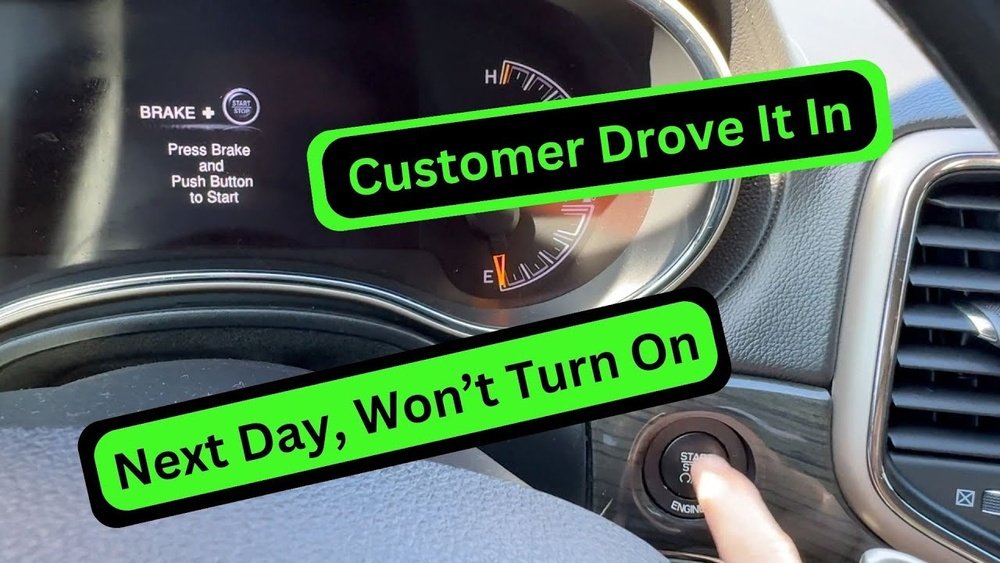
This situation means the battery has enough charge to power the lights, radio, and other electrical components, but not enough to engage the starter motor and turn the engine over. It’s a common point of confusion because the presence of power suggests the battery is fine, but the lack of engine crank points to a problem in the starting system or related components. Understanding the potential causes is the first step toward diagnosing and fixing the issue, getting your Grand Cherokee back on the road.
Common Causes For A Jeep Grand Cherokee Not Starting With Power
When your Jeep Grand Cherokee has power but won’t start, it’s usually due to a problem within the starting system or its supporting components. Several parts work together to get your engine running, and a failure in any one of them can lead to this specific symptom.
Let’s explore the most frequent culprits.
Battery Issues Beyond A Dead Battery
While it might seem counterintuitive, a battery can be the cause even if your lights and radio work. The battery is responsible for providing the significant surge of electrical current needed to turn the starter motor.
- Weak Battery: A battery’s health degrades over time. Even if it can power accessories, it might not have the cranking amps required to spin the starter motor effectively. This is especially true in cold weather, where battery performance drops significantly. A battery that’s several years old is a prime suspect.
- Corroded Battery Terminals: The connection between the battery cables and the battery posts is critical. If the terminals are covered in white or bluish-green corrosion, it can significantly impede the flow of electricity. This corrosion acts like an insulator, preventing the full power of the battery from reaching the starter. Cleaning these terminals is a simple yet often overlooked fix.
- Loose Battery Cables: Similar to corrosion, loose battery cables can prevent proper electrical contact. If the clamps are not tight on the battery posts, the connection can be intermittent or weak, leading to starting problems even when the battery itself is healthy.
Starter Motor Problems
The starter motor is an electric motor that uses power from the battery to spin the engine’s flywheel, initiating the combustion process. If the starter motor itself is failing or has a bad connection, it won’t be able to crank the engine.
- Faulty Starter Solenoid: The starter solenoid is an electrical switch that engages the starter motor. It receives a signal from the ignition switch and then sends a high-current signal from the battery to the starter motor. If the solenoid is bad, it might not send this signal, or it might not engage the starter gear properly. You might hear a single click when you try to start the car if the solenoid is trying to engage but failing.
- Worn Starter Motor: Over time, the internal components of the starter motor can wear out. Brushes can become worn, or the motor windings can fail. A failing starter motor might draw too much current without turning, or it might not turn at all.
- Bad Starter Relay: This is a smaller electrical switch that controls the power going to the starter solenoid. If the starter relay fails, it won’t send the signal to the solenoid, and the starter won’t engage.
Ignition Switch Issues
The ignition switch is what you turn with your key or press with a button to start the vehicle. It sends electrical signals to various components, including the starter relay and solenoid.
- Worn Ignition Switch: The electrical contacts inside the ignition switch can become worn or dirty over time. This can prevent the switch from sending the correct signals to the starting system, even if the key turns or the button is pressed. In some cases, the switch might still power accessories but fail to send the signal for the start position.
- Faulty Ignition Lock Cylinder: This is the part the key physically turns. If the lock cylinder is damaged or worn, it might not properly activate the electrical switch within the ignition assembly.
Fuel System Problems (less Common For “power But No Crank”)
While a lack of fuel pressure or a clogged fuel filter usually results in the engine cranking but not starting (or starting and immediately dying), in some rare cases, a severe fuel delivery issue might contribute to a no-start condition where the starter solenoid is also affected.
However, the primary symptom of a fuel issue is typically engine cranking.
Electrical System And Wiring
The complex electrical system of a modern vehicle like the Grand Cherokee involves numerous wires, fuses, and relays. Any break, short, or poor connection in this system can lead to starting problems.
- Blown Fuses or Faulty Relays: The starting system has specific fuses and relays. If any of these are blown or faulty, they can interrupt the flow of power to the starter. Checking the fuse box diagrams for your specific Grand Cherokee model is crucial.
- Wiring Harness Issues: Damaged or corroded wiring harnesses can cause intermittent electrical problems, including starting issues. This can be caused by age, moisture, or physical damage.
- Grounding Issues: A poor ground connection for the engine or starter motor can prevent the starter from receiving a complete circuit, thus preventing it from cranking.
Diagnosing The Problem: A Step-by-step Approach
When your Jeep Grand Cherokee won’t start but has power, a systematic diagnostic approach is essential. Trying to guess the problem can lead to unnecessary part replacements and frustration.
Step 1: Listen Carefully When You Try To Start
The sounds your Jeep makes (or doesn’t make) are vital clues.
- No Sound at All: If you turn the key or press the start button and hear absolutely nothing, it often points to a problem with the ignition switch, a blown fuse, a faulty relay, or a dead battery that can’t even activate the solenoid.
- A Single Loud Click: This is a classic symptom of a starter motor issue. It usually means the starter solenoid is receiving power and trying to engage, but the starter motor itself is either jammed, worn out, or not receiving enough power to turn.
- Rapid Clicking Sound: This sound is almost always indicative of a weak battery. The battery has enough power to engage the starter solenoid momentarily, but not enough to turn the starter motor. The solenoid rapidly engages and disengages.
- Engine Cranks Slowly: If the engine turns over very slowly but doesn’t start, it strongly suggests a weak battery or poor battery connections (corrosion or loose cables).
Step 2: Inspect The Battery And Connections
This is the easiest and most common place to start.
- Visual Inspection: Look at the battery terminals. Are they clean, or do they have white, powdery corrosion? Are the cable clamps tight on the posts?
- Cleaning Terminals: If you see corrosion, disconnect the battery cables (negative first, then positive). Use a wire brush or a dedicated battery terminal cleaner to scrub both the posts and the inside of the cable clamps until they are shiny. Reconnect the cables (positive first, then negative), ensuring they are snug.
- Check Battery Age: If your battery is more than 3-5 years old, it might be nearing the end of its life, even if it seems to work for accessories.
Step 3: Check Fuses And Relays
Your Grand Cherokee has several fuse boxes, usually one under the hood and another inside the cabin.
- Locate Fuse Boxes: Consult your owner’s manual to find the locations and identify the fuses and relays related to the starting system (often labeled “START,” “IGN,” “CRANK,” or “STARTER”).
- Inspect Fuses: Pull out the relevant fuses and hold them up to the light. Look for a broken wire inside the plastic casing. If a fuse is blown, replace it with one of the exact same amperage rating. If the new fuse blows immediately, there’s a short circuit somewhere in the system.
- Test Relays: Relays are trickier to test without specialized tools. Sometimes, you can swap a suspect relay with an identical one from a non-critical system (like the horn or fog lights) to see if the starting problem is resolved. If it is, the swapped relay was faulty.
Step 4: Test The Starter Motor And Solenoid
This often requires more advanced tools or knowledge.
- Voltage Drop Test: A mechanic can perform a voltage drop test on the starter circuit to see if there’s excessive resistance, indicating a bad connection or a failing starter.
- Direct Jump Start (Caution Advised): In some older vehicles, you could briefly “hotwire” the starter solenoid with a screwdriver to see if the starter motor engages. This is not recommended for modern vehicles like the Grand Cherokee due to complex electronics and safety systems, and it can cause damage if done incorrectly. If you suspect the starter, it’s best to have it tested professionally. Many auto parts stores offer free battery and starter testing.
Step 5: Evaluate The Ignition Switch
If fuses, relays, and battery connections are good, the ignition switch is a likely suspect.
- Key Won’t Turn: If the key is difficult to turn or won’t turn at all, the ignition lock cylinder might be the issue. Sometimes jiggling the steering wheel can help if it’s locked.
- No Power to Starter: If you have power to the car but no signal is sent to the starter when the key is turned to the “start” position, the ignition switch is a strong possibility. This often requires a multimeter to test for voltage at the starter relay or solenoid signal wire.

Understanding Specific Jeep Grand Cherokee Starting System Components
Jeep Grand Cherokees, depending on the model year and trim, employ sophisticated systems to start the engine. Knowing the key components can help you communicate effectively with a mechanic or even tackle some simpler fixes yourself.
The Battery’s Role In Cranking
The battery is the powerhouse. It stores chemical energy and converts it into electrical energy. When you turn the key, the battery must deliver a massive burst of amperage, typically hundreds of amps, to the starter motor. This high current is necessary to overcome the engine’s internal resistance and the compression of the cylinders. A battery that can power a 100-watt stereo for hours might not be able to provide the sustained high current needed for cranking.
The Starter Motor And Solenoid Assembly
The starter motor is a robust electric motor. It’s connected to the engine’s flywheel via a small gear (the pinion gear). When energized, the starter motor spins rapidly. Simultaneously, the starter solenoid, which is usually mounted on top of the starter motor, pushes the pinion gear forward to mesh with the teeth on the flywheel. Once meshed, the starter motor spins the engine. After the engine starts, the solenoid retracts the pinion gear, and the starter motor stops spinning.
The Role Of Relays And Fuses
- Starter Relay: This is an electromagnetic switch controlled by a low-current signal from the ignition switch. When activated, it closes a high-current circuit, sending power from the battery to the starter solenoid. This protects the ignition switch from high electrical loads.
- Fuses: These are safety devices designed to melt and break a circuit if too much current flows through them, preventing damage to wiring and components. The starting system has dedicated fuses.
The ignition switch is the interface between the driver and the vehicle’s electrical systems.
- Key Ignition: When you turn the key, you activate different electrical circuits sequentially: accessory mode, ignition (on), and finally, the start position. The start position sends a signal to the starter relay.
- Push-Button Start: Vehicles with push-button start use a more complex system involving the key fob being detected inside the vehicle. Pressing the button sends a signal to the vehicle’s computer (ECU), which then verifies the fob and signals the start circuit. Issues with the fob’s battery, the car’s proximity sensors, or the ECU can prevent starting.
Troubleshooting Specific Scenarios
Let’s consider some common scenarios and how they might apply to your Jeep Grand Cherokee.
Scenario 1: The Single Click
You turn the key, and you hear one distinct “click” from under the hood, but the engine doesn’t turn over.
- Likely Causes:
- Weak Battery: Enough power to engage the solenoid, but not enough to spin the starter.
- Corroded or Loose Battery Cables: Similar to a weak battery, poor connections prevent full power from reaching the starter.
- Faulty Starter Solenoid: The solenoid is trying to work but failing internally.
- Bad Starter Motor: The motor itself is seized or has internal electrical failure.
- Poor Ground Connection: The starter circuit isn’t completing properly.
- What to Check First: Inspect and clean battery terminals and cable connections. Try jump-starting the vehicle. If it starts with a jump, your battery is likely the issue. If not, the problem is more likely the starter motor/solenoid or related wiring.
Scenario 2: Rapid Clicking Noise
You turn the key, and you hear a rapid series of “click-click-click-click” sounds.
- Likely Causes:
- Severely Weak Battery: This is the most common cause. The battery has just enough voltage to engage the starter solenoid, but as soon as the starter tries to draw current, the voltage drops too low, the solenoid disengages, and the cycle repeats.
- Extremely Poor Battery Connections: Similar to a weak battery, heavily corroded or loose terminals can cause this effect.
- What to Check First: This almost always points to the battery. Check connections, and if they are clean and tight, try a jump start. If a jump start works, replace the battery.
Scenario 3: Nothing Happens, But Dash Lights Are Bright
You turn the key, and there is absolutely no sound from the engine bay, but all your dashboard lights, headlights, and radio work perfectly.
- Likely Causes:
- Blown Starter Fuse or Faulty Starter Relay: The electrical path to the starter is interrupted.
- Faulty Ignition Switch: The switch isn’t sending the “start” signal.
- Neutral Safety Switch (Automatic Transmission) or Clutch Switch (Manual Transmission) Issue: These switches prevent starting unless the transmission