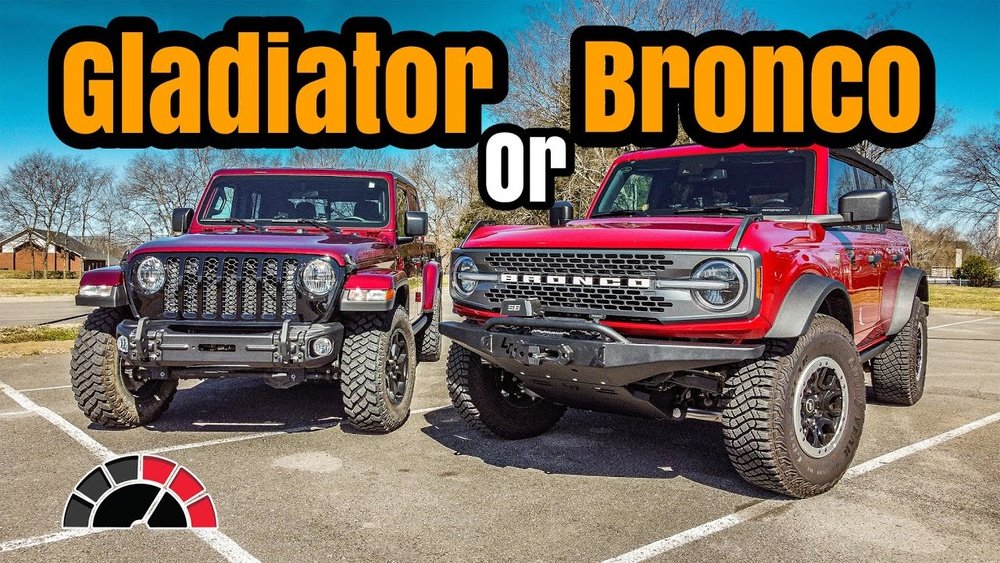
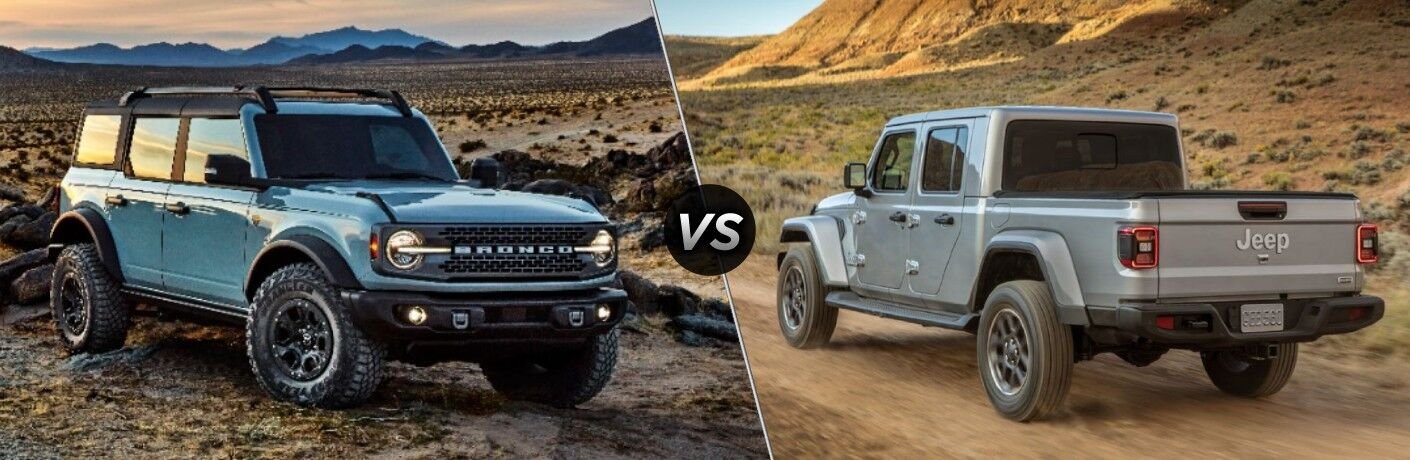
The Jeep Gladiator and the Ford Bronco are two of the most exciting vehicles for anyone who loves adventure, off-roading, or just wants a tough, stylish ride. Both are American legends, built for drivers who want more than just a city commute.
But which one is right for you? Let’s explore their strengths, weaknesses, and what really sets them apart so you can make the best choice for your needs.
Performance And Power
Both vehicles are built for rugged terrain, but their engines and abilities are quite different.
| Model | Engine Options | Horsepower | Towing Capacity |
|---|---|---|---|
| Jeep Gladiator | 3.6L V6, 3.0L Diesel | 285 hp (V6), 260 hp (Diesel) | 7,700 lbs |
| Ford Bronco | 2.3L Turbo, 2.7L V6 | 300 hp (2.3L), 330 hp (2.7L) | 3,500 lbs |
The Jeep Gladiator stands out for its powerful towing capacity—over double that of the Bronco. This makes it a better choice if you plan to pull trailers, boats, or heavy gear. The Bronco, on the other hand, offers more horsepower in its top engine and turbo options, giving it a quicker feel, especially on highways.
Off-road Capabilities
Adventure lovers often focus on off-road features. Both models offer impressive tools, but they’re not identical.
| Feature | Jeep Gladiator | Ford Bronco |
|---|---|---|
| 4×4 System | Standard | Standard |
| Ground Clearance | 11.1 inches | 11.6 inches |
| Water Fording | 30 inches | 33.5 inches |
| Locking Differentials | Available | Available |
| Removable Roof/Doors | Yes | Yes |
The Ford Bronco has a slight edge in ground clearance and water fording depth. This means it can handle deeper streams and rougher trails. However, the Gladiator’s longer wheelbase gives it more stability on uneven surfaces, but can also limit its maneuverability in tight spots.
Interior And Comfort
Driving off-road is fun, but comfort matters too. Both vehicles offer unique interiors.
- Jeep Gladiator: More utilitarian, lots of hard plastics, but highly durable. Seats up to five, roomy rear seats, and has a truck bed for extra cargo.
- Ford Bronco: Modern design, softer materials, and lots of tech. Seats up to five, but cargo is limited to the rear area (no truck bed).
The Bronco’s interior feels more like an SUV, with advanced infotainment and digital displays. Gladiator’s cabin is simple and rugged, built to take dirt, mud, and rough use.
Practicality And Everyday Use
Let’s look at how these vehicles perform in daily life.
Jeep Gladiator
- Truck Bed: The Gladiator is a pickup. Its 5-foot bed is perfect for hauling bikes, camping gear, or tools.
- Payload: Can carry up to 1,700 lbs in the bed.
- Fuel Economy: Around 17–22 mpg, depending on engine choice.
Ford Bronco
- SUV Shape: More like a traditional SUV, easier for parking and city driving.
- Cargo Space: Up to 35.6 cu ft behind the rear seats, expandable with seats folded.
- Fuel Economy: 18–22 mpg, slightly better with the smaller engine.
If you need a vehicle for work, hauling, or moving large items, the Gladiator’s truck bed is a major advantage. The Bronco is more suited for city life, family trips, and weekend adventures.
Technology And Features
Both vehicles are packed with modern tech, but they focus on different things.
- Jeep Gladiator: Uconnect system, Apple CarPlay, Android Auto, navigation, and optional Wi-Fi hotspot.
- Ford Bronco: SYNC 4 system, larger touchscreen, wireless Apple CarPlay/Android Auto, advanced off-road navigation.
The Bronco’s tech feels more advanced, especially for younger drivers or those who want easy smartphone integration. Gladiator’s system is reliable, but not as flashy.
Price And Value
Price is always important. Here’s a quick comparison:
| Model | Starting Price (2024) | Top Trim Price |
|---|---|---|
| Jeep Gladiator | $39,080 | $55,000+ |
| Ford Bronco | $36,785 | $70,000+ |
The Bronco starts lower, but its top trims get expensive quickly, especially with all the off-road packages. Gladiator is more consistent in price, with fewer extreme jumps.
Two Insights Beginners Often Miss
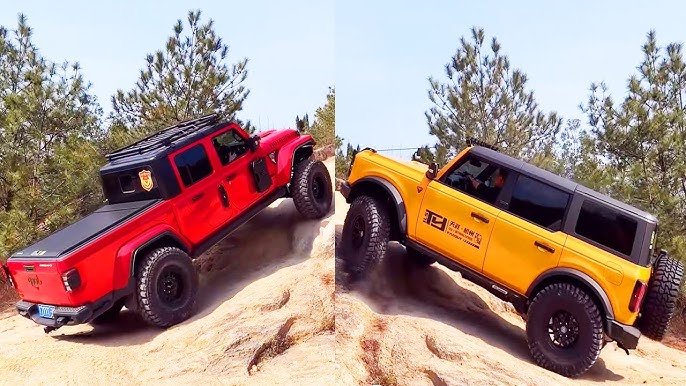
- Gladiator’s Long Wheelbase: While it helps stability, it can make tight turns on trails harder. Beginners might not realize this until they try to navigate sharp corners or narrow paths.
- Bronco’s Modular Design: The Bronco’s doors, roof, and fenders can be removed and swapped easily. This makes it perfect for customization—something most buyers don’t notice until they see all the aftermarket options.
Which Should You Choose?
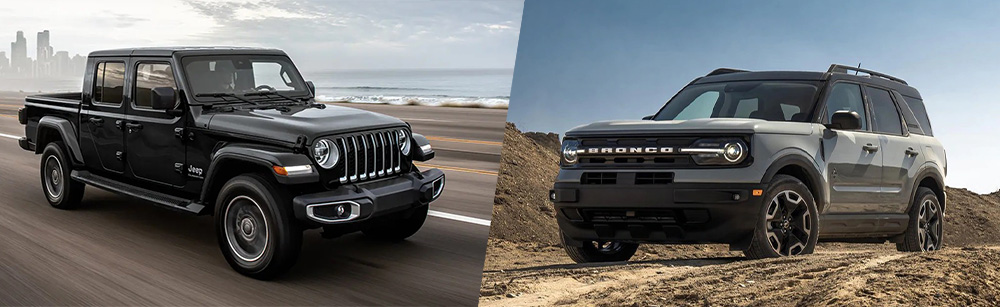
If you want a true pickup, need to haul heavy loads, or love the classic Jeep style, the Jeep Gladiator is your best bet. It’s built tough, has amazing towing power, and is easy to maintain. For those who prefer a modern SUV, love off-roading but also want daily comfort and high-tech features, the Ford Bronco shines. Its removable doors, advanced navigation, and stylish interior make it a hit with younger drivers and families.
For more technical details and reviews, check out this Car and Driver resource.
Frequently Asked Questions
Is The Jeep Gladiator Better For Towing Than The Ford Bronco?
Yes, the Gladiator can tow up to 7,700 lbs, which is much higher than the Bronco’s 3,500 lbs. If you plan to pull boats, trailers, or heavy gear, Gladiator is the better choice.
Can Both Vehicles Handle Deep Water Crossings?
Both are excellent, but the Ford Bronco can ford up to 33.5 inches of water, compared to Gladiator’s 30 inches. Bronco is slightly better for deep streams and muddy trails.
Which Is More Fuel Efficient?
The Ford Bronco offers slightly better fuel economy, especially with the smaller turbo engine. Both are similar, averaging around 18–22 mpg, but Bronco has a slight edge.
Are The Roofs And Doors Removable?
Yes, both the Gladiator and Bronco offer removable roofs and doors. Bronco’s modular design lets you easily swap parts, which is a unique feature for customization lovers.
Which Is Easier To Drive In The City?
The Ford Bronco is easier for city driving. It’s shorter, more nimble, and fits better in tight spaces and parking lots. The Gladiator’s pickup size can be challenging for urban environments.
Both the Jeep Gladiator and Ford Bronco have their own strengths. Think about how you’ll use your vehicle, what features matter most, and how much you want to spend.
With the right choice, your next adventure can start today.