The Jeep Gladiator stands out in the world of midsize trucks. With its rugged style and off-road abilities, it’s a favorite for adventure seekers.
But whether you drive it on the highway or rocky trails, one small detail often gets ignored: the lug nut torque. Using the right torque for your Gladiator’s lug nuts is critical for both safety and performance.
Many owners overlook this, leading to problems that can be easily avoided with a few simple steps.
Why Lug Nut Torque Matters
Lug nut torque refers to how tightly the wheel nuts are fastened to the wheel hub. If you use too much force (over-torquing), you risk damaging the wheel, hub, or stud threads. Too little force (under-torquing), and the wheel could come loose while driving. Both situations are dangerous and can cause accidents or expensive repairs.
The Jeep Gladiator, like all vehicles, has a specific torque specification set by the manufacturer. Following this spec keeps your wheels secure and helps prevent issues like warped brake rotors or uneven tire wear. It also ensures your warranty remains valid.
Official Jeep Gladiator Lug Nut Torque Specifications
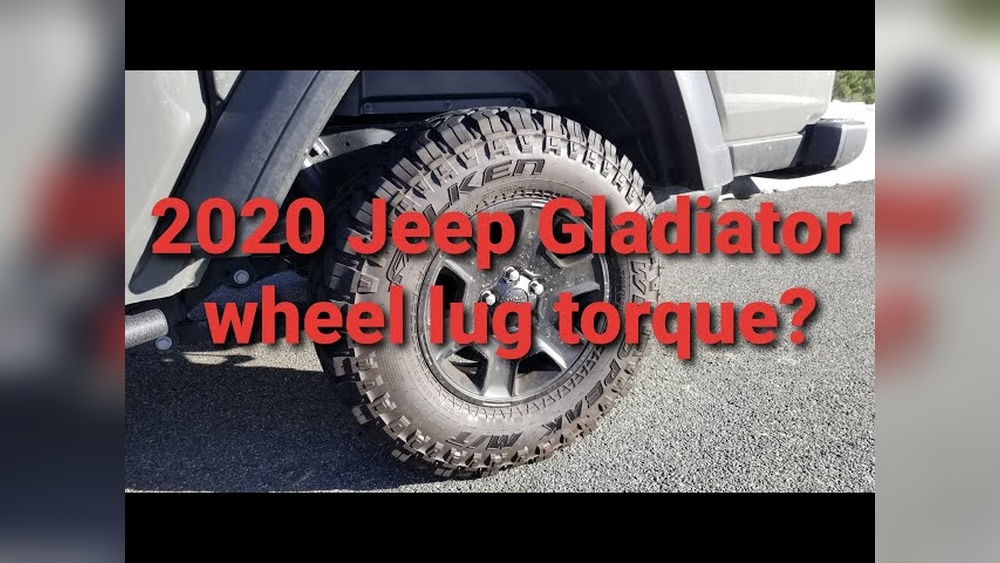
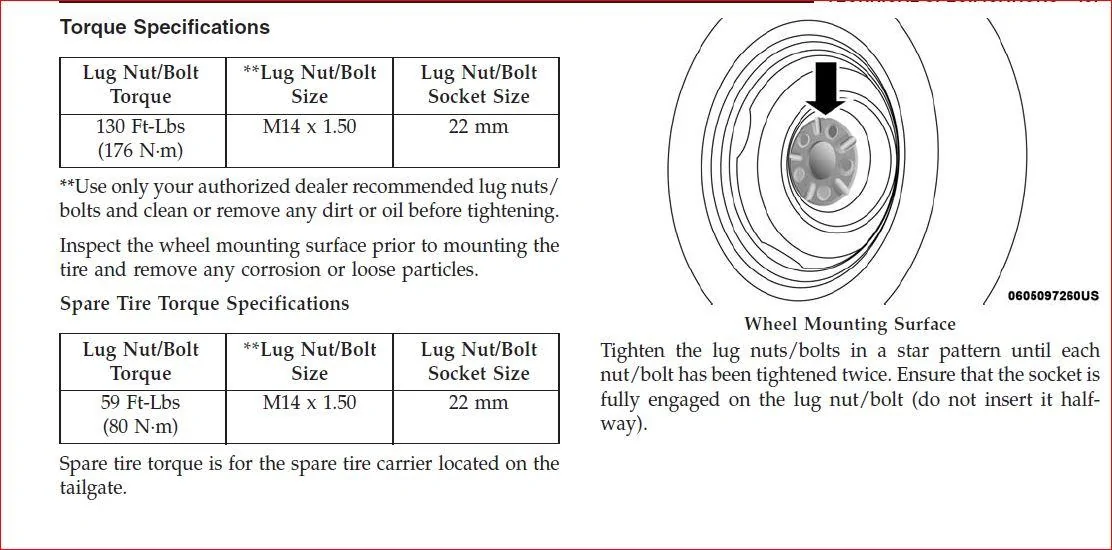
The correct torque for the Jeep Gladiator lug nuts is generally 130 lb-ft (pound-feet). This spec applies to most models from 2020 and onward, regardless of trim (Sport, Overland, Rubicon, Mojave, etc.).
Here’s a quick reference:
| Model Year | Lug Nut Torque (lb-ft) | Lug Nut Size |
|---|---|---|
| 2020-2026 | 130 | 14mm x 1.5 |
Always double-check your owner’s manual, as aftermarket wheels or upgraded components might require a different torque value.

How To Properly Torque Jeep Gladiator Lug Nuts
Applying the right torque is easy with the right tools and technique. Here’s a straightforward process:
- Gather the correct tools: You’ll need a torque wrench, a suitable socket (usually 22mm), and possibly a breaker bar for removing stubborn nuts.
- Tighten in a star pattern: When installing the wheel, always tighten the lug nuts in a crisscross or star pattern. This helps the wheel seat evenly against the hub.
- Set your torque wrench: Adjust the torque wrench to 130 lb-ft.
- Tighten each lug nut: Apply steady pressure until you hear or feel the wrench ‘click’—this means you’ve reached the correct torque.
- Double-check after driving: After about 50–100 miles, recheck the torque. Sometimes the nuts can settle, especially with new wheels.
| Step | Action | Why It Matters |
|---|---|---|
| 1 | Use proper tools | Ensures accuracy and avoids damage |
| 2 | Tighten in star pattern | Prevents warping and uneven fit |
| 3 | Set torque wrench | Delivers correct tightening force |
| 4 | Tighten to spec | Secures wheel safely |
| 5 | Recheck after driving | Accounts for settling and safety |
Common Mistakes And How To Avoid Them
Many Jeep Gladiator owners make simple errors that can cause problems down the road.
- Guessing the torque: Never “feel” the tightness by hand. Always use a calibrated torque wrench.
- Ignoring re-torque: Failing to check the nuts after a short drive can lead to a loose wheel.
- Using the wrong lug nuts: If you switch to aftermarket wheels, ensure the lug nuts match the correct size and seat type.
- Not cleaning the hub: Dirt or rust on the hub surface can prevent the wheel from sitting flat, affecting torque accuracy.
A surprising insight: Temperature can affect torque. If you torque your wheels in very cold or hot conditions, check them again as temperatures change, especially after off-roading.
What Happens If You Don’t Torque Correctly?
Improper lug nut torque isn’t just a minor issue. Here are real risks:
- Loose wheels: Under-torqued nuts can slowly back off, causing the wheel to wobble or even detach.
- Warped rotors: Over-torquing can bend the brake rotors, leading to vibration and poor braking.
- Snapped studs: Too much force can break the wheel studs, requiring costly repairs.
- Uneven tire wear: Incorrect torque may lead to irregular tire wear patterns.
A real-world example: Some Jeep owners report a steering shake after tire service. In many cases, the cause is uneven or incorrect lug nut torque, not a mechanical problem.
How Lug Nut Torque Compares Across Jeep Models
It’s useful to know how the Gladiator’s torque spec compares to other Jeeps. Here’s a quick look:
| Model | Lug Nut Torque (lb-ft) |
|---|---|
| Gladiator (2020-2026) | 130 |
| Wrangler JL | 130 |
| Grand Cherokee | 110 |
| Cherokee | 100 |
Notice that the Gladiator and Wrangler share the same spec, while other Jeep models are lower. Always check before swapping wheels between models.

Non-obvious Tips For Jeep Gladiator Owners
- Carry a torque wrench in your truck, especially if you go off-roading. Trails can loosen lug nuts, so it’s smart to check them before heading home.
- Replace damaged lug nuts or studs immediately. Even a slightly rounded lug nut can throw off your torque readings and make roadside repairs much harder.
- Check torque after tire rotations and brake service. Shops are sometimes in a hurry and may use air tools that over-tighten the nuts.
For official torque specs and more details, you can visit the Jeep Owner’s Manual.
Frequently Asked Questions
What Is The Correct Lug Nut Torque For A 2026 Jeep Gladiator?
The recommended torque is 130 lb-ft for 2026 Jeep Gladiator models, using 14mm x 1.5 lug nuts.
Can I Use An Impact Wrench To Tighten My Lug Nuts?
You can use an impact wrench to snug the nuts, but always finish with a torque wrench to ensure accuracy and prevent over-tightening.
How Often Should I Check My Lug Nut Torque?
It’s good practice to check after any wheel removal, then again after 50–100 miles of driving. Off-roaders should check more often.
Are Aftermarket Wheels Compatible With Stock Lug Nut Torque?
Not always. Some aftermarket wheels require different torque values or lug nut types. Always check the wheel manufacturer’s recommendations.
What Are The Signs Of Incorrectly Torqued Lug Nuts?
Common signs include steering vibration, clunking noises, and uneven tire wear. If you notice these, check your lug nut torque immediately.
Taking a few minutes to correctly torque your Jeep Gladiator’s lug nuts can prevent major problems and keep your ride safe. It’s a simple habit that pays off every time you hit the road or trail.