Jeep Fuse Box Diagram: A Clear Guide For Owners
If your Jeep’s electrical parts stop working, you might worry it's something big. But often, the problem is a simple blown fuse.
The fuse box is the heart of your Jeep’s electrical system, protecting everything from headlights to the radio. Knowing your Jeep fuse box diagram can save you time, money, and stress.
In this article, you’ll learn how to read a fuse box diagram, find common fuse locations, and understand what each fuse does. Whether you’re fixing a Wrangler, Cherokee, or Grand Cherokee, this guide will make electrical problems less confusing.
What Is A Jeep Fuse Box Diagram?
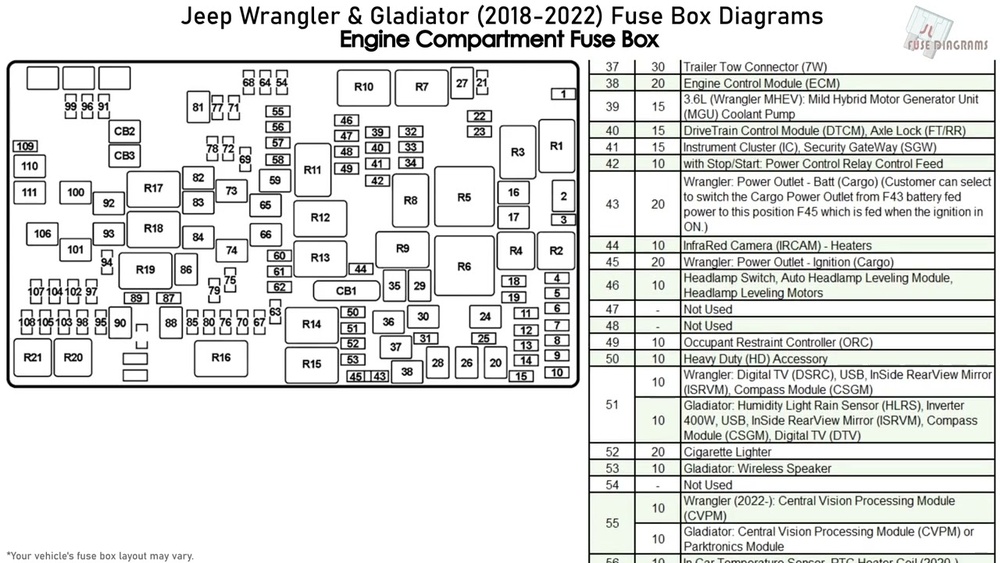
A fuse box diagram is a map that shows you where each fuse is, what it controls, and how much current it can handle. Each fuse protects a part of your Jeep, like the horn, AC, or power windows. If there’s a short circuit or overload, the fuse blows instead of damaging more expensive parts.
Without the diagram, it’s easy to pull the wrong fuse or miss a problem. The diagram usually comes in the owner’s manual, on the fuse box cover, or online.
Typical Fuse Box Locations In Jeeps
Finding the fuse box is your first step. Most Jeeps have two main fuse boxes:
- Engine compartment fuse box: Under the hood, near the battery or firewall. This box handles big systems like the engine and headlights.
- Cabin fuse box: Inside the Jeep, usually under the dashboard on the driver’s side. This one protects smaller electronics like the radio and interior lights.
Here’s a quick comparison of where you’ll find the fuse boxes in popular Jeep models:
| Model | Engine Compartment Fuse Box | Cabin Fuse Box |
|---|---|---|
| Wrangler (JK/JL) | Near battery | Left of steering column |
| Cherokee (KL) | Behind air filter | Passenger side dashboard |
| Grand Cherokee (WK2) | Next to battery | Under dash, left side |
Reading A Jeep Fuse Box Diagram
Every diagram uses symbols and numbers. Here’s what you’ll often see:
- Fuse location number (like F1, F12, M7)
- Amp rating (10A, 20A, 30A)
- Circuit protected (e.g., “A/C Clutch,” “Radio,” “Power Windows”)
A sample diagram might look like this:
| Fuse Number | Amp Rating | Component Protected |
|---|---|---|
| F1 | 15A | Horn |
| F12 | 20A | Power Windows |
| M7 | 10A | Radio |
Important tip: Always use a new fuse with the same amp rating. Using the wrong size can cause more damage.
Common Jeep Fuse Problems And Solutions
Many electrical issues in Jeeps start with a fuse. Here are some common symptoms and what you can do:
- Radio not working: Check the radio fuse. If blown, replace it with the same amp rating.
- Lights won’t turn on: Locate the fuse for headlights or taillights. Inspect and replace if needed.
- Windows stuck: Power window fuses often blow after using the windows a lot. Swap out the fuse to restore power.
Some beginners forget to check for loose fuses. Even if a fuse isn’t blown, it might be loose and not making good contact. Push each fuse firmly into its slot.
Another common mistake is not checking related relays. Some systems, like the starter or fan, use both a fuse and a relay. If the fuse is good, test or swap the relay next.
How To Replace A Jeep Fuse Safely
Replacing a fuse is easy, but do it safely:
- Turn off the ignition and remove the key.
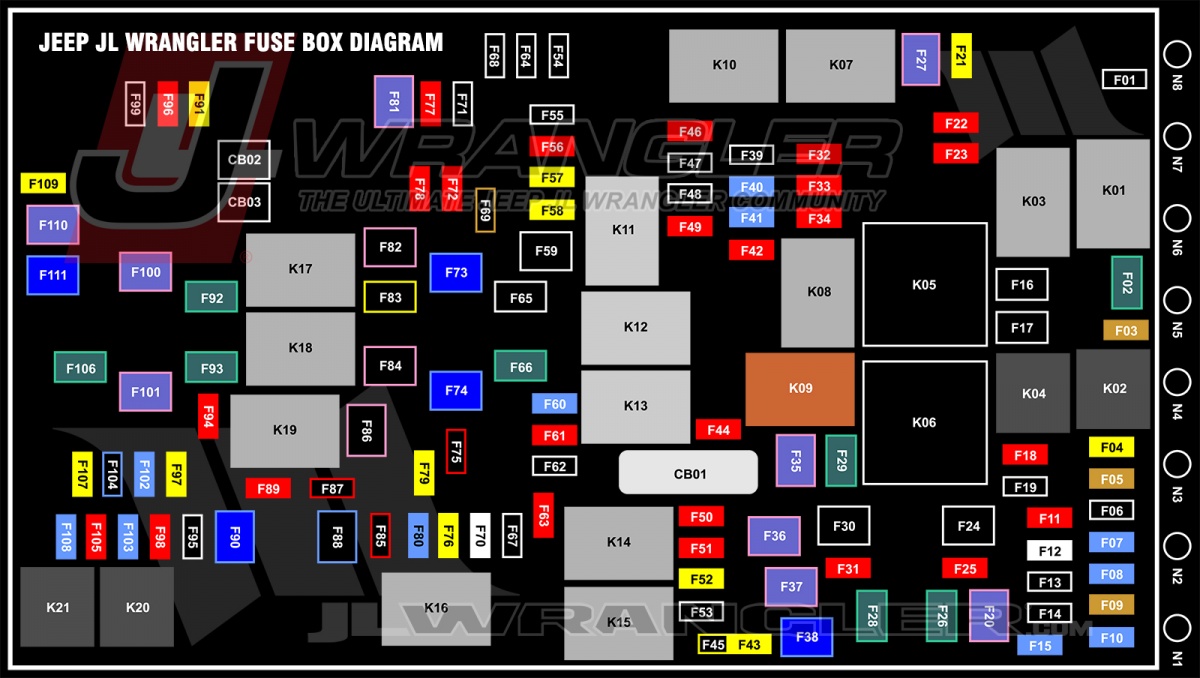
- Find the right fuse using your diagram.
- Pull out the fuse with a fuse puller or needle-nose pliers.
- Check the fuse for a broken wire or black mark (signs it’s blown).
- Install a new fuse of the same amp rating.
- Test the system by turning it on.
Never use metal tools that might touch other fuses or wires. Avoid using a higher amp fuse just because it fits.
Why Diagrams Differ By Jeep Model
Each Jeep model and year can have a different fuse layout. For example, a 2015 Wrangler will not match a 2020 Cherokee.
Even trims with extra features (like heated seats or sunroof) add or move fuses.
Always check the VIN (Vehicle Identification Number) and owner’s manual for your specific Jeep. If you lose your manual, you can often download it from the official Jeep website or trusted sources like Jeep’s official manual portal.
Example: 2018 Jeep Wrangler Jl Fuse Box Diagram
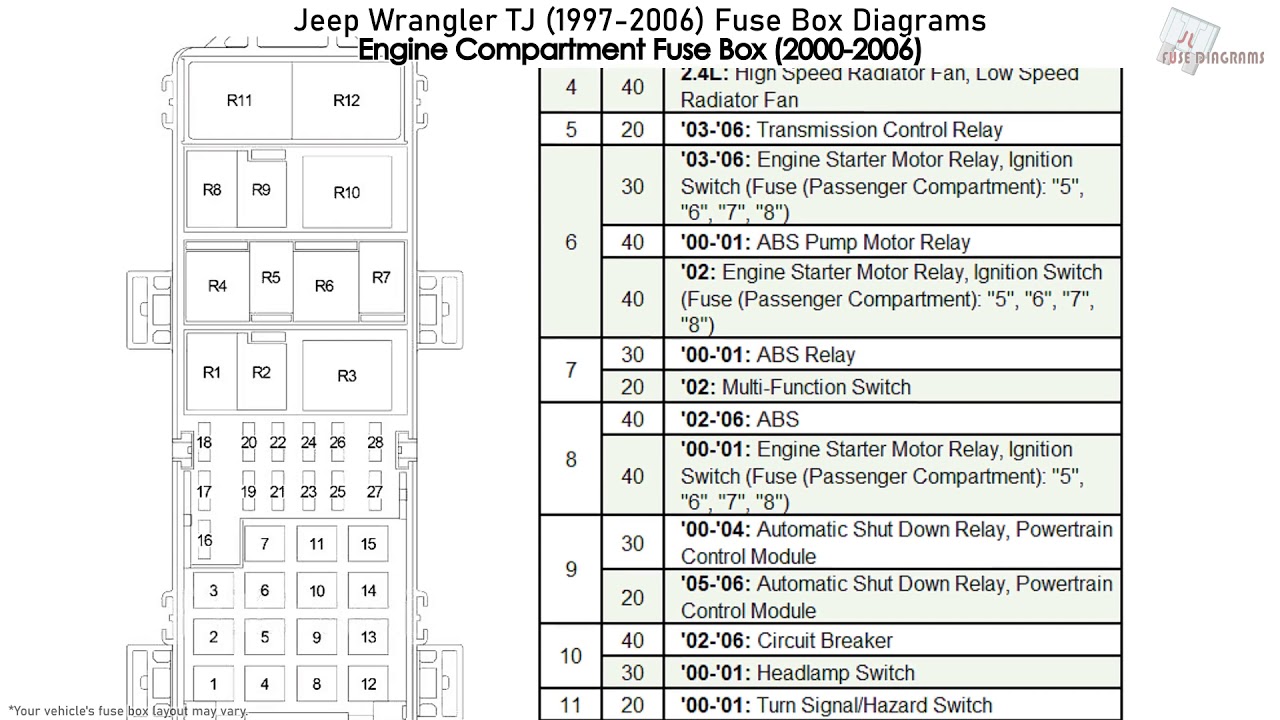
Let’s look at a real-world example. Here’s how a typical 2018 Jeep Wrangler JL fuse box is organized:
| Fuse | Location | Amp | Circuit |
|---|---|---|---|
| F10 | Cabin | 10A | Instrument Cluster |
| F31 | Engine | 20A | Fuel Pump |
| F43 | Engine | 30A | Starter |
This example shows how fuses are split between the cabin and engine. Some fuses protect safety parts (like the starter), while others handle comfort features.
Practical Tips For Using Your Jeep Fuse Box Diagram
- Take a photo of your fuse box diagram for quick reference.
- Label extra fuses in your glove box in case you need to replace one on the road.
- Check both fuse boxes if a system doesn’t work—some features use more than one fuse.
- Keep spare fuses of common sizes (10A, 15A, 20A) in your Jeep.
- If a fuse blows repeatedly, there may be a deeper electrical problem. Seek a professional mechanic.

Frequently Asked Questions
What Happens If I Use The Wrong Amp Fuse In My Jeep?
Using a fuse with a higher amp rating than recommended can damage your Jeep’s electrical system and even cause a fire. Always match the amp rating listed in your diagram.
Where Can I Find The Fuse Box Diagram For My Jeep?
You can check the owner’s manual, look inside the fuse box cover, or visit trusted sources like the official Jeep website.
How Do I Know If A Fuse Is Blown?
Remove the fuse and hold it up to the light. If the thin metal strip inside is broken or burned, the fuse is blown.
Are Jeep Fuse Boxes And Diagrams The Same For All Years And Models?
No, fuse box layouts change by model and year. Always use the diagram made for your exact Jeep.
Can I Fix Electrical Issues Myself Using The Fuse Box Diagram?
Yes, for simple issues like a blown fuse. For repeated problems or if you’re unsure, consult a qualified mechanic to avoid bigger damage.
Understanding your Jeep fuse box diagram can make electrical issues much less stressful. With the right information and a bit of care, you can get your Jeep back on the road quickly and safely.