When you think of off-road capability, one name often comes to mind: Jeep. For decades, Jeep has built its reputation on vehicles that can tackle tough terrain.
A big part of this capability comes from their high ground clearance. This feature is not just for looks; it’s essential for driving over rocks, through mud, and across uneven surfaces without damaging the vehicle.
In this article, we will explore why Jeep SUVs are known for their impressive ground clearance, what makes it so important, and which models offer the most capability for those who want to venture off the beaten path.
The Importance Of High Ground Clearance
Ground clearance is the distance between the lowest point of a vehicle’s underbody and the ground. For SUVs, especially those designed for off-roading, this measurement is critical. A higher ground clearance means the vehicle can drive over obstacles that would otherwise get stuck underneath, potentially causing serious damage to the engine, exhaust system, or transmission.
Think of it like this: imagine walking through a field with tall grass. If your legs are short, you’ll constantly be tripping and getting caught. If you have long legs, you can stride over the grass with ease. A vehicle with high ground clearance has “long legs” for navigating rough terrain.
Beyond simply avoiding damage, high ground clearance offers several other advantages:
- Improved Off-Road Performance: It allows the tires to maintain contact with the ground over uneven surfaces, providing better traction and control. Without sufficient clearance, the vehicle’s frame can bottom out, leaving it stranded.
- Enhanced Water Fording: A higher chassis means the vehicle can drive through deeper water crossings without water entering the engine’s air intake or damaging sensitive electronics.
- Better Visibility: Sitting higher off the ground often gives the driver a better view of the road and surrounding environment, which is particularly useful when off-roading.
- Protection from Debris: It provides a buffer against rocks, branches, and other debris that might be kicked up or encountered on trails.
How Jeep Achieves High Ground Clearance
Jeep’s commitment to off-road prowess means they engineer their vehicles with ground clearance in mind. Several factors contribute to this:
1. Robust Suspension Systems
Jeep vehicles often feature solid axle suspension systems, especially in their more trail-rated models like the Wrangler. Solid axles are less complex than independent suspension systems and are known for their durability and articulation. They allow the wheels to move up and down more freely, keeping all four tires on the ground even on very uneven terrain, while also contributing to a higher overall ride height.
Independent suspension systems, while offering better on-road comfort and handling, can be more susceptible to damage off-road and typically result in lower ground clearance. Jeep strategically uses different suspension types depending on the model’s intended use, prioritizing ground clearance for its iconic off-roaders.
2. Tire Size
Larger tires naturally increase a vehicle’s ground clearance. Jeep often equips its SUVs with larger, more aggressive tires that are designed for off-road use. These tires have a taller sidewall and a larger overall diameter, which directly translates to more distance between the ground and the vehicle’s undercarriage. For example, a stock Jeep Wrangler Rubicon often comes with 33-inch tires, which is significantly larger than what you’d find on a typical sedan or even a less off-road-focused SUV.
3. Chassis Design And Body Mounting
The design of the chassis and how the vehicle’s body is mounted to it also play a role. Jeep SUVs often have a body-on-frame construction, particularly the Wrangler and Gladiator. This robust construction provides a strong foundation and allows for greater separation between the frame and the ground. Even unibody SUVs from Jeep, like the Grand Cherokee, are designed with higher ride heights and underbody protection than many competitors.
4. Skid Plates And Underbody Protection
While not directly increasing ground clearance, skid plates are crucial for protecting the vehicle’s vital components. These are sturdy metal plates mounted underneath the vehicle to guard the engine, transmission, fuel tank, and transfer case from impacts. They are designed to slide over obstacles, and their presence means that even if the vehicle *does* come close to the ground, its essential parts are shielded. This protective layer allows drivers to confidently traverse terrain that might otherwise be too risky.

Key Jeep Models And Their Ground Clearance
Jeep offers a range of SUVs, each with varying levels of off-road capability and ground clearance. Here are some of the standout models:
The Jeep Wrangler
The Jeep Wrangler is the undisputed king of Jeep’s lineup when it comes to off-road capability and ground clearance. It’s designed from the ground up for tackling the toughest trails.
- Wrangler Sport/Sport S: Even the base models offer impressive ground clearance.
- Wrangler Rubicon: This is where the ground clearance really shines. The Rubicon trim is specifically engineered for extreme off-roading. It features a Dana 44 heavy-duty solid front and rear axle, electronic locking front and rear differentials, electronic sway bar disconnect, and 33-inch all-terrain tires. This combination results in a formidable ground clearance.
Typical Ground Clearance for Jeep Wrangler Rubicon: Around 10.9 inches (27.7 cm). This figure can vary slightly based on tire choice and specific model year. This is one of the highest factory ground clearances available in an SUV.
The Jeep Gladiator
The Jeep Gladiator is essentially a Jeep Wrangler with a truck bed. It shares much of its DNA with the Wrangler, including its robust suspension and off-road prowess. This means it also boasts excellent ground clearance.
- Gladiator Rubicon: Similar to the Wrangler Rubicon, the Gladiator Rubicon comes equipped with features that maximize its ability to clear obstacles. This includes 33-inch tires, locking differentials, and a refined suspension system.
Typical Ground Clearance for Jeep Gladiator Rubicon: Approximately 11.1 inches (28.2 cm). This slight increase over the Wrangler is due to its specific chassis and suspension tuning.
The Jeep Grand Cherokee
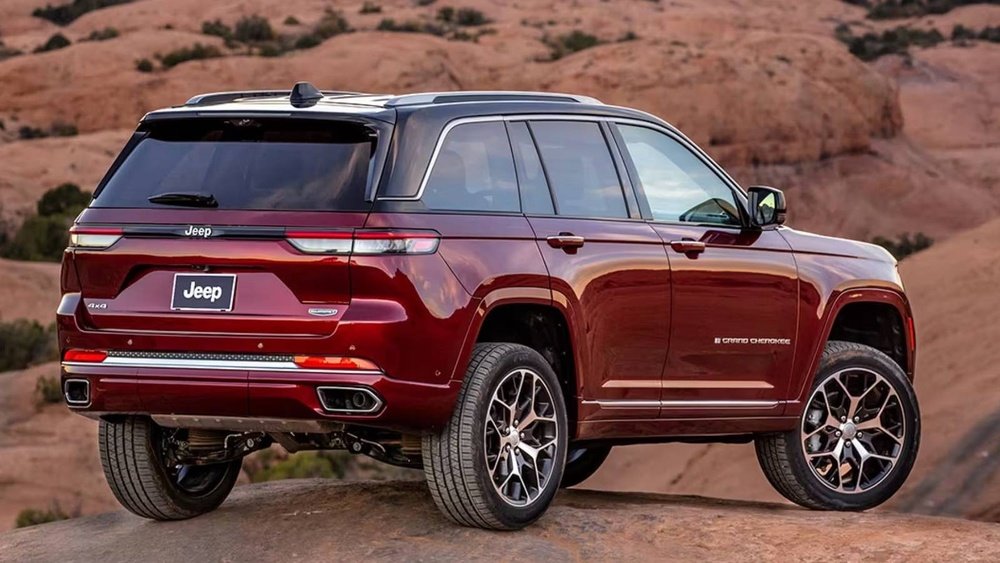
The Jeep Grand Cherokee is a more refined and luxurious SUV, but it still offers significant off-road capability, especially in its Trailhawk and Rubicon-equivalent trims (though not officially named Rubicon). It uses a unibody construction and typically an independent front and rear suspension for better on-road comfort. However, Jeep equips it with advanced systems to enhance its off-road performance.
- Grand Cherokee Trailhawk: This trim often comes with all-terrain tires, enhanced suspension, and Jeep’s Quadra-Lift air suspension system. This system allows the driver to adjust the vehicle’s ride height, significantly increasing ground clearance when needed.
Typical Ground Clearance for Jeep Grand Cherokee (with Quadra-Lift Air Suspension in Off-Road Mode): Can reach up to 10.8 inches (27.4 cm). This is comparable to the Wrangler, achieved through advanced technology rather than just mechanical design.
The Jeep Cherokee
The Jeep Cherokee (the smaller, car-based SUV, not to be confused with the Grand Cherokee) also offers respectable off-road capability for its class, though it generally has less ground clearance than its larger siblings.
- Cherokee Trailhawk: This is the most off-road-oriented trim. It features Jeep’s Selec-Terrain™ Traction Management System and often comes with all-terrain tires and a slightly increased ride height compared to other Cherokee trims.
Typical Ground Clearance for Jeep Cherokee Trailhawk: Around 8.7 inches (22.1 cm). While lower than the Wrangler or Grand Cherokee, this is still competitive for a compact SUV and sufficient for many light to moderate off-road trails.
The Jeep Renegade
The Jeep Renegade is the smallest SUV in Jeep’s lineup. While it’s more focused on urban driving and fuel efficiency, some trims offer surprising off-road chops for their size.
- Renegade Trailhawk: This trim level is designed to offer enhanced capability. It includes 4×4 capability, all-terrain tires, and a raised suspension.
Typical Ground Clearance for Jeep Renegade Trailhawk: Approximately 8.1 inches (20.6 cm). This is a respectable figure for a subcompact SUV and allows it to handle light trails and uneven surfaces better than many competitors.
Here’s a quick comparison of some key Jeep models:
| Model | Typical Ground Clearance (inches) | Key Off-Road Features | Primary Use Case |
|---|---|---|---|
| **Jeep Wrangler Rubicon** | 10.9 | Dana 44 axles, locking diffs, sway bar disconnect, 33″ tires | Extreme off-roading, rock crawling |
| **Jeep Gladiator Rubicon** | 11.1 | Dana 44 axles, locking diffs, sway bar disconnect, 33″ tires, truck bed | Off-roading, towing, utility with off-road capability |
| **Jeep Grand Cherokee Trailhawk** | 10.8 (with Quadra-Lift) | Quadra-Lift air suspension, Selec-Terrain, off-road tires | Adventure touring, moderate to challenging off-road |
| **Jeep Cherokee Trailhawk** | 8.7 | Selec-Terrain, 4×4 system, off-road tires | Light off-roading, all-weather capability |
| **Jeep Renegade Trailhawk** | 8.1 | 4×4 system, off-road tires, raised suspension | Urban driving with light trail capability |
Beyond Stock: Modifying For More Ground Clearance
While Jeep SUVs come with impressive factory ground clearance, many owners seek even more capability through modifications. This is a common practice in the off-roading community.
1. Lift Kits
Lift kits are the most popular modification for increasing ground clearance. They work by raising the vehicle’s body or suspension. There are several types:
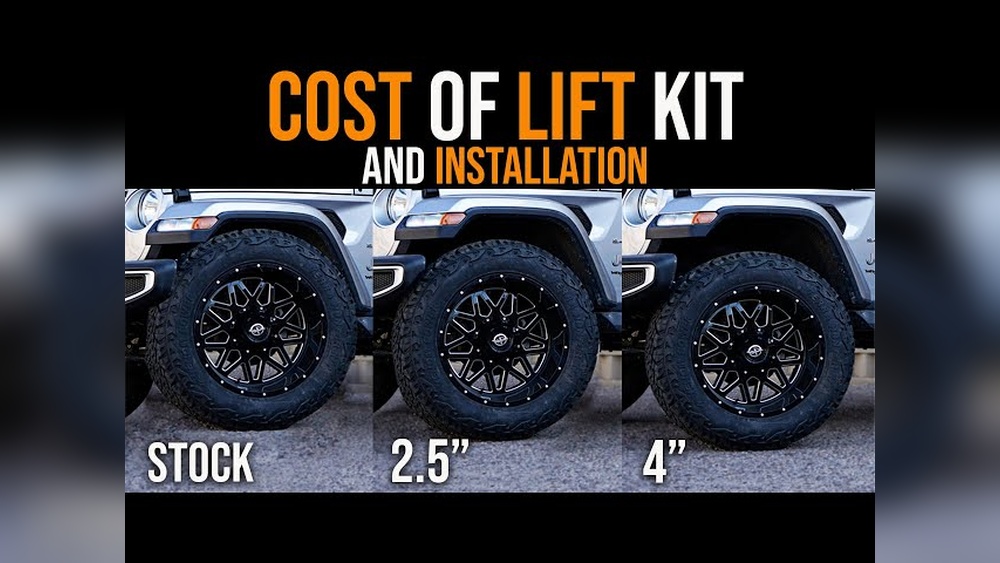
- Suspension Lift Kits: These replace or modify suspension components like springs, shocks, and control arms to lift the vehicle. They offer the most significant increase in ground clearance and are generally the best option for serious off-roading.
- Body Lift Kits: These kits use spacers to lift the vehicle’s body away from the frame. They are generally less expensive and easier to install than suspension lifts but offer less improvement in off-road articulation. They primarily increase clearance for larger tires.
A typical suspension lift can add anywhere from 2 to 6 inches (5 to 15 cm) or even more, depending on the kit and vehicle. For example, a 4-inch suspension lift on a Jeep Wrangler can easily bring its ground clearance to over 14 inches (35.5 cm).
2. Larger Tires
As mentioned earlier, larger tires are a simple and effective way to increase ground clearance. When combined with a lift kit, the effect is amplified. However, there are limits. Installing tires that are too large can cause them to rub against the fenders, suspension components, or body panels, especially when the suspension is compressed or turned. This can require fender trimming or re-gearing the axles to maintain proper performance.
For instance, moving from a 33-inch tire to a 35-inch tire on a Jeep Wrangler can add about an inch of ground clearance without any suspension modifications, assuming proper fitment. With a lift kit, fitting 37-inch or even 40-inch tires becomes possible, drastically increasing ground clearance.
3. Aftermarket Bumpers And Rock Sliders
While not directly increasing clearance, certain aftermarket parts can improve a vehicle’s ability to navigate obstacles. High-clearance bumpers are designed to offer better approach and departure angles, meaning less of the bumper hangs down to catch on terrain. Rock sliders, which run along the sides of the vehicle between the wheels, protect the body panels and can help the vehicle slide over rocks rather than getting hung up.

Considerations When Increasing Ground Clearance
While more ground clearance is often better for off-roading, there are trade-offs to consider:
- On-Road Handling: Lifting a vehicle significantly can negatively impact its on-road stability and handling. The center of gravity is raised, making it more prone to body roll in corners.
- Fuel Economy: Larger tires and increased aerodynamic drag from a higher stance can reduce fuel efficiency.
- Drivetrain Stress: Larger tires and more aggressive off-roading put increased stress on the engine, transmission, axles, and drivetrain components. Upgraded components may be necessary for reliability.
- Cost: Lift kits, larger tires, and associated modifications can be expensive. The cost can range from a few hundred dollars for basic kits to several thousand for comprehensive setups.
- Legality and Emissions: In some regions, there are regulations regarding how much a vehicle can be lifted or the size of tires that can be fitted. It’s important to check local laws.
When I tested a Jeep Wrangler Rubicon with a 3-inch lift and 37-inch tires, the transformation was remarkable. It could crawl over obstacles that felt insurmountable before. However, on the highway, I noticed a definite increase in steering effort and a more pronounced lean in turns. It was a clear trade-off: extreme off-road capability for slightly compromised on-road manners.
Jeep Vs. Competitors: Ground Clearance Comparison
Jeep has a strong reputation, but other manufacturers also offer SUVs with good ground clearance. Here’s how some popular competitors stack up:
- Toyota 4Runner TRD Pro: This is a direct competitor to the Jeep Wrangler and Grand Cherokee in terms of off-road capability. The TRD Pro model typically offers around 9.6 inches (24.4 cm) of ground clearance. While good, it is generally less than the Wrangler Rubicon.
- Ford Bronco: The new Ford Bronco has been designed to compete directly with the Wrangler. The Bronco Wildtrak and Badlands trims, especially with the Sasquatch package, offer impressive ground clearance, often around 11.5 inches (29.2 cm) with 35-inch tires. This puts it in very close competition with Jeep’s top offerings.
- Land Rover Defender: The Defender is known for its luxury and off-road prowess. With its adjustable air suspension, it can achieve up to 11.5 inches (29.2 cm) of ground clearance in its off-road height setting.
- Chevrolet Tahoe/Suburban Z71: These large SUVs offer decent ground clearance, especially in the Z71 off-road package, which can provide around **8.0 to