The question of whether the 2019 Jeep Cherokee is rear-wheel drive (RWD) is a common one, especially for those who appreciate the traditional driving dynamics and capabilities often associated with RWD vehicles.
Jeep has a long history of producing rugged, off-road-capable vehicles, and understanding their drivetrain configurations is key for potential buyers and enthusiasts. The Cherokee, a nameplate with a rich heritage, has evolved significantly over its generations, and its drivetrain options have varied accordingly.
For the 2019 model year, Jeep offered the Cherokee in several configurations, and it's important to clarify which ones are RWD and which are not.
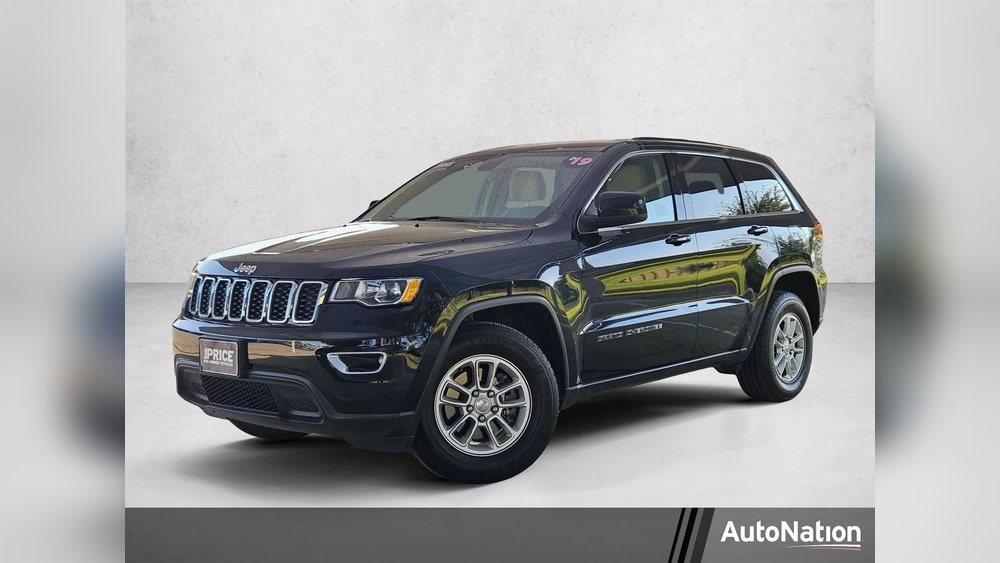
Many people associate SUVs and particularly Jeep vehicles with four-wheel drive (4WD) or all-wheel drive (AWD) systems. This is often due to their reputation for off-road prowess and all-weather capability.
However, not all vehicles in a manufacturer's lineup, or even all trims of a specific model, come standard with these more complex and often more expensive drivetrain systems.
Rear-wheel drive is a simpler, more traditional setup where the engine's power is sent only to the rear wheels. While RWD is less common in modern SUVs, especially those marketed for their off-road abilities, it's not entirely absent.
Understanding the specific offerings for the 2019 Jeep Cherokee requires a closer look at its trim levels and available packages.
Understanding Drivetrain Basics: Rwd, 4wd, And Awd
Before diving into the specifics of the 2019 Jeep Cherokee, it’s helpful to understand the fundamental differences between rear-wheel drive (RWD), four-wheel drive (4WD), and all-wheel drive (AWD). This foundational knowledge will make it easier to grasp why certain Jeep Cherokee models are configured the way they are.
Rear-wheel Drive (rwd)
In a rear-wheel drive system, the engine’s power is primarily sent to the rear wheels. The front wheels are responsible only for steering. This setup is common in many cars, trucks, and some SUVs. RWD vehicles often offer a balanced weight distribution, which can contribute to good handling and a more engaging driving experience, especially for performance-oriented vehicles. For trucks and some SUVs, RWD is often the standard configuration, with 4WD being an optional upgrade for enhanced traction.
Four-wheel Drive (4wd)
Four-wheel drive systems, often referred to as 4×4, are designed for serious off-road capability and challenging driving conditions. In a traditional 4WD system, power can be sent to all four wheels, but the driver typically has the option to engage or disengage 4WD. Many 4WD systems offer different modes, such as 2WD (usually RWD), 4WD High (4H), and 4WD Low (4L). 4WD Low provides maximum torque at lower speeds, which is crucial for crawling over rocks or pulling heavy loads. Jeeps are renowned for their robust 4WD systems.
All-wheel Drive (awd)
All-wheel drive systems are designed to provide enhanced traction and stability in a wider range of conditions, from slippery roads to light off-roading. Unlike many traditional 4WD systems, AWD systems are often full-time or automatic, meaning they can send power to all four wheels as needed without driver intervention. The system constantly monitors traction and adjusts power distribution to the wheels that have the most grip. AWD is generally more focused on on-road performance and all-weather safety rather than extreme off-road capability.
The 2019 Jeep Cherokee Drivetrain Configurations
Now, let's focus specifically on the 2019 Jeep Cherokee. Jeep offered this model year with a variety of powertrain and drivetrain options across its different trim levels.
The key to answering whether the 2019 Jeep Cherokee is RWD lies in understanding these variations.
Front-wheel Drive (fwd) As The Standard
For the 2019 model year, the standard drivetrain for the Jeep Cherokee was front-wheel drive (FWD). This means that in its base configuration, the engine’s power was sent to the front wheels. FWD is a common setup for many SUVs and crossovers because it is generally more fuel-efficient, less complex, and less expensive to manufacture than RWD, 4WD, or AWD systems. It provides adequate traction for most everyday driving situations, such as commuting, city driving, and light highway travel, especially in areas that don’t experience severe weather conditions.
Available 4×4 Systems
While FWD was standard, Jeep did offer four-wheel drive (4×4) systems as an option on many of the 2019 Cherokee trims. This is where the confusion often arises. A buyer could choose to equip their 2019 Cherokee with a 4×4 system, but it was not the default. These 4×4 systems were designed to enhance the vehicle’s capability in adverse weather and for light to moderate off-road excursions.
Jeep typically offers different levels of 4×4 sophistication. For the 2019 Cherokee, the available 4×4 systems were:
- Jeep Active Drive I: This was a full-time, single-range 4×4 system. It automatically engaged when needed to provide extra traction. It was designed to be efficient and unobtrusive for everyday driving while still offering enhanced grip.
- Jeep Active Drive II: This system was more advanced and included a two-speed power transfer case with a low-range gear. This low-range gearing significantly improves off-road capability, providing more torque for crawling over obstacles or for towing. It also typically included a neutral mode for flat-towing behind an RV.
- Jeep Active Drive Lock: This was the most capable 4×4 system offered, building upon Active Drive II by adding a locking front differential. This further enhances off-road performance by ensuring that power is always distributed to both front wheels, even if one loses traction. This system was usually reserved for the more off-road-oriented trims.
It’s crucial to note that none of these 4×4 systems were rear-wheel drive. When you selected a 4×4 option, you were opting for a system that could distribute power to all four wheels, not just the rear. The underlying architecture of these systems is designed to work with all wheels, not just the rear.
Why No Rear-wheel Drive Option?
The absence of a dedicated RWD option for the 2019 Jeep Cherokee, beyond the standard FWD, is a strategic choice by Jeep. The Cherokee is positioned as a compact SUV with a blend of on-road comfort and off-road capability.
- Market Demand: The majority of buyers in the compact SUV segment prioritize fuel efficiency and all-weather traction, which FWD and AWD/4WD systems generally provide. RWD, while offering certain driving dynamics, is less common in this segment and often perceived as less practical for families or those facing varied weather conditions.
- Brand Identity: While Jeep is known for its off-road prowess, the Cherokee, especially in its more recent iterations, aims for a broader appeal than the Wrangler. Offering FWD as standard and robust 4×4 systems as options allows Jeep to cater to a wider range of consumer needs and preferences. A pure RWD configuration might not align with the brand’s core offerings for this particular model.
- Platform Design: The platform on which the 2019 Cherokee is built is primarily designed to accommodate FWD and AWD/4WD configurations. Adapting it for a dedicated RWD setup would likely involve significant engineering changes, potentially increasing costs and complexity without a substantial market benefit for this model.

Examining 2019 Jeep Cherokee Trims And Their Drivetrains
To definitively answer the question and provide clarity, let’s break down the 2019 Jeep Cherokee by its common trim levels and their respective drivetrain options. This will illustrate that while FWD was standard, RWD was not an offered configuration.
Latitude
The Latitude trim was the entry-level model for the 2019 Jeep Cherokee.
- Standard Drivetrain: Front-Wheel Drive (FWD).
- Optional Drivetrain: 4×4 (typically Jeep Active Drive I).
Buyers of the Latitude could choose to upgrade from the standard FWD to a 4×4 system for enhanced capability. However, they could not opt for a rear-wheel drive configuration.
Latitude Plus
The Latitude Plus trim offered a slight step up in features from the base Latitude.
- Standard Drivetrain: Front-Wheel Drive (FWD).
- Optional Drivetrain: 4×4 (typically Jeep Active Drive I).
Similar to the Latitude, the Latitude Plus came standard with FWD, with the option to upgrade to a 4×4 system.
Limited
The Limited trim represented a more upscale offering within the 2019 Cherokee lineup, focusing on comfort and convenience features.
- Standard Drivetrain: Front-Wheel Drive (FWD).
- Optional Drivetrain: 4×4 (typically Jeep Active Drive I or Jeep Active Drive II, depending on specific packages and options chosen).
The Limited trim also followed the pattern of FWD being standard, with 4×4 systems available as an upgrade to provide better traction and capability.
Trailhawk
The Trailhawk trim was specifically designed for off-road enthusiasts and came with a more robust set of standard features geared towards trail driving.
- Standard Drivetrain: 4×4 (typically Jeep Active Drive II or Jeep Active Drive Lock, depending on the specific configuration).
- No FWD Option: Unlike other trims, the Trailhawk was not offered with FWD. It was exclusively a 4×4 vehicle.
- No RWD Option: Crucially, even though it was a 4×4-focused model, it was not offered in a rear-wheel drive configuration.
The Trailhawk’s standard 4×4 system, often including the low-range gearing of Active Drive II and sometimes the locking front differential of Active Drive Lock, underscored its off-road intentions.
Overland
The Overland trim was the most luxurious option in the 2019 Jeep Cherokee lineup, emphasizing premium materials and advanced features.
- Standard Drivetrain: Front-Wheel Drive (FWD).
- Optional Drivetrain: 4×4 (typically Jeep Active Drive I or Jeep Active Drive II).
Even in its most premium form, the Overland trim started with FWD, with the option to add a 4×4 system.
Drivetrain Specifications Summary For 2019 Jeep Cherokee
To provide a clear overview, here’s a summary of the drivetrain options for the 2019 Jeep Cherokee across its main trims.
| Trim Level | Standard Drivetrain | Optional Drivetrain | Notes |
|---|---|---|---|
| **Latitude** | FWD | 4×4 (Active Drive I) | Base model, 4×4 is an upgrade. |
| **Latitude Plus** | FWD | 4×4 (Active Drive I) | Similar to Latitude, FWD standard, 4×4 optional. |
| **Limited** | FWD | 4×4 (Active Drive I or Active Drive II) | More premium features, FWD standard, 4×4 optional. |
| **Trailhawk** | 4×4 (Active Drive II or Active Drive Lock) | N/A | Off-road focused, **standard 4×4**, not available with FWD or RWD. |
| **Overland** | FWD | 4×4 (Active Drive I or Active Drive II) | Luxury focused, FWD standard, 4×4 optional. |
This table clearly shows that no 2019 Jeep Cherokee model was offered with a rear-wheel drive (RWD) configuration. The choices were between front-wheel drive (FWD) as standard on most trims, or one of the available four-wheel drive (4×4) systems.

Why The Distinction Matters For Buyers
Understanding the drivetrain of a vehicle like the 2019 Jeep Cherokee is crucial for several reasons, impacting performance, fuel economy, cost, and intended use.
Performance And Handling
- FWD: Generally offers good traction for everyday driving, especially in dry conditions. It can sometimes lead to understeer (the front end pushing wide in a turn) when pushed hard, as the front wheels are responsible for both accelerating and steering.
- 4×4 Systems (Active Drive I, II, Lock): Provide significantly enhanced traction in slippery conditions like rain, snow, ice, or off-road. They distribute power to all four wheels, reducing the likelihood of wheel slip. The Trailhawk’s Active Drive II and Lock systems, with their low-range gearing and locking differentials, offer superior off-road performance for tackling challenging terrain.
- RWD (Hypothetical for 2019 Cherokee): If it were available, RWD would offer a different driving feel. It typically provides better weight distribution and can reduce torque steer (a pulling sensation in the steering wheel during acceleration). RWD vehicles can also be more prone to oversteer (the rear end sliding out in a turn), which can be desirable for performance driving but less so in slippery conditions without proper driver skill.
Fuel Economy
- FWD: Generally the most fuel-efficient option because it has a simpler drivetrain with fewer components and less weight compared to 4×4 systems.
- 4×4 Systems: Tend to be less fuel-efficient than FWD due to the added weight of the transfer case, driveshafts, and extra differentials, as well as increased mechanical drag. However, modern systems like Jeep’s Active Drive are designed to be efficient by only engaging 4WD when needed.
- RWD (Hypothetical): Typically falls between FWD and 4WD in terms of fuel economy. It’s less complex than 4WD but has more drivetrain components than FWD.
Cost
- FWD: The least expensive option, both in terms of the initial purchase price and potentially long-term maintenance, due to its simpler design.
- 4×4 Systems: Add a significant cost to the vehicle’s price tag. The more advanced the system (e.g., Active Drive II or Lock), the higher the premium. Maintenance costs for 4×4 systems can also be higher.
- RWD (Hypothetical): Would likely be priced between FWD and 4WD, reflecting its complexity.