The mid-size SUV market is packed with strong options, but few rivalries are as interesting as the Hyundai Palisade versus the Jeep Grand Cherokee. Both SUVs have a loyal following, modern tech, and plenty of comfort. Still, their personalities and strengths are very different. If you are thinking about which one to buy, it’s important to look beyond the surface. Let’s break down how these two vehicles compare in real-world use, and see which fits your needs best.
Design And Interior Quality
The Hyundai Palisade makes a bold first impression with its wide stance, striking grille, and smooth lines. Inside, it feels like a luxury SUV, with soft-touch materials and thoughtful details. Even the base trims include features like a large touchscreen, power-adjustable seats, and tri-zone climate control.
In contrast, the Jeep Grand Cherokee has a rugged but modern look. Its interior has improved greatly in recent years, with better materials and a more refined design. Leather seats, real wood trim, and customizable screens are available in higher trims. However, some find the rear seating less spacious compared to the Palisade.
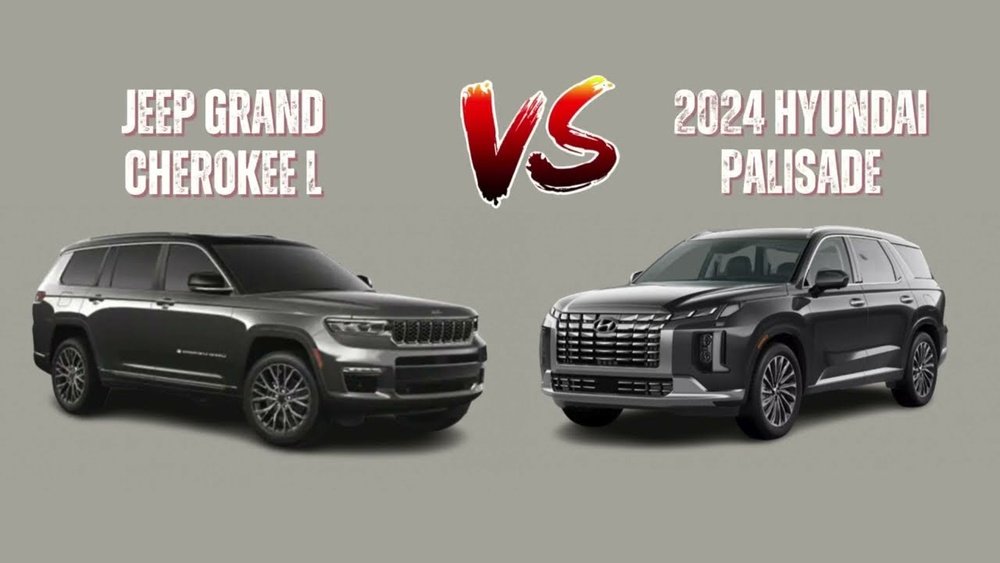
Here is a quick look at some key interior differences:
| Feature | Hyundai Palisade | Jeep Grand Cherokee |
|---|---|---|
| Seating Capacity | 7 or 8 | 5 (up to 7 with L model) |
| Touchscreen Size | 12.3-inch (standard) | 8.4-inch (standard), 10.1-inch (optional) |
| Third Row | Standard | Optional (Grand Cherokee L) |
An important insight: Many buyers assume the Grand Cherokee always seats seven, but only the Grand Cherokee L version includes the third row. The regular model is strictly a five-seater.
Performance And Driving Experience
When it comes to engines, both SUVs offer strong options, but their focus is different. The Hyundai Palisade uses a 3.8L V6 with 291 horsepower. It is smooth and quiet, perfect for family road trips or city driving. The ride is soft, and the cabin stays peaceful even at highway speeds.
The Jeep Grand Cherokee offers more variety:
- 3.6L V6 (293 hp)
- 5.7L V8 (357 hp, available on some trims)
- Plug-in hybrid (4xe, 375 hp)
The Grand Cherokee stands out for its off-road abilities. With available four-wheel drive, hill descent control, and several terrain modes, it can handle rough trails that would challenge the Palisade. For pure comfort, though, the Palisade often feels less bouncy on everyday roads.
Here’s a quick specs comparison:
| Engine | Palisade | Grand Cherokee |
|---|---|---|
| Base Engine | 3.8L V6 (291 hp) | 3.6L V6 (293 hp) |
| Optional Engine | — | 5.7L V8 (357 hp), Plug-in Hybrid (375 hp) |
| Towing Capacity (max) | 5,000 lbs | 7,200 lbs |
A detail many overlook: The Palisade does not offer a hybrid or V8 option, so drivers wanting either more power or better fuel economy may lean toward the Grand Cherokee.
Technology And Safety
Both the Palisade and Grand Cherokee are packed with modern tech. The Palisade shines with its user-friendly infotainment system and standard features that many rivals charge extra for. Wireless Apple CarPlay, Android Auto, and several USB ports are included from the start.
The Grand Cherokee also offers a strong tech package, but some features are only in higher trims. The available digital gauge cluster and night vision camera are impressive, but you’ll pay more for them.
Safety is a priority for both brands. The Palisade comes standard with features like:
- Forward collision warning
- Automatic emergency braking
- Blind-spot monitoring
- Adaptive cruise control
The Grand Cherokee matches these basics but can add extras like a hands-free driving system and a 360-degree camera. Insurance Institute for Highway Safety (IIHS) ratings are strong for both, with the Palisade earning a Top Safety Pick+ in recent years.
Space And Practicality
If you need room for people and gear, the Palisade has an edge. It offers easy access to the third row and more cargo space behind the seats. Folding the rear seats is quick, and the floor is nearly flat.
The Grand Cherokee is spacious for five passengers. The Grand Cherokee L adds a third row, but legroom in the back is tighter than in the Palisade. Cargo space is also smaller, especially with all seats in use.
Here’s how they compare on cargo capacity:
| Model | Cargo (All Seats Up) | Cargo (Max) |
|---|---|---|
| Palisade | 18 cu ft | 86.4 cu ft |
| Grand Cherokee (5-seat) | 37.7 cu ft | 70.8 cu ft |
| Grand Cherokee L | 17.2 cu ft | 84.6 cu ft |
One thing new owners miss: The Palisade’s smart one-touch seat folding makes loading and unloading far simpler, especially when you have kids or lots of bags.
Value And Ownership Costs
The Hyundai Palisade is usually the better deal at the start. It comes loaded with features for the price, and Hyundai’s warranty is one of the best: 5 years/60,000 miles basic and 10 years/100,000 miles powertrain.
The Jeep Grand Cherokee costs more, especially as you add options. Maintenance and repair costs can also be higher in the long run. However, Jeep’s resale value tends to be stronger, especially for well-kept models.
Another practical tip: The Palisade’s fuel economy is better than the V8 Grand Cherokee, but if you get the hybrid Grand Cherokee 4xe, you could save more on gas—if you mostly drive short distances and charge often.
For more detailed cost breakdowns, check the official Kelley Blue Book comparison tool.
Which One Is Right For You?
The Hyundai Palisade is great for families who want comfort, space, and value. It’s easy to drive, has lots of standard features, and is backed by a strong warranty.
The Jeep Grand Cherokee is the better pick if you value ruggedness, off-road ability, or want a luxury feel in higher trims. It offers more powerful engines and can tow more, but you’ll pay for those extras.
Before deciding, think about:
- How many people you need to carry often
- Whether you plan to tow or go off-road
- Your budget for both the purchase and future maintenance
- Which features are must-haves vs. nice-to-haves
Taking a test drive of both is the best way to know which matches your lifestyle.
Frequently Asked Questions
Is The Hyundai Palisade Bigger Than The Jeep Grand Cherokee?
The Palisade is longer and offers more passenger space, especially with its standard third row. The Grand Cherokee L is closer in size but still has less legroom in the rear.
Which Suv Has Better Fuel Economy?
The Palisade’s V6 is more fuel-efficient than the Grand Cherokee’s V8. However, the Grand Cherokee 4xe plug-in hybrid can beat both if you drive mostly short trips and recharge often.
Is The Palisade Good For Off-road Driving?
The Palisade is designed for comfort on paved roads, not for heavy off-roading. If you need an SUV for trails, the Grand Cherokee is a much better choice.
What Is The Biggest Advantage Of The Jeep Grand Cherokee?
The Grand Cherokee stands out for its off-road capability and its powerful engine choices. It’s also a stronger tow vehicle.
Which Suv Has A Better Warranty?
The Hyundai Palisade has a longer warranty: 5 years/60,000 miles basic and 10 years/100,000 miles powertrain, which is longer than what Jeep offers.
Both SUVs are strong choices, but your needs and preferences will decide the winner. Try both before you buy, and you’ll make a confident, informed choice.