Adding extra backup lights to your Jeep Wrangler can make a big difference when reversing at night or off-roading. Better visibility means safer driving, fewer accidents, and less stress. Many Jeep owners want brighter backup lights, but wiring them correctly is not always easy. If you’re new to vehicle wiring, the process may seem confusing. This guide will help you wire extra backup lights step-by-step, showing you how to avoid common mistakes and achieve a professional result. We’ll cover everything from choosing the right lights, wiring techniques, to safety tips. Whether your Jeep is stock or heavily modified, you’ll find practical advice to help you get the job done right.
Choosing Extra Backup Lights For Your Jeep Wrangler
Before you begin wiring, you need to select the right lights. The backup lights you choose will affect brightness, power draw, and installation complexity.
Popular Types Of Backup Lights
Most Jeep owners use one of these:
- LED Pods — Bright, low power draw, compact.
- Halogen Lights — Cheaper, higher power consumption.
- Light Bars — Wide illumination, usually mounted above or below bumper.
LED pods are the most popular because they are efficient, durable, and easy to mount. Halogens are less common now due to their lower lifespan and higher heat.
Key Factors When Choosing Backup Lights
- Brightness (Lumens): For backup lights, 800–2,000 lumens per pod is enough. Too bright can cause glare.
- Power Consumption: LED pods use 10–30 watts per light. Halogens can use 55 watts or more.
- Water Resistance: Look for IP67 or IP68 rating for off-road use.
- Size and Mounting: Ensure the lights fit your chosen mounting location.
Example Comparison
Here’s a quick comparison of popular options:
| Light Type | Brightness (Lumens) | Power Usage (Watts) | Typical Price |
|---|---|---|---|
| LED Pod | 1,500 | 20 | $40–$70 each |
| Halogen | 800 | 55 | $25–$50 each |
| Light Bar | 6,000 | 120 | $90–$180 |
If you plan to add two LED pods, your total power draw will be about 40 watts.
Planning The Wiring Setup
Wiring extra backup lights is not just about connecting wires. Planning helps prevent electrical problems and ensures a neat, safe installation.
Essential Wiring Components
You’ll need:
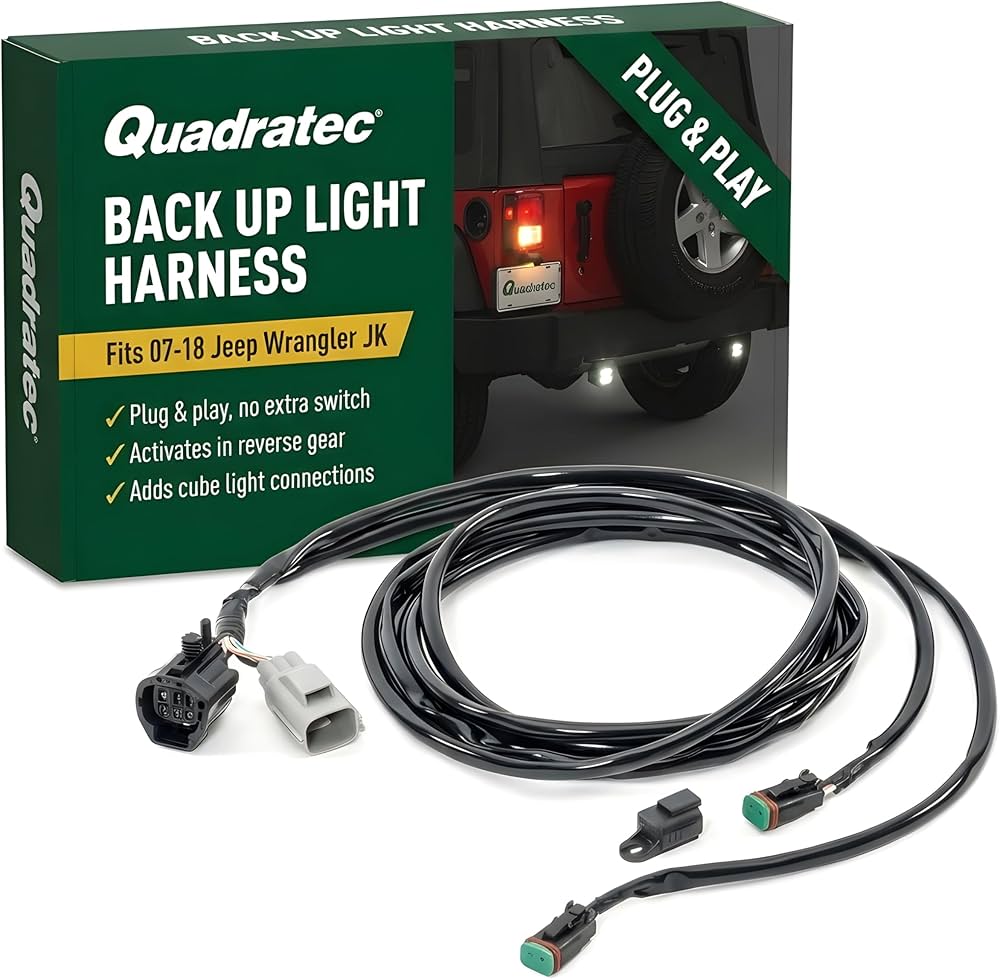
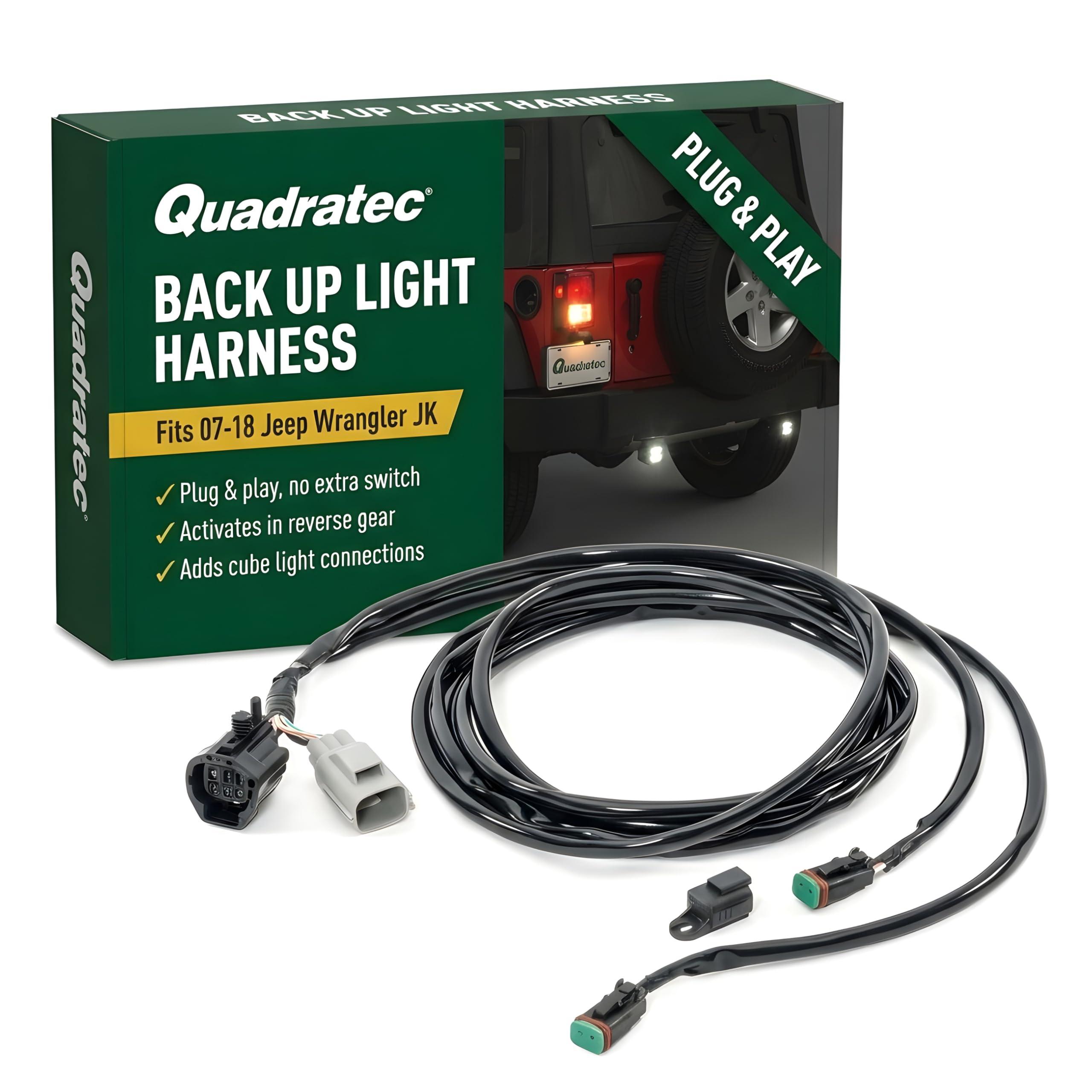
- Wiring harness (with relay and fuse)
- Switch (optional for manual control)
- Connectors (crimp terminals, butt connectors)
- Heat shrink tubing (for water resistance)
- Wire loom (protects wires from abrasion)
- Electrical tape
- Zip ties
- Drill and bits (for mounting)
- Multimeter (for testing voltage)
Wiring Methods
You have two main ways to wire extra backup lights:
- Automatic Activation: Lights turn on with factory reverse lights.
- Manual Activation: You control lights with a switch.
Most Jeep owners prefer automatic activation for convenience. Manual activation is useful for off-road situations where you need backup lights without shifting into reverse.
Deciding Where To Mount The Lights
Popular locations:
- Rear bumper
- Above license plate
- On tire carrier
- Under bumper
Choose a spot where the lights won’t get blocked by the spare tire or tow hitch. Make sure you can run wiring safely from the lights to the fuse box or battery.
Step-by-step Wiring Instructions
Wiring extra backup lights takes patience and attention to detail. Here’s how to do it safely and efficiently.
1. Disconnect The Battery
Always disconnect the negative terminal before starting any electrical work. This prevents shorts and protects you from shocks.
2. Mount The Lights
Use the supplied brackets or fabricate your own. Mark mounting holes, drill, and secure the lights. Make sure they are aimed correctly and won’t get damaged when off-roading.
3. Route The Wires
Run the wires from each light toward the front of the Jeep. Use wire loom and zip ties to protect wires and keep them out of the way. Avoid hot surfaces and moving parts.
4. Connect To Factory Reverse Light Circuit
For automatic activation, tap into the reverse light wire. On most Wranglers, this wire is located near the rear tail light harness.
- Use a multimeter to confirm which wire supplies 12V when in reverse.
- Carefully strip a small section of the wire insulation.
- Use a crimp connector or solder and heat shrink for a strong, waterproof joint.
5. Add A Relay And Fuse
Extra lights draw more power than factory wiring can handle. Use a relay to control the lights and a fuse to protect the circuit.
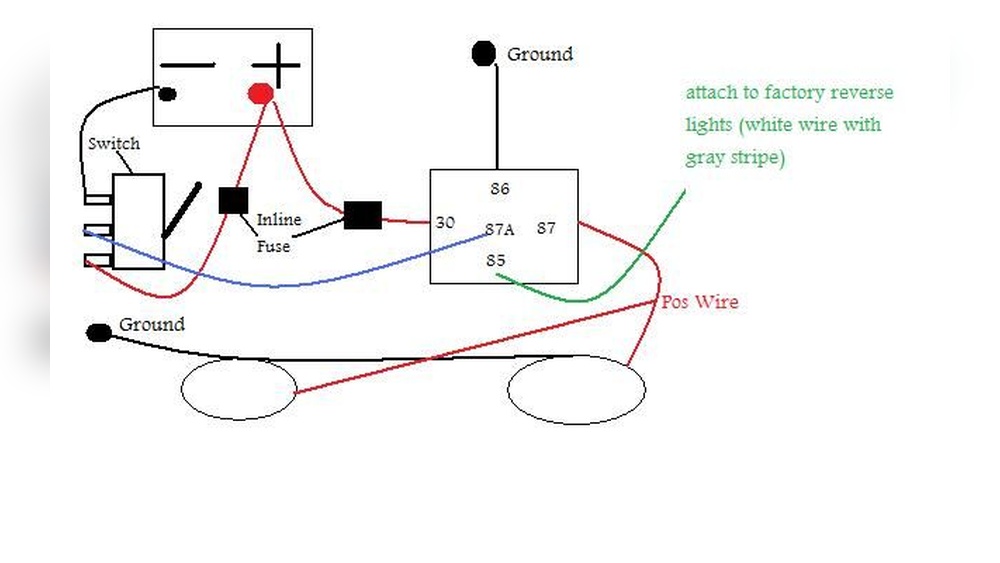
A typical relay wiring setup:
- Pin 85: Connect to ground.
- Pin 86: Connect to the reverse light wire.
- Pin 30: Connect to battery positive (via fuse).
- Pin 87: Connect to backup lights.
Choose a fuse rated slightly above total light draw (for two 20W lights, use a 5A fuse).
6. Optional: Add A Manual Switch
For extra control, wire a switch to the relay so you can turn the lights on anytime.
- Mount the switch inside the Jeep (dashboard or near gear shifter).
- Run wires through a firewall grommet.
- Use a waterproof switch for off-road use.
7. Test The System
Reconnect the battery. Shift into reverse and check if the lights turn on. Test the manual switch if installed. Use a multimeter to check voltage at each connection.
8. Secure And Protect All Wiring
Zip tie wires out of the way. Cover exposed connections with heat shrink or electrical tape. Double-check all mounts and connections.
Common Mistakes And How To Avoid Them
Wiring mistakes can cause poor performance, blown fuses, or even fires. Here are some errors Jeep owners often make:
- Skipping the relay: Connecting lights directly to factory reverse wire can overload the circuit.
- Wrong fuse size: Too small blows often, too large risks fire.
- Poor connections: Loose or unsealed connectors let water in, causing corrosion.
- Routing wires poorly: Wires near hot exhaust, sharp edges, or moving parts get damaged.
- Ignoring ground connections: Bad grounding causes flickering or dim lights.
Always check your work and test all connections before finishing.
Example Jeep Wrangler Backup Light Installation
To give you more confidence, here’s a real-world example:
A Jeep owner installed two 1,500 lumen LED pods above the bumper. They used a wiring harness with relay and fuse, tapped into the reverse light wire behind the passenger tail light, and mounted a waterproof switch inside the cabin.
The lights turn on automatically in reverse and can be switched on manually for off-road use. The installation took about 2. 5 hours and cost $110 for parts.
Installation Data
Here’s a summary of the setup:
| Component | Quantity | Cost | Install Time |
|---|---|---|---|
| LED Pods | 2 | $80 | 45 min |
| Wiring Harness | 1 | $20 | 30 min |
| Switch | 1 | $10 | 30 min |
| Misc Hardware | — | $0 | 15 min |
| Total | $110 | 2.5 hr |
Tips For A Professional-quality Installation
Many installations look messy or fail after a few months. Here’s how to make yours reliable and neat:
- Use wire loom: Protects wires from rocks and debris.
- Seal all connections: Water causes corrosion and electrical problems.
- Aim lights carefully: Too high causes glare, too low reduces visibility.
- Label wires: Helps future troubleshooting.
- Check for local regulations: Some states limit light brightness or placement.
A non-obvious tip: Always leave extra wire slack at mounting points. This allows for future adjustments and prevents strain on connectors.
Another insight: If your Jeep has a tow package, you can tap into the trailer reverse wire instead of tail light wire. This is easier and often more accessible.
Backup Light Performance: What To Expect
After wiring extra backup lights, you’ll notice much brighter and wider illumination behind your Jeep. This makes backing up safer, especially in rural areas, campsites, or dark parking lots.
With two LED pods, you’ll likely see a 3 5x improvement in brightness compared to factory lights. Off-road, you’ll spot obstacles, rocks, and tree branches much sooner.
Performance Comparison Table
Here’s what you can expect:
| Setup | Area Lit (sq ft) | Brightness | Visibility Rating |
|---|---|---|---|
| Stock Reverse Lights | 150 | Low | 3/10 |
| 2 LED Pods | 600 | High | 9/10 |
| Light Bar | 900 | Very High | 10/10 |
Safety And Legal Considerations
While extra backup lights are useful, you must follow safety and legal guidelines.
- Do not use backup lights on public roads except when reversing.
- Check local laws for maximum brightness and placement.
- Never aim lights directly at other vehicles or pedestrians.
Some states require backup lights to turn off automatically when not in reverse. If you use a manual switch, always use responsibly.
For more details on automotive lighting regulations, see NHTSA.
Frequently Asked Questions
How Many Extra Backup Lights Can I Add To My Jeep Wrangler?
You can add as many as your Jeep’s electrical system can support. For most Wranglers, adding 2 4 LED pods (20 watts each) is safe. Always use a relay and fuse to prevent overload.
Do I Need A Relay For Extra Backup Lights?
Yes, a relay is important. It protects your factory wiring from overheating and allows you to safely run higher wattage lights.
Can I Wire Backup Lights To A Manual Switch Only?
Yes, you can wire lights to a manual switch. This lets you turn them on whenever needed, but remember to use a relay and fuse. Only use on private property or off-road to avoid legal issues.
Will Extra Backup Lights Drain My Jeep’s Battery?
If wired correctly and used only when needed, the battery drain is minimal. Two LED pods use about 40 watts total, which is less than 4 amps. Avoid leaving lights on for long periods with the engine off.
Is It Safe To Install Extra Backup Lights Myself?
If you follow proper wiring steps, use a relay and fuse, and seal all connections, DIY installation is safe. If you’re unsure, consult a professional or check Jeep forums for advice.
Adding extra backup lights to your Jeep Wrangler is a smart upgrade for safety and convenience. With careful planning, the right parts, and proper wiring, you’ll enjoy brighter visibility and peace of mind when reversing or exploring off-road. Take your time, double-check your work, and you’ll achieve a reliable, professional result.