If you drive a Jeep, you probably know that 4 wheel drive (4WD) is one of its most important features. It gives you better control on snow, mud, sand, and rocky roads.
But many drivers—especially those new to Jeeps—aren’t sure exactly how to turn on 4WD or what setting to use in different situations. Getting this right helps you stay safe and avoid damaging your vehicle.
Here, you’ll learn the four main ways to activate 4WD in modern Jeeps, why each matters, and some smart tips most beginners miss.

Understanding Jeep 4 Wheel Drive Systems
Jeeps use different kinds of 4WD systems. The two most common are part-time 4WD and full-time 4WD. In part-time systems, you switch between 2WD and 4WD. Full-time systems let you drive in 4WD all the time. Some newer Jeeps include automatic 4WD that handles everything for you.
Knowing your Jeep’s system is important. Check your owner’s manual or look for badges like “Trail Rated,” “Selec-Trac,” or “Quadra-Trac” on your Jeep.
Each system has its own way to turn on 4WD, and using the wrong method can cause mechanical problems.
Turning On Jeep 4 Wheel Drive: The 4 Main Methods
Most Jeeps have one of four ways to engage 4WD. Let’s go through each, with examples and tips.
1. Manual Lever (traditional Shift)
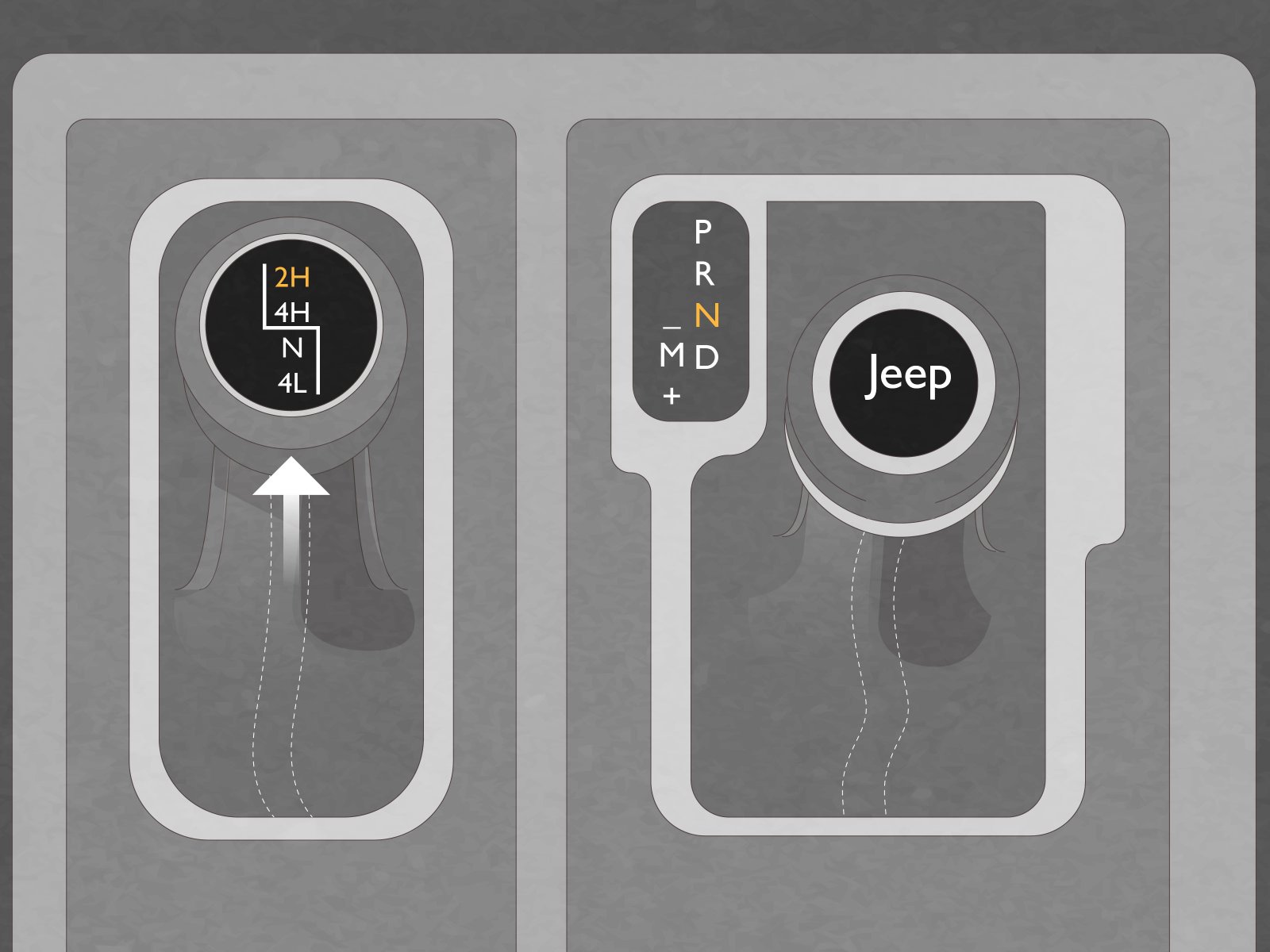
Older Jeeps and some basic models use a manual lever next to the gear shifter. This lever usually has positions like 2H, 4H, N, and 4L.
- 2H: Two-wheel drive, normal driving.
- 4H: Four-wheel drive, high range. Use for slippery roads.
- N: Neutral, for towing.
- 4L: Four-wheel drive, low range. Use for deep mud, sand, or steep hills.
How to turn on 4WD:
- Slow your Jeep to under 55 mph.
- Move the lever from 2H to 4H for regular 4WD. You can usually do this while driving.
- For 4L, stop the Jeep, put it in neutral, then shift the lever to 4L.
Example: If you’re driving and see snow ahead, shift to 4H. If you get stuck, stop and shift to 4L.
Common mistake: Trying to shift into 4L while moving. Always stop first.
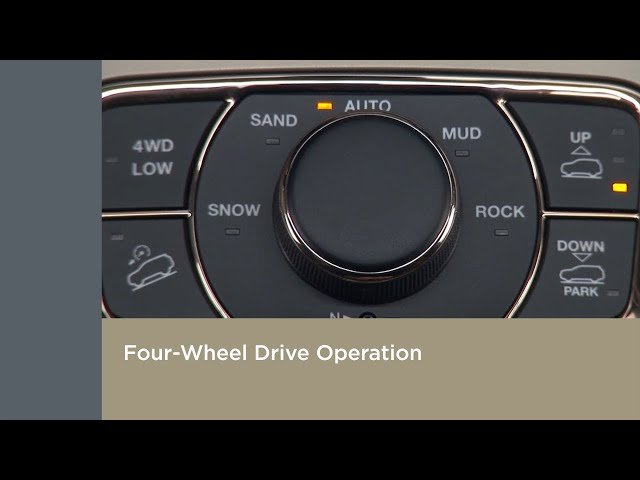
Many newer Jeeps use a push button or rotary knob on the dashboard. It often says 4WD, 4H, 4L, or has pictures of tires.
How to turn on 4WD:
- For 4H, press or turn the switch while driving (under 55 mph).
- For 4L, stop the Jeep, shift to neutral, then press or turn to 4L.
Example: On a Jeep Grand Cherokee, you might see a knob labeled “Selec-Terrain.” Turn it to “Snow” or “Mud” for automatic 4WD adjustments.
Non-obvious insight: Some switches also let you pick terrain modes, which change throttle and braking for even more control.
3. Automatic 4wd (full-time Systems)
Automatic 4WD is found in Jeeps with full-time systems, like Quadra-Trac or Selec-Trac. Here, you don’t need to do anything—4WD engages itself when needed.
How it works:
- Drive as normal. The computer senses wheel slip and activates 4WD.
- Some models let you choose between “Auto,” “Snow,” “Sand,” or “Rock” for better performance.
Example: In a Jeep Wrangler Rubicon with Selec-Trac, you leave it in “Auto” mode. The Jeep handles the rest.
Practical tip: Even in auto mode, you can manually select “4L” for extra torque if you’re going off-road.
4. Touchscreen Controls
Some luxury Jeep models (like the Grand Cherokee L or Wagoneer) have touchscreen controls for 4WD and terrain settings.
How to turn on 4WD:
- Tap the screen to choose “4WD Auto,” “4WD Low,” or specific terrain modes.
- The system guides you with prompts—sometimes requiring you to stop or shift to neutral.
Example: On a Grand Cherokee L, you tap “Mud/Sand” and the Jeep switches to 4WD with optimized settings.
Non-obvious insight: Touchscreen mode often includes tire pressure advice and hill descent controls, which help on steep slopes.

Comparing 4wd Activation Methods
Here’s a quick comparison of the four ways to turn on Jeep 4WD:
| Method | Ease of Use | Recommended For | Common Mistakes |
|---|---|---|---|
| Manual Lever | Medium | Older models, off-roaders | Shifting to 4L while moving |
| Electronic Switch | Easy | Most modern Jeeps | Forgetting to stop for 4L |
| Automatic 4WD | Very easy | Daily driving, beginners | Not using 4L for tough terrain |
| Touchscreen | Easy | Luxury models | Missing manual override options |
When To Use Each 4wd Setting
You might wonder when to use 4H vs 4L or Auto. Here’s a quick guide:
| Setting | Best For | Speed Limit |
|---|---|---|
| 4H | Snow, rain, gravel | Up to 55 mph |
| 4L | Mud, sand, rocks, steep hills | Under 25 mph |
| Auto | Mixed roads, uncertain conditions | Normal driving speeds |
Extra Tips For Safe 4wd Use
- Always check your tires. Uneven wear can stress the 4WD system.
- Avoid sharp turns on dry pavement in 4WD; it can damage the drivetrain.
- Don’t forget to shift back to 2H or Auto when you return to normal roads.
Statistics: According to Jeep, using 4WD correctly can reduce accident risk by up to 30% on slippery roads.
Example: If you drive in snow and leave 4WD on after roads clear, you may waste fuel and wear out parts faster.
For more details on Jeep 4WD systems, visit Jeep Official Site.
Frequently Asked Questions
How Do I Know If My Jeep Has 4wd?
Check the dashboard for 4WD indicators or your owner’s manual. Some Jeeps have badges, and most modern models include it.
Can I Switch To 4wd While Driving?
Yes, for 4H in most Jeeps. For 4L, always stop and shift to neutral first.
What’s The Difference Between 4h And 4l?
4H is for faster speeds and light conditions. 4L gives extra torque for tough terrain, but you should drive slowly.
Is 4wd The Same As Awd?
No. 4WD is usually for off-road and tough conditions; AWD (all-wheel drive) is for everyday driving and light snow.
Will Using 4wd All The Time Damage My Jeep?
If your Jeep has part-time 4WD, don’t use 4WD on dry pavement. For full-time 4WD, it’s safe to leave it on.
Turning on Jeep 4WD is simple once you know your system. Using the right method and setting keeps you safe and protects your Jeep.
With these tips, you’ll be ready for any road or trail.