Checking the gear ratio by spinning the tire is a practical skill for car owners, mechanics, and enthusiasts. Understanding your vehicle’s gear ratio can help diagnose issues, improve performance, and guide modifications.
While many people rely on manufacturer data, sometimes you need to verify the gear ratio yourself—especially with older or modified vehicles. This article explains the process step-by-step, highlights important tips, and shares common mistakes to avoid.
If you want to learn how to check gear ratio by spinning the tire, you’re in the right place.

What Is Gear Ratio And Why Does It Matter?
The gear ratio is the relationship between the number of rotations the driveshaft makes and the number of rotations the axle makes. For example, a 3.73 gear ratio means the driveshaft turns 3.73 times for every full turn of the axle. This ratio affects acceleration, fuel economy, and towing capacity. Lower ratios (like 2.73) give better fuel economy, while higher ratios (like 4.10) improve towing and acceleration.
Here’s a quick comparison of common gear ratios:
| Gear Ratio | Acceleration | Fuel Economy | Towing Power |
|---|---|---|---|
| 2.73 | Low | High | Low |
| 3.55 | Medium | Medium | Medium |
| 4.10 | High | Low | High |
Many people overlook how gear ratio affects daily driving. For example, switching from a 3.
55 to a 4. 10 ratio can change your RPM at highway speed by 500 or more, making your engine work harder.
Tools And Preparation
Before you start, gather these items:
- Jack and jack stands: To lift the vehicle safely
- Chalk or marker: To mark the tire and driveshaft
- Assistant (optional): Helps spin the tire while you watch the driveshaft
- Gloves and safety glasses: For protection
Safety is crucial. Make sure the car is on a flat surface, the parking brake is on, and you block the wheels that stay on the ground.
Step-by-step: How To Check Gear Ratio By Spinning The Tire
Follow these steps to check the gear ratio accurately:
- Lift the vehicle: Use the jack to raise the rear of your car. Secure it with jack stands.
- Mark the tire and driveshaft: Put a chalk mark on the tire and on the driveshaft’s yoke.
- Put the transmission in neutral: This allows the wheels to spin freely.
- Spin the tire: Turn the tire slowly and count how many times the driveshaft rotates for one full revolution of the tire.
- Record the data: Note the number of driveshaft turns.
If your car has an open differential, spin one tire and count the driveshaft turns. If it has a limited-slip or locking differential, spin both tires together. Here’s a comparison:
| Type of Differential | How to Spin | Driveshaft Turns |
|---|---|---|
| Open | Spin one tire | Divide driveshaft turns by 2 |
| Limited-slip/Locking | Spin both tires together | Direct count |
For example, if you spin one tire and the driveshaft turns 4 times for one tire revolution, divide by 2. Your gear ratio is 2.
00. If both tires spin together and the driveshaft turns 3. 73 times, your gear ratio is 3.
73.
Practical Example
Imagine checking a truck with an open differential. You mark the tire and driveshaft, spin the tire once, and see the driveshaft turns 7.4 times. Divide by 2: 7.4 / 2 = 3.7. So, the gear ratio is about 3.7.
Here’s a summary of calculations:
| Tire Spins | Driveshaft Spins | Ratio Calculation | Gear Ratio |
|---|---|---|---|
| 1 | 4 | 4 / 2 | 2.00 |
| 1 | 7.4 | 7.4 / 2 | 3.70 |
| 1 | 3.73 | Direct count | 3.73 |
Tip: Always double-check your count. If the driveshaft moves less than a full revolution, estimate the decimal (for example, 3.5 turns).
Common Mistakes And How To Avoid Them
- Miscounting rotations: It’s easy to lose track. Use a helper or video record the process.
- Wrong differential method: Not identifying the differential type leads to incorrect results.
- Vehicle not in neutral: If the transmission isn’t in neutral, the wheels won’t spin freely.
- Unstable jacks: Unsafe lifting can cause accidents. Always use jack stands.
Many beginners don’t realize that spinning one tire on a limited-slip differential can damage the internal parts. Always check your vehicle’s manual if unsure.
Non-obvious Insights
- For trucks and off-road vehicles, gear ratios often change after modifications, so checking manually is crucial.
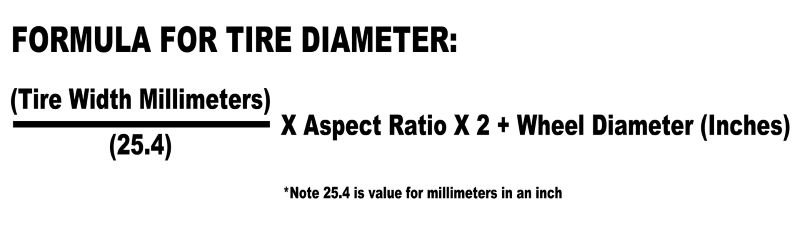
- If you have oversized tires, the effective gear ratio changes. This can affect speedometer readings and engine performance.
- Some vehicles have a factory tag or stamp on the differential cover. However, these can be wrong if the gears were replaced.
If you want more details on vehicle differentials, visit Wikipedia.
Frequently Asked Questions
How Accurate Is The Spinning Tire Method?
It’s accurate within 0. 1, but small mistakes in counting can affect results. Repeat the process to confirm.
Can I Check Gear Ratio Without Lifting The Car?
No. The wheels must turn freely.
Lifting the rear and using jack stands is necessary.
What Happens If I Get The Ratio Wrong?
Incorrect gear ratio can cause poor performance, wrong parts ordering, and even damage during repairs.
Is This Method Safe For All Vehicles?
Most vehicles are safe to check this way. However, avoid spinning one tire on limited-slip or locking differentials.
How Do I Know If My Vehicle Has An Open Or Limited-slip Differential?
Look for factory labels, check the manual, or do a simple test: spin one tire and see if the other moves. If it moves in the same direction, it’s limited-slip.
Learning how to check gear ratio by spinning the tire gives you better control over your vehicle’s performance and maintenance. With the right tools, safety steps, and careful counting, you can get reliable results.
Always confirm your differential type and remember that small errors can make a big difference.
If you’re unsure, ask a professional or consult your vehicle’s manual for guidance.