When you buy a Jeep, excitement comes with the promise of off-road adventures and rugged capability. But many Jeep owners, especially first-timers, find themselves wondering: “Is my Jeep really 4 wheel drive?”
This question matters, because 4 wheel drive (4WD) is what makes a Jeep so versatile in tough conditions. Knowing if your Jeep has this feature can affect your safety, driving style, and even your vehicle’s value.
It’s common to assume all Jeeps have 4WD, but that’s not always true. Some Jeeps are built with two wheel drive (2WD) for city driving and fuel savings. Others have advanced 4WD systems for serious trails. The difference is not always obvious, especially with modern Jeeps that look similar on the outside. If you’re unsure, don’t worry—you’re not alone. Many Jeep owners only discover the truth after getting stuck or reading the manual closely.
Let’s break down the four main ways to tell if your Jeep is 4 wheel drive. This guide will help you check your Jeep confidently no matter your experience level.
We’ll also cover extra details, common mistakes, and answer the most frequent questions.
By the end, you’ll know exactly what to look for and how to confirm your Jeep’s capability.
1. Inspect The Transfer Case Lever Or 4wd Selector
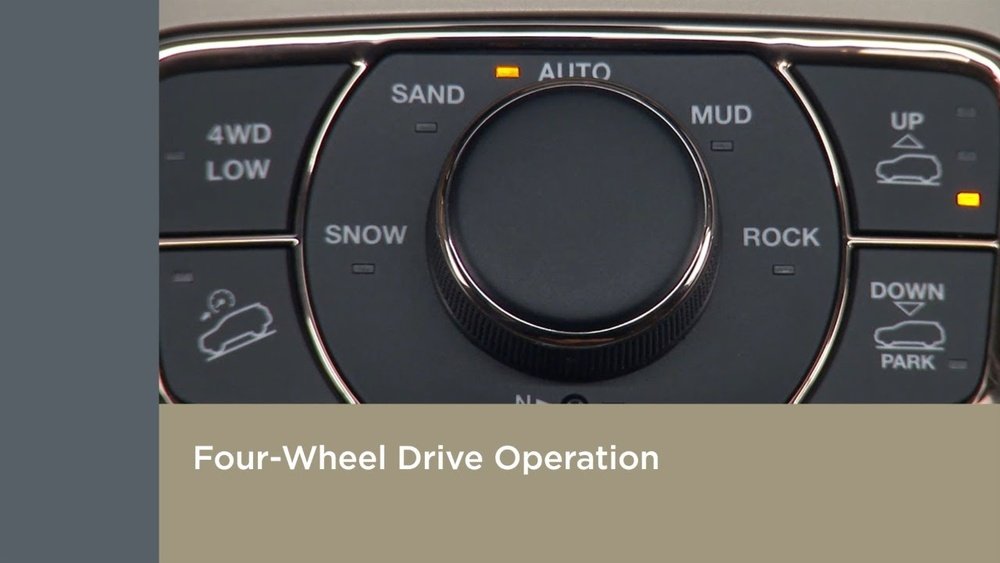
The transfer case lever or a 4WD selector switch is one of the clearest signs your Jeep is built for 4 wheel drive. This part lets you switch between driving modes, sending power to all four wheels when needed.
Where To Look
- In most Jeeps, the transfer case lever is beside the main gear shifter on the center console. It’s often shorter and may be labeled with “2H,” “4H,” “N,” and “4L.”
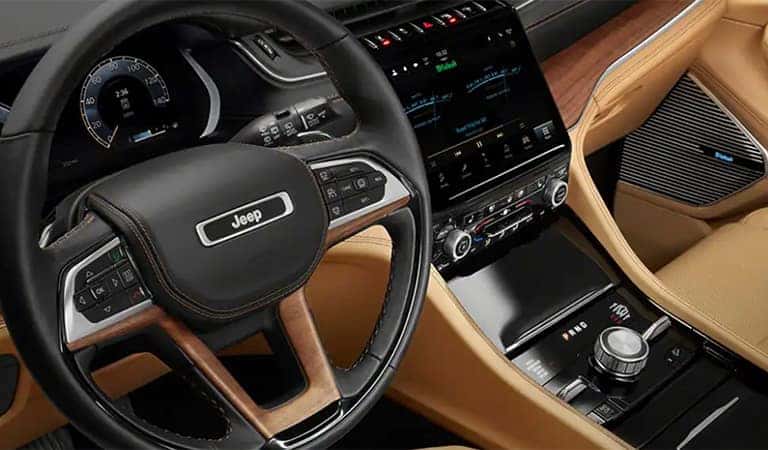
- Newer models may use a 4WD selector switch (a knob or button), usually near the gear shift.
What The Labels Mean
- 2H (Two-wheel drive, high range): Standard driving mode.
- 4H (Four-wheel drive, high range): For slippery or loose surfaces at normal speeds.
- 4L (Four-wheel drive, low range): For off-road, sand, mud, or heavy towing at slow speeds.
- N (Neutral): Disconnects power; used for towing.
If you see these options, your Jeep almost certainly has 4WD. If you only find a single gear shifter without these settings or buttons, your Jeep is likely 2WD.
Table: Common Jeep Models And 4wd Controls
| Jeep Model | 4WD Control Type | Location |
|---|---|---|
| Wrangler | Lever | Next to gear shifter |
| Cherokee (older) | Lever | Center console |
| Grand Cherokee (newer) | Knob/Button | Near gear shift |
| Compass/Renegade | Knob/Button (if 4WD) | Center stack |
Non-obvious Insight
Not all Jeeps with a 4WD lever are truly 4WD some older or base models have levers but are only 2WD, so always double-check the labels and owner’s manual.
2. Check The Drivetrain Underneath
A visual inspection under your Jeep can tell you a lot. The drivetrain for 4WD vehicles is more complex than for 2WD. You’ll be looking for a front differential and a driveshaft going to the front axle.
How To Check
- Park your Jeep on level ground. Set the parking brake and make sure the vehicle is off.
- Slide under the front of your Jeep (use a flashlight if needed).
- Look for a metal shaft running from the transfer case (midway under the vehicle) to the front axle.
- Find the front differential—a round, solid metal casing attached to the front axle.
If you see both a front driveshaft and front differential, your Jeep is equipped for 4WD. If these are missing and there’s only a shaft to the rear, your Jeep is 2WD.
Table: What You Might See
| Component | 4WD Jeep | 2WD Jeep |
|---|---|---|
| Front driveshaft | Yes | No |
| Front differential | Yes | No |
| Rear driveshaft | Yes | Yes |
| Transfer case | Yes | No |
Important Tip
On some newer or smaller Jeep models (like Compass or Renegade), the 4WD system may not have a visible transfer case but will still have a front differential and driveshaft. Always compare your findings with your Jeep’s year and model.
3. Review The Owner’s Manual And Vehicle Information
Sometimes, the easiest way to check is right in your glove box or paperwork. The owner’s manual and vehicle info labels tell you exactly how your Jeep was built.
What To Find
- The owner’s manual will have a section on drivetrain or “vehicle specifications.” Look for terms like “4WD,” “4×4,” or “AWD” (all wheel drive, not the same as 4WD but still powers all wheels).
- The window sticker (Monroney label) from when the Jeep was new lists key features. Find “drivetrain” or “drive type.”
- Vehicle identification number (VIN): This 17-character code is on your dashboard. You can enter it on sites like the manufacturer’s official site or NHTSA to decode if your Jeep is 2WD or 4WD.
Example Manual Entry
- “This vehicle is equipped with a Command-Trac 4WD system. Use the transfer case lever to engage 4H or 4L as needed.”
Non-obvious Insight
Some used Jeeps have had parts swapped or retrofitted. If you’re buying used, the manual may not match the current hardware always check both the paperwork and the physical vehicle.
4. Look For Badges, Emblems, And Marketing Clues
Automakers like Jeep often use badges and emblems to show off 4WD features. These small details can be a quick clue, but don’t rely on them alone.
Where To Spot Them
- “Trail Rated” badge: Usually on the front fenders of Wranglers, Grand Cherokees, and other off-road models. This means the Jeep passed Jeep’s off-road tests, which require 4WD.
- “4×4” badge: Often on the rear tailgate or near the model name.
- Model names like “4WD,” “4×4,” or “AWD” may appear in brochures or on the build sheet.
Table: Badge Meaning
| Badge | Meaning | Model Examples |
|---|---|---|
| Trail Rated | Passed off-road tests, has 4WD | Wrangler, Cherokee, Grand Cherokee |
| 4×4 | 4WD equipped | Most Jeep models |
| AWD | All wheel drive (not true 4WD, but similar in function) | Compass, Renegade |
| No badge | Check other methods—may be 2WD | Base models |
Important Note
Badges can be removed or added by previous owners or dealers. Always use them as a first clue, but confirm with the drivetrain or paperwork for full confidence.

Extra Tips For Checking 4wd On Your Jeep
Even after using the four main methods, some situations need a bit more attention.
- Test on a loose surface: If safe, put your Jeep in 4H or 4L, then drive slowly on gravel or dirt. If all wheels get power, you’ll feel extra grip. (Never test on dry pavement; it can damage your 4WD system.)
- Ask a mechanic: If you’re unsure, a trusted mechanic can check your Jeep in minutes.
- Check for dashboard lights: Some models show “4WD” or “4×4” lights when engaged.
Common Mistakes Jeep Owners Make
It’s easy to get confused, especially with modern vehicles. Here are mistakes to avoid:
- Assuming all Jeeps are 4WD. Some, especially in warm states, are 2WD only.
- Trusting only the badge. Badges can be swapped or missing.
- Ignoring the manual. The owner’s manual is often the fastest way to confirm.
- Testing on pavement. Engaging 4WD on dry roads can hurt your Jeep’s drivetrain.
Why Knowing Your Jeep’s 4wd Status Matters
Understanding if your Jeep is 4WD isn’t just about off-roading. It affects:
- Resale value: 4WD models usually sell for more.
- Maintenance: 4WD requires different care and fluid changes.
- Driving safely: Using 2WD in snow or mud can leave you stuck. Using 4WD wrong can break parts.
When you know your Jeep’s real capability, you can drive with more confidence. This knowledge also helps with insurance, repairs, and even planning trips.
Frequently Asked Questions
How Can I Tell If My Jeep Is 4wd Without Crawling Underneath?
You can often check for a 4WD selector lever or button inside your Jeep, usually next to the main gear shifter. Your owner’s manual will also list the drive type. If you see options like 4H, 4L, or 4WD on any controls, your Jeep likely has 4WD.
Is “awd” The Same As “4wd” On A Jeep?
No, AWD (all wheel drive) and 4WD are different. AWD sends power to all wheels automatically and is usually for on-road traction, while 4WD is designed for off-road and tough conditions, with selectable modes. Some smaller Jeeps use AWD for better fuel economy and easy use.
Can A Jeep Be Converted From 2wd To 4wd?
Technically, yes—but it’s expensive and complex. You need to add a front differential, driveshaft, transfer case, and change the electronics. For most owners, buying a factory 4WD Jeep is cheaper and safer than converting a 2WD.
My Jeep Has A “trail Rated” Badge. Does This Mean It’s 4wd?
Yes, the Trail Rated badge means your Jeep passed Jeep’s off-road tests, which require a working 4WD system. However, always check for the 4WD controls and in the manual to be 100% sure, as badges can be swapped.
Where Can I Find More Details About My Jeep’s Features?
You can use your Jeep’s VIN to look up the original build sheet on the official Jeep website or check with your local dealer. The owner’s manual and window sticker (if you still have it) are also good sources for specific features.
Whether you’re new to Jeep ownership or simply want to be sure about your vehicle, checking for 4WD is smart.
With these steps and insights, you’ll know exactly what your Jeep can do and be ready for whatever the road (or trail) throws your way.