Switching your Jeep to 4×4 mode can feel confusing, especially for new drivers or anyone used to regular two-wheel drive. Getting it wrong can damage your vehicle or leave you stuck when you need traction most. But with the right steps and a clear understanding of the different 4×4 modes, you can switch safely and confidently. This guide will show you how to switch to 4×4 in a Jeep, explain what each mode does, and share key tips that most beginners miss.
Understanding Jeep 4×4 Systems
Jeeps offer several types of 4×4 systems, but most use a manual lever or an electronic switch. The two most common systems are part-time and full-time 4×4. Here’s a quick look at the differences:
| System Type | When To Use | Main Benefit |
|---|---|---|
| Part-Time 4×4 | Off-road, snow, mud | Best for tough conditions |
| Full-Time 4×4 | Any surface | Can stay on all the time |
Your Jeep’s owner’s manual will tell you which system you have. Always check before switching modes, as the wrong use can wear out your drivetrain.
The Four Main 4×4 Modes In A Jeep
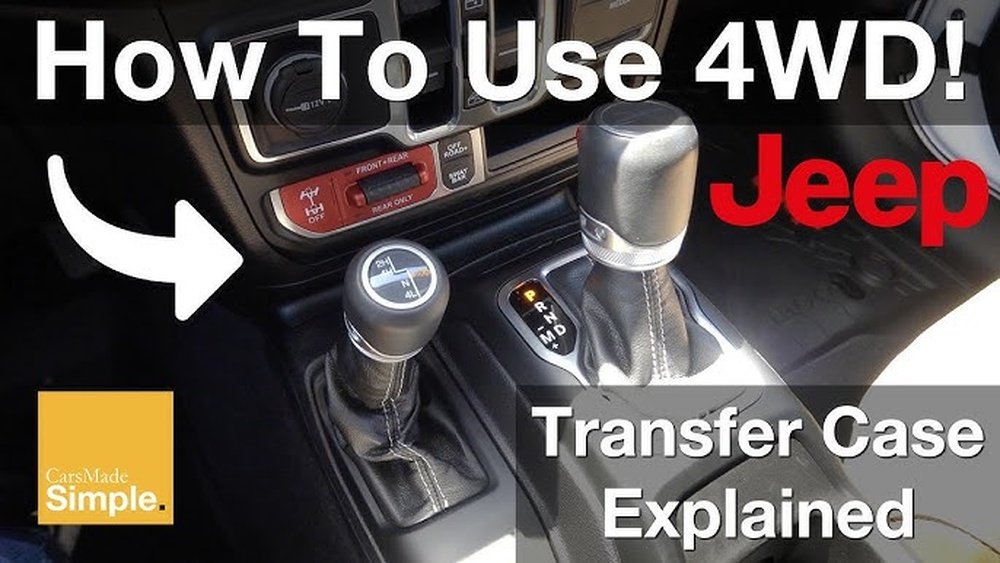
Every Jeep with 4×4 has up to four modes: 2H (Two High), 4H (Four High), N (Neutral), and 4L (Four Low). Each is made for a different driving situation. Let’s break down how and when to use each mode.
1. 2h (two-wheel Drive High)
2H is the standard mode for daily driving on dry pavement. Only the rear wheels receive power, giving you better gas mileage and less wear on 4×4 parts.
- How to use: This is the default position. No action is needed unless you’ve switched out of 4×4.
- When to use: Normal roads, highways, city driving.
- Key tip: Using 4×4 on dry pavement can damage your Jeep’s transfer case.
2. 4h (four-wheel Drive High)
4H sends power to all four wheels. It’s perfect for slippery roads, light off-roading, or when you need extra grip at higher speeds.
- How to engage: Slow down to under 55 mph. Move the lever or switch from 2H to 4H while driving straight. You usually don’t need to stop or shift to neutral.
- When to use: Rain, snow, ice, gravel, or dirt roads.
- Common mistake: Switching to 4H at high speed can cause drivetrain stress.
Example: If you hit a patch of snow on the highway, slow down and shift to 4H for better traction.
3. N (neutral)
The Neutral (N) mode disconnects the transmission from the wheels. Power doesn’t reach the drive shafts. This setting is rarely used except for towing the Jeep behind another vehicle.
- How to engage: Bring the Jeep to a complete stop. Shift the transmission to neutral. Move the transfer case lever to N.
- When to use: Only for flat towing (like behind a motorhome).
- Key tip: Never drive in N—your Jeep will not move under its own power.
4. 4l (four-wheel Drive Low)
4L gives maximum power and control at low speeds. Both axles turn slowly but with a lot of torque. This is the mode for tough off-road obstacles.
- How to engage: Stop the Jeep completely. Put the transmission in neutral. Firmly move the lever or switch from 4H to 4L.
- When to use: Steep hills, deep mud or snow, sand, or rock crawling.
- Common mistake: Never shift to 4L while moving—this can damage gears.
Non-obvious insight: Many people forget to return to 2H after off-roading. Driving on pavement in 4H or 4L increases tire and drivetrain wear.

Step-by-step: Switching Between Modes
Switching modes correctly protects your Jeep and keeps you safe. Here’s a quick summary of steps for each transition:
| From | To | What To Do |
|---|---|---|
| 2H | 4H | Slow under 55 mph, shift lever/switch to 4H |
| 4H | 4L | Stop, transmission in neutral, shift to 4L |
| 4L | 4H | Stop, transmission in neutral, shift to 4H |
| 4H | 2H | Slow under 55 mph, shift lever/switch to 2H |
Practical tip: Always move the lever or switch smoothly. Forcing it can break internal parts.
Special Precautions And Best Practices
Switching to 4×4 is simple, but there are important details that keep your Jeep running well:
- Listen for clicks or grinding: If you hear strange noises, stop and try shifting again.
- Don’t use 4×4 on dry pavement: This causes “driveline binding,” which feels like tight steering and can break parts.
- Check indicator lights: Make sure the dashboard shows the correct mode.
- Test in a safe place first: If you’re new to 4×4, practice switching modes in a parking lot or empty field.
Non-obvious insight: After using 4L, always drive a short distance in 2H. This helps re-engage the front hubs and ensures everything works smoothly.

Troubleshooting Common Problems
Sometimes the 4×4 system might not engage or disengage right away. Here’s what you can do:
- Shift slightly forward or backward while trying to switch modes.
- Double-check that the transmission is in the correct position (Drive, Neutral, or Reverse).
- If the 4×4 light blinks or stays on, consult your owner’s manual or a certified mechanic.
- Cold weather can make shifting harder—give the vehicle a few minutes to warm up.
If you want more technical details, the official Jeep Maintenance Guide offers a full explanation of each system.
Frequently Asked Questions
How Fast Can I Drive In 4h?
You can drive up to 55 mph in 4H, but it’s best to keep speeds lower for safety and control, especially on slippery surfaces.
Is It Ok To Switch To 4×4 While Moving?
Yes, you can switch between 2H and 4H while driving slowly and straight. For 4L, always stop first.
What Should I Do If The 4×4 System Gets Stuck?
Try rolling the Jeep forward and backward a few feet. Shift back to 2H and see if the light goes off. If not, seek professional help.
Does Using 4×4 Use More Gas?
Yes, 4×4 mode uses more fuel because all four wheels are powered. Only use it when you need extra traction.
Can I Use 4h Or 4l On Dry Pavement?
No. Only use 4H or 4L on loose or slippery surfaces. On dry roads, these modes can damage your Jeep’s drivetrain.
Switching to 4×4 in a Jeep isn’t hard when you know how each mode works and follow the right steps. By understanding your vehicle and avoiding common mistakes, you’ll stay safe and keep your Jeep in top shape for all your adventures.