Replacing the battery in your Jeep key dongle is a simple task that can save you time and stress. If your key fob starts losing range, fails to unlock doors, or doesn’t start the car, a weak battery is often the cause.
Many Jeep owners worry about damaging their fob or making mistakes. This guide will help you replace the battery confidently, avoid common errors, and understand which battery to buy.
Understanding Your Jeep Key Dongle
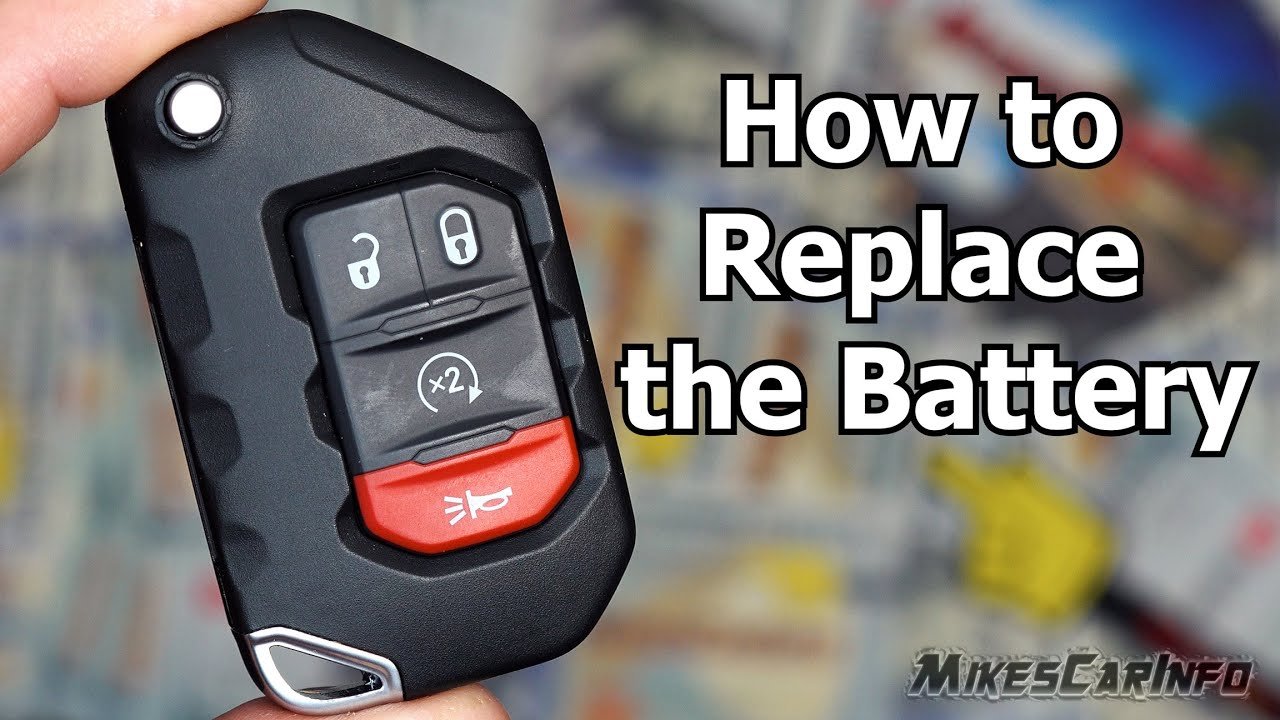
Jeep uses several key fob designs, but most work similarly. Newer models (like the Jeep Grand Cherokee, Jeep Wrangler, and Jeep Compass) use a plastic dongle with buttons for lock, unlock, and panic. Inside, a small coin battery powers the electronics. Older models may use a flip key or a simpler remote, but battery replacement steps are almost identical.
A weak battery can cause:
- Reduced range: Your fob only works close to the vehicle.
- Unresponsive buttons: Pressing doesn’t unlock or lock reliably.
- Warning lights: Some models show a low battery alert on the dashboard.
Tools And Materials Needed
You don’t need advanced tools. Here’s what you should have ready:
- Small flathead screwdriver or a plastic pry tool
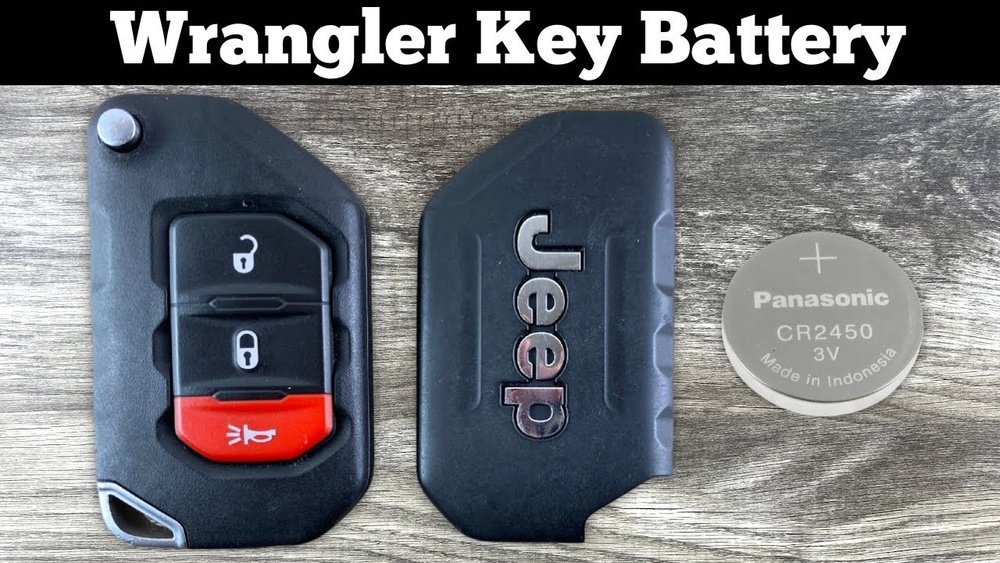
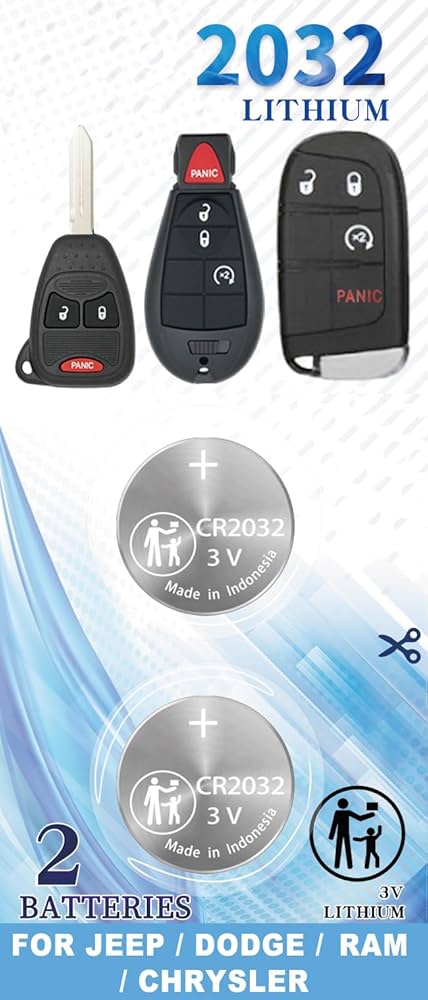
- Replacement battery (usually CR2032 or CR2016, check your manual or fob)
- Clean cloth for handling internal parts
If you’re unsure about the battery type, check the back of your key fob or the owner’s manual. Most Jeep fobs from 2010 onward use the CR2032. Here’s a quick comparison:
| Battery Type | Voltage | Common Jeep Models |
|---|---|---|
| CR2032 | 3V | Grand Cherokee, Wrangler, Compass, Renegade |
| CR2016 | 3V | Older Cherokee, Liberty |
Step-by-step Battery Replacement Guide
Follow these steps to avoid mistakes and keep your key fob safe.
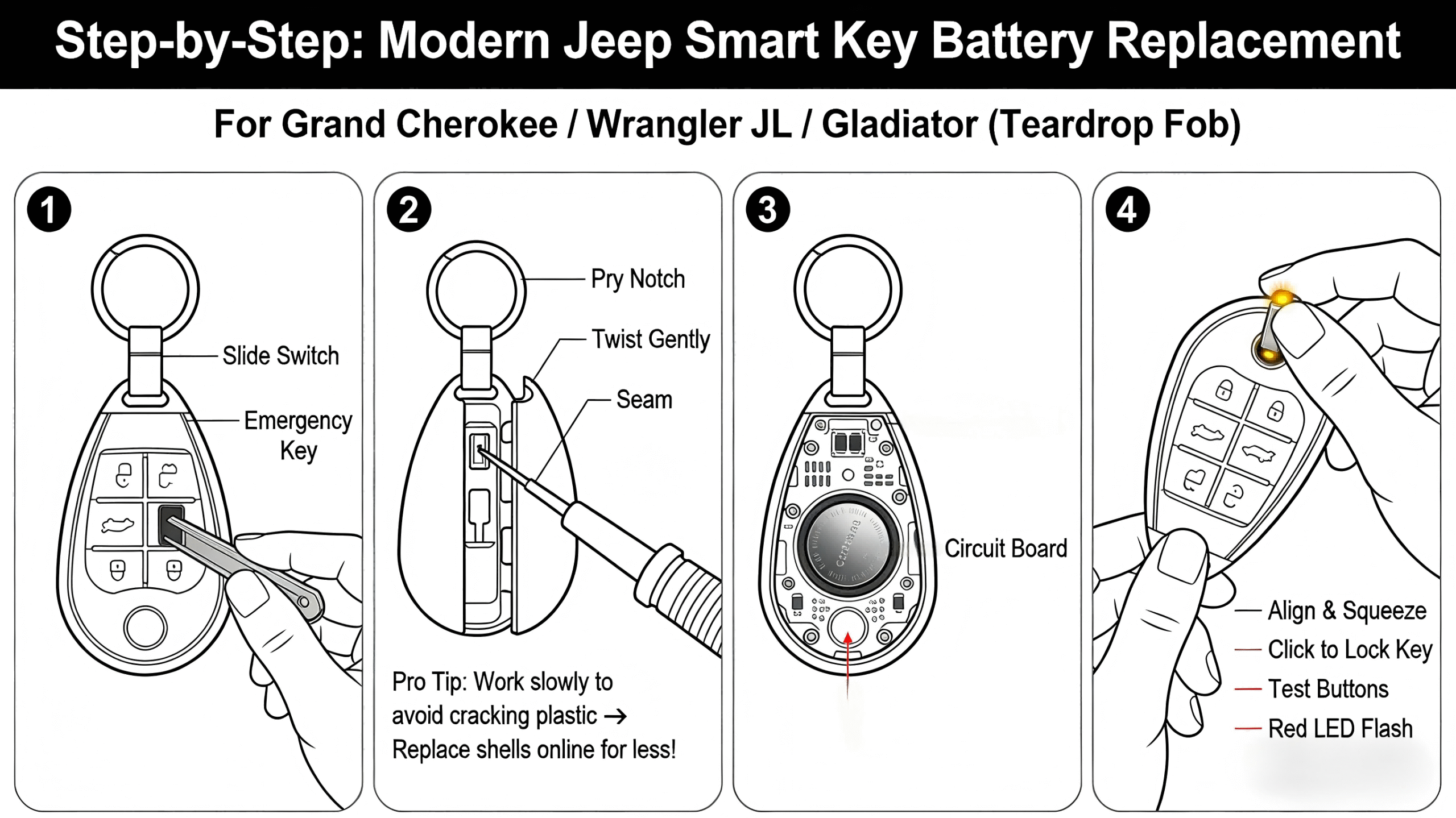
1. Open The Key Fob
- Find the seam along the side of your fob.
- Insert the flathead screwdriver or pry tool gently into the seam.
- Twist slowly until the fob pops open. Don’t force it—gentle pressure is safer.
2. Remove The Old Battery
- Inside, you’ll see the battery held in place.
- Use your tool to lift the battery carefully.
- Avoid touching the circuit board with fingers or metal tools.
3. Insert The New Battery
- Match the battery’s positive (+) side with the markings inside the fob.
- Press the battery in gently until it clicks into place.
- Double-check the orientation; incorrect placement is a common mistake.
4. Reassemble The Fob
- Align the two halves of the fob.
- Press together until you hear a snap.
- Test the buttons before reattaching to your keyring.
5. Test The Key Fob
- Stand near your Jeep and press lock/unlock.
- If the fob works, you’ve done it correctly.
- If not, open the fob again and check battery placement.
Below is a comparison of the main steps for CR2032 and CR2016 fobs:
| Step | CR2032 Fob | CR2016 Fob |
|---|---|---|
| Opening Method | Side seam pry | Back cover slide |
| Battery Orientation | Positive up | Positive down |
| Reassembly | Snap halves | Slide cover |
Tips For A Smooth Battery Change
- Buy quality batteries: Cheap batteries may leak or fail early.
- Keep the fob clean: Dust or oil can interfere with contacts.
- Don’t force parts: If something won’t move, check for hidden clips.
- Reset if needed: Some Jeep fobs require holding the lock button for 5 seconds after a battery change.
Many beginners forget to check the battery orientation. Always match the + side with the diagram inside the fob—reversed batteries won’t work and may damage the electronics.
Common Mistakes And How To Avoid Them
- Using the wrong battery type: Always check your model before buying.
- Touching the circuit board: Finger oils can cause corrosion. Use a cloth or gloves.
- Forcing the fob open: This can break clips. Use slow, steady pressure.
- Not testing after replacement: Always test lock/unlock before finishing.
If your fob still doesn’t work after replacing the battery, try these steps:
- Remove and reinsert the battery.
- Clean the contacts with a dry cloth.
- Check if the battery is new and not expired.
Jeep forums often report issues when cheap batteries are used. Spending a bit more for a quality brand can prevent headaches later.
When To Seek Professional Help
Most battery changes are easy. However, if:
- Your fob won’t open or close properly
- The buttons stick or don’t respond after replacement
- You see corrosion or broken parts inside
It’s best to visit your Jeep dealership or a locksmith. They have special tools and can diagnose deeper issues.
Some newer fobs also require programming after battery replacement, though this is rare.
According to Jeep Official Owner Site, most key fob batteries last 2–3 years. If you replace yours and it drains quickly, your fob may have a fault or your battery is low quality.
Here is an overview of battery life and replacement frequency for Jeep fobs:
| Model | Average Battery Life | Recommended Replacement Interval |
|---|---|---|
| Grand Cherokee | 2–3 years | Every 24–36 months |
| Wrangler | 2 years | Every 24 months |
| Compass | 1.5–2 years | Every 18–24 months |
Frequently Asked Questions
How Do I Know Which Battery My Jeep Key Dongle Needs?
Check your owner’s manual, or look inside the fob after opening. Most Jeep fobs use CR2032, but older models may need CR2016.
Can I Use Any Brand Of Coin Battery?
Yes, but choose a quality brand like Energizer or Panasonic. Cheap batteries may not last as long or could leak.
Will Replacing The Battery Affect My Jeep’s Security System?
No. The battery change doesn’t reset or change any security settings. Your fob will work as before.
What If The Key Fob Still Doesn’t Work After Battery Replacement?
Check the battery orientation, make sure the contacts are clean, and test the battery in another device if possible. If problems continue, visit a dealer or locksmith.
How Often Should I Replace My Jeep Key Fob Battery?
Most batteries last 2–3 years. Replace them when you notice reduced range or unreliable buttons, or as part of regular maintenance.
Replacing your Jeep key dongle battery takes only a few minutes and helps keep your vehicle secure. With the right battery and careful handling, your fob will work like new, saving you the hassle of dealership visits or sudden lockouts.