Getting your kayak onto a Jeep Wrangler is a challenge many outdoor lovers face. The Wrangler’s high roof and rugged build make it a great adventure vehicle, but loading a kayak safely takes some planning.
If you want to avoid scratches, back pain, and kayak damage, it’s important to use the right techniques and equipment.
This article will guide you through every step, highlight common mistakes, and share practical tips from real Jeep and kayak owners.
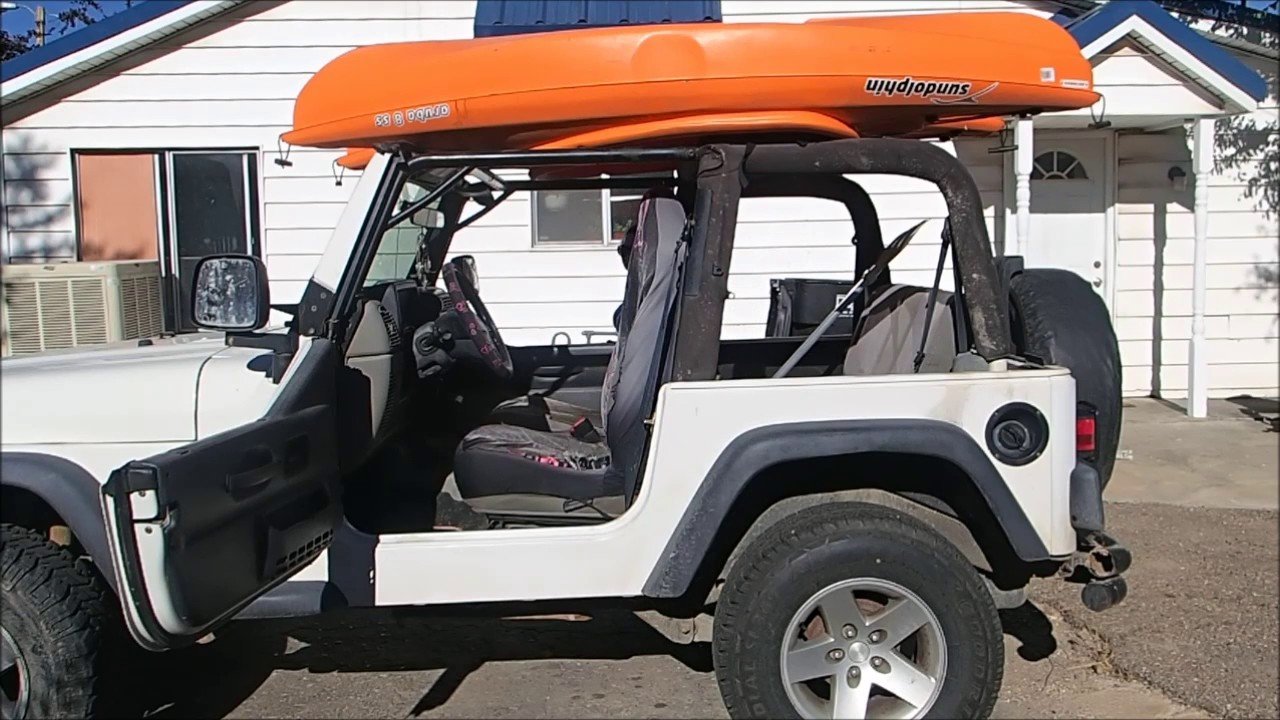
Choosing The Right Kayak Rack For Your Wrangler
A kayak rack is essential for safe transport. Not all racks fit every Wrangler or kayak size. Here’s how different options compare:
| Rack Type | Pros | Cons |
|---|---|---|
| J-Style Carrier | Stable, saves roof space | Harder to load solo |
| Saddle/Cradle | Supports hull, easy loading | Takes more roof space |
| Stacker | Holds multiple kayaks upright | Less secure for heavy kayaks |
For most Jeep Wranglers, J-style carriers are popular because they keep the kayak at an angle, freeing up roof space for extra gear. But if you kayak alone often, a saddle rack might be easier to use. Always check the rack’s compatibility with your Wrangler’s roof bars before buying.
Preparing Your Jeep And Kayak
Before lifting anything, take a few minutes to prep your vehicle and gear.
- Check weight limits. Most Wrangler roofs can handle around 150 lbs (including rack and gear). Don’t overload.
- Clean roof and rack. Dirt or sand can scratch paint or damage kayak hulls.
- Remove loose items from the kayak—like paddles or seats—so nothing falls during loading.
- Have padding ready. Simple foam blocks or towels protect both your Jeep’s paint and the kayak.
Pro tip: If you’re loading solo, park next to a curb. This lowers one side of your Jeep, making it easier to lift the kayak.

Step-by-step: How To Load A Kayak Onto A Jeep Wrangler
Let’s break the process down so you can do it safely even if you’re on your own.
1. Position The Kayak
Lay the kayak next to your Jeep with the bow (front) facing the direction you’ll lift. If you’re right-handed, most find it easier to load from the right side.
2. Lift Using The Right Technique
If you have help:
- Each person stands at one end.
- Bend your knees, grip firmly, and lift together.
If you’re alone:
- Stand at the stern (back).
- Lift the front onto the rear roof rack.
- With the bow resting, move to the side and push the kayak forward onto the rack.
3. Center And Secure The Kayak
Make sure the kayak’s weight is evenly balanced. It should not stick out too far at either end. Here’s a quick visual:
| Kayak Position | Risk | Best Practice |
|---|---|---|
| Too far forward | Blocks windshield, wind drag | Align mid-section with rack |
| Too far back | Hits rear door, unstable | Ends even with bumper and hood |
Double-check that the kayak is snug against the rack’s pads.
4. Strap It Down Securely
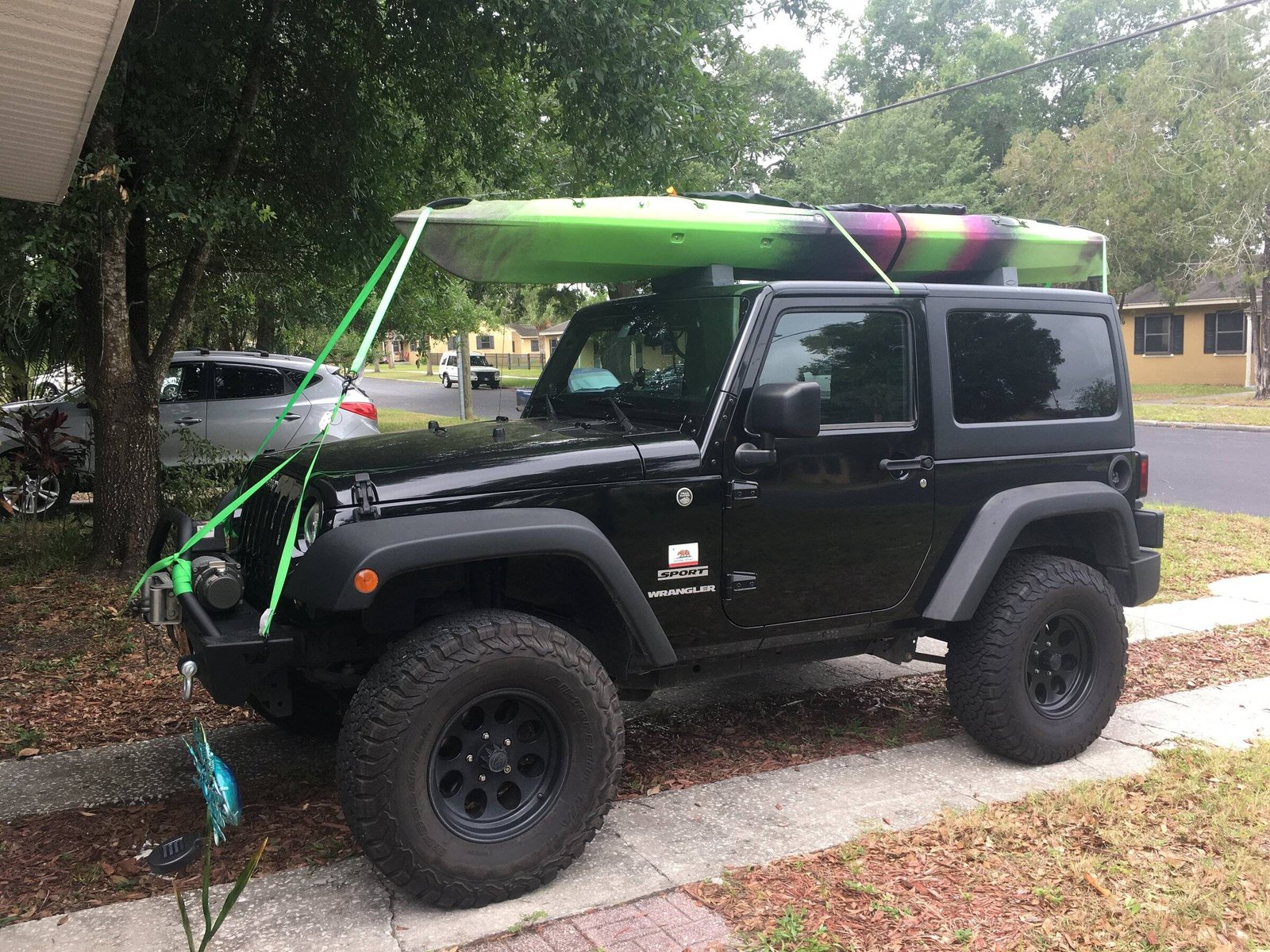
Use cam straps—not bungee cords or rope. Run straps over the kayak and through the rack’s anchor points. Tighten until snug, but not so tight that you deform the kayak.
Always secure bow and stern lines to your Wrangler’s tow hooks or bumpers. This prevents the kayak from sliding or lifting in strong wind.
Common Mistakes To Avoid
- Using ratchet straps. These can easily crush a plastic kayak.
- Skipping bow/stern lines. Even short trips need them.
- Leaving straps flapping. Secure loose ends to avoid damage or noise.
- Not double-checking connections. Give the kayak a firm shake before driving.
Many beginners forget to check local laws. Some states require a red flag on any load that sticks out past the vehicle’s bumper. It’s a simple step that avoids fines.
Tips For Easier Loading
If lifting onto a Wrangler feels tough, here are two smart solutions:
- Lift-assist racks are available. These systems use gas struts or rollers to make solo loading simple, but they cost more.
- DIY helpers. A thick rug or pool noodle can protect your Jeep’s paint if you rest the kayak on the rear while lifting.
Also, always check your kayak’s weight. Some fishing kayaks can weigh 70 lbs or more.
Don’t risk injury ask for help if needed.
Final Checks Before Driving
- Walk around your Jeep. Make sure all straps are tight and ends are secured.
- Test the kayak by shaking it. It should not move more than an inch.
- Check visibility—no straps blocking mirrors or rearview.
- After the first 10 minutes of driving, pull over and re-tighten all straps. Vibration can loosen them.
Kayak transport is safest at speeds under 65 mph. Higher speeds cause more wind lift and stress on your roof rack.
Frequently Asked Questions
How Many Kayaks Can I Carry On A Jeep Wrangler?
Most Wranglers can carry one or two kayaks with a proper rack. Use a stacker rack if you want to carry two, but always check your roof weight limit.
Can I Put A Kayak On A Soft Top Jeep Wrangler?
Yes, but you need a frame-mounted rack that does not rest on the soft top fabric. Never place weight directly on the soft top—it can tear or collapse.
What Size Kayak Fits Best On A Wrangler?
Kayaks 10–14 feet long fit best. Longer kayaks may stick out too far and create safety risks. Always secure both ends and check local laws for overhang limits.
Are There Special Racks For Wranglers With No Roof Rails?
Yes, you can buy clamp-on racks or systems that attach to the roll bars. Check brands like Thule and Yakima for Wrangler-specific kits.
Is It Safe To Leave My Kayak On The Jeep Overnight?
It’s generally safe for a night, but use locking straps to prevent theft. Extended sun exposure can fade and damage kayak material, so cover it if possible.
Putting a kayak on a Jeep Wrangler takes some practice, but the right gear and good habits make it simple. Always choose a rack that fits your Jeep and kayak, use proper loading techniques, and never skip safety checks. For further details on kayak roof racks and installation, see this REI guide. With a little care, you’ll enjoy stress-free trips to the water every time.