If you’re new to driving a Jeep or just want to make sure you’re using its full capabilities, knowing how to put your Jeep in 4×4 is essential. Whether you’re tackling rough trails, slippery roads, or simply want better control, engaging four-wheel drive can make all the difference.
But how exactly do you shift into 4×4 without causing damage or getting stuck? You’ll learn the simple steps to activate your Jeep’s 4×4 system smoothly and safely.
By the end, you’ll feel confident handling your Jeep in any condition ready to take on whatever the road or off-road throws at you.
Let’s get started!
Jeep 4×4 Basics
Jeep vehicles are well-known for their 4×4 capability. This system helps the Jeep drive on rough, slippery, or uneven surfaces. Understanding how to use the 4×4 system is key to safe and effective driving in tough conditions.
The 4×4 system sends power to all four wheels. This improves traction and control. Different Jeep models may have varied 4×4 systems. Learning the basics helps you choose the right mode for your drive.
Types Of 4×4 Systems
Jeep offers two main types of 4×4 systems: part-time and full-time. Part-time 4×4 is common in many Jeep models. It allows switching between two-wheel drive and four-wheel drive. This system should not be used on dry pavement in 4×4 mode.
Full-time 4×4 systems send power to all wheels all the time. They often include a center differential to allow smooth turns on any surface. Some Jeep models use advanced systems with automatic mode selection.
Other types include low-range 4×4, which provides extra power at low speeds. This mode is useful for rock crawling or deep mud. Knowing your Jeep’s 4×4 system helps you drive better in different conditions.
When To Use 4×4 Modes
Use 4×4 high mode on slippery roads like snow or rain. It improves grip and helps avoid wheel spin. It is safe to use at normal driving speeds. Use 4×4 low mode for steep hills or off-road trails. This mode gives more torque and control but limits speed.
Switch to two-wheel drive on dry, smooth roads. It saves fuel and reduces wear on the drivetrain. Use neutral mode when towing your Jeep behind another vehicle. Always shift to neutral before changing 4×4 modes to prevent damage.
Knowing when and how to use each mode keeps your Jeep safe and ready for adventure. Practice shifting between modes in a safe area to build confidence.
Locating Controls
Before engaging your Jeep’s 4×4 system, knowing where the controls are is essential. These controls let you switch between two-wheel and four-wheel drive modes. Locating them quickly ensures safe and smooth operation. Jeep models may vary, but the basics stay similar. Understanding these controls helps you use your Jeep off-road or in tough conditions.
Transfer Case Lever
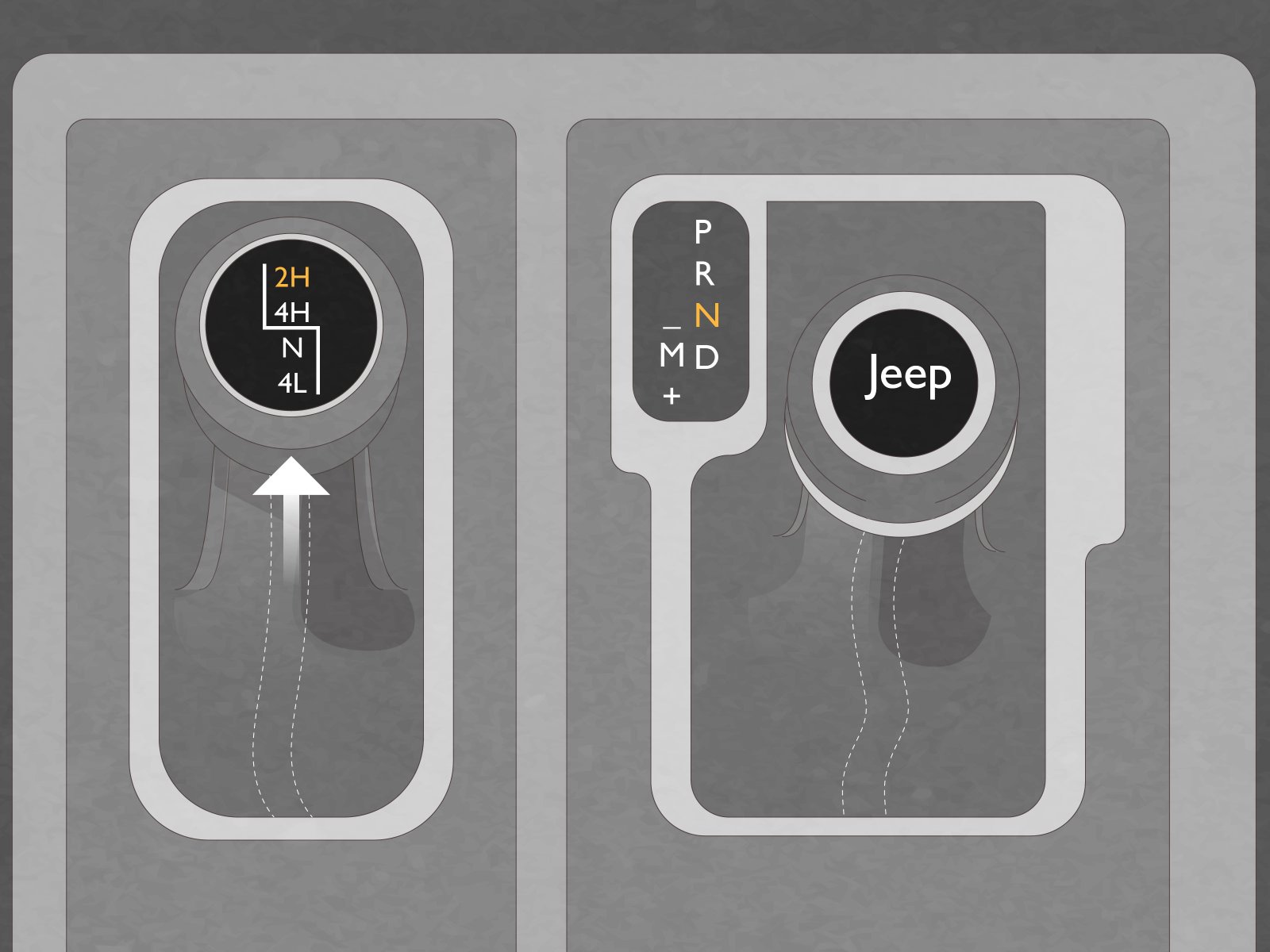
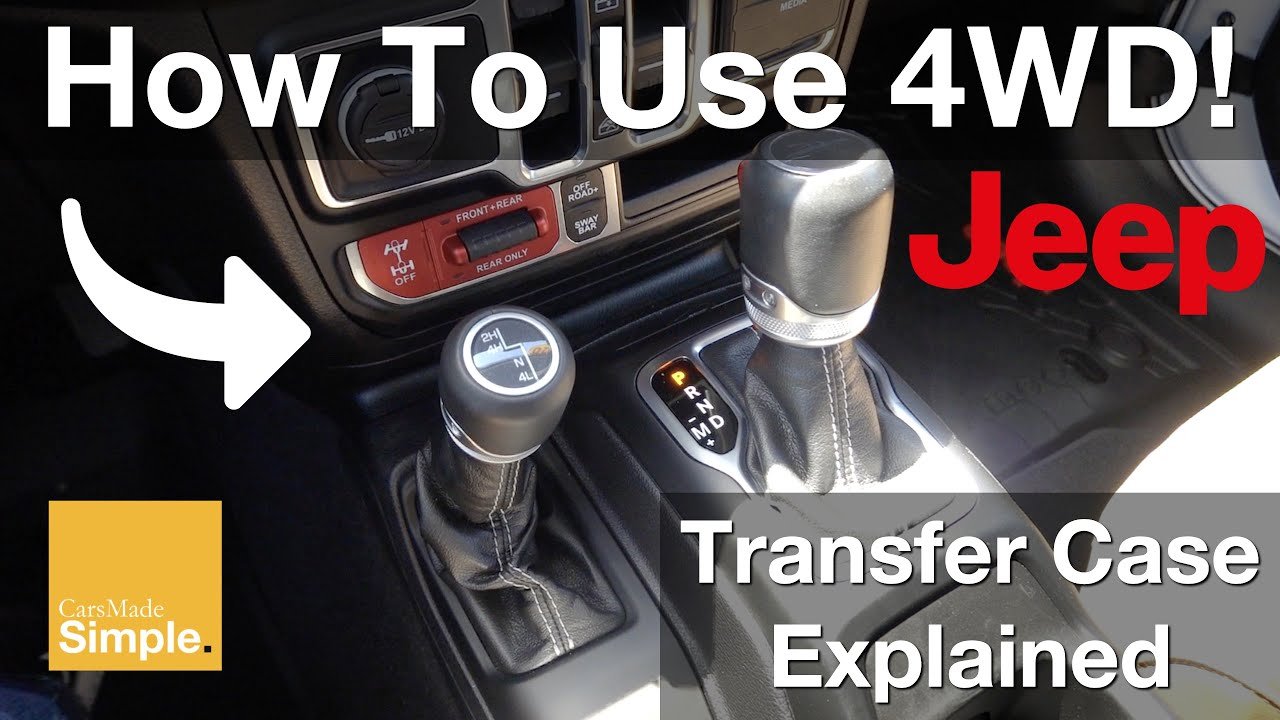
The transfer case lever is the main control for 4×4 modes. It usually sits near the gear shift in the center console. This lever moves between different settings, such as 2H (two-wheel drive high), 4H (four-wheel drive high), and 4L (four-wheel drive low). Each setting suits different driving needs and terrain types.
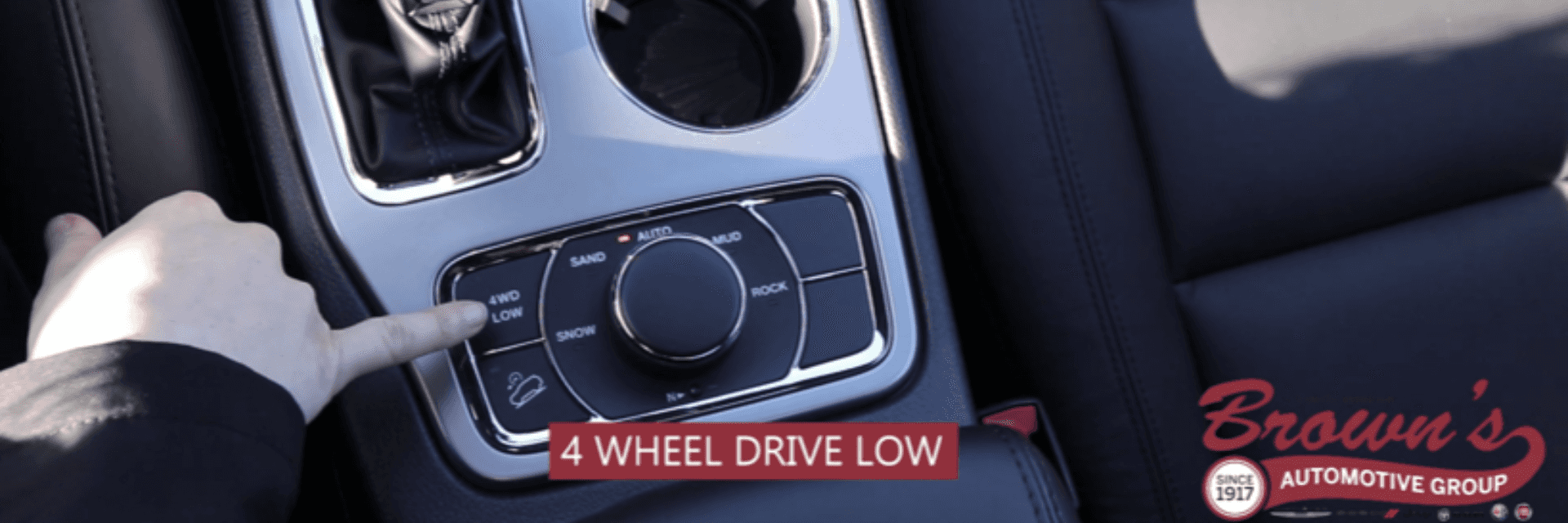
In older Jeep models, the transfer case lever is a separate stick. Newer models may use electronic buttons or switches instead. The lever allows you to manually choose the drive mode. This gives better control on slippery or uneven surfaces.
Shift Lever Functions
The shift lever controls the Jeep’s main transmission gears. It lets you switch between Park, Reverse, Neutral, and Drive. In many Jeeps, you need to shift into Neutral before changing 4×4 modes. This step ensures the transfer case engages without damage.
Some Jeeps have a button on the shift lever to assist with mode changes. For example, pressing it allows smooth shifting between 2H and 4H. Understanding your shift lever functions makes it easier to switch drive modes safely. Always check your owner’s manual for specific instructions.
Step-by-step Shifting
Shifting your Jeep into 4×4 mode improves traction and control on tough terrain. Each 4×4 setting serves a different purpose. Understanding the steps helps you switch modes smoothly and safely. Follow these clear instructions to engage and disengage your Jeep’s 4×4 system.
Engaging 4×4 High
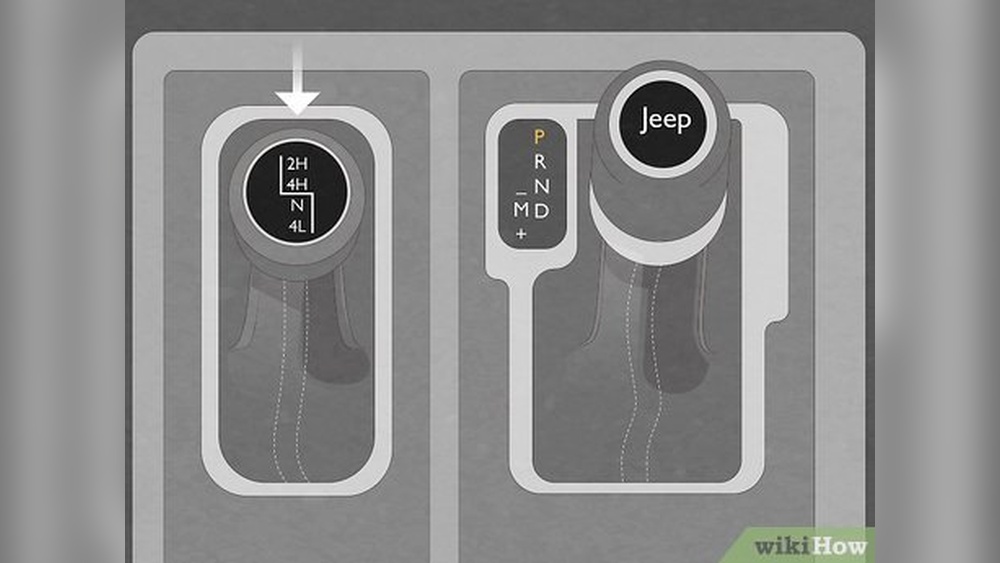
Start by driving at a low speed or while stopped. Press the brake pedal firmly. Shift the main transmission into neutral. Locate the 4×4 lever near the gear shift. Pull the lever straight down to engage 4×4 High. You may hear a slight click or feel resistance. Shift the main transmission back into drive. Slowly release the brake and accelerate. Four-wheel drive high is now active for slippery roads.
Engaging 4×4 Low
Stop the Jeep completely and press the brake pedal. Shift the transmission into neutral. Move the 4×4 lever to neutral position by pulling it straight up. Wait a moment. Then push the lever down and towards the rear to engage 4×4 Low. You will feel the lever lock into place. Shift the transmission back into drive. Use 4×4 Low for steep hills or heavy off-road conditions. Drive slowly to avoid damage.
Shifting Back To 2wd
Find a safe, flat surface and stop the Jeep. Press the brake pedal firmly. Shift the transmission into neutral. Pull the 4×4 lever up to the 2WD position. You may need to move it slowly to feel it click. Shift the transmission back into drive. Four-wheel drive is now disengaged. Using 2WD saves fuel on normal roads and smooth surfaces.
Driving Tips In 4×4
Driving in 4×4 mode changes how your Jeep handles on rough or slippery surfaces. It helps improve traction but needs careful control. Using 4×4 correctly keeps you safe and protects your vehicle. Follow these driving tips to get the best performance from your Jeep’s 4×4 system.
Smooth Gear Engagement
Shift gears gently to avoid damage. Briefly release the gas pedal before changing gears. Put the transmission in neutral before switching to 4×4 mode. Move the 4×4 lever slowly and firmly. This prevents grinding and ensures the system engages properly. Avoid forcing the lever if it feels stuck. Smooth actions help the drivetrain stay healthy and work efficiently.
Speed And Terrain Considerations
Drive slowly on rough or slippery roads. Low speeds give the 4×4 system time to react. Use 4×4 low range on steep hills or deep mud. Higher speeds suit 4×4 high range on loose gravel or snow. Avoid sharp turns on hard surfaces while in 4×4 mode. This reduces tire wear and drivetrain strain. Adjust speed to match road conditions for better control and safety.
Common Mistakes To Avoid
Engaging 4×4 on your Jeep properly ensures better control and safety. Many drivers make simple mistakes that can damage the system or reduce its effectiveness. Avoiding these errors helps your Jeep perform well on rough terrain. Learn about common pitfalls to keep your vehicle running smoothly.
Shifting At High Speeds
Shifting your Jeep into 4×4 at high speeds can harm the drivetrain. The system needs time to engage properly. Always slow down before switching to four-wheel drive. This prevents grinding noises and mechanical wear. Smooth shifts protect your vehicle and improve ride quality.
Ignoring Neutral Position
Failing to put the transmission in neutral before shifting to 4×4 can cause damage. Neutral disconnects the drivetrain, allowing safe engagement. Skipping this step leads to hard shifts and stress on the transfer case. Always shift to neutral first, then engage four-wheel drive. This simple step extends the life of your Jeep’s 4×4 system.
Maintenance For 4×4 Systems
Maintaining your Jeep’s 4×4 system ensures reliable performance and longevity. Regular care helps avoid costly repairs and keeps the vehicle ready for any terrain. Simple maintenance steps protect the drivetrain components and improve safety.
Regular Inspections
Check the 4×4 system often for wear and damage. Look for leaks, loose parts, or unusual noises. Inspect the drive shafts, axles, and transfer case carefully. Early detection of problems prevents bigger issues later. Also, check the condition of the tires and suspension, as these affect 4×4 performance.
Fluid Checks And Changes
Fluids in the transfer case and differentials need regular checks. Low or dirty fluids cause excessive wear and overheating. Change the fluids according to the Jeep’s manual schedule. Use the recommended type and amount of fluid. Proper lubrication keeps the gears and bearings working smoothly. Check seals and gaskets to avoid leaks. Clean fluids improve 4×4 system efficiency and durability.
<!– wp:rank-math/faq-block {"questions":[{"id":"faq-question-bd5a0ca71a07","title":"Do I Put My Jeep In 4h Or 4l For Snow?","content":"
Use 4H for driving on snowy roads at normal speeds to improve traction. Use 4L only for deep snow or steep, slippery terrain requiring maximum torque and control. Always shift to Neutral before changing between 4H and 4L.
“,”visible”:true},{“id”:”faq-question-275b3e9a5196″,”title”:”How Do You Engage A Jeep In 4 Wheel Drive?”,”content”:”To engage 4-wheel drive in a Jeep, shift the transmission to Neutral. Then, pull the 4WD lever or press the button to activate. Return the transmission to Drive and gently accelerate for smooth engagement.
“,”visible”:true},{“id”:”faq-question-41a675d05198″,”title”:”Does Jeep Need To Be In Neutral To Put In 4wd?”,”content”:”Yes, put the Jeep in neutral before shifting into 4WD for smooth engagement and to avoid drivetrain damage.
“,”visible”:true},{“id”:”faq-question-fecbc4c6604a”,”title”:”Do I Put The Jeep In Drive For 4h?”,”content”:”No, shift your Jeep into Neutral (N) before engaging 4H. Then, shift back to Drive (D) once 4H is engaged.
“,”visible”:true}]} –>Do I Put My Jeep In 4h Or 4l For Snow?
Use 4H for driving on snowy roads at normal speeds to improve traction. Use 4L only for deep snow or steep, slippery terrain requiring maximum torque and control. Always shift to Neutral before changing between 4H and 4L.
How Do You Engage A Jeep In 4 Wheel Drive?
To engage 4-wheel drive in a Jeep, shift the transmission to Neutral. Then, pull the 4WD lever or press the button to activate. Return the transmission to Drive and gently accelerate for smooth engagement.
Does Jeep Need To Be In Neutral To Put In 4wd?
Yes, put the Jeep in neutral before shifting into 4WD for smooth engagement and to avoid drivetrain damage.
Do I Put The Jeep In Drive For 4h?
No, shift your Jeep into Neutral (N) before engaging 4H. Then, shift back to Drive (D) once 4H is engaged.
Conclusion
Engaging 4×4 in your Jeep improves traction on rough roads. Always shift to Neutral before changing drive modes.
Pull the 4×4 lever gently for smooth engagement. Practice these steps in a safe area first.
Knowing how to use 4×4 helps you drive confidently off-road.
Keep your Jeep maintained for best performance. Enjoy your adventures with better control and safety.