Upgrading your Jeep with a lift kit is a popular way to improve off-road ability and fit larger tires. But after you lift your Jeep, the factory shocks often no longer fit or perform as they should. Choosing the right shock absorbers is critical for ride quality and vehicle safety. The first step is knowing how to measure shocks for your lifted Jeep. Many Jeep owners overlook this step and end up with shocks that are too short, too long, or simply wrong for their setup. Let’s break down the process so you can get a perfect fit the first time.
Why Shock Length Matters For Lifted Jeeps
When you lift a Jeep, the distance between the mounting points for your shocks increases. Factory shocks may bottom out on bumps or limit suspension travel, causing poor handling and even damaging your suspension. Properly sized shocks:
- Allow full suspension travel
- Prevent the shocks from bottoming out
- Improve ride quality on and off-road
A common mistake is buying shocks based only on the amount of lift. For example, a “3-inch lift” might not always mean you need shocks labeled for a 3-inch lift.
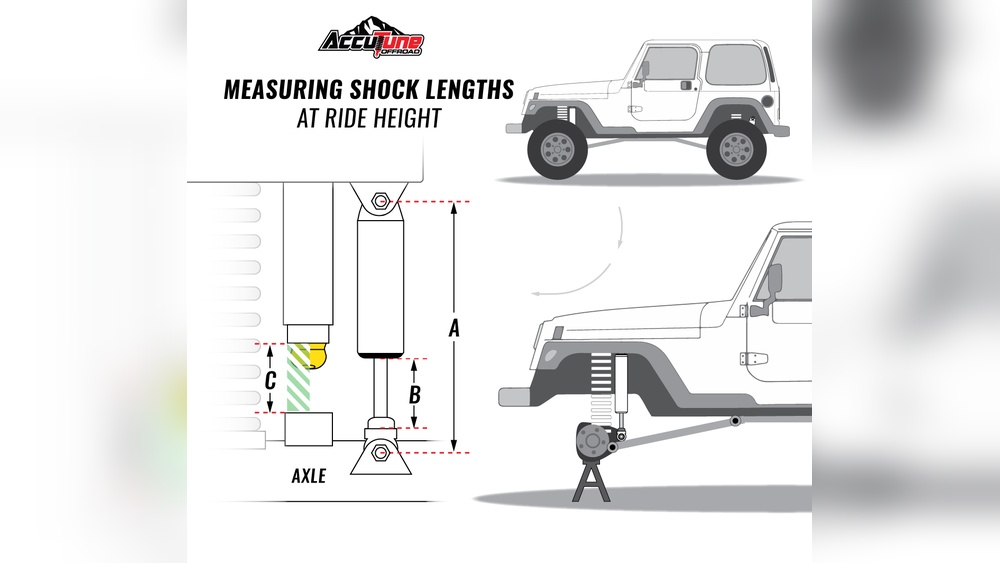
Different brands and kits move the mounting points in unique ways.
Tools And Preparation
Before you start measuring, gather these tools:
- Tape measure (preferably flexible)
- Floor jack and jack stands
- Pen and notebook
- Safety gloves
Always work on a level surface and ensure the Jeep is secure before crawling underneath.
Steps To Measure Shocks For A Lifted Jeep
Measuring for new shocks is simple if you follow these steps:
1. Park Your Jeep On A Level Surface
Set the Jeep on flat ground. Make sure the suspension is at normal ride height, with all tires touching the ground.
2. Measure Compressed Length
- Jack up one corner of your Jeep until the tire just leaves the ground.
- Let the axle hang freely. This position is called full droop.
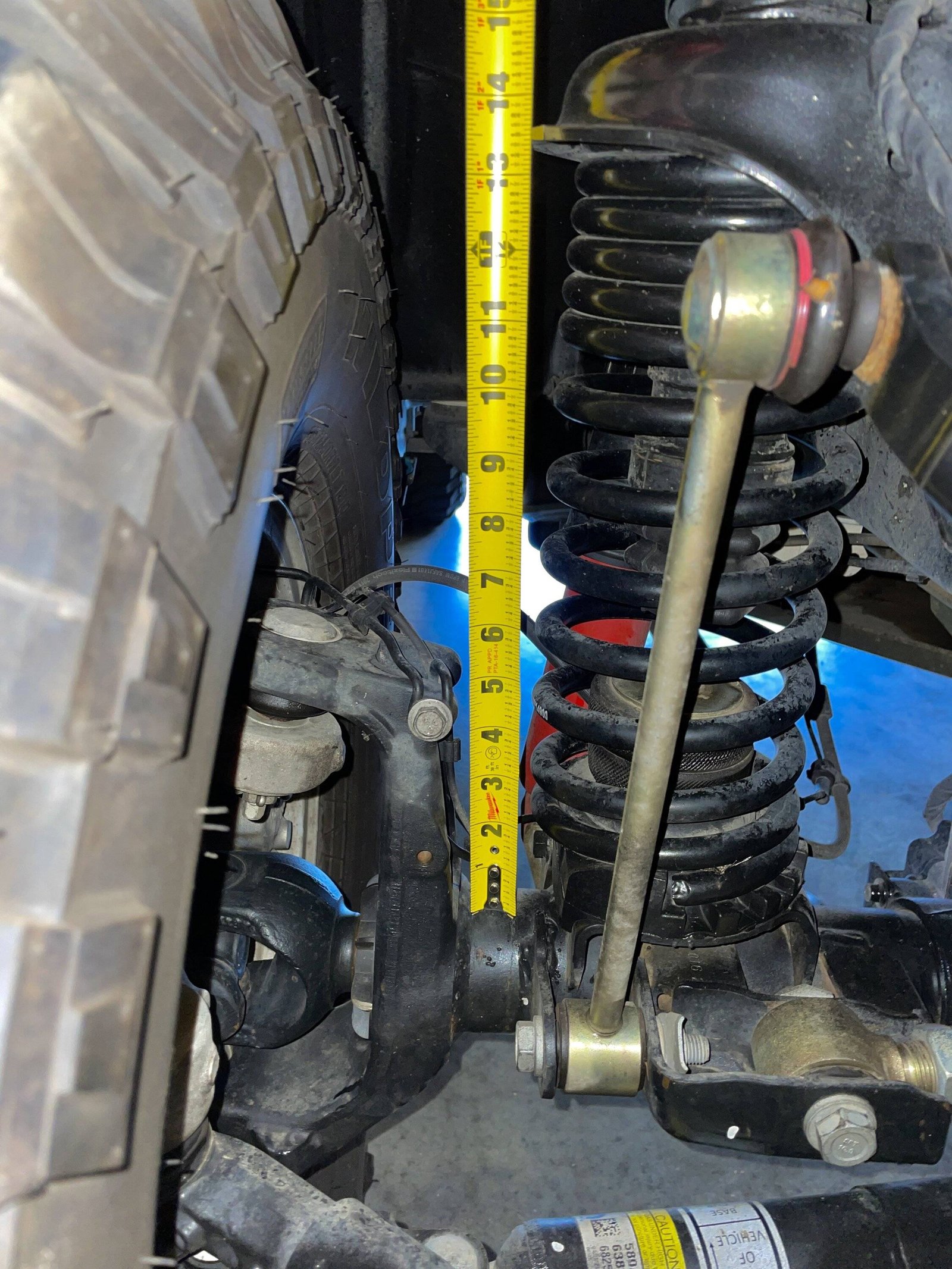
- Measure the distance from the upper shock mount to the lower shock mount.
- Record this as your maximum extended length.
3. Measure Extended Length
- Lower the Jeep so the suspension is fully compressed (as if you just landed from a jump).
- This can be simulated by removing the coil spring and letting the axle sit on the bump stop (if you know how).
- Measure from the same mounting points.
- This is your minimum compressed length.
4. Calculate Ideal Shock Size
Your shock should have:
- A minimum compressed length less than your measurement at full bump stop compression.
- A maximum extended length greater than your measurement at full droop.
This ensures your shock won’t bottom out or limit axle drop.
Example: Measuring A Lifted Jeep Wrangler
Imagine you have a 2.5-inch lift on a Jeep Wrangler JK.
- At full droop, the shock mounting points are 26 inches apart.
- At full compression, they’re 16 inches apart.
So, you need a shock with:
- Compressed length: Less than 16 inches
- Extended length: More than 26 inches
Most manufacturers list these numbers in their catalogs.
Comparing Stock Vs. Lifted Shock Lengths
Here’s how shock lengths typically compare:
| Shock Type | Compressed Length (inches) | Extended Length (inches) |
|---|---|---|
| Stock Wrangler JK | 14 | 23 |
| 2.5″ Lift Shock | 16 | 26 |
| 4″ Lift Shock | 18 | 29 |
Notice how both measurements increase as the lift gets taller.
Important Factors When Measuring Shocks
Shock Mounting Style
Jeep shocks use different mounting ends eyelet, stud, or bar pin. Always check your current mounts.
Using the wrong style can cause fitment problems.
Bump Stops And Limit Straps
If you have added bump stops or limit straps, factor them into your measurements. They change how far your suspension travels.
Suspension Modifications
Other changes, like long-arm kits or axle swaps, can change mounting points. Don’t assume all “2-inch lifts” are the same.

Common Mistakes To Avoid
- Measuring only one side: Always check both sides. Some Jeeps settle unevenly.
- Guessing based on lift height: Always measure your Jeep; don’t trust kit labels.
- Ignoring bump stops: If you lengthen bump stops, measure at the new stop point.
Real-world Tip: Test Fit Before Buying
If you’re unsure, test-fit an adjustable shock or use an old shock as a reference. Cycle the suspension to check for binding or over-extension.
This small step can save you from costly returns.
Manufacturer Data: What To Look For
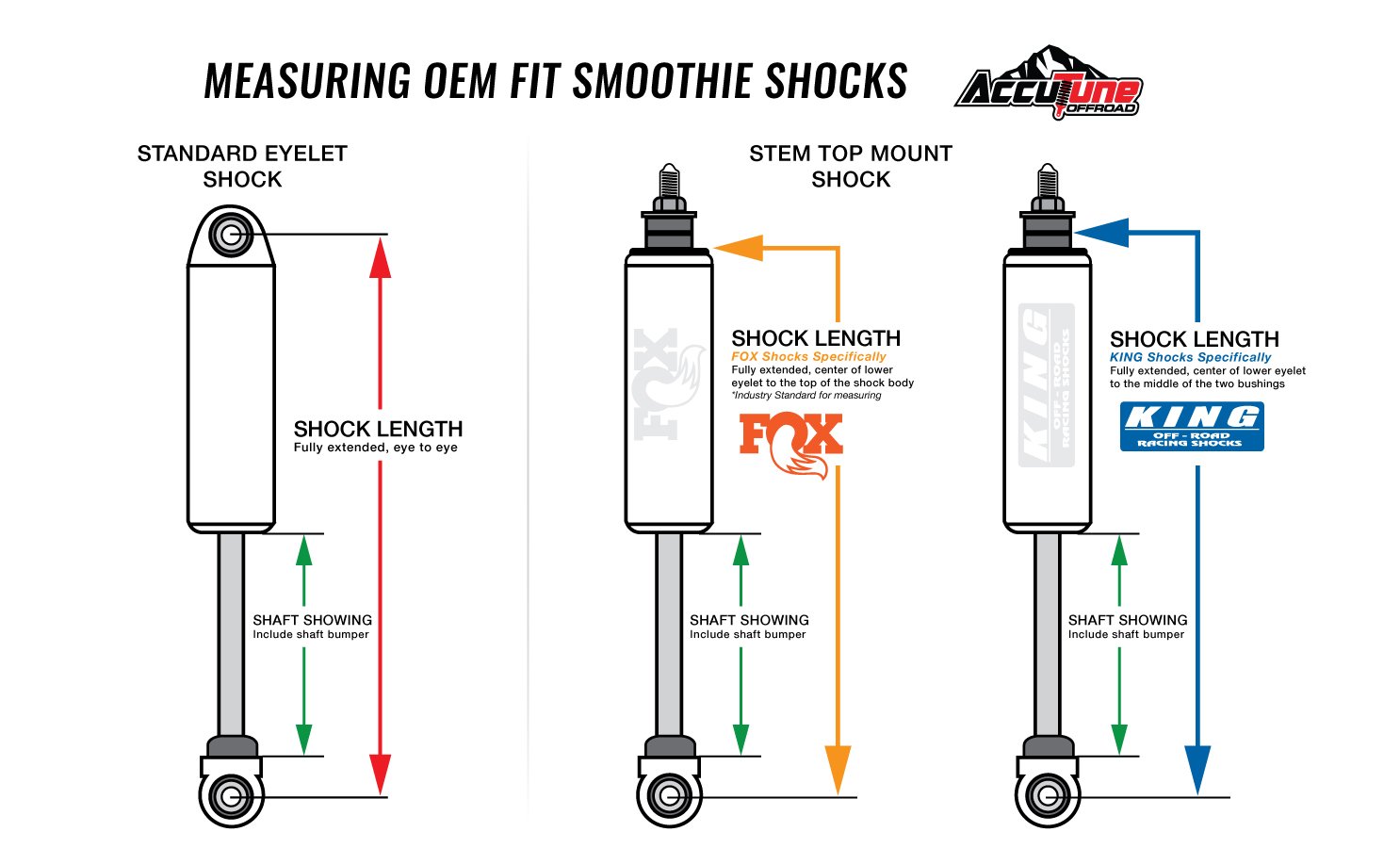
Manufacturers list compressed and extended lengths for each shock. Here’s a quick comparison:
| Brand | Compressed (in) | Extended (in) | Fits Lift Range |
|---|---|---|---|
| Bilstein 5100 | 15.9 | 26.1 | 2-3″ |
| Fox Performance | 16.5 | 27.0 | 2-4″ |
| Rancho RS5000X | 15.1 | 25.8 | 2-3″ |
Match your measurements to these specs for the best results.
Non-obvious Insights For Jeep Owners
- Suspension Settling: Springs can settle over time, changing your ride height. Re-check shock measurements after a few months if you install a new lift.
- Tire Clearance: Longer shocks can allow your axle to drop further, but watch for tire rub on fenders at full droop.
Wrapping Up
Measuring shocks for a lifted Jeep is more than just matching numbers from a box. By taking careful measurements and double-checking your setup, you ensure your Jeep rides well and performs safely.
Remember, every Jeep is a little different even with the same lift kit.
Take the time to measure correctly, and your Jeep will handle both the highway and the trail with confidence.
For more technical details about shock absorbers and suspension geometry, you can visit the Wikipedia Suspension page.
Frequently Asked Questions
How Do I Know If My Shocks Are Too Short After A Lift?
If your shocks limit axle droop or bottom out before the bump stops, they are too short. You may also feel a harsh ride or hear clunking noises.
Can I Use Factory Shocks With A Small Lift?
Factory shocks sometimes work with up to a 1. 5-inch lift but often limit travel and wear out quickly. Always measure to confirm.
What Happens If My Shocks Are Too Long?
Shocks that are too long can bottom out internally or cause suspension binding, which may damage mounts or other parts.
Do I Need To Change Bump Stops When Lifting My Jeep?
Often, yes. New bump stops help prevent shocks from bottoming out and protect your suspension at full compression.
Can I Use Universal Shocks On My Jeep?
Universal shocks can work if you match the mounting style and correct lengths, but specific Jeep shocks often perform better and fit easier.