Measuring the lift on your Jeep JK isn’t just about numbers—it’s about understanding your vehicle’s setup and how it affects performance. Maybe you’re planning bigger tires, curious about your ride height, or just bought a used Jeep and want to know exactly what you have. No matter your reason, knowing the real lift height is important for off-road readiness, on-road safety, and future upgrades.
Many Jeep owners find that advertised lift sizes and real-world results can differ. Sometimes, previous modifications, worn parts, or even heavy bumpers can change the actual lift height.
Measuring it yourself removes the guesswork. This guide walks you through simple, reliable methods to measure the lift on your Jeep JK, explains why it matters, and helps you avoid common mistakes.
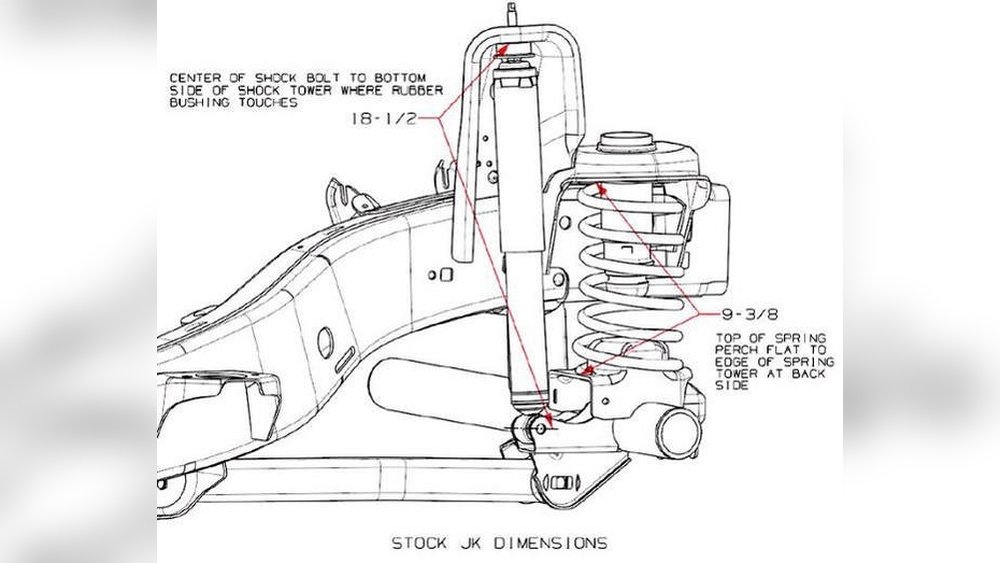
Why Measure Your Jeep Jk Lift?
When you install a lift kit or buy a modified Jeep, you want to know exactly how much your ride has been raised. The stated lift kit size isn’t always the final lift height due to factors like spring sag, added accessories, or tire changes. Measuring your lift gives you:
- Accurate clearance for tires, axles, and underbody parts
- Better understanding of handling and safety
- Confidence when buying or selling your Jeep
- Ability to choose correct shocks, bump stops, or driveshafts
Even if you haven’t installed the lift yourself, measuring helps you plan for future upgrades and avoid surprises on the trail.
Tools And Preparation
Before you start measuring, gather the following:
- Tape measure (at least 36 inches long)
- Pen and paper (or a phone for notes)
- Flat, level ground (garage or driveway)
- Vehicle’s stock specifications (from the Jeep manual or online)
- Tire pressure gauge (optional)
A few practical tips before measuring:
- Make sure your Jeep is empty or carries a normal load (remove heavy gear).
- Set tire pressures to factory recommendations for consistent results.
- Park on flat ground and straighten the steering wheel.
Key Measurement Points On A Jeep Jk
The Jeep JK (2007–2018) has several reference points for measuring lift. The most common and reliable are:
- Fender to Ground: Measures total ride height, including tire size.
- Fender to Axle Center: Shows true suspension lift, ignoring tire changes.
- Bump Stop Clearance: Checks functional suspension travel.
- Frame to Ground: Helps with ground clearance calculations.
Each method has pros and cons. The fender-to-axle method removes tire size as a variable, giving the most accurate suspension lift measurement.
The fender-to-ground method is easier but less precise if you’ve changed tire sizes.
How To Measure Fender To Axle Center
This is the gold standard for measuring suspension lift because it ignores tire size. Here’s how to do it right:
- Park your Jeep JK on level ground.
- At each wheel, locate the highest point of the fender flare (front and rear).
- Use your tape measure to measure vertically from the center of the axle (the big round part in the middle of the wheel) up to the bottom edge of the fender.
- Record each measurement.
- Compare your results to Jeep’s factory specifications.
Typical stock measurements for a 2-door JK:
| Location | Stock Height (inches) |
|---|---|
| Front Fender to Axle Center | 19.0 |
| Rear Fender to Axle Center | 20.0 |
Subtract the stock number from your measurement. For example, if you measure 22 inches at the front fender to axle and the stock is 19 inches, you have a 3-inch lift in front.
Non-obvious tip: Always measure both sides (left and right). Sometimes, one side sits higher due to uneven spring wear, especially if you carry a heavy spare tire or aftermarket gas tank.

Measuring Fender To Ground
This method is quick, but it includes any tire size changes. Use it if you want to know your Jeep’s overall height for garage clearance or legal reasons.
- Measure from the ground straight up to the highest part of the fender flare at each wheel.
- Record the numbers.
- Compare to factory data. For a stock 2-door JK on 255/75R17 tires:
- Front: About 36 inches
- Rear: About 37 inches
If you’ve changed tire size, this measurement will be higher or lower. To find your suspension lift only, subtract the extra height from larger tires.
Example:
If your new tires are 33 inches, and stock tires are about 32 inches, your tires add 0. 5 inches of lift (since each tire is 1 inch larger in diameter, so the radius and lift grows by half).
Using Bump Stop Clearance
Bump stops are rubber or plastic blocks that prevent your suspension from compressing too far. Measuring the distance from the axle to the bump stop tells you about usable suspension travel and can hint at the amount of lift.
- With the Jeep on level ground, measure from the top of the axle tube to the bottom of the bump stop pad.
- Typical stock clearance is about 2.5–3 inches.
- More space suggests longer springs or spacers (lifted suspension).
This method is useful for checking if your Jeep has bump stop extensions (sometimes added with big lifts). If so, note this when planning shock upgrades.
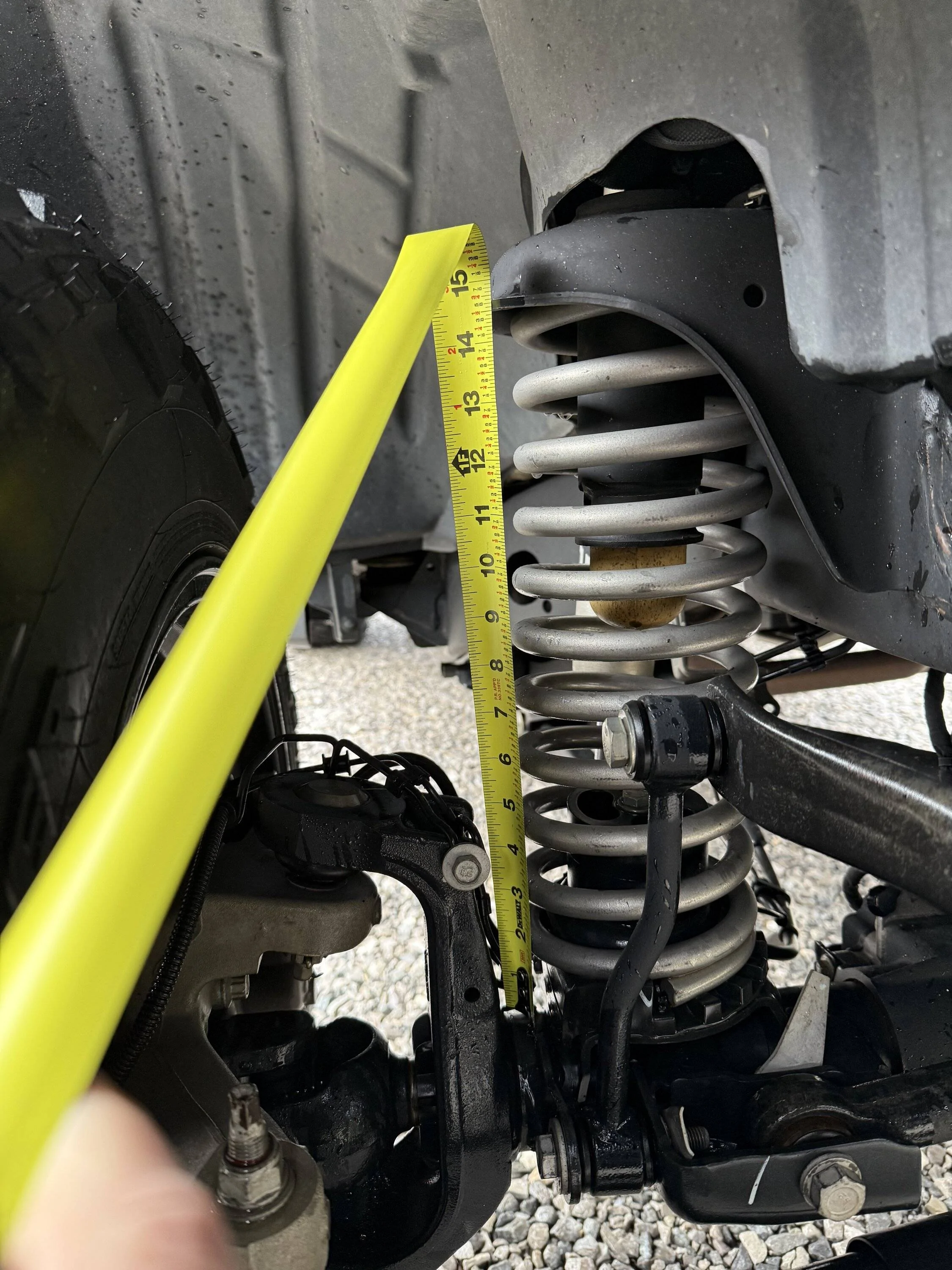
Checking Frame To Ground Clearance
The frame is a solid reference point that doesn’t change with fenders or body lifts.
- Measure from the bottom of the frame rail (just behind the front tire or in front of the rear tire) down to the ground.
- Compare to factory values:
- Stock front: About 13 inches
- Stock rear: About 13.5 inches
This measurement helps with obstacle clearance but is affected by both tire size and suspension lift.
Comparing Suspension, Body, And Tire Lifts
Not all lifts are the same. There are three main ways a Jeep JK can be lifted:
| Lift Type | Main Effect | Typical Height Gain |
|---|---|---|
| Suspension Lift | Raises chassis and suspension | 1–6 inches |
| Body Lift | Raises body off frame | 1–2 inches |
| Tire Size Increase | Adds ground clearance | Varies (0.5–2 inches+) |
Suspension lift is the most common and best for off-road use. Body lifts are cheaper but do not increase ground clearance under the axles. Tire upgrades give extra height but may affect gearing and speedometer accuracy.
Non-obvious insight: Sometimes, Jeeps have a combination. Always check for body lift blocks (visible between the frame and body) and ask about tire size when buying a used Jeep.
Practical Example: Calculating Your Real Lift
Let’s say you measure your Jeep JK and find:
- Front fender to axle: 22.5 inches
- Rear fender to axle: 23 inches
Stock Values: 19 (front), 20 (rear)
Calculation:
- Front lift: 22.5 – 19 = 3.5 inches
- Rear lift: 23 – 20 = 3 inches
This means you have about a 3–3.5 inch suspension lift. If your Jeep also has a 1-inch body lift and runs tires 2 inches taller than stock, the total ride height increase is even more.
Common Mistakes When Measuring Jeep Jk Lift
- Ignoring tire size: Measuring only fender to ground with bigger tires overestimates your suspension lift.
- Measuring with a loaded vehicle: Heavy gear or passengers compress the springs, giving a lower reading.
- Not using the correct stock spec: Model years and trim levels can have slightly different stock ride heights.
- Not checking both sides: Jeep suspension can sag unevenly over time.
Avoid these errors to get a true understanding of your Jeep’s lift.
Why Accurate Measurement Matters
Knowing your exact lift helps with:
- Choosing the right shock absorbers and control arms
- Setting correct driveline angles to avoid vibration
- Deciding on bump stop extensions or sway bar links
- Passing vehicle inspections (some regions limit lift height)
If you’re ever unsure, compare your Jeep to a stock model at a dealership or Jeep event. This visual check often reveals small body lifts or aftermarket changes you might miss.
Data Table: Popular Lift Kits And Their Actual Gains
Here’s a look at how some popular lift kits perform in real-world measurements (actual lift can vary due to accessories, engine type, or spring choice):
| Lift Kit Brand | Advertised Height | Measured Lift (avg.) |
|---|---|---|
| Teraflex 2.5” Lift | 2.5 inches | 2.75 inches |
| Rubicon Express 3.5” Lift | 3.5 inches | 3.25 inches |
| AEV DualSport 2.5” | 2.5 inches | 2.4 inches |
| Rough Country 4” Lift | 4 inches | 3.8 inches |
As you can see, real measurements can be slightly higher or lower than advertised, depending on your Jeep’s setup.
When Should You Re-measure Your Lift?
- After installing or changing suspension parts (springs, shocks, bumpers)
- After adding heavy accessories (winch, steel bumpers, roof rack)
- If you notice uneven ride height or handling changes
- Before and after installing larger tires
Regular checks help you spot sagging springs or issues before they become bigger problems.
Final Thoughts
Measuring your Jeep JK lift isn’t complicated, but it does require attention to detail. Using the fender-to-axle method gives the most accurate suspension lift measurement. Always account for tire size, extra accessories, and body lifts to understand your true ride height. This helps you make smart decisions about future upgrades, keeps your Jeep safe on- and off-road, and ensures you’re getting what you paid for if you bought a modified vehicle.
For those who want more technical details or factory specs, the official Jeep website is a reliable resource.
Frequently Asked Questions
How Do I Know If My Jeep Jk Has A Suspension Or Body Lift?
Look for spacers or blocks between the body and frame for a body lift—usually visible near the door sills. Suspension lifts replace or add to springs and shocks. If you see new coils, longer shocks, or changed control arms, it’s likely a suspension lift.
Can I Measure Lift With Aftermarket Bumpers And Winches Installed?
Yes, but remember that heavy accessories compress the springs and can lower your lift measurement. For best accuracy, measure your Jeep in a typical driving condition—either always loaded or empty.
Why Does My Jeep Jk Look Higher In The Rear Or Front?
This is called rake. Some kits intentionally set the rear higher to handle cargo or towing. Uneven ride height can also happen from worn springs or extra weight (like a heavy spare tire).
Will A Lift Kit Affect My Warranty?
Most lift kits will not void your warranty if installed properly, but they can affect coverage on related components. Always check with your dealer or review your warranty policy.
How Often Should I Check My Jeep’s Lift Measurement?
Check after any major modifications, and at least once a year. Regular checks help you spot spring sag or uneven suspension before it causes problems.