Installing wheel spacers on a Jeep can change its look and performance. Many Jeep owners want a wider stance, better stability, or extra clearance for bigger tires. But installing spacers isn’t just about bolting them on. You need to follow steps carefully, use the right tools, and avoid common mistakes that could affect your safety. This guide will help you install wheel spacers confidently, covering every step and sharing important tips that beginners often miss.
Why Install Wheel Spacers?
Wheel spacers push your wheels outward from the hub. This gives your Jeep a wider track, which can improve stability when off-roading or cornering. They also help clear larger tires or aftermarket suspension parts.
Some Jeep models, like the Wrangler JK, see up to 1.5 inches extra clearance per side with common spacers. This small change can make a big difference in handling and appearance.
Benefits And Drawbacks
| Benefit | Drawback |
|---|---|
| Better stability | Extra stress on wheel bearings |
| More aggressive look | Possible rubbing if too wide |
| Fit larger tires | Legal restrictions in some states |
| Improved cornering | Can void warranty |
Many beginners don’t realize that some states have rules about how far wheels can stick out. Always check local laws before installing spacers.
Choosing The Right Wheel Spacers
Not all spacers are equal. The wrong type can cause vibration, poor handling, or even wheel failure.
Types Of Wheel Spacers
| Type | Description |
|---|---|
| Slip-on | Fits over existing studs, usually for small widths |
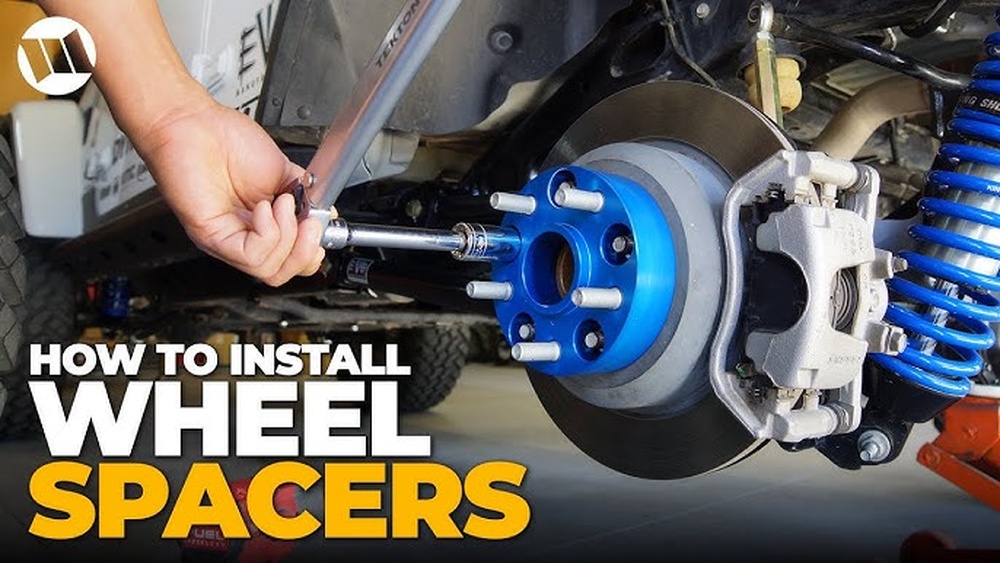
| Bolt-on | Bolts to the hub, then wheels bolt onto spacer |
Bolt-on spacers are safer for Jeeps because they provide better support and keep wheels secure. Always choose spacers made from billet aluminum for strength and durability.
Size And Fit
Measure your Jeep’s hub diameter and wheel bolt pattern. Most Jeep Wranglers use 5×127 mm bolt pattern. Spacers come in sizes from 1 inch to 2 inches. Too wide can cause rubbing or stress suspension parts.
Tools And Materials Needed
Before starting, gather these tools:
- Torque wrench (for proper tightening)
- Socket set (usually 19mm or 21mm for Jeep lug nuts)
- Breaker bar (for stubborn bolts)
- Jack and jack stands (never work under just a jack)
- Thread locker (medium strength)
- Wheel spacers (correct size and fit)
- Wire brush (for cleaning hub)
Many beginners skip the thread locker. It helps keep spacer bolts tight, especially during off-road use.
Step-by-step Installation Guide
Follow these steps for a safe and solid installation:
- Park safely: Ensure your Jeep is on level ground. Set the parking brake and chock wheels.
- Loosen lug nuts: Slightly loosen the lug nuts on the wheels where you’ll install spacers. Do not fully remove them yet.
- Lift the Jeep: Use a jack to lift the vehicle. Place jack stands under the frame for safety.
- Remove wheels: Take off the lug nuts and pull the wheels away.
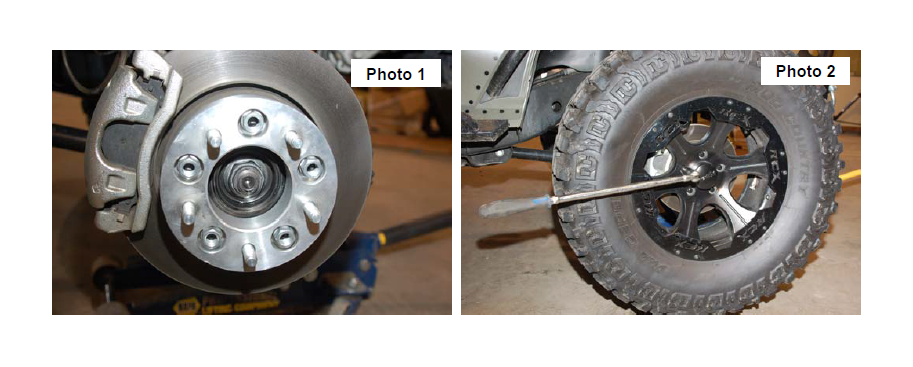
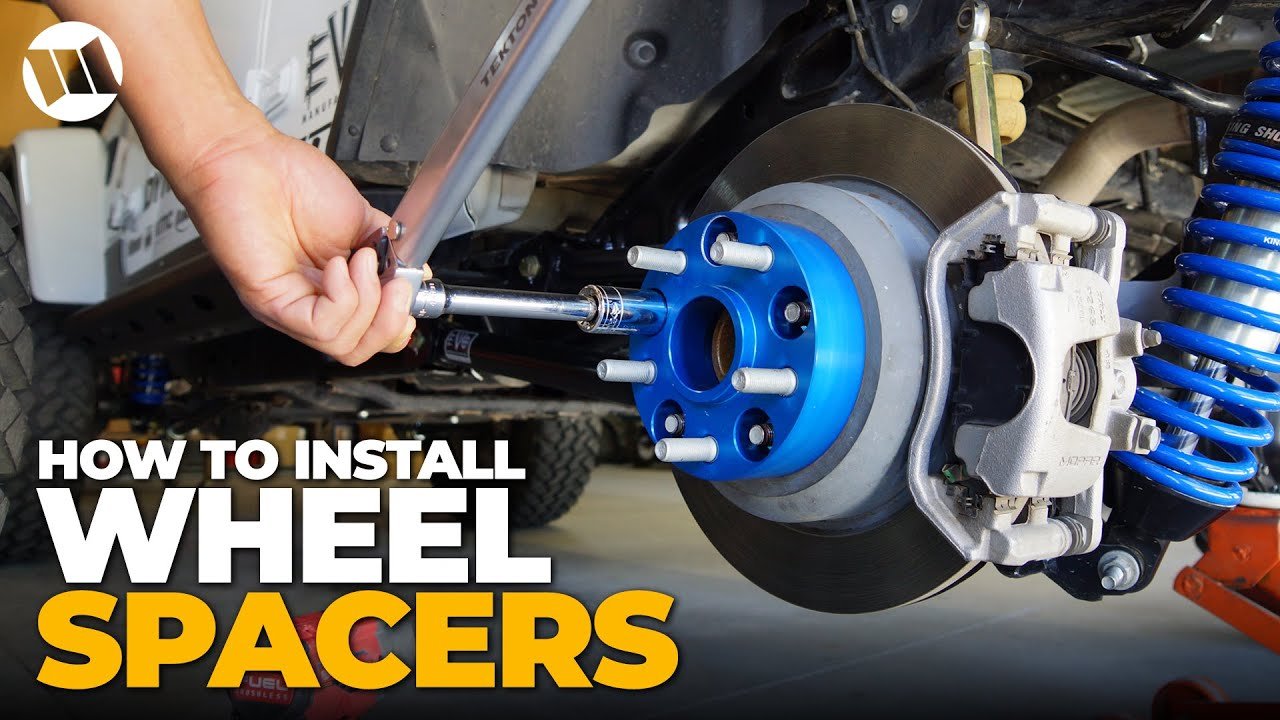
- Clean hub: Use a wire brush to remove rust and dirt from the hub. A clean surface is important for spacer fit.
- Position spacer: Align the spacer with the hub. If using bolt-on spacers, apply thread locker to the spacer’s bolts.
- Bolt spacer to hub: Tighten the spacer bolts in a star pattern. Use a torque wrench—most Jeep spacers require 90–100 ft-lbs of torque.
- Reinstall wheels: Place the wheel back onto the spacer. Tighten lug nuts in a star pattern.
- Lower Jeep: Remove jack stands and lower the vehicle.
- Final torque: Re-torque all lug nuts to factory specs (usually 95–105 ft-lbs for Jeep Wranglers).
- Check clearance: Turn the steering fully left and right. Check for rubbing on fenders or suspension.
- Drive and re-torque: After 25–50 miles, re-check and re-torque all bolts.
Common Mistakes To Avoid
- Not using a torque wrench: Hand-tightening is not enough. Under- or over-tightening can cause wheel failure.
- Skipping thread locker: Spacer bolts can loosen over time without it.
- Ignoring hub cleaning: Dirt or rust can prevent spacers from seating properly, causing vibration.
- Installing too wide spacers: This can damage suspension and steering parts.
Real-world Example
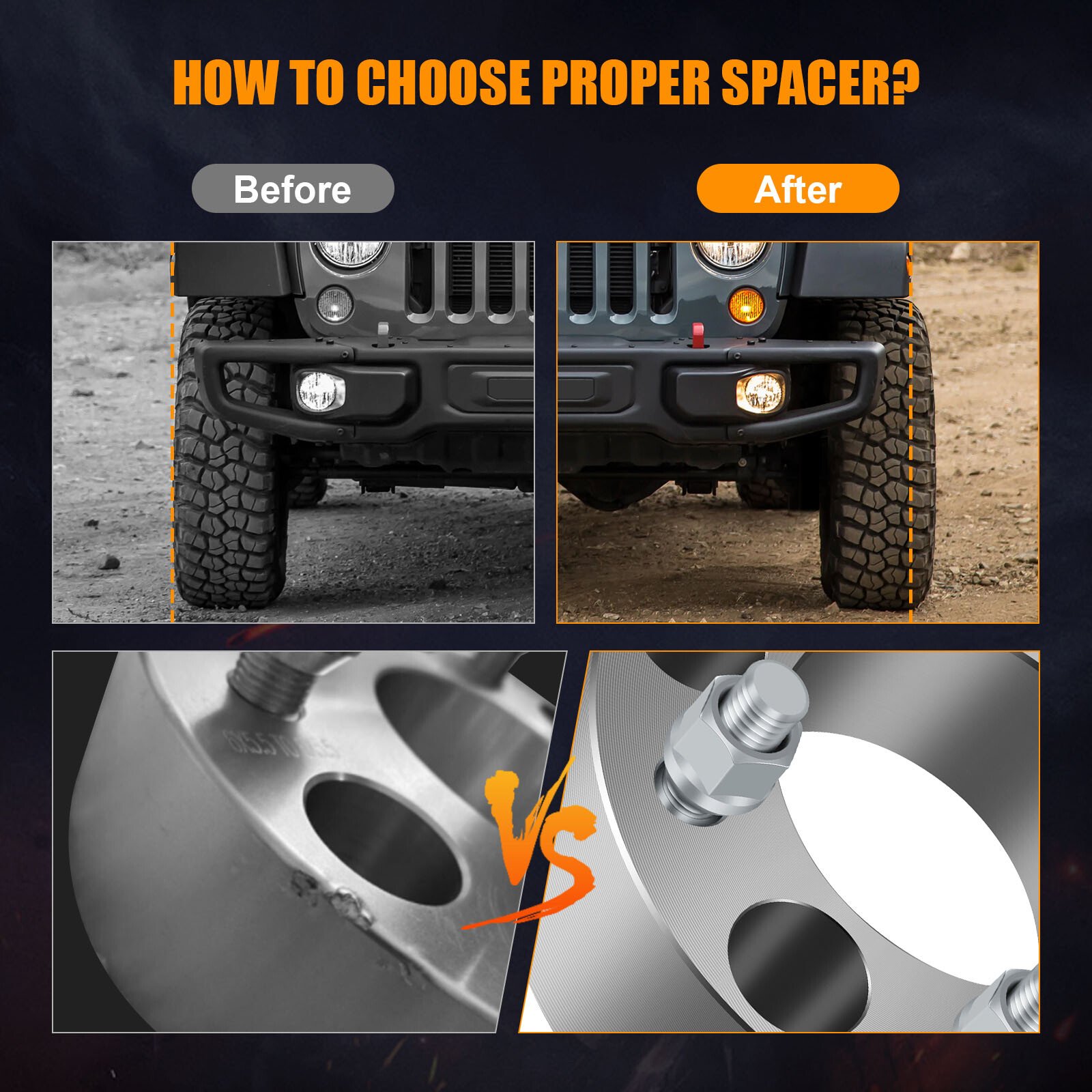
A Jeep Wrangler owner installed 1.5-inch bolt-on spacers to fit 35-inch tires. After cleaning the hub and using thread locker, he torqued everything to spec. After 30 miles, he checked torque again—two spacer bolts were slightly loose. Re-torquing fixed the issue. The Jeep handled better, and there was no rubbing.
Maintenance And Safety Checks
Wheel spacers need regular checks to stay safe:
- Inspect bolts every 5,000 miles
- Check for signs of rust or corrosion
- Re-torque after off-roading or hitting potholes
If you notice any vibration, noise, or looseness, remove the wheel and inspect the spacer immediately.
How Wheel Spacers Affect Handling
Using spacers changes your Jeep’s track width. A wider stance can make the Jeep feel more stable, especially in corners. But too much width can stress wheel bearings and affect steering response. For most drivers, spacers between 1 inch and 1.5 inches offer the best balance.
Here’s a comparison of stability before and after adding spacers:
| Spacer Width | Cornering Stability (1-5) | Risk of Suspension Stress (1-5) |
|---|---|---|
| None | 3 | 1 |
| 1 inch | 4 | 2 |
| 1.5 inches | 5 | 3 |
| 2 inches | 5 | 4 |
Frequently Asked Questions
What Are The Risks Of Using Wheel Spacers?
Wheel spacers can cause extra stress on wheel bearings and suspension parts. If installed incorrectly, they can loosen and cause vibration or even wheel separation.
Do Wheel Spacers Affect Warranty?
Many manufacturers say spacers void warranty on suspension and wheel parts. Always check your Jeep’s warranty terms before installing.
How Do I Know If My Spacers Are Safe?
Choose bolt-on spacers made from billet aluminum. Always torque bolts to spec and check them regularly. Avoid slip-on spacers for Jeep models.
Can I Install Spacers With Factory Wheels?
Yes, but check that the wheel bore fits the spacer and that the added width doesn’t cause rubbing. Most factory wheels can handle up to 1.5-inch spacers safely.
Is It Legal To Use Wheel Spacers?
Laws vary by state. Some places limit how far wheels can stick out from fenders. Check your local regulations or visit Wikipedia for more information.
Installing wheel spacers on your Jeep is simple if you follow the right steps. The right tools, careful torque, and regular checks are key for safety and performance.
With this guide, you can enjoy a wider stance and better handling without risking your Jeep or your safety.
Always double-check your work, and enjoy the improved drive.