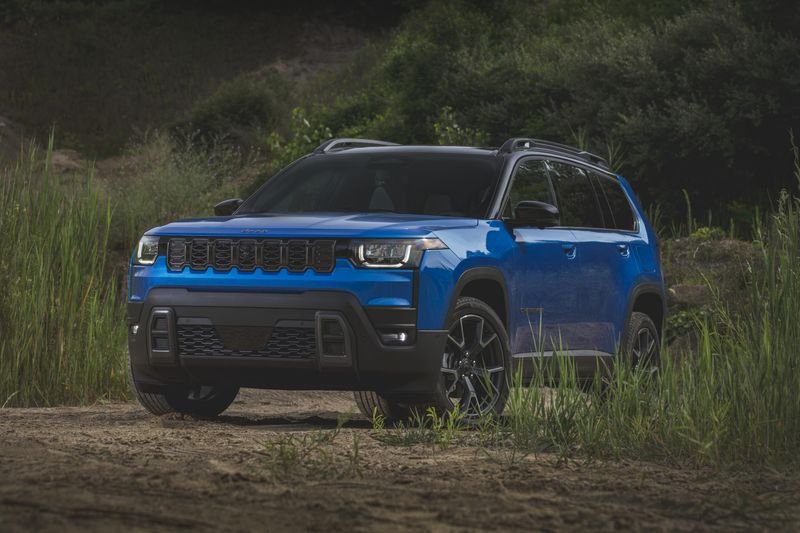
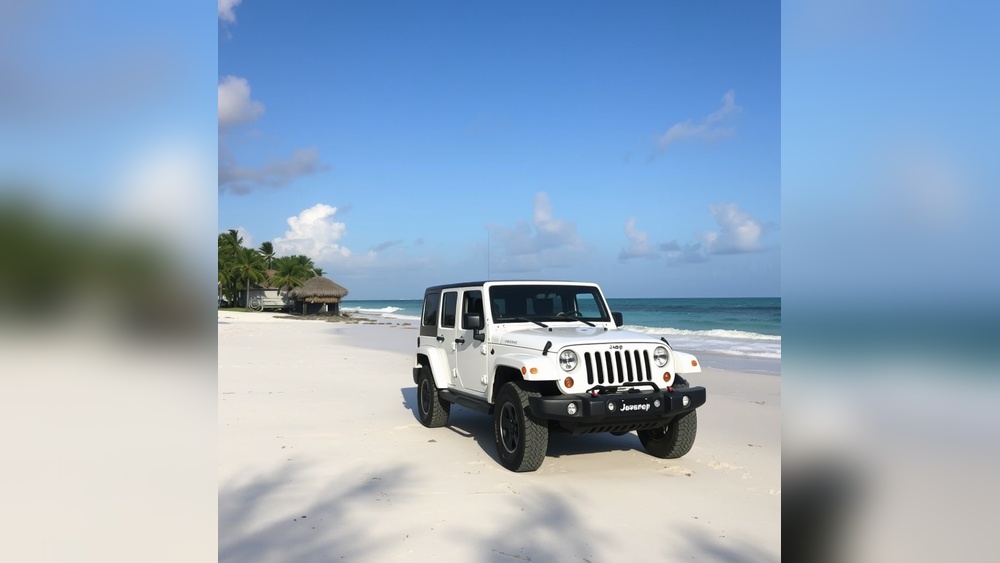
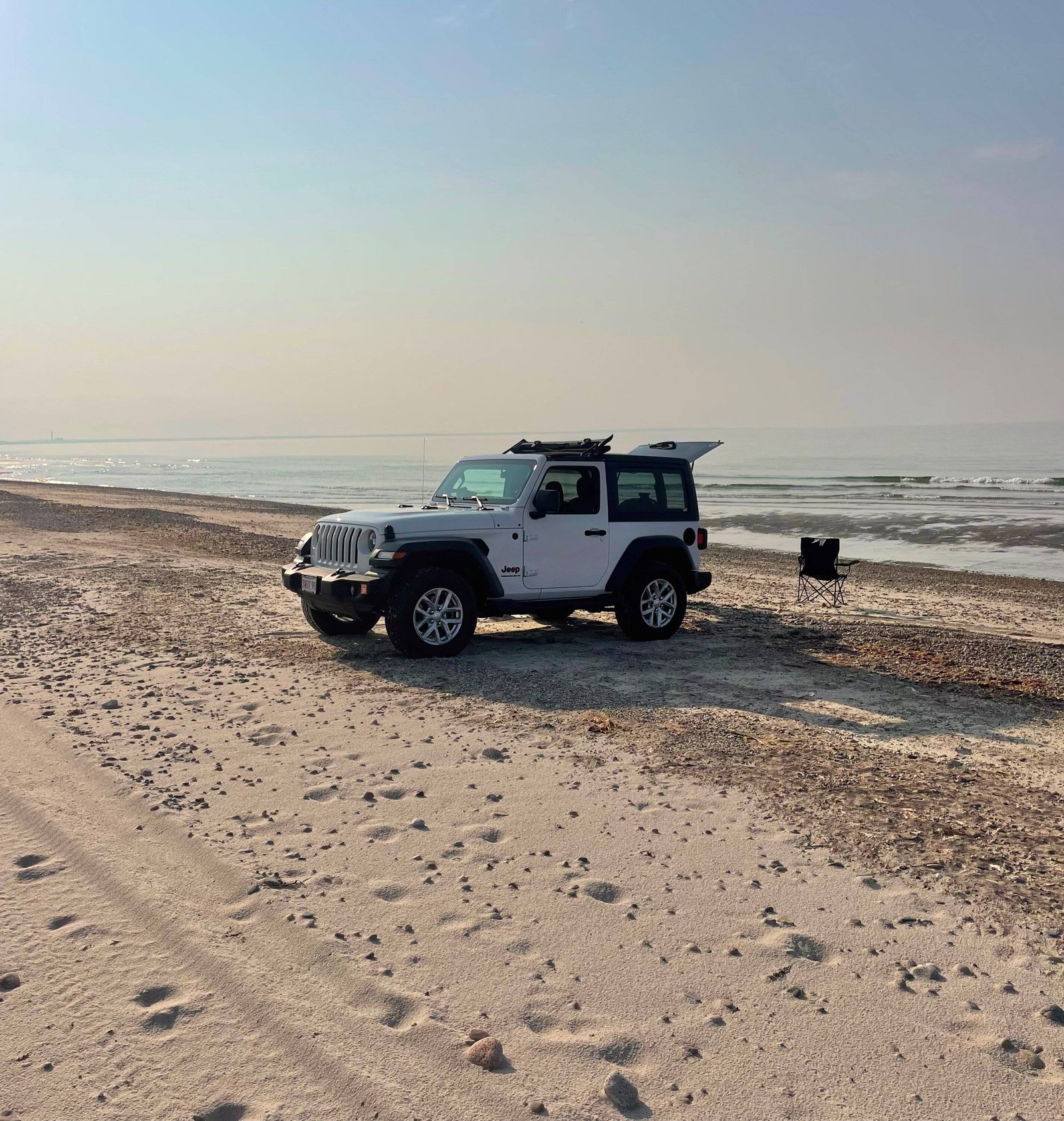
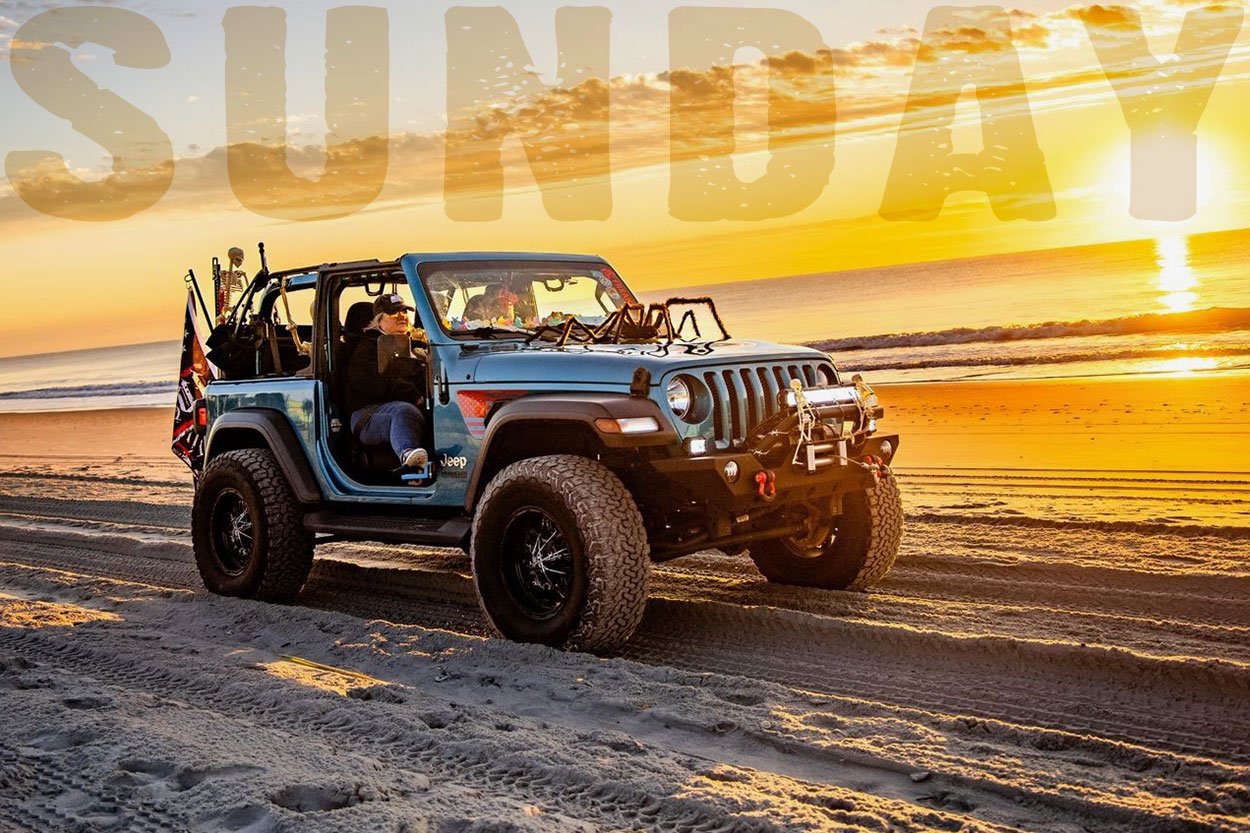
Driving a Jeep on the beach is an exciting adventure that blends the freedom of open spaces with the thrill of off-road exploration. While it looks simple, beach driving requires special skills and preparation. If done correctly, it creates unforgettable memories.
If done poorly, it can lead to getting stuck or damaging your vehicle. This guide will show you how to drive a Jeep on the beach safely, confidently, and legally even if it’s your first time.
Preparing Your Jeep For The Beach
Before you touch the sand, make sure your Jeep is ready. Preparation prevents problems and keeps your trip enjoyable.
1. Check Tire Pressure
Lower your tire pressure to 15-20 PSI. This helps your tires “float” on the sand instead of digging in.
Most factory Jeep tires can handle this range, but check your tire’s sidewall for the lowest safe pressure.
2. Inspect 4wd System
Make sure your four-wheel drive (4WD) is working. Test it before you reach the sand, not after you get stuck.
3. Bring Recovery Gear
Pack a shovel, tow strap, and traction boards. A small air compressor helps you refill tires after leaving the beach.
4. Remove Extra Weight
Take out unnecessary gear. A lighter Jeep has less chance of sinking in soft sand.
5. Know Local Rules
Some beaches require permits or have restricted areas. Research the rules for your chosen beach.
Beach Driving Techniques
Sand is not like a paved road. Understanding the right techniques helps you avoid common mistakes.
Entering And Exiting The Sand
When you leave the pavement, keep your speed steady and avoid sudden stops. If you stop, you might sink and lose traction.
Maintaining Momentum
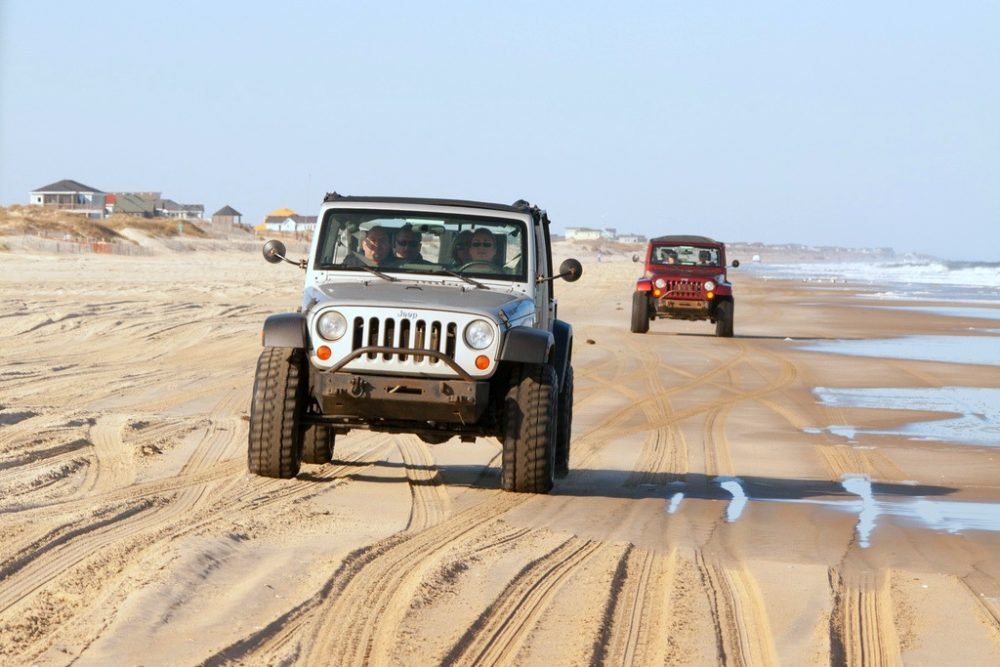
On soft sand, momentum is your best friend. Drive at a steady speed—usually between 10-20 mph. Go too fast, and you lose control. Too slow, and you risk getting stuck.
Steering And Turning
Make wide, gentle turns. Tight turns dig your front tires into the sand.
Always look ahead for obstacles like driftwood, holes, or deep ruts.
Avoiding Obstacles
Watch for people, animals, and other vehicles. Wet sand near the waterline is usually firmer and easier to drive on, but be careful of rising tides.
Jeep Models And Beach Performance
Different Jeep models perform differently on sand. The table below compares popular Jeep models for beach driving.
| Jeep Model | Ground Clearance (inches) | 4WD System | Ideal for Beach? |
|---|---|---|---|
| Wrangler | 10.8 | Part-Time 4WD | Yes |
| Grand Cherokee | 8.6 | Full-Time 4WD | Yes |
| Renegade | 8.7 | Available 4WD | Moderate |
| Compass | 8.2 | Available 4WD | Moderate |
Wrangler and Grand Cherokee are the top choices due to their clearance and advanced 4WD systems.
Safety And Environmental Tips
Protect yourself, others, and the beach environment.
1. Watch For Tides
Check tide charts before driving. Getting caught by the rising tide can trap your Jeep.
2. Avoid Soft Dunes
Dunes are sensitive habitats. Stay on marked paths to avoid harming plants and animals.
3. Stay Alert
Sand changes quickly. What was firm in the morning may be soft and dangerous by afternoon.
4. Pack Out Trash
Leave no trace. Bring bags to collect your garbage and keep the beach clean.
Common Mistakes To Avoid
Many drivers make errors that lead to getting stuck or damaging their vehicle. Here are mistakes to avoid:
- Spinning tires when stuck: This only digs you in deeper.
- Driving with high tire pressure: Makes it easy to sink.
- Ignoring tire tracks: Follow existing tracks for firmer sand.
- Failing to check local rules: Can lead to fines or towing.
Recovery: What To Do If You Get Stuck
Even experts get stuck sometimes. Here’s what to do:
1. Stop Spinning Tires
Don’t make it worse. Stop and get out to assess.
2. Clear Sand From Tires
Use a shovel to dig sand away from the tires and undercarriage.
3. Use Recovery Gear
Lay traction boards in front of your tires. If you have a tow strap and another vehicle, attach it to a recovery point.
4. Lower Tire Pressure Further
If you started at 20 PSI, try dropping to 15 PSI for extra grip.
5. Rock The Jeep
Shift between drive and reverse slowly to “rock” out of the rut.
Essential Beach Driving Gear
Having the right gear makes your trip safer and smoother. The table below shows essential items and their purpose.
| Item | Purpose |
|---|---|
| Shovel | Dig out stuck tires |
| Traction Boards | Give grip on soft sand |
| Air Compressor | Refill tires after the beach |
| Tow Strap | Pull vehicle with help |
| Pressure Gauge | Check tire PSI |
Many beginners forget the air compressor, which is crucial for safely returning to paved roads.
Legal And Insurance Considerations
Not all beaches allow vehicles. Some require permits or have strict rules.
Always check with local authorities before driving onto the sand. Insurance may not cover beach driving, so call your provider to clarify your coverage.
For more detailed regulations, the National Park Service provides information on legal beach driving in US parks.
Frequently Asked Questions
What Tire Pressure Is Best For Beach Driving?
Lower your tire pressure to 15-20 PSI. This helps the tires spread out and float on the sand.
Can All Jeep Models Drive On The Beach?
Most 4WD Jeep models can handle beach driving. Check your manual and avoid using 2WD-only models.
What Should I Do If My Jeep Gets Stuck?
Stop spinning your tires, dig out sand, use traction boards, and lower tire pressure even more if needed.
Is Driving On Wet Sand Safer?
Wet sand is usually firmer and easier to drive on. Still, avoid getting too close to the water, especially at high tide.
Do I Need A Special Permit To Drive On The Beach?
Many beaches require a permit. Always check with local authorities before you go.
Driving a Jeep on the beach is a unique way to explore and enjoy nature. With proper preparation, respect for the environment, and the right skills, you can have a safe and memorable adventure.
Remember, every beach is different learn its rules and challenges before you go.
Happy driving!