If you own a Jeep TJ, you know it’s a tough, reliable vehicle built for adventure. But even the toughest ride needs care, and one of the most overlooked checks is the transmission fluid. Checking this fluid is not just about maintenance—it’s about keeping your Jeep’s transmission running smoothly for many miles. If you’ve never done this before, don’t worry. This guide walks you through everything you need to know, from what tools you need to how to spot trouble before it becomes a big problem.
Why Transmission Fluid Matters In Your Jeep Tj
The transmission fluid acts as a lubricant, coolant, and hydraulic fluid for your Jeep’s transmission. Without enough clean fluid, your transmission can overheat, shift poorly, or even fail. Transmission repairs are expensive, often costing thousands of dollars. Regularly checking and maintaining the fluid is a simple way to avoid these headaches.
Understanding The Jeep Tj Transmission Types
Before you start, it’s important to know your Jeep’s transmission type. The TJ (1997–2006) came with both manual and automatic transmissions. Each type has its own method for checking fluid.
| Model Year | Transmission Type | Common Model Names |
|---|---|---|
| 1997–2002 | 3-speed Automatic (32RH) | Sport, SE, Sahara |
| 2003–2006 | 4-speed Automatic (42RLE) | X, Rubicon, Unlimited |
| 1997–2004 | 5-speed Manual (AX-5, NV3550) | SE, Sport |
| 2005–2006 | 6-speed Manual (NSG370) | Unlimited, Rubicon |
Check your owner’s manual or look at your gear shifter to confirm which you have. The process is slightly different for each type.
Tools And Supplies You’ll Need
Gathering the right tools helps the job go smoothly. Here’s a simple list for checking transmission fluid on a Jeep TJ:
- Socket set or adjustable wrench
- Clean rags or paper towels
- Transmission fluid (as specified in your manual)
- Small funnel (for automatic transmission top-up)
- Jack and stands (if you need extra clearance)
- Gloves and safety glasses
For automatic transmissions, you might need a long-necked funnel. For manuals, you’ll need a hand pump if adding fluid.
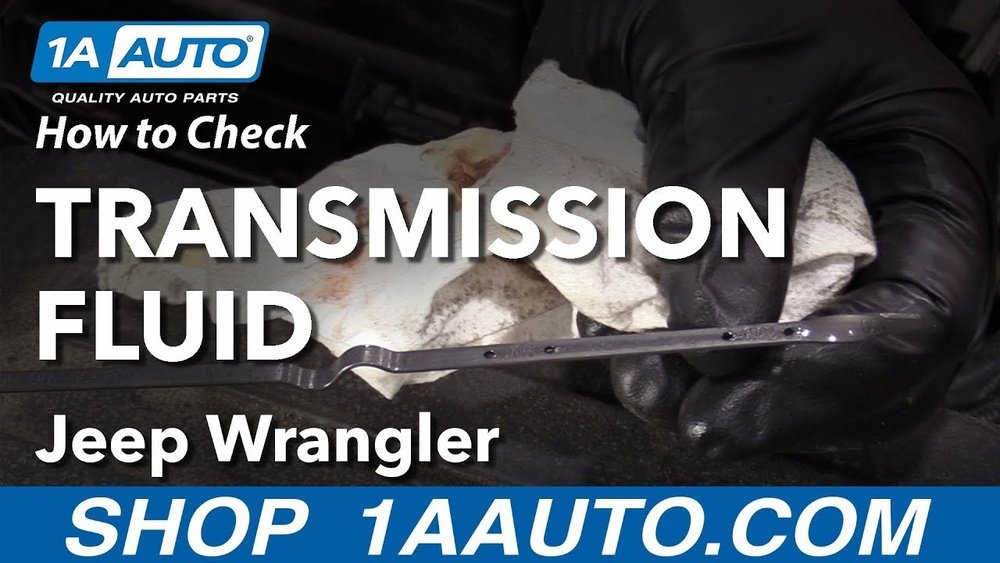
How To Check Transmission Fluid: Automatic Jeep Tj
Most Jeep TJ automatics have a traditional dipstick, but not all models do. Here’s a step-by-step process for models with a dipstick (like the 32RH and 42RLE):
- Warm up the engine. Start your Jeep and let it idle for 10–15 minutes, so the fluid circulates and reaches normal temperature.
- Park on level ground. Make sure your Jeep is on a flat surface and shift the transmission through all gears, ending in ‘Park’ or ‘Neutral’ with the parking brake set.
- Open the hood. Find the transmission dipstick; it’s usually labeled and may be near the firewall.
- Remove and clean the dipstick. Pull it out, wipe it clean with a rag, and reinsert it fully.
- Check the fluid level. Pull it out again and look at both sides. The fluid should be between the ‘Add’ and ‘Full’ marks. The color should be pinkish-red, not brown or black.
- Top up if needed. If the level is low, use a funnel to add small amounts of the recommended fluid, rechecking often. Don’t overfill.
- Check for issues. If you see bubbles, burnt smell, or debris, this may signal internal problems.
Automatic Transmission Fluid Comparison
Different Jeep TJ automatics use different fluids. Using the wrong type can harm your transmission.
| Transmission Model | Recommended Fluid | Capacity (Dry Fill) |
|---|---|---|
| 32RH (3-speed) | ATF+4 | ~4.0 quarts |
| 42RLE (4-speed) | ATF+4 | ~10.5 quarts |
Never mix ATF+4 with other fluids. Always double-check your manual or the label on the dipstick.
How To Check Transmission Fluid: Manual Jeep Tj
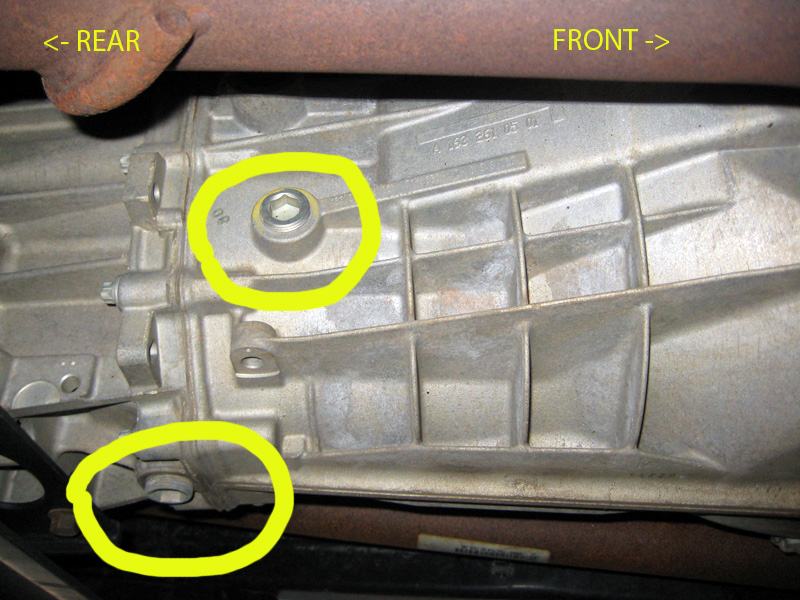
Manual transmissions don’t have a dipstick. Instead, you check the fluid level at the transmission fill plug underneath the Jeep.
- Cool down your Jeep. Let the vehicle cool for safety.
- Lift the Jeep (if needed). Use jack stands for extra room, ensuring the Jeep is level.
- Locate the fill plug. Under the Jeep, find the transmission. Look for a small plug about halfway up the transmission case.
- Remove the fill plug. Use a socket or wrench to unscrew it. Be ready for a few drops of fluid to come out.
- Check the level. The fluid should be right at the bottom of the hole. If you can touch fluid with your finger or it drips out, the level is good.
- Top off if necessary. If it’s low, use a hand pump to add the correct gear oil until it barely starts to drip out.
- Replace the plug. Tighten securely, but don’t overtighten.
Manual Transmission Fluid Comparison
Manual TJs use gear oil, not ATF. Here’s a quick comparison:
| Transmission Model | Recommended Fluid | Capacity (Dry Fill) |
|---|---|---|
| AX-5 | 75W-90 GL-5 | ~3.2 pints |
| NV3550 | 75W-90 GL-3 | ~3.5 pints |
| NSG370 | Manual Transmission Fluid (Mopar part 4874464 or equivalent) | ~4.2 pints |
Tip: Don’t confuse gear oil grades. Using GL-5 in transmissions that require GL-3 can damage synchros.
Signs Of Bad Or Low Transmission Fluid
Catching problems early can save you thousands in repairs. Watch for these warning signs:
- Delayed or harsh shifting (automatic)
- Grinding gears (manual)
- Slipping transmission
- Burnt smell or dark, dirty fluid
- Transmission warning light
- Leaking fluid under the Jeep
If you notice any of these, check your fluid immediately. Continuing to drive can make the problem worse.
Common Mistakes When Checking Transmission Fluid
Many Jeep TJ owners make small errors that can lead to bigger issues. Here are a few to avoid:
- Checking on a slope: The fluid reading won’t be accurate unless the Jeep is level.
- Using the wrong fluid: Always use the type specified for your transmission.
- Not warming up (automatics): Fluid expands when hot. Checking cold can give a false low reading.
- Overfilling: Too much fluid can cause foaming and erratic shifting.
- Ignoring signs of trouble: If you see metal shavings or a burnt smell, don’t just top off—investigate further.
How Often Should You Check And Change Transmission Fluid?
For most Jeep TJs, checking transmission fluid every 12,000 to 15,000 miles is a good habit. If you often drive off-road, tow, or live in a hot climate, check more often.
Fluid change intervals depend on your transmission:
- Automatic: Every 30,000–60,000 miles or as recommended by Jeep.
- Manual: Every 60,000–100,000 miles.
Always adjust your schedule if you notice harsh conditions or problems.
Practical Tips For Diy Jeep Owners
If you’re new to checking fluids, these tips can make the process easier:
- Take photos as you go. This helps you remember bolt locations and fluid levels.
- Keep a maintenance log. Write down the date, mileage, and what you did. This helps with resale and troubleshooting.
- Buy quality fluids. Cheap fluids can break down quickly and harm your transmission.
- Check for leaks after every off-road trip. Rocks and debris can damage transmission pans.
- Wear gloves. Transmission fluid can irritate your skin.
When To Seek Professional Help
While checking fluid is simple, some problems need a trained eye. See a mechanic if:
- You find metal flakes in the fluid.
- The fluid is black or smells burnt.
- You hear whining, clunking, or grinding noises.
- There’s a large, sudden drop in fluid level.
Catching issues early often means smaller, less expensive repairs.

Jeep Tj Transmission Fluid Specs At A Glance
Here’s a quick-reference chart for the most common Jeep TJ transmissions:
| Transmission | Fluid Type | Fill Location | Frequency (Normal Use) |
|---|---|---|---|
| 32RH (Auto) | ATF+4 | Engine Bay Dipstick | 30,000–60,000 miles |
| 42RLE (Auto) | ATF+4 | Engine Bay Dipstick | 30,000–60,000 miles |
| AX-5 (Manual) | 75W-90 GL-5 | Underbody Fill Plug | 60,000–100,000 miles |
| NV3550 (Manual) | 75W-90 GL-3 | Underbody Fill Plug | 60,000–100,000 miles |
| NSG370 (Manual) | Mopar Manual Fluid | Underbody Fill Plug | 60,000–100,000 miles |
For more technical details, check the official Jeep Wrangler TJ page.
Frequently Asked Questions
How Do I Know If My Jeep Tj Has A Transmission Fluid Problem?
Watch for slipping gears, delayed shifting, or a burnt smell from the transmission area. These are early signs of trouble. Also, check for transmission fluid leaks under your Jeep.
What Type Of Transmission Fluid Does A 2005 Jeep Tj Need?
A 2005 Jeep TJ with an automatic transmission uses ATF+4 fluid. Manuals (like the NSG370) require Mopar Manual Transmission Fluid part 4874464 or an approved equivalent.
Can I Check My Jeep Tj Transmission Fluid When The Engine Is Cold?
For automatics, always check when the engine is fully warmed up and running. For manuals, the Jeep should be cool and safely supported before opening the fill plug.
Is It Safe To Drive If My Transmission Fluid Is Low?
No. Driving with low transmission fluid can cause severe damage to your transmission. Top up the fluid as soon as possible, and check for leaks.
How Often Should I Change My Jeep Tj Transmission Fluid?
For most driving, change the automatic transmission fluid every 30,000–60,000 miles. For manuals, change the gear oil every 60,000–100,000 miles. Adjust if you drive in harsh conditions or tow frequently.
Taking care of your Jeep TJ’s transmission fluid is one of the best ways to keep your Jeep running strong. With a few basic tools and a little time, you can check and maintain this vital fluid yourself, saving money and avoiding big repairs down the road. Whether you’re on city streets or rugged trails, your Jeep’s transmission will thank you for the attention.