Modern cars rely on precise fuel delivery for smooth performance. If your engine feels rough, has trouble starting, or smells strongly of fuel, it could point to a leaking fuel injector.
Ignoring this issue risks engine damage, poor fuel economy, and even fire hazards. Learning how to check for a leaking injector is a valuable skill for drivers and mechanics alike.
This guide explains clear, effective ways to spot injector leaks using simple tools and practical steps. You’ll understand the signs, know what to look for, and avoid common mistakes that can lead to expensive repairs.
Why Fuel Injector Leaks Matter
A fuel injector leak is more than an inconvenience. It can cause:
- High fuel consumption
- Engine misfire
- Strong fuel smell
- Hard starting
- Black smoke from exhaust
Leaking injectors can let excess fuel into the engine, making it run rich. This wastes money and can damage spark plugs, sensors, and the catalytic converter.
In rare cases, fuel leaks may cause fires, especially if the leak is external.
Key Symptoms Of Leaking Injectors
Watch for these signs:
- Fuel odor: Strong smell near the engine or exhaust.
- Rough idle: Engine feels shaky or unstable when stopped.
- Hard starts: Engine takes longer to start, especially after sitting overnight.
- Poor performance: Loss of power or sluggish acceleration.
- Increased emissions: Noticeable black smoke from the tailpipe.
- Check Engine Light: Error codes related to fuel mixture.
Not every symptom means a leak, but several together are a strong warning.
Step-by-step Methods To Check For Injector Leaks
There are safe, proven ways to test for leaks. Here’s how to do it:
1. Visual Inspection
Start with a careful look:
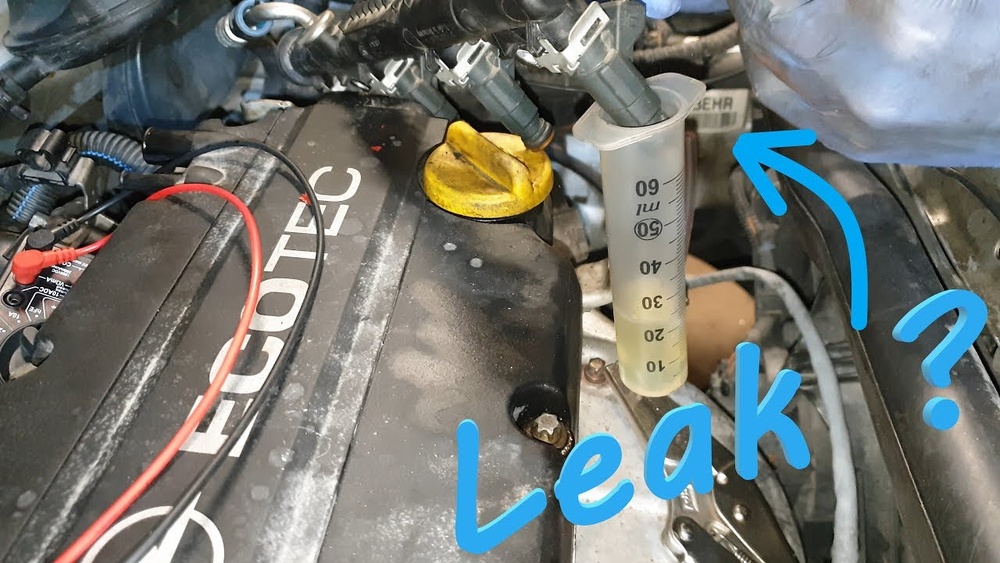
- Open the hood and locate the fuel rail and injectors.
- Check for wet spots or stains around the injector body.
- Look for pooled fuel near the base or on the intake manifold.
If you see visible fuel, do not start the engine. Clean the area and repair immediately.
2. Smell Test
Sometimes leaks are too small to see. Stand near the engine with it off and sniff. A strong gasoline smell can signal a leak. If you notice the smell only when the engine is running, the leak may be internal.
3. Fuel Pressure Drop Test
This test helps find internal leaks:
- Attach a fuel pressure gauge to the fuel rail.
- Turn the ignition on, but don’t start the engine.
- Watch the gauge for a steady reading.
- If pressure drops quickly after turning off, an injector may be leaking.
Here’s a simple comparison of expected results:
| Condition | Fuel Pressure Behavior |
|---|---|
| No Leak | Pressure holds steady for several minutes |
| Minor Leak | Pressure drops slowly (over 5-10 minutes) |
| Major Leak | Pressure drops rapidly (within 1-2 minutes) |
4. Injector Removal And Inspection
For a deeper check:
- Remove the suspected injector.
- Inspect the O-rings and body for cracks, tears, or fuel stains.
- Replace faulty seals or injectors as needed.
5. Cylinder Balance Test
This method shows if one cylinder is running rich due to a leak:
- With the engine running, disconnect one injector at a time.
- Listen for changes in engine speed or smoothness.
- If unplugging a certain injector makes little difference, it may be leaking.
6. Professional Diagnostic Tools
Advanced shops use electronic tools to check injector performance. They may use ultrasonic testing or scan tools to read live data from the engine computer.
Common Mistakes When Checking Injectors
Many beginners make errors that hide leaks or damage parts:
- Using excessive force: Can break connectors or O-rings.
- Skipping pressure tests: Missing internal leaks.
- Ignoring safety: Always work in a well-ventilated area and avoid open flames.
- Not cleaning before inspection: Dirt can hide leaks and confuse results.
Here’s a quick comparison of safe versus unsafe practices:
| Safe Practice | Unsafe Practice |
|---|---|
| Disconnect battery before inspecting | Inspect with battery connected |
| Work in open, ventilated space | Work near open flame or cigarette |
| Wear gloves and eye protection | Touch fuel with bare hands |

Repair Options And When To Seek Help
If you find a leaking injector, you have two main choices:
- Replace O-rings/seals: Cheap if only the seal is damaged.
- Replace injector: Needed if the body is cracked or the leak is internal.
For most people, replacing O-rings is a simple task. But if the leak is inside the injector, or if you’re unsure, it’s best to see a mechanic.
Some cars have complex fuel systems that need professional tools and skills.
Extra Tips Most Beginners Miss
- Check after every repair: Always re-check for leaks after replacing parts. Sometimes new seals need to settle.
- Don’t reuse old O-rings: Even if they look fine, old rings can fail quickly.
- Use the correct torque: Over-tightening can crush seals and cause leaks.
Cost And Time Estimates
Fixing injector leaks is usually fast and affordable:
| Repair Type | Average Cost | Estimated Time |
|---|---|---|
| O-ring replacement | $10–$50 per injector | 30–60 minutes |
| Injector replacement | $80–$300 per injector | 1–2 hours |
| Professional diagnosis | $50–$150 | 30–60 minutes |
Frequently Asked Questions
What Causes Fuel Injector Leaks?
Leaking injectors usually result from worn O-rings, cracks in the injector body, or dirt that prevents proper sealing. Sometimes poor installation can damage seals.
Can I Drive With A Leaking Injector?
It’s not safe to drive with a leaking injector. The excess fuel can cause engine damage, raise fire risk, and make your car fail emissions tests.
How Often Should Injectors Be Checked?
Inspect injectors whenever you notice fuel odor, rough running, or after 50,000–100,000 miles as routine maintenance.
Are Fuel Injector Cleaners Helpful?
Injector cleaners can remove carbon buildup, but they do not fix leaks. Mechanical issues like cracked seals require physical repair.
Where Can I Find More Detailed Guides?
You can visit Wikipedia for comprehensive information about fuel injectors, their history, and technology.
Spotting and fixing a leaking fuel injector saves money and keeps your car running safely. With the right tools and careful inspection, most leaks are easy to diagnose and repair. Regular checks prevent bigger problems and give peace of mind every time you drive.



















