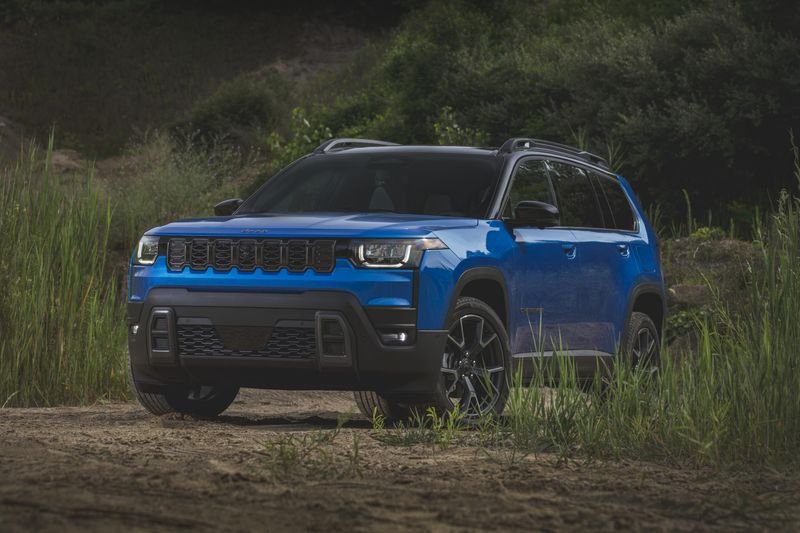
If your 2016 Jeep Wrangler is running hotter than usual or the heater isn’t working well, you may need to change the thermostat. This part controls coolant flow and helps keep your engine at the right temperature. Replacing it is a job many people can do at home with basic tools, saving both time and money. With care and the right steps, you can get your Jeep back on the road in just a couple of hours.
Tools And Parts You Need
Before you start, gather these items:
- New thermostat (correct for 2016 Jeep Wrangler, 3.6L engine)
- New thermostat gasket
- Socket set (8mm, 10mm commonly used)
- Ratchet and extension
- Drain pan
- Flathead screwdriver or pliers (for hose clamps)
- Coolant (Mopar or equivalent, check owner’s manual)
- Clean rags
- Scraper or gasket remover
- Gloves and safety glasses
Tip: Buy a thermostat with a gasket included to avoid leaks.
Safety And Preparation
- Cool Down: Never open the cooling system when hot. Wait at least 30 minutes after driving.
- Lift the Hood: Park on a flat surface and set the parking brake.
- Disconnect Battery: Remove the negative terminal to avoid electrical shorts.
Draining The Coolant
Start by draining some coolant so it doesn’t spill everywhere during the job.
- Place a drain pan under the radiator.
- Open the radiator cap slowly to release any pressure.
- Open the radiator drain plug (bottom passenger side) and let about 1-2 gallons drain out. This is enough for the thermostat change.
Insight: Draining just enough coolant saves time on refilling and bleeding air later.
Locating And Removing The Thermostat
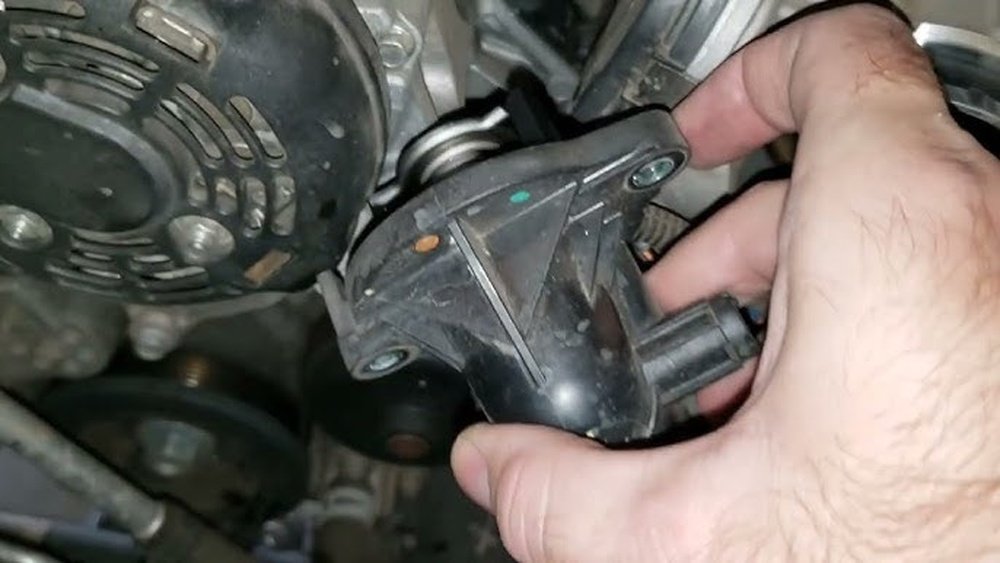
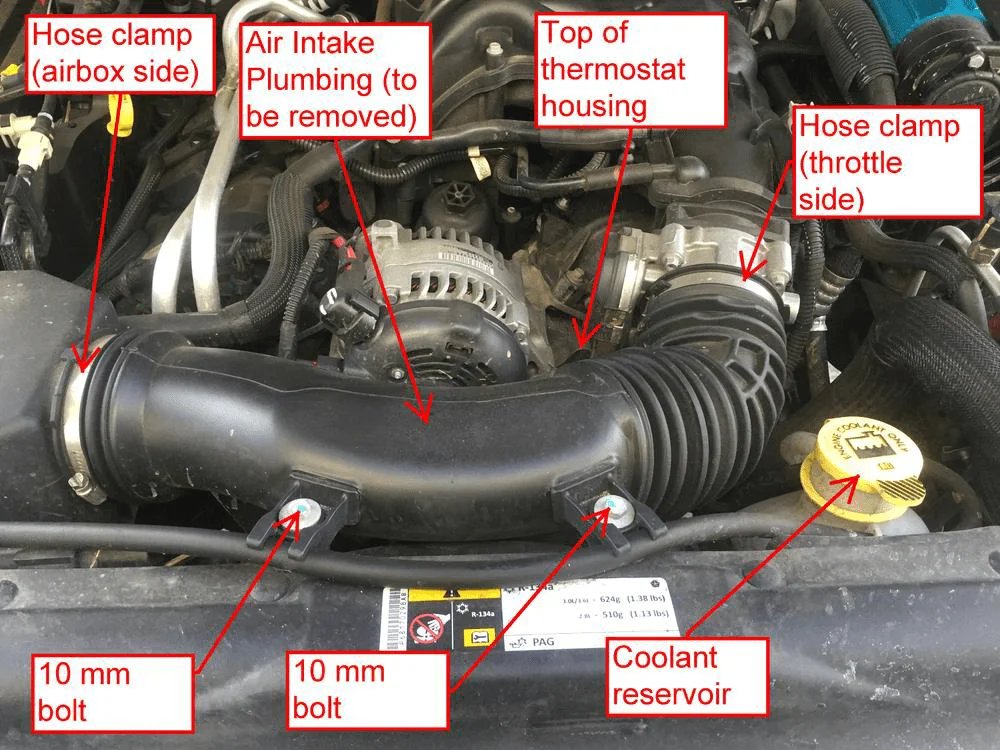
On the 2016 Jeep Wrangler, the thermostat is inside the thermostat housing where the lower radiator hose meets the engine.
- Follow the lower radiator hose to the engine. The metal or plastic housing here holds the thermostat.
- Use a screwdriver or pliers to remove the hose clamp and pull off the hose. Some coolant may leak; have a rag ready.
- Remove the two bolts holding the thermostat housing with your socket set.
- Carefully pull off the housing. The thermostat may stick—wiggle it gently.
Common mistake: Don’t force the housing off; prying can crack plastic parts.
Replacing The Thermostat
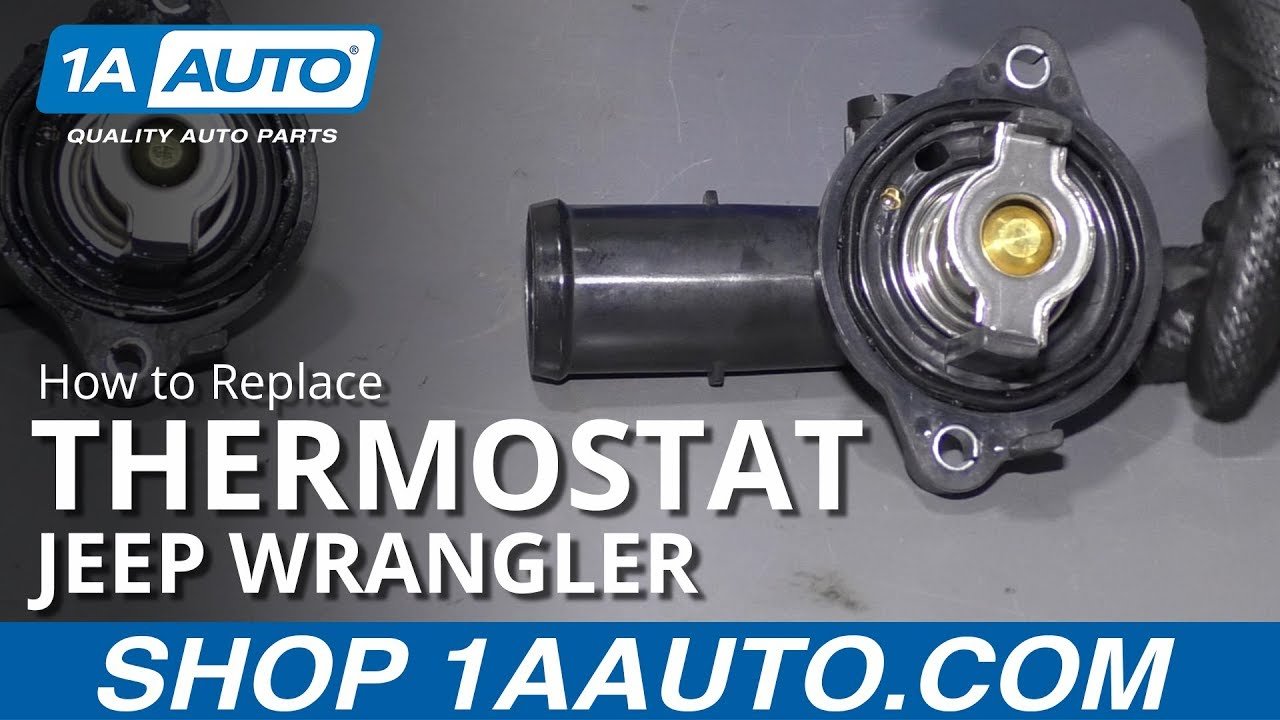
- Note how the old thermostat sits in the housing—orientation matters.
- Remove the old thermostat and gasket. Clean the mating surfaces with a scraper or rag.
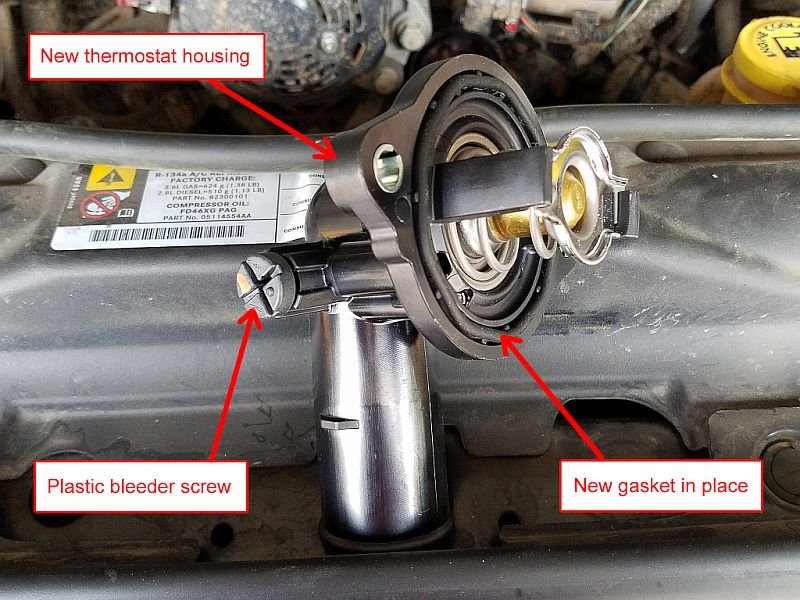
- Place the new gasket and thermostat in the same position as the old one.
- Reinstall the housing and tighten bolts evenly (do not overtighten—torque specs are about 89 in-lbs).
- Reattach the lower radiator hose and clamp.
Non-obvious tip: Some thermostats have a small air bleed hole. This should point up to help air escape.
Refilling And Bleeding The Cooling System
- Close the radiator drain plug.
- Pour fresh coolant into the radiator until full.
- Fill the coolant reservoir to the “MAX” line.
- Start the engine and let it warm up with the radiator cap off. Watch for bubbles—this is air leaving the system.
- When the engine reaches normal temperature and the heater blows hot air, top off coolant if needed.
- Check for leaks at the thermostat housing and hose connections.
Pro tip: Squeeze the upper radiator hose gently to help move trapped air out.
Quick Reference: Thermostat Replacement Steps
| Step | Action | Details |
|---|---|---|
| 1 | Drain coolant | Remove radiator cap, open drain plug |
| 2 | Remove hose & housing | Detach lower hose, unbolt housing |
| 3 | Replace thermostat | Install new thermostat and gasket |
| 4 | Reassemble | Reattach housing and hose |
| 5 | Refill coolant | Fill radiator and reservoir, bleed air |
Choosing The Right Thermostat
All thermostats are not the same. For your Jeep, use a 195°F thermostat (the factory standard). Avoid cheap brands, as they may not last or seal well.
| Brand | Price (USD) | Warranty |
|---|---|---|
| Mopar (OEM) | 35-50 | 12 months |
| Stant | 20-30 | 12 months |
| Duralast | 18-28 | Limited Lifetime |
Important: Always match the temperature rating to the Jeep specs. Using a colder or hotter thermostat can cause poor fuel economy or engine damage.
Final Checks After Installation
- Drive your Jeep for about 15 minutes.
- Watch the temperature gauge—it should stay just below the center.
- Check for leaks around the housing and hoses.
- Recheck coolant levels after the engine cools.
A new thermostat should fix most overheating or no-heat problems. If issues continue, other parts may need attention.
Real-world Example
A 2016 Wrangler owner noticed engine overheating and weak heat from vents. After changing the thermostat using the steps above, the temperature gauge returned to normal, and the heater worked well again.
This shows that a faulty thermostat can cause both overheating and cabin heating issues.
For more technical details, see the official Jeep Owner’s Manual.
Frequently Asked Questions
How Often Should I Change The Thermostat On A 2016 Jeep Wrangler?
Most thermostats last 60,000 100,000 miles. Change it if you see signs like overheating, cold air from the heater, or coolant leaks.
What Type Of Coolant Should I Use After Changing The Thermostat?
Use Mopar 10 Year/150,000 Mile Coolant (HOAT) or an equivalent that meets Chrysler MS-9769 spec. Mixing types can damage your cooling system.
Can I Reuse The Old Thermostat Gasket?
No. Always use a new gasket to prevent leaks. Old gaskets often get damaged during removal.
What If My Temperature Gauge Still Shows Overheating After Replacement?
Check for air pockets in the system, low coolant, or possible radiator or water pump problems. Bleeding the air is critical.
Do I Need Special Tools To Change The Thermostat?
No special tools are needed, just standard sockets, pliers, and screwdrivers. A torque wrench helps ensure bolts are tightened correctly but is not required.
Changing the thermostat on your 2016 Jeep Wrangler is a smart DIY project. Take your time, follow each step, and your Jeep will run at the right temperature again.