Building your own Jeep hard top hoist can make removing and storing your Jeep’s hard top much easier and safer. Many Jeep owners struggle with lifting the heavy top by themselves, and improper storage can lead to scratches or damage.
A custom hoist lets you do the job solo, saves your back, and protects your investment. If you’re ready to free up some garage space and enjoy open-air driving more often, this guide will show you how to build a reliable hard top hoist using common tools and materials.
Why Build Your Own Hard Top Hoist?
A factory or aftermarket hoist kit can cost $150 $500, but building your own is much cheaper usually under $75. You can also customize it to fit your garage and your Jeep’s top.
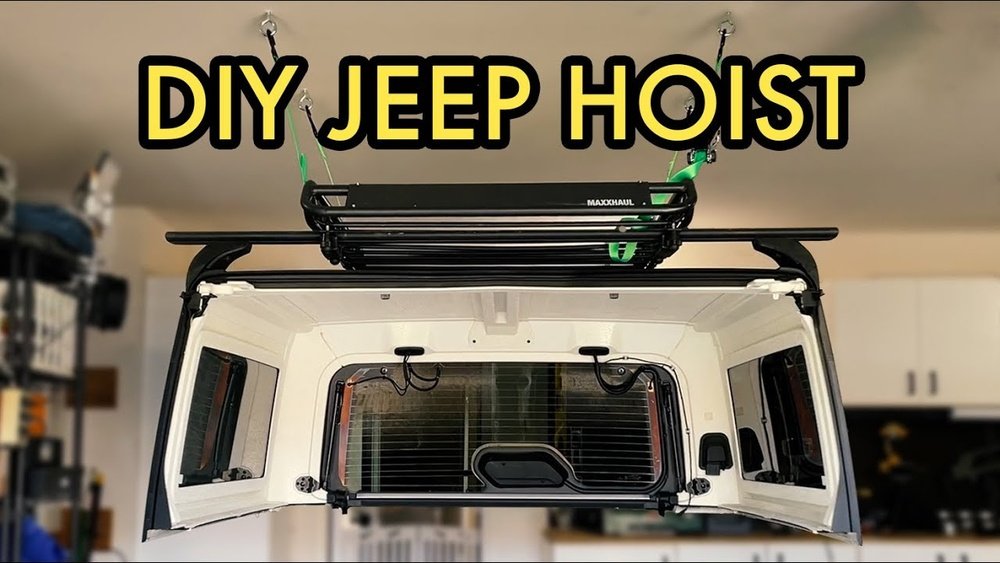
Besides saving money, a DIY hoist gives you a sense of accomplishment and lets you add features, like easy one-person operation or pulley upgrades.
Many Jeep owners don’t realize that the wrong hoist setup can put stress on the roof or glass. Building your own means you control how and where the lifting straps support the top.
With the right setup, you’ll avoid the common mistake of damaging the rear window or weather seals.
Materials And Tools Needed
You’ll need a few items, most of which are available at hardware stores. Here’s a quick list for a basic manual hoist:
- Heavy-duty eye bolts (2–4, rated 250 lbs or more)
- Nylon lifting straps (2–4, soft and at least 1” wide)
- Rope or paracord (50 ft of 3/8” or thicker)
- Pulley blocks (2 double pulleys, 2 single pulleys)
- Lag bolts (for ceiling joists)
- Manual hand winch (optional, for easier lifting)
- Drill, socket set, wrench, stud finder, ladder
For comparison, here’s how costs break down for a basic DIY setup vs. a store-bought kit:
| Item | DIY Hoist Cost | Store-Bought Kit |
|---|---|---|
| Straps/Pulleys | $35 | Included |
| Hardware (bolts/rope) | $20 | Included |
| Manual Winch | $15 (optional) | Included |
| Total Cost | $55–70 | $150–500 |
Step-by-step Guide To Building A Jeep Hard Top Hoist
Step 1: Locate Ceiling Joists
Use a stud finder to locate two strong ceiling joists in your garage. The joists must be parallel and spaced at least 4 feet apart. Mark the spots where you’ll install the eye bolts. This step is critical—never anchor into drywall alone.
Step 2: Install Eye Bolts
Drill pilot holes and screw in the heavy-duty eye bolts. These will support the full weight of your Jeep’s hard top, which can be 120 150 lbs.
Make sure each bolt is fully threaded into solid wood.
Step 3: Attach Pulleys And Rope
Clip the pulley blocks onto the eye bolts. Thread your rope through the pulleys, creating a double-lift system.
This setup reduces the weight you feel when lifting. Use carabiners to make attaching and removing the straps easier.
Step 4: Position Lifting Straps
Lay the nylon straps under the Jeep’s hard top. One strap should go under the front, one under the rear. Make sure the straps are spread out to distribute the weight evenly. This prevents pressure on the glass or edges.
Here’s a quick table to help you choose the right straps:
| Strap Width | Weight Rating | Recommended Use |
|---|---|---|
| 1 inch | 250 lbs | Light tops |
| 1.5 inch | 500 lbs | Most Jeep tops |
| 2 inch | 900 lbs | Extra safety, peace of mind |
Step 5: Hoist The Top
Connect the lifting straps to the rope and start pulling. If you use a manual winch, cranking will be smoother and safer.
Keep the top level as you lift. Raise it just high enough to clear your Jeep, then secure the rope or winch handle.
Step 6: Store The Top
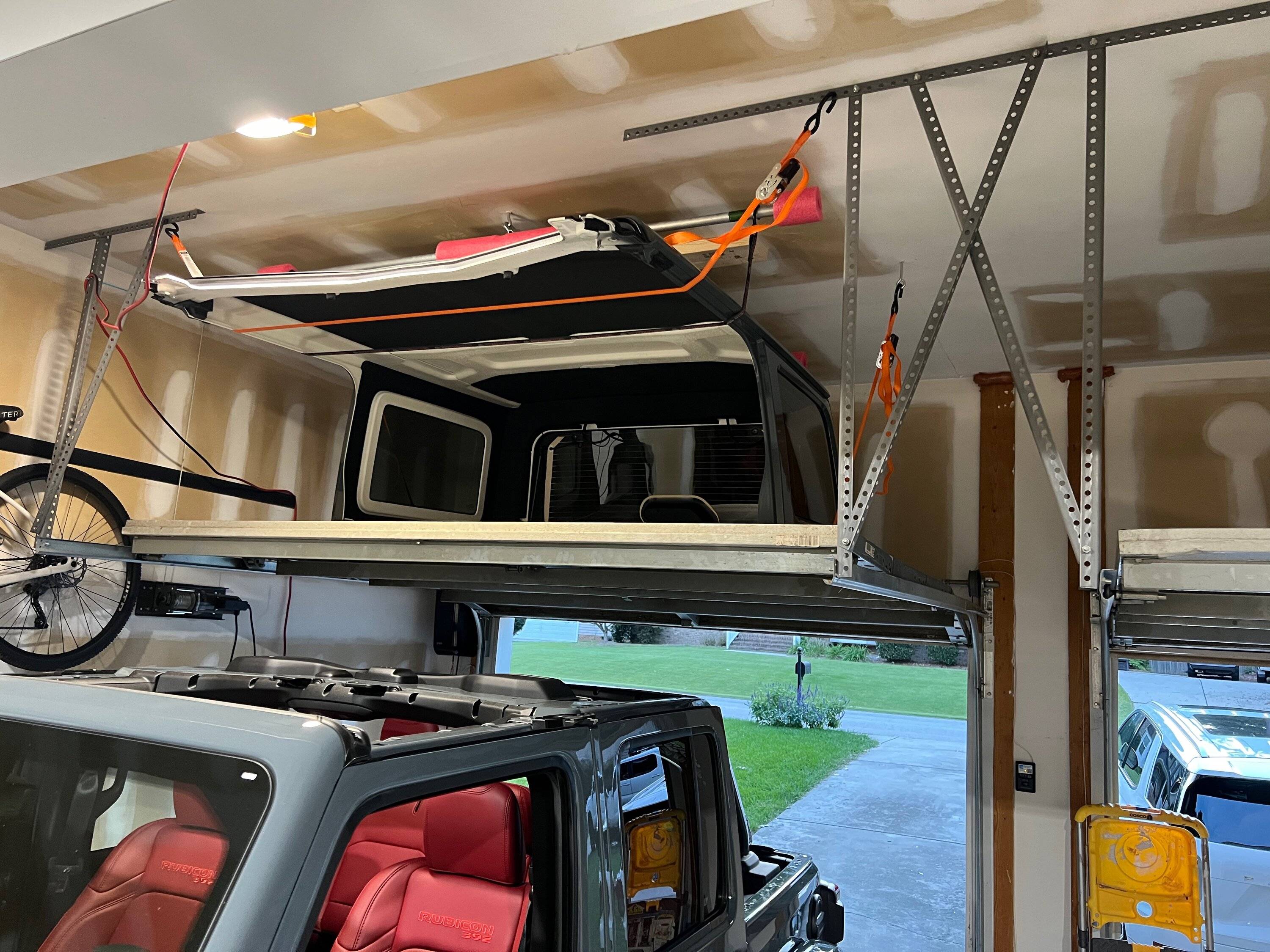
With the top suspended, you can leave it hanging or build a simple shelf just below the ceiling. This frees up floor space and keeps the top safe from bumps or scratches.
Safety Tips And Common Mistakes
- Always check that each anchor point is secure before lifting.
- Don’t use ropes or straps with worn or frayed areas.
- Test-lift with a helper the first time to check balance and height.
- Never leave the top hanging over your Jeep for long periods—humidity and temperature changes can affect the straps.
- Double-check the weight rating of all components.
- If your garage ceiling is very high, consider a longer rope and a locking pulley for extra safety.
An insight many miss: Pulley friction can add more effort than expected. Choose smooth, quality pulleys, and keep them clean for easy lifting.
Customization Ideas
You can add features to make your hoist even better:
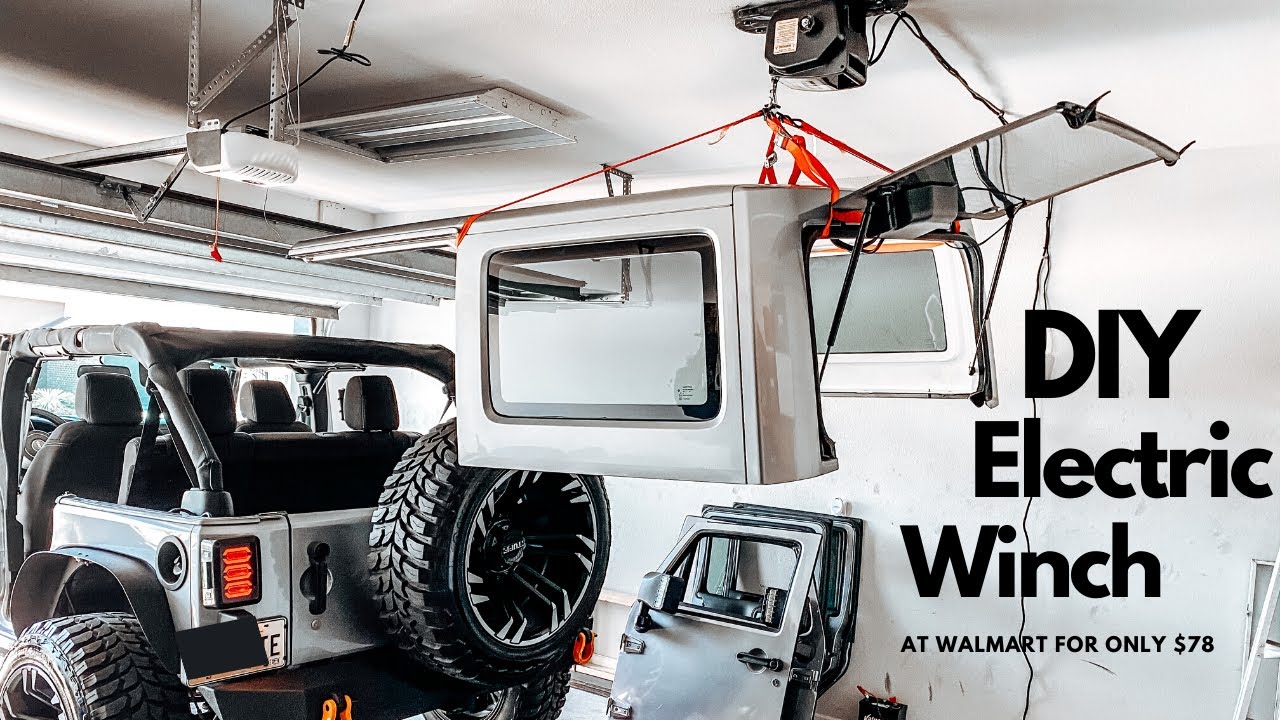
- Electric winch: For effortless lifting (especially in tall garages)
- Wall cleat: To tie off the rope securely and safely
- Protective sleeves: On straps to prevent rubbing or scratching
Some Jeep owners use garage hooks to hang doors, too, making an all-in-one storage system.
Is A Diy Hoist Right For You?
If you’re comfortable with basic tools and want to save money, a homemade hoist is a smart solution. However, if your garage ceiling is weak or you’re unsure about hardware ratings, it’s best to buy a tested kit or hire a pro.
For more details about Jeep hard tops and accessories, check Wikipedia’s Jeep Wrangler page.

Frequently Asked Questions
How Much Weight Can A Typical Diy Hoist Support?
Most setups using quality eye bolts, straps, and pulleys can safely support 120–200 lbs—enough for all Jeep hard tops. Always check the lowest-rated component.
Can I Use This Hoist For Other Vehicles?
Yes, you can adapt the hoist to lift truck caps, cargo boxes, or kayaks. Just adjust the strap placement and confirm the weight ratings.
How Long Does It Take To Build A Hoist?
Most people finish in 2–3 hours with basic tools. Allow extra time if you need to buy materials or reinforce your ceiling.
Do I Need A Power Tool To Lift The Top?
No, a manual hoist is enough. But a hand winch or electric winch makes lifting smoother, especially if you’re doing it alone.
What’s The Biggest Mistake To Avoid?
The most common error is anchoring into drywall instead of a strong ceiling joist. Always anchor into solid wood, and never exceed hardware ratings.
A well-built Jeep hard top hoist makes every top-off adventure easier and keeps your hard top safe and sound. With a careful setup, you’ll enjoy open-air driving season after season no extra hands needed.