Many Jeep Wrangler owners wonder, “How much psi should I put in my tires? ” Getting tire pressure right is more than comfort it affects safety, fuel efficiency, and how your Jeep handles both on and off the road.
If you set the psi too low or too high, your Jeep won’t perform as it should.
This guide helps you understand the ideal tire pressure for your Wrangler, why it matters, and what factors can change your psi needs.
Recommended Tire Pressure For Jeep Wrangler
Most Jeep Wranglers come with a sticker on the driver’s door jamb showing the recommended psi for stock tires. For most models, Jeep suggests 35 psi for the front and rear tires. However, this number can change based on the tire size, model year, and driving conditions.
Here’s a quick look at standard psi recommendations:
| Model Year | Stock Tire Size | Recommended PSI |
|---|---|---|
| 2018–2024 Wrangler JL | 245/75R17 | 35 psi |
| 2012–2017 Wrangler JK | 255/75R17 | 35 psi |
| 2007–2011 Wrangler JK | 225/75R16 | 33 psi |
| 1997–2006 Wrangler TJ | 215/75R15 | 30 psi |
Always check your Jeep’s sticker or owner’s manual for the exact number. If you change your tire size, the recommended psi may not apply.
Why Tire Pressure Matters
Correct psi is essential for several reasons:
- Safety: Low or high pressure can lead to tire blowouts or loss of control.
- Tire life: Wrong psi causes uneven wear, which means buying new tires sooner.
- Fuel economy: Underinflated tires use more gas.
- Handling: Jeep Wranglers feel different on and off-road, and psi affects how your Jeep steers and brakes.
For example, a Wrangler with tires at 25 psi on the highway will feel slow and hard to steer. At 40 psi, it will bounce and grip less. Getting the right psi is about balance.
Adjusting Psi For Off-road And Aftermarket Tires
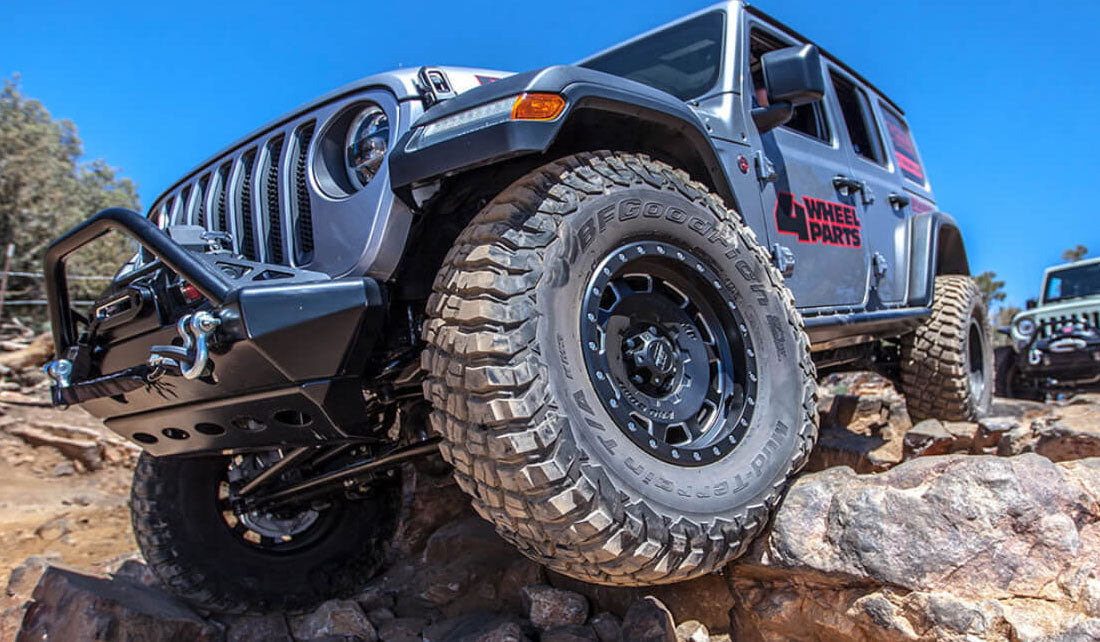
Many Jeep owners use larger tires for off-road adventures. Larger tires need different psi than factory ones. Off-road driving also changes the rules.
Off-road Psi
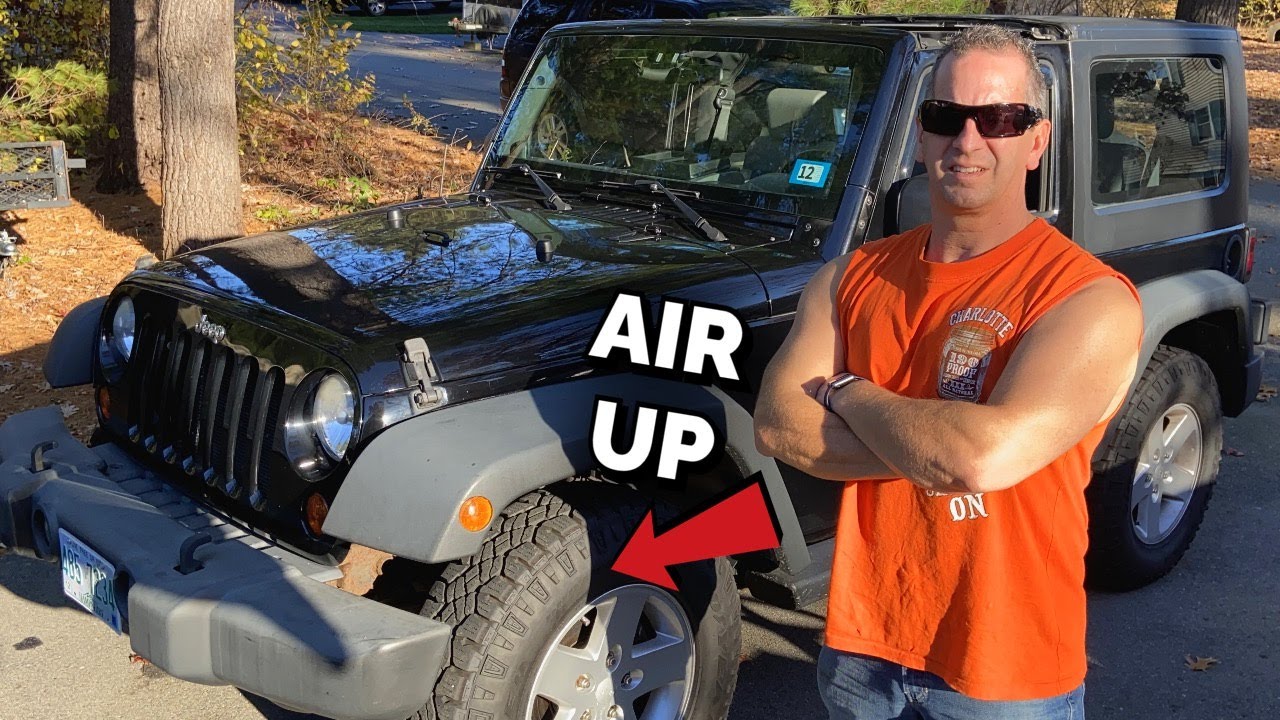
Lowering psi helps tires grip rough terrain. Most Jeep drivers drop their psi to 15–20 psi when off-roading. This creates a larger contact patch and smoother ride over rocks or sand. Always air up again before driving on pavement.
Aftermarket Tires
If you upgrade to 33-inch, 35-inch, or 37-inch tires, recommended psi is often lower than stock. Here’s a typical range:
| Tire Size | On-Road PSI | Off-Road PSI |
|---|---|---|
| 33-inch | 28–32 psi | 15–18 psi |
| 35-inch | 26–30 psi | 12–16 psi |
| 37-inch | 24–28 psi | 10–14 psi |
Never guess psi for aftermarket tires. Manufacturers provide specs, or you can do a chalk test: draw a chalk line across the tread, drive a few feet, and adjust psi until the line wears evenly.
Factors Affecting Tire Pressure
Several things can change the psi you need:
- Temperature: Cold weather drops psi; hot weather increases it. Check tires when cold for best accuracy.
- Load: Carrying gear or towing means adding 1–2 psi.
- Altitude: Higher elevations can slightly lower psi.
- Driving style: Aggressive driving may need higher psi for stability.
A key insight: Tire pressure changes about 1 psi for every 10°F temperature shift. If you set psi at 60°F and it’s 90°F later, expect a 3 psi rise.

How To Check And Set Tire Pressure
Checking tire pressure is simple but often ignored. Use a quality digital tire gauge for the most accurate reading.
Follow these steps:
- Find the recommended psi for your Wrangler (sticker or manual).
- Check tires when they are cold (before driving).
- Unscrew the valve cap, press the gauge, and read the number.
- Inflate or deflate until you reach the right psi.
- Screw the cap back on.
For quick reference, here’s a comparison of manual vs. digital gauges:
| Type | Accuracy | Ease of Use | Cost |
|---|---|---|---|
| Manual (analog) | Good | Medium | Low |
| Digital | Excellent | Easy | Medium |
A common mistake: People check psi after driving, but heat raises pressure, so readings are not accurate.
Common Mistakes Jeep Owners Make
Many beginners overlook these details:
- Setting psi for looks: Lowering psi just to make tires look “cool” leads to fast tire wear.
- Ignoring psi after upgrades: Switching to bigger tires but using factory psi is wrong.
- Forgetting to check spare tire: The spare also needs proper psi.
- Not adjusting for load: Carrying heavy gear without adding psi hurts performance.
An important tip: If your Jeep feels unstable or bounces, check tire pressure first. Most handling problems come from wrong psi.
Expert Tips For Jeep Wrangler Tire Pressure
- Use a quality gauge: Cheap gauges can be off by 3–5 psi.
- Rotate tires regularly: This keeps wear even and helps maintain psi.
- Check psi monthly: Tires lose pressure naturally over time.
- Don’t rely on TPMS alone: Tire Pressure Monitoring Systems can miss slow leaks.
- Adjust psi for season: In winter, check more often because psi drops quickly.
A non-obvious insight: Even with TPMS, check with a manual gauge every month. TPMS sensors can fail or give slow readings.
Frequently Asked Questions