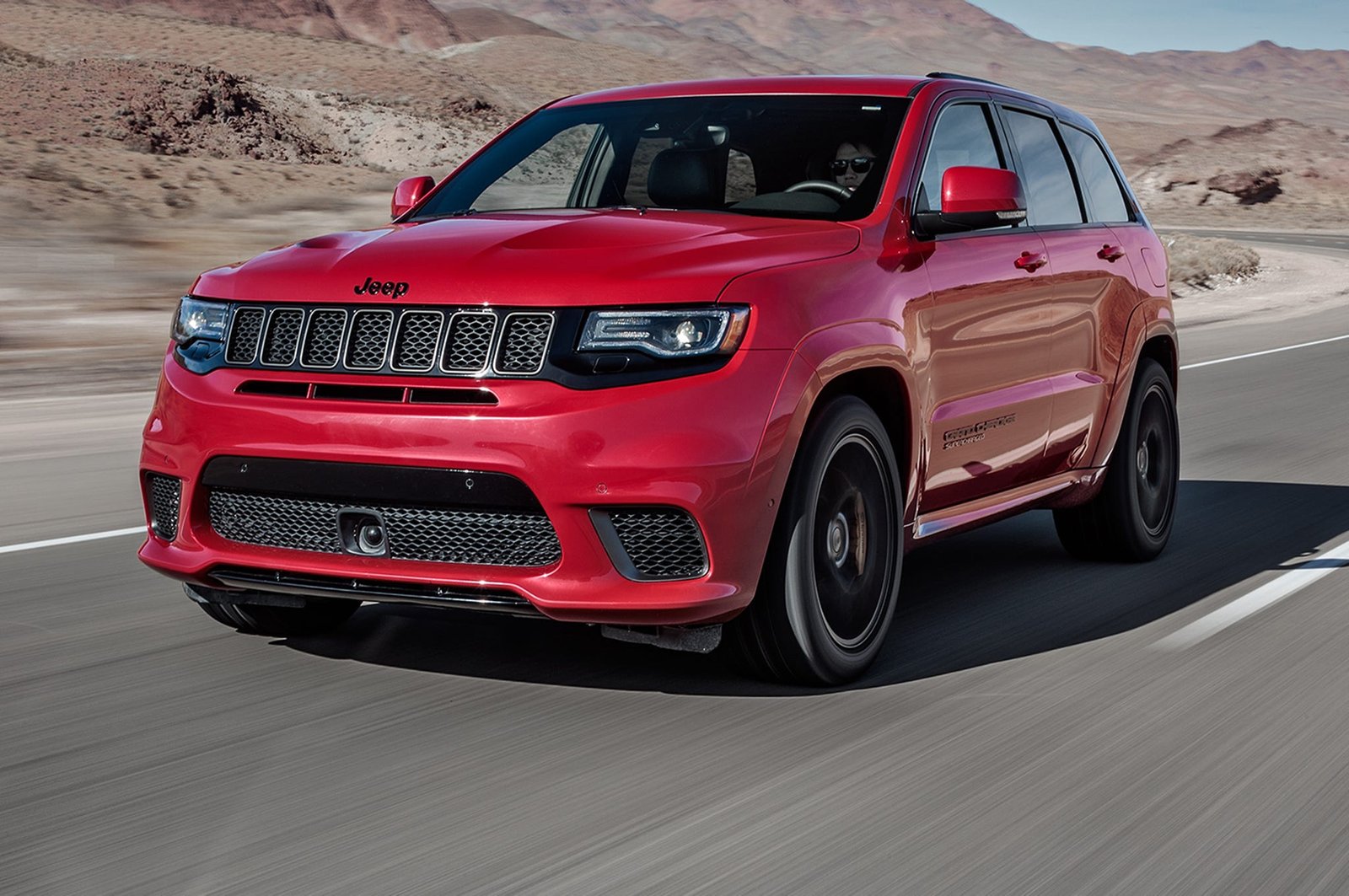
Grand Cherokee seating depends on the body style. Current two-row Grand Cherokee models seat five passengers, while the Grand Cherokee L provides three-row configurations with seating for up to seven. Used SUVs still need a model-year check.
Quick Answer
Use the body style, not the badge alone. Jeep describes two-row Grand Cherokee models and Grand Cherokee L three-row models.
Test passenger access and cargo space with the seats occupied before choosing.
Separate the body styles
A standard Grand Cherokee and Grand Cherokee L serve different needs. Confirm the row count before comparing cargo space.
Test the third row
Ask the passengers who will use it to enter and sit for several minutes. Headline capacity does not measure comfort.
Load cargo with seats up
Bring luggage, a stroller or groceries. Maximum folded-seat volume does not show normal family use.
Inspect used-seat hardware
Check belts, latches, folding mechanisms and headrests.
Choose by routine
A household using six or seven seats regularly needs a different setup from a buyer prioritizing second-row comfort.
Key Details to Check
| Item | What to verify | Why it matters |
|---|---|---|
| Rows | Two or three | Defines passenger capacity |
| Model | Grand Cherokee or Grand Cherokee L | Prevents a wrong comparison |
| Belts | Present and functional | Needed at every position |
| Cargo | Space behind occupied seats | Tests weekly practicality |
| Access | Entry to rear rows | Matters in daily use |
Step-by-Step Review
- Identify the body style.
- Open the official page or matching manual.
- Confirm seat count and belts.
- Ask rear passengers to enter and exit.
- Load normal cargo with seats occupied.
- Inspect folding parts on a used SUV.
- Choose the configuration that works during a normal week.
Common Mistakes to Avoid
- Assuming every Grand Cherokee seats seven.
- Testing cargo only with seats folded.
- Ignoring third-row access.
- Skipping belt checks.
- Choosing from brochure capacity alone.
Practical Follow-Up
Bring real cargo and passengers. Load a stroller, travel bags or work gear while the required seats remain upright.
A Grand Cherokee configuration should be tested as a family tool, not judged only from a capacity line.
What to Save With the Vehicle
For Grand Cherokee seating capacity, keep the model year, VIN, mileage, inspection date and one clear photo or receipt in the vehicle file.
A written Grand Cherokee seating capacity result makes the next repair, parts order or workshop conversation easier to compare with this exact Jeep.
Deeper Review for Grand Cherokee Seating Capacity
For Grand Cherokee seating capacity, use the same order every time. Start with rows, move to belts, and finish with access.
Verify two or three, note present and functional, and record entry to rear rows. For Grand Cherokee seating capacity, this repeatable sequence helps separate a genuine fault or fitment issue from a difference caused by weather, prior repairs or an incomplete first inspection.
Use One Controlled Follow-Up
Before approving parts or labor, revisit this step: Load normal cargo with seats occupied. If the outcome changes, write down what changed and when.
Avoid testing cargo only with seats folded. The goal is not to collect guesses.
For Grand Cherokee seating capacity, the goal is to keep the next decision tied to one Jeep, one operating condition and one verified result.
Final Inspection Checklist
- Confirm rows: Two or three.
- Review model: Grand Cherokee or Grand Cherokee L.
- Check cargo: Space behind occupied seats.
- Complete this step: Choose the configuration that works during a normal week.
- Avoid this mistake: Choosing from brochure capacity alone.
Test the Third Row With Real Passengers
A Grand Cherokee L seat count looks useful on paper, but access and comfort should be tested by the people who will use the rear row. Ask passengers to climb in, sit for several minutes and exit again.
Check whether child seats, bags or mobility needs change the routine. The correct configuration should work during an ordinary week, not only during a showroom visit.
Compare Cargo With Every Required Seat Up
Bring a stroller, luggage or work equipment and load the cargo area while the needed seats remain upright. Maximum cargo figures with folded seats do not describe a family trip with passengers aboard.
The test helps separate a useful three-row layout from a vehicle that still needs a roof box or different packing plan.
Inspect Used-Seat Hardware
On a used SUV, fold and raise every seat. Check belts, latches, headrests and trim around the mechanisms.
Look for damage caused by cargo or child-seat installation. A seat that does not lock correctly deserves repair before the vehicle carries passengers.
Check the Cabin After Folding Seats
Fold and raise the seats more than once before buying. Confirm that belts do not become trapped, headrests remain present and the seat locks firmly after returning upright.
A third-row SUV should switch between cargo and passenger use without a loose latch or missing hardware becoming part of the weekly routine.
Grand Cherokee L Access Check
Open the second-row path to the third row several times and watch how seats slide or fold. Check whether a child seat blocks the movement.
A seven-passenger layout is useful only when the rear row can be reached without turning every trip into a rearranging exercise.
Frequently Asked Questions
Does every Grand Cherokee have three rows?
No. Current standard-wheelbase models use two rows, while Grand Cherokee L offers three rows.
How many people fit in Grand Cherokee L?
Jeep states that Grand Cherokee L offers seating for up to seven.
Should the third row be tested?
Yes. Comfort and access matter as much as the number of belts.
Final Takeaway
Choose the Grand Cherokee body style that matches the passengers and cargo carried most often. Seat count starts the comparison; access, comfort and cargo space complete it.