The Jeep Cherokee is a well-known SUV in the United States, loved for its comfort and off-road abilities. But one of the most common questions people ask before buying is: How many miles per gallon does a Jeep Cherokee get? Fuel efficiency is important, especially with changing gas prices and growing interest in environmental impact. This article will give you clear, practical answers about Jeep Cherokee MPG, with data, comparison tables, and tips to help you make the right choice.
What Is Miles Per Gallon (mpg) And Why Does It Matter?
Miles per gallon (MPG) shows how far a vehicle can travel using one gallon of fuel. The higher the MPG, the less money you spend on gas and the lower your carbon footprint. For SUVs like the Jeep Cherokee, MPG is especially important because larger vehicles often use more fuel than smaller cars.
Jeep Cherokee Mpg By Model Year
The Jeep Cherokee has changed over the years. Different engines, trims, and technologies affect its fuel economy. Let’s look at recent model years, focusing on the popular fifth generation (2014 2023).

| Model Year | Engine | Drivetrain | City MPG | Highway MPG | Combined MPG |
|---|---|---|---|---|---|
| 2022 | 2.4L I4 | FWD | 22 | 31 | 25 |
| 2022 | 3.2L V6 | 4WD | 19 | 27 | 22 |
| 2022 | 2.0L Turbo | 4WD | 20 | 27 | 23 |
| 2020 | 2.4L I4 | FWD | 22 | 31 | 25 |
| 2018 | 2.4L I4 | FWD | 21 | 30 | 24 |
You can see that the 2.4L I4 engine with front-wheel drive (FWD) gets the best gas mileage, while the 3.2L V6 with four-wheel drive (4WD) is less efficient. These numbers are based on EPA estimates.
Factors That Affect Jeep Cherokee Mpg
Many drivers notice their real-world MPG is different from the official numbers. Here are the main reasons why:
- Driving habits: Fast acceleration, heavy braking, and high speeds lower MPG.
- Engine type: Larger engines and turbocharged engines often use more fuel.
- Drivetrain: 4WD models use more gas than FWD models because of extra weight and moving parts.
- Cargo and passengers: More weight means lower MPG.
- Tire pressure: Under-inflated tires increase rolling resistance, reducing efficiency.
- Terrain: Hilly or rough roads use more gas than flat highways.
One detail beginners often miss is how much short city trips hurt MPG. SUVs like the Cherokee are less efficient in stop-and-go traffic compared to highway driving.
Comparing Jeep Cherokee Mpg To Other Suvs
Is the Jeep Cherokee fuel-efficient compared to other SUVs in its class? Here’s a simple comparison:
| Model | Engine | Drivetrain | Combined MPG |
|---|---|---|---|
| Jeep Cherokee (2022) | 2.4L I4 | FWD | 25 |
| Toyota RAV4 (2022) | 2.5L I4 | FWD | 30 |
| Honda CR-V (2022) | 1.5L Turbo | FWD | 30 |
| Ford Escape (2022) | 1.5L Turbo | FWD | 30 |
The Jeep Cherokee has lower MPG than the Toyota RAV4, Honda CR-V, and Ford Escape. This is because the Cherokee is heavier and often has more power for off-roading. If fuel economy is your top concern, you may want to look at these alternatives.
Real-world Mpg: What Owners Report
Official EPA numbers are tested in a controlled lab. Real-world results can be higher or lower. Many Jeep Cherokee owners report getting 20–24 MPG in daily mixed driving. Highway trips often reach or beat EPA estimates, especially with a light foot and proper tire pressure.
One non-obvious tip: Using cruise control on the highway can help you get closer to the advertised MPG. Also, keeping up with regular maintenance, like oil changes and air filter replacement, keeps your engine running efficiently.
How To Improve Your Jeep Cherokee’s Gas Mileage
There are several ways to get better MPG from your Cherokee:
- Drive smoothly: Avoid rapid starts and stops.
- Lighten your load: Remove unnecessary items from your trunk and roof.
- Check your tires: Keep them properly inflated.
- Use recommended oil: It reduces engine friction.
- Plan trips: Combine errands to reduce short trips.
Many drivers forget that even small habits, like idling for long periods, can waste fuel.
Jeep Cherokee Mpg Over Time
If you’re considering a used Cherokee, it’s useful to see how fuel efficiency has changed over the years.
| Generation | Years | Engine | Combined MPG Range |
|---|---|---|---|
| Fifth (KL) | 2014–2023 | 2.4L I4, 3.2L V6, 2.0L Turbo | 21–25 |
| Fourth (KK) | 2008–2012 | 3.7L V6 | 16–18 |
| Third (KJ) | 2002–2007 | 2.4L I4, 3.7L V6 | 18–21 |
Notice the improvement in recent years, especially with the smaller engines and better transmissions.
Frequently Asked Questions
How Many Miles Per Gallon Does A 2022 Jeep Cherokee Get?
A 2022 Jeep Cherokee with the 2.4L I4 engine and FWD gets about 22 MPG in the city, 31 MPG on the highway, and 25 MPG combined. Four-wheel drive and V6 options are less efficient.
Is The Jeep Cherokee Good On Gas Compared To Other Suvs?
The Cherokee is average for its class, but not the best. Competitors like the Toyota RAV4 and Honda CR-V get better MPG, especially in city driving.
Does Four-wheel Drive Lower The Cherokee’s Mpg?
Yes, 4WD versions of the Jeep Cherokee usually get 2–3 MPG less than FWD models. The extra weight and parts needed for 4WD use more fuel.
What Is The Best Engine For Fuel Economy In A Jeep Cherokee?
The 2.4L I4 engine with FWD gives the best gas mileage. The 3.2L V6 and turbo options are more powerful but use more gas.
Where Can I Find Official Mpg Ratings For The Jeep Cherokee?
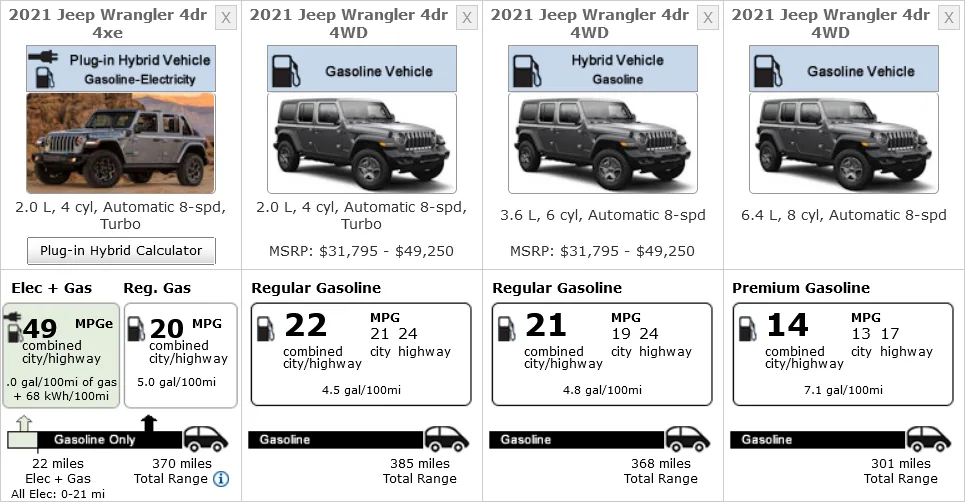
You can see official EPA ratings and compare different models at the US Department of Energy’s Fuel Economy website.
Choosing a Jeep Cherokee means balancing power, comfort, and fuel efficiency. While it may not be the most fuel-efficient SUV, with smart driving and the right engine, you can get good mileage for daily use or adventure.
Remember, your habits and maintenance matter just as much as the numbers on paper.