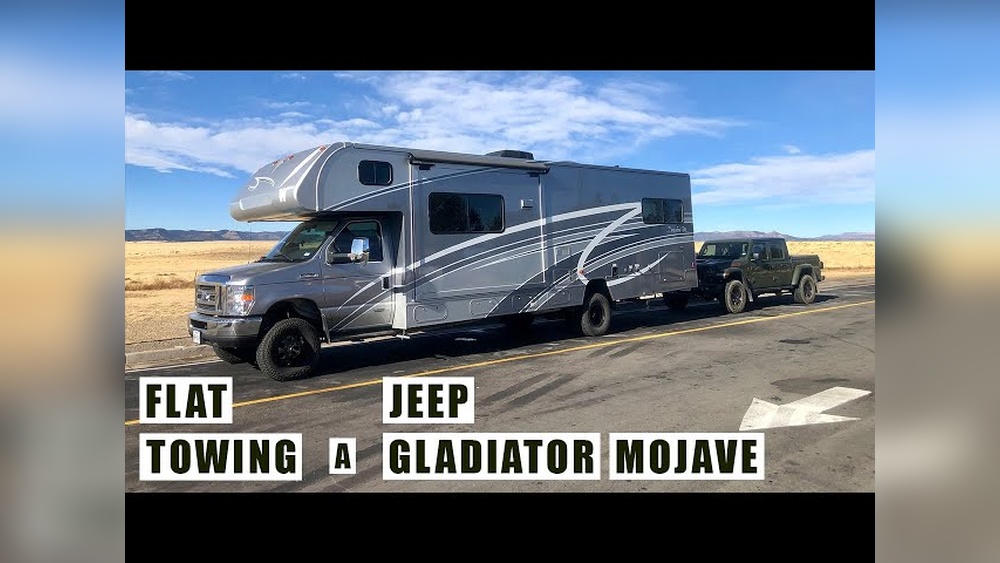
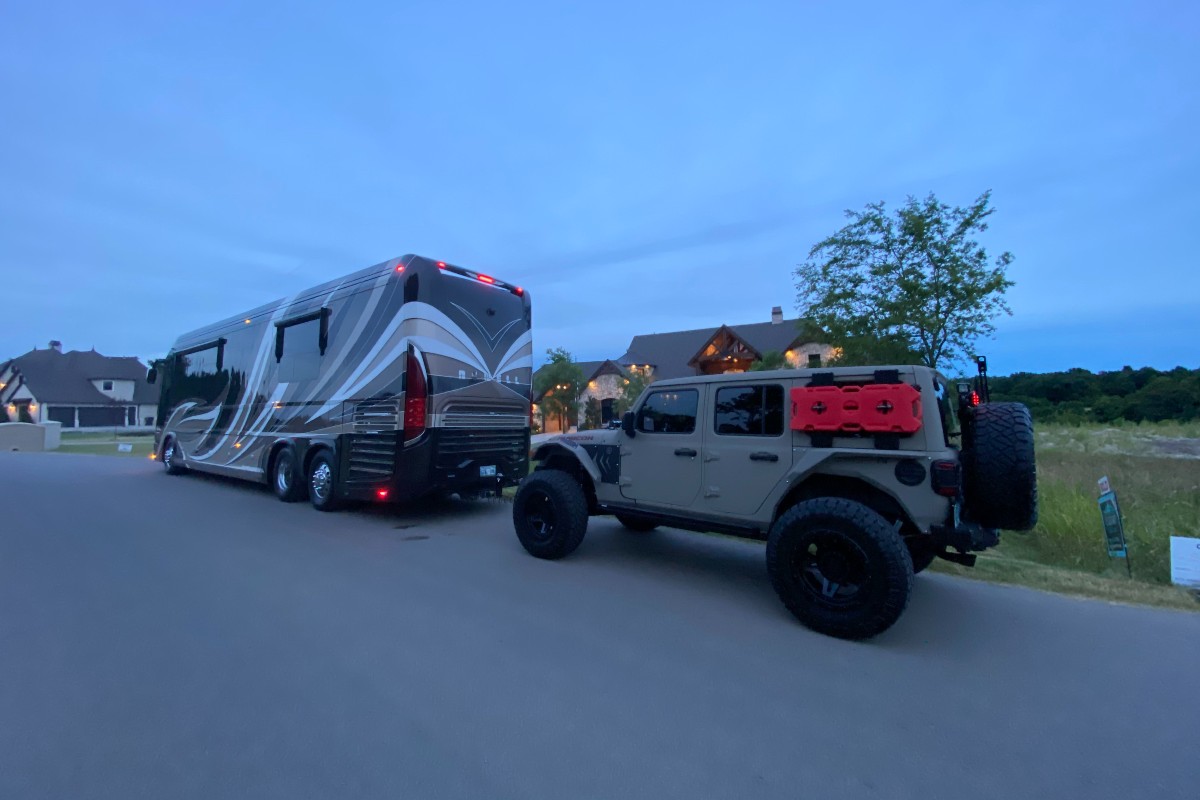
The Jeep Gladiator is a unique vehicle in the pickup truck world. It blends rugged off-road capability with everyday practicality. Many RV owners and travelers wonder if the Gladiator can be flat towed behind a motorhome. Flat towing, also called “dinghy towing,” means pulling a vehicle with all four wheels on the ground. This method is popular for convenience and flexibility, but not all vehicles are designed for it. If you’re considering a Jeep Gladiator for your next adventure, it’s important to know how flat towing works, what’s required, and the risks involved.
Can The Jeep Gladiator Be Flat Towed?
The simple answer: Yes, most Jeep Gladiators can be flat towed. This is possible because the Gladiator has a transfer case that can be set to “neutral,” disconnecting the drivetrain. However, not every Gladiator trim or drivetrain setup qualifies. Most 4×4 models (with manual or automatic transmissions) can be flat towed, while 2WD versions cannot.
Here’s a quick comparison of the Gladiator’s flat towing capability:
| Model | Drivetrain | Flat Towable? |
|---|---|---|
| Gladiator Sport | 4×4 | Yes |
| Gladiator Overland | 4×4 | Yes |
| Gladiator Rubicon | 4×4 | Yes |
| Gladiator 2WD | 2WD | No |
Key point: Only 4×4 Gladiators with a manual or automatic transmission and a transfer case can be flat towed. Always check your owner’s manual for specifics.
Flat Towing Requirements
To safely flat tow a Jeep Gladiator, you need:
- Proper transfer case: Put the transfer case in “neutral” and the transmission in “park” (for automatic) or “neutral” (for manual).
- Tow bar and base plate: These connect the Gladiator to your motorhome.
- Safety cables: Required by law for backup safety.
- Supplemental braking system: Many states require this for the towed vehicle.
- Wiring harness: Connects the Gladiator’s lights to your RV’s lights.
Here is a breakdown of essential towing equipment:
| Equipment | Purpose | Approximate Cost |
|---|---|---|
| Tow bar | Connects vehicle to RV | $500–$1,200 |
| Base plate kit | Mounts tow bar to Gladiator | $400–$800 |
| Safety cables | Backup in case tow bar fails | $50–$100 |
| Brake system | Helps stop towed vehicle | $500–$1,500 |
| Wiring harness | Syncs Gladiator lights | $100–$200 |
A common mistake is forgetting to install a brake system. This can result in fines and unsafe towing. Also, double-check your Gladiator’s transfer case is truly in “neutral.” If not, you could cause expensive drivetrain damage.
Step-by-step: Setting Up Flat Towing
- Park the Gladiator on a level surface.
- Start the engine and press the brake pedal.
- Shift the transmission to “neutral.”
- Set the transfer case to “neutral.”
- Confirm the transfer case indicator shows “neutral.”
- Attach the tow bar and safety cables.
- Connect the wiring harness to the RV.
- Install and activate the supplemental brake system.
If your Gladiator has push-button start, make sure the ignition is in the “run” position (not off) before towing. This prevents steering lock and keeps electronics working.
Flat Towing Pros And Cons
Flat towing offers convenience, but there are trade-offs. Let’s compare:
| Pros | Cons |
|---|---|
| Quick setup | Can cause drivetrain wear if not setup correctly |
| No trailer needed | Requires special hardware |
| Easy to maneuver at campsites | Some states have strict brake laws |
| Lower fuel usage compared to trailer towing | Risk of battery draining if electronics left on |
A non-obvious tip: If you plan to flat tow often, invest in a battery disconnect switch. Some Gladiator models drain their battery during towing if accessories are left running.
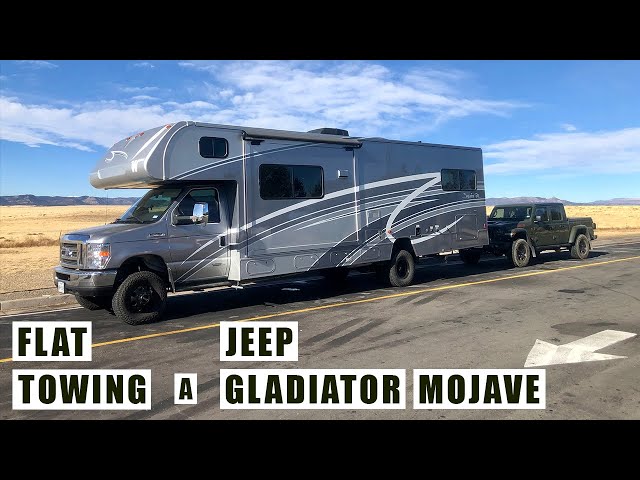
Real-world Example
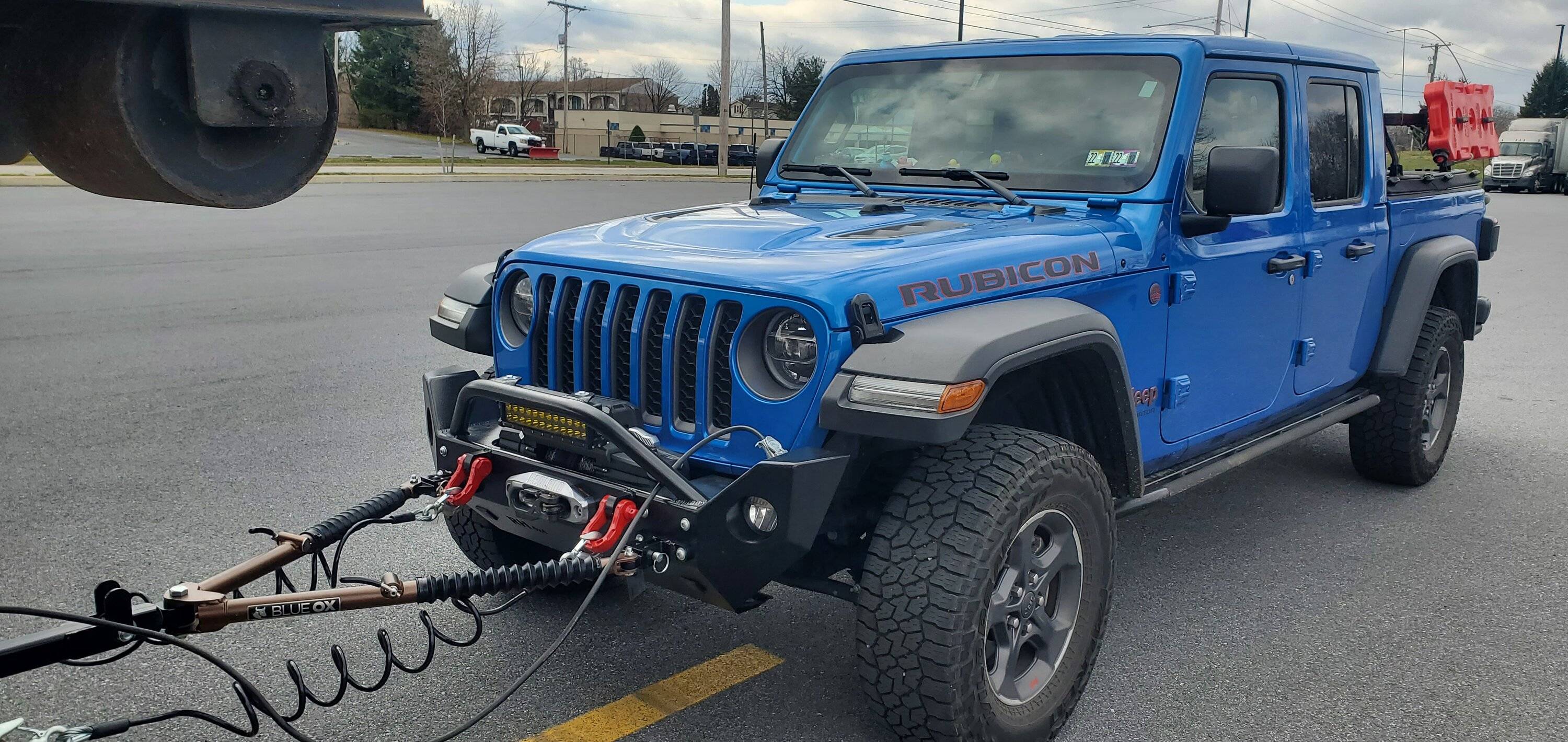
Many RVers choose the Jeep Gladiator because it’s versatile. For instance, a 2021 Gladiator Rubicon owner reported flat towing the truck for over 15,000 miles behind a Class A motorhome without issues. The owner used a Blue Ox tow bar, supplemental brake system, and carefully followed Jeep’s official towing instructions. The Gladiator’s weight (about 4,500 lbs) is manageable for most large RVs, but always check your RV’s towing capacity.
Common Flat Towing Mistakes
- Not checking transfer case position: If not set to “neutral,” you risk major damage.
- Skipping brake system install: Required in most states and improves safety.
- Not reading owner’s manual: Each Gladiator model may have unique instructions.
- Forgetting to disconnect battery: Risk of battery drain during long trips.
- Ignoring tire pressure: Low tire pressure can cause uneven wear or unsafe towing.
Frequently Asked Questions
Is Flat Towing Safe For The Jeep Gladiator?
Yes, if you follow Jeep’s instructions and use the correct equipment. Always set the transfer case to “neutral” and install a supplemental brake system.
Flat towing is safe for most 4×4 Gladiators.
Can I Flat Tow A Gladiator With 2wd?
No. Only 4×4 Gladiator models with a transfer case can be flat towed. 2WD versions do not have the “neutral” transfer case setting and are not designed for flat towing.
Does Flat Towing Void My Warranty?
Flat towing does not void the warranty if you follow Jeep’s guidelines. Improper towing, such as not setting the transfer case correctly, can cause damage and may void parts of your warranty.
How Fast Can I Flat Tow The Gladiator?
Jeep recommends keeping speeds under 65 mph while flat towing. Higher speeds can increase the risk of damage or accidents.
Where Can I Find Official Jeep Gladiator Towing Instructions?
You can find official instructions in your owner’s manual or on Jeep’s website. For more detailed information, visit Jeep Official Site.
Flat towing the Jeep Gladiator is a practical choice for RV owners and adventure seekers. With the right setup, you can tow your Gladiator safely behind a motorhome and enjoy its off-road capabilities at your destination.
Just remember to follow manufacturer guidelines, invest in quality hardware, and double-check your setup before every trip.
Flat towing is simple and reliable if you pay attention to the details.