Many people love Jeeps for their off-road power and rugged style. But when it comes to engine reliability, the story becomes a bit more complex. Some owners praise their Jeeps for lasting many years, while others share less positive experiences.
So, are Jeep engines reliable? Let’s look deeper at what really matters, which engines perform best, and what to watch for as a Jeep owner or buyer.
How Jeep Engine Reliability Is Measured
Reliability means more than just not breaking down. It includes how long an engine lasts, how often it needs repairs, and how expensive those repairs are. For Jeep engines, reliability often depends on:
- Model year and engine type
- Maintenance history
- Driving conditions (off-road, city, highway)
For example, a Jeep that tows heavy loads or spends a lot of time off-road will need more care than one used mostly for daily commuting.
Comparing Popular Jeep Engines
Over the years, Jeep has used many engines. Some are famous for their strength and lifespan, while others have caused problems. Here’s a look at how several popular Jeep engines compare:
| Engine | Years Used | Common Issues | Known For |
|---|---|---|---|
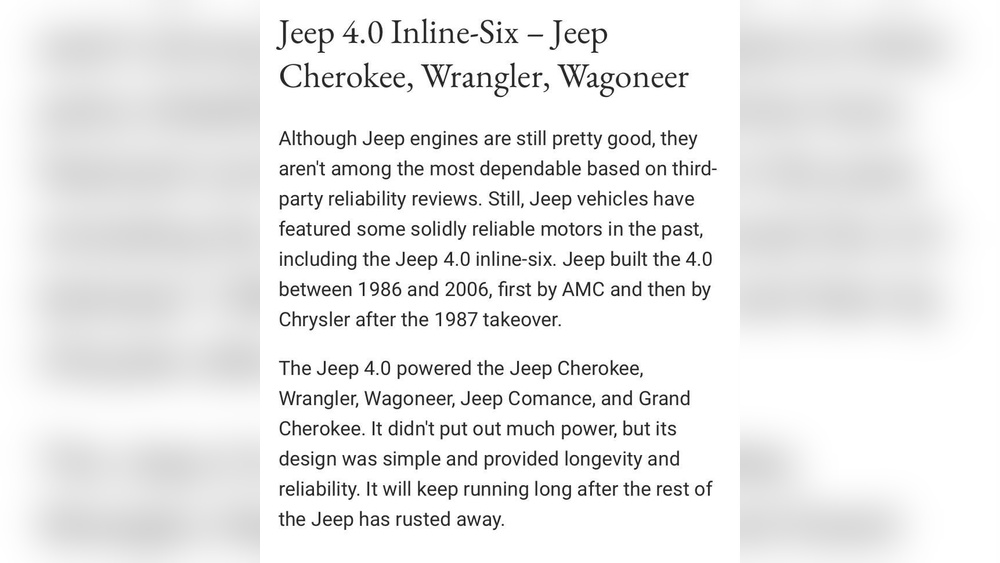
| 4.0L Inline-6 | 1987–2006 | Minor oil leaks | Very reliable, long-lasting |
| 3.6L Pentastar V6 | 2011–present | Early head issues (fixed later) | Good balance of power and efficiency |
| 2.4L Tigershark I4 | 2014–present | Oil consumption concerns | Smooth but not as durable |
| 5.7L Hemi V8 | 2005–present | Lifter/cam wear | Strong performance |
The 4.0L Inline-6 is often called one of the most reliable Jeep engines ever. Many reach 200,000 miles or more with basic care. The newer 3.6L Pentastar V6 is also popular, but early models (2011–2013) had cylinder head problems. These were fixed in later years.
What Affects Jeep Engine Life?
Several factors can make a big difference in how long your Jeep’s engine lasts:
- Regular maintenance: Oil changes, spark plugs, and air filters are basic but critical.
- Driving habits: Hard off-roading or towing pushes the engine more.
- Quality of parts: Using cheap filters or oil can reduce engine life.
A Jeep that gets regular care can last much longer than average. Some owners go well past 250,000 miles with only minor issues.
Common Jeep Engine Problems
Even reliable engines can have weak points. Here are some of the most frequent issues Jeep owners report:
- Oil leaks: The 4.0L engine sometimes leaks around the valve cover gasket.
- Cooling problems: Overheating can occur in older models, often due to radiator or water pump failure.
- Excessive oil consumption: The 2.4L Tigershark engine has drawn attention for burning oil faster than normal.
- Lifter or camshaft wear: The 5.7L Hemi V8 can develop ticking noises, leading to expensive repairs.
Not every Jeep will have these problems, but knowing them helps you spot warning signs early.
Data: Jeep Engine Reliability Vs Competitors
How do Jeep engines compare to those in other SUVs? Reliability studies and owner surveys offer helpful clues.
| Brand | Engine Longevity (Miles) | Major Repair Rate (per 100 vehicles) |
|---|---|---|
| Jeep | 180,000–220,000 | 24 |
| Toyota | 220,000–260,000 | 12 |
| Ford | 170,000–210,000 | 21 |
| Chevrolet | 170,000–200,000 | 23 |
Jeep engines are solid, but brands like Toyota often score higher for long-term reliability. However, Jeep engines are designed for tougher off-road use, which can mean more wear and tear.
Real-world Experience: What Owners Say
Owner feedback is mixed, but there are common themes:
- Many drivers love the old 4.0L and newer 3.6L for easy maintenance and solid performance.
- Some report expensive repairs, especially with less common engines or neglected maintenance.
- Off-road fans often accept more repairs as a trade-off for Jeep’s unique abilities.
One insight beginners miss: Rust and electrical issues can sometimes be mistaken for engine problems. Always check the full vehicle before blaming the engine alone.
Practical Tips For Better Jeep Engine Reliability
Want your Jeep engine to last? Here are a few proven tips:
- Use high-quality oil and change it on time—Jeep engines are sensitive to oil quality.
- Fix leaks early. Small leaks can lead to big problems if ignored.
- Don’t ignore warning lights. Modern Jeeps use sensors that can detect problems before you notice them.
- After heavy off-roading, check for mud or debris around the engine. It can block cooling and cause overheating.
If you’re buying used, always ask for service records. A well-documented service history is a strong sign of a reliable engine.
Cost Of Repairs And Maintenance
Jeep engines are generally not the cheapest to repair, but costs are close to average for SUVs. Here’s a look at common costs:
| Repair/Service | Typical Cost (USD) |
|---|---|
| Oil change | $60–$120 |
| Timing chain replacement | $700–$1,200 |
| Head gasket repair | $1,400–$2,000 |
| Lifter/camshaft repair | $1,500–$2,500 |
Regular maintenance can prevent most expensive repairs. Skipping oil changes or using the wrong fluids is a common and costly mistake.
Frequently Asked Questions
Are Jeep Engines Reliable For Daily Driving?
Most modern Jeep engines are reliable for daily use when properly maintained. The 3. 6L Pentastar and 4. 0L Inline-6 are especially good choices.
Which Jeep Engine Is The Most Reliable?
The 4.0L Inline-6 is widely respected for its durability and simple design. Many owners report it running smoothly past 200,000 miles.
Do Jeep Engines Last As Long As Toyota Or Honda?
Jeep engines can last a long time, but Toyota and Honda engines usually score higher for longevity and require fewer repairs over time. Jeep engines are built for tough conditions, but this can mean more wear.
What Are The Most Common Problems With Jeep Engines?
Oil leaks, cooling system failures, and excessive oil use are the most reported issues, depending on the model and year. Regular maintenance reduces these risks.
How Can I Make My Jeep Engine Last Longer?
Follow the factory maintenance schedule, use quality fluids, and avoid letting small problems grow. After off-road trips, clean the engine area and check for leaks or damage.
For more in-depth owner reports and technical details, you can visit the official Jeep Wikipedia page.
In summary, Jeep engines can be reliable—especially the best-known models—if you keep up with care and repairs. Some engines have weak points, but with smart ownership, a Jeep can serve you well for many years and adventures.