Are All Jeep 40 Blocks The Same?
If you’re searching for Jeep 40 blocks, you might wonder if they are all identical. Many Jeep owners and mechanics ask this question when rebuilding engines or swapping parts.
The answer isn’t as simple as “yes” or “no.” Jeep 4.
0 engine blocks have been used in several models over many years, and there are differences that can affect compatibility and performance. Let’s break down all 40 Jeep 4.
0 block variants, explain their unique traits, and help you understand what matters when choosing one for your Jeep.
Jeep 4.0 Block Variants: 1987–2006
Jeep’s 4.0 engine block first appeared in 1987 and was produced until 2006. Over these years, the block was used in different models, and Jeep made changes to fit new technologies and regulations. Here are all 40 block variations, listed by year and model.
- 1987 Jeep Cherokee XJ (Renix 4.0)
- Unique coolant passages, Renix electronics, no knock sensor.
- 1988 Jeep Cherokee XJ (Renix)
- Slight casting updates, still Renix system.
- 1989 Jeep Cherokee XJ (Renix)
- Minor casting improvements, same electronics.
- 1990 Jeep Cherokee XJ (Renix)
- Last Renix block, often has extra boss casting.
- 1991 Jeep Cherokee XJ (HO 4.0)
- High Output (HO) block, new fuel injection system, revised cooling.
- 1992 Jeep Cherokee XJ (HO)
- Small changes in casting, improved oiling.
- 1993 Jeep Cherokee XJ (HO)
- Extra reinforcement ribs, same HO electronics.
- 1994 Jeep Cherokee XJ (HO)
- Minor coolant passage changes, HO block.
- 1995 Jeep Cherokee XJ (HO)
- Slight update in oil drainback, HO.
- 1996 Jeep Cherokee XJ (HO/OBD-II)
- OBD-II sensors, revised knock sensor boss.
- 1997 Jeep Cherokee XJ (HO/OBD-II)
- Improved block strength, OBD-II.
- 1998 Jeep Cherokee XJ (HO/OBD-II)
- Updated casting, OBD-II, new engine mounts.
- 1999 Jeep Cherokee XJ (HO/OBD-II)
- Minor changes, improved oil pan fitment.
- 2000 Jeep Cherokee XJ (HO/OBD-II)
- Thicker casting, new exhaust bosses.
- 2001 Jeep Cherokee XJ (HO/OBD-II)
- Last XJ block, unique sensor placements.
- 1993 Jeep Grand Cherokee ZJ (HO)
- Different motor mounts, HO block.
- 1994 Jeep Grand Cherokee ZJ (HO)
- Slight coolant passage changes, ZJ specific.
- 1995 Jeep Grand Cherokee ZJ (HO)
- Extra reinforcement for heavier chassis.
- 1996 Jeep Grand Cherokee ZJ (HO/OBD-II)
- OBD-II bosses, ZJ oil pan.
- 1997 Jeep Grand Cherokee ZJ (HO/OBD-II)
- Updated casting, ZJ-specific mounts.
- 1998 Jeep Grand Cherokee ZJ (HO/OBD-II)
- Improved oiling, ZJ block.
- 1997 Jeep Wrangler TJ (HO/OBD-II)
- TJ mounts, OBD-II sensors.
- 1998 Jeep Wrangler TJ (HO/OBD-II)
- Slight casting changes, OBD-II.
- 1999 Jeep Wrangler TJ (HO/OBD-II)
- Reinforced block, TJ oil pan.
- 2000 Jeep Wrangler TJ (HO/OBD-II)
- Updated knock sensor boss, TJ.
- 2001 Jeep Wrangler TJ (HO/OBD-II)
- Extra reinforcement, unique TJ sensors.
- 2002 Jeep Wrangler TJ (HO/OBD-II)
- Block casting changes, OBD-II.
- 2003 Jeep Wrangler TJ (HO/OBD-II)
- Slight mount changes, TJ block.
- 2004 Jeep Wrangler TJ (HO/OBD-II)
- Revised coolant passages, TJ.
- 2005 Jeep Wrangler TJ (HO/OBD-II)
- Last major TJ block, improved strength.
- 2006 Jeep Wrangler TJ (HO/OBD-II)
- Final year, unique sensor locations.
- 1999 Jeep Grand Cherokee WJ (HO/OBD-II)
- New chassis, WJ-specific mounts.
- 2000 Jeep Grand Cherokee WJ (HO/OBD-II)
- Improved oil pan fitment, WJ block.
- 2001 Jeep Grand Cherokee WJ (HO/OBD-II)
- Reinforced block, WJ sensors.
- 2002 Jeep Grand Cherokee WJ (HO/OBD-II)
- Slight casting changes, WJ.
- 2003 Jeep Grand Cherokee WJ (HO/OBD-II)
- Improved coolant passages, WJ.
- 2004 Jeep Grand Cherokee WJ (HO/OBD-II)
- Last WJ block, unique sensor bosses.
- 2004 Jeep Wrangler Unlimited LJ (HO/OBD-II)
- LJ-specific mounts, extra block strength.
- 2005 Jeep Wrangler Unlimited LJ (HO/OBD-II)
- Improved oiling, LJ block.
- 2006 Jeep Wrangler Unlimited LJ (HO/OBD-II)
- Last 4.0 block, unique mounts, final casting.
What Makes Each Jeep 4.0 Block Different?
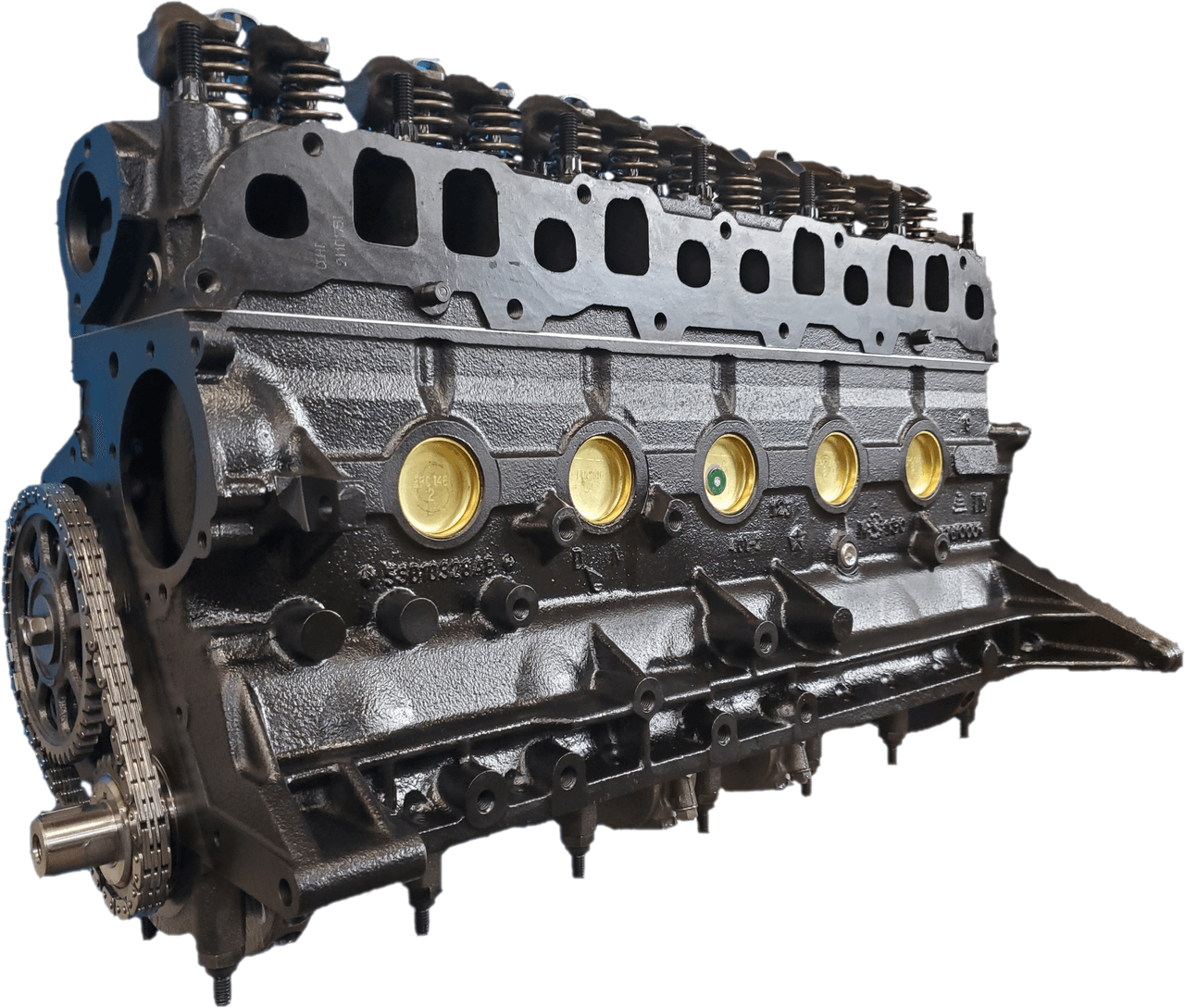
While all Jeep 4.0 blocks share the same basic architecture (inline-six, iron block, 4.0L), differences matter for fitment and reliability.
- Mounting bosses: Some blocks have extra bosses or threaded holes for different mounts and accessories.
- Sensor locations: OBD-II blocks use different sensors and placements than Renix or HO blocks.
- Casting strength: Later blocks (2000–2006) are thicker and stronger due to updated casting methods.
- Coolant and oil passages: Some years have improved oil drainback or coolant flow for better reliability.
- Engine electronics: Early Renix blocks won’t easily swap with HO or OBD-II electronics.
Real-world Comparison
Let’s compare the three main block types: Renix (1987–1990), HO (1991–1995), and OBD-II (1996–2006).
| Block Type | Years | Sensor Compatibility | Strength | Mounting Differences |
|---|---|---|---|---|
| Renix | 1987–1990 | Unique sensors | Medium | Early mounts |
| HO | 1991–1995 | HO sensors | Better | Updated mounts |
| OBD-II | 1996–2006 | OBD-II sensors | Strongest | Modern mounts |
Common Mistakes When Swapping Jeep 4.0 Blocks
- Ignoring sensor compatibility: Swapping a Renix block into an OBD-II Jeep will cause sensor issues.
- Wrong engine mounts: Later blocks may not fit early chassis without modification.
- Oil pan mismatch: Some blocks have different oil pan bolt patterns.
- Missing reinforcement: Early blocks are not as strong as later ones, so avoid using them for high power builds.
Practical Tips For Choosing The Right Block
- Always check year, model, and sensor setup before buying.
- If building a performance engine, choose a 2000–2006 block for extra strength.
- Ask sellers for casting numbers and photos of mounting bosses.
- Test-fit accessories and mounts before final installation.
- For daily use, any HO or OBD-II block will work if sensors and mounts match.
Data Table: Block Casting Numbers
Here are some common casting numbers and their years:
| Casting Number | Year Range | Notes |
|---|---|---|
| 53020343 | 1991–1995 | HO block, strong |
| 53020569 | 1996–1999 | OBD-II, updated |
| 53021040 | 2000–2006 | Thickest casting |