Jeep vehicles are famous for their off-road power and rugged design. But what makes them so capable? A big part of the answer is their differential. This hidden component decides how power moves from the driveshaft to the wheels. If you want to repair, upgrade, or buy parts for your Jeep, you must know exactly which differential you have. Misidentifying it can lead to costly mistakes and poor performance.
Let’s break down the process of identifying Jeep differentials in a simple, practical way. Even if you’re new to Jeeps or car mechanics, you’ll be able to follow along and make confident decisions.
Why Differential Identification Matters
Choosing the right replacement parts or upgrades depends on the differential type. For example, axle shafts, gears, and lockers vary between models. Some diffs can handle bigger tires or more torque, while others can’t.
If you mismatch parts, you could damage your Jeep or even create safety issues. That’s why getting this step right is so important.
Main Types Of Jeep Differentials
Jeep has used many differentials over the years. Here are some of the most common:
- Dana 30 – Found in many front axles of Wranglers and Cherokees.
- Dana 35 – Used in rear axles of Wranglers, Cherokees, and older models.
- Dana 44 – A stronger axle, seen in Wranglers, Gladiators, and older CJs.
- Dana 60 – Heavy-duty, mostly in larger or modified Jeeps.
- AMC 20 – Common in older CJ and Wagoneer models.
- Chrysler 8.25 – Found in some Cherokees and Libertys.
- Dana 25, 27, 41, 53 – Rare, but in classic or vintage Jeeps.
Not sure which one you have? The next steps will help you figure it out.
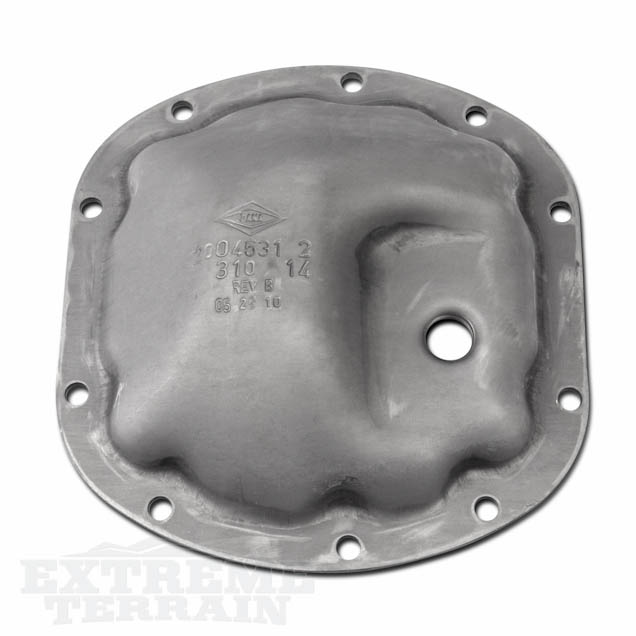
How To Identify Your Jeep Differential
Identifying a Jeep differential is easier if you know what to look for. You’ll be using visual cues, numbers, and sometimes measurements.
1. Check The Differential Cover Shape
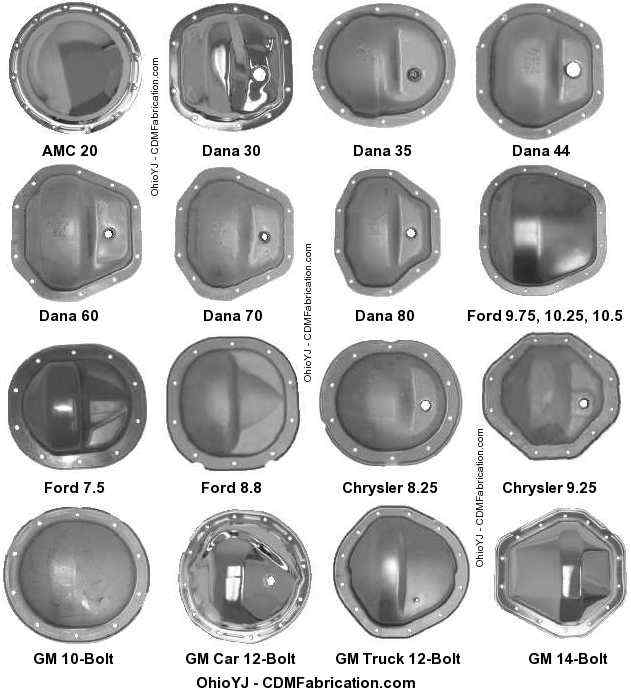
Each differential has a unique cover shape. Lay under your Jeep and look at the rear or front axle. Compare what you see with reference photos from forums or manuals.
Here’s a quick comparison:
| Differential | Cover Shape | Bolts |
|---|---|---|
| Dana 30 | Oval with flat bottom | 10 |
| Dana 35 | Rounded “D” shape | 10 |
| Dana 44 | Hexagonal | 10 |
| AMC 20 | Perfect circle | 12 |
| Chrysler 8.25 | Oval with flat sides | 10 |
Pro tip: The AMC 20 is the only Jeep differential with a truly circular cover.
Most differentials have a small metal tag attached to the cover or housing. This tag shows the gear ratio and sometimes the model (like “D44” for Dana 44).
If the tag is missing, check for stamped numbers on the housing. These numbers may be faint, so clean the area well.
3. Measure The Ring Gear
If you want to be sure, measure the ring gear diameter. This requires removing the cover and counting the bolts.
Here’s a quick reference:
| Differential | Ring Gear Size |
|---|---|
| Dana 30 | 7.12 inches |
| Dana 35 | 7.56 inches |
| Dana 44 | 8.5 inches |
| AMC 20 | 8.875 inches |
| Chrysler 8.25 | 8.25 inches |
If you see a ring gear close to 9 inches, you likely have an AMC 20.
4. Count The Axle Shafts And Bolts
Some differentials use c-clip axles (like the Dana 35), while others have bolt-in axles (like Dana 44). The way the axle attaches can help you identify the model.
5. Use Online Resources
If you’re stuck, use your Jeep’s VIN number and check with trusted online databases. Many Jeep enthusiast sites have photo guides and charts to compare your axle visually. The official Jeep Wikipedia page also provides a model history.
Common Mistakes When Identifying Jeep Differentials
- Assuming based on year/model – Jeep sometimes changed axles mid-year or during special editions.
- Relying only on cover shape – Modifications and aftermarket covers can look different.
- Ignoring gear ratio tags – Always check for tags or stamps before buying parts.
- Not cleaning the axle – Dirt can hide important numbers or shapes.
It’s always smart to double-check with multiple methods.
Real-world Example
Suppose you have a 2005 Jeep Wrangler. You crawl underneath and see a hexagonal cover with 10 bolts. You check for a tag and see “D44. ” This means you have a Dana 44—good for heavy off-roading and upgrades.
In another example, a 1998 Cherokee might have a slightly oval cover with 10 bolts and no tag. Measuring the ring gear gives about 8. 25 inches. That’s a Chrysler 8. 25 rear axle.
Upgrades And Modifications: What To Know
Once you know your differential, you can choose the right lockers, gears, or axle shafts. Stronger models like the Dana 44 handle bigger tires and more power. Dana 35s are weaker and may break under heavy use.
Don’t skip identification if you plan to:
- Install larger tires (over 33 inches)
- Add a locker
- Re-gear for towing or rock crawling
Using the wrong upgrade can lead to axle failure.

Frequently Asked Questions
What Is The Easiest Way To Identify My Jeep Differential?
The quickest method is to look at the differential cover shape and count the bolts. Most Jeep axles have unique covers. Use a photo guide for comparison.
Can I Use The Vin Number To Find My Axle Type?
Yes, the VIN number can help. Some Jeep models include axle information in their build sheet, which you can request from the dealer or find online.
Are All Dana 44 Axles The Same?
No, there are different versions of the Dana 44. Some have thicker tubes, different brakes, or other small changes. Always check the exact specs for your year and model.
What If My Differential Has No Tag Or Markings?
If the ID tag is missing, use a combination of cover shape, bolt count, and ring gear measurement. Sometimes, previous owners remove or replace covers, so use more than one method.
Is It Worth Upgrading From Dana 35 To Dana 44?
For serious off-roading or larger tires, upgrading to a Dana 44 is smart. Dana 35s are known to break under heavy loads. However, it’s important to match the axle to your driving needs and budget.
Knowing your Jeep differential is the key to safer driving, smarter upgrades, and avoiding costly mistakes. Take your time, double-check your findings, and enjoy the adventure of Jeep ownership with confidence.