If you drive a Jeep Compass, you might have seen a warning light that looks like a horseshoe with an exclamation mark. This is your tire pressure monitoring system (TPMS) alert. It means at least one tire has low pressure or there’s a problem with the sensor. Driving with this warning can be stressful and even dangerous if ignored. Knowing how to reset the tire pressure sensor can save you time, money, and worry. This guide explains how to do it step by step, including what causes the light, and shares tips to make sure your TPMS works correctly.
What Is A Tire Pressure Sensor And Why Does It Matter?
A tire pressure sensor is a small device inside each tire that checks air pressure. If the pressure drops below a safe level, the TPMS warning light comes on your dashboard. Keeping the right tire pressure is important because:
- Better fuel economy: Under-inflated tires use more gas.
- Safer driving: Low pressure increases the risk of a blowout.
- Longer tire life: Correct pressure helps tires wear evenly.
Many drivers forget that temperature changes can also affect pressure. For example, a 10°F drop can lower tire pressure by 1 psi. That’s why the warning light often comes on during cold mornings.
Common Reasons The Tpms Light Stays On
Before resetting the sensor, it’s smart to know why the light is on. Here are the main reasons:
- Low tire pressure: One or more tires are under-inflated.
- Tire rotation or replacement: The sensor needs recalibration after moving or changing tires.
- Sensor battery is dead: Sensors have batteries that last 5-10 years.
- Sensor damage: Hitting potholes or curbs can break a sensor.
- Seasonal temperature drops: Cold weather lowers tire pressure quickly.
If you just fill your tires but the light stays on, the sensor may need a manual reset.

How To Check Tire Pressure On A Jeep Compass
Always check tire pressure before resetting the sensor. Most Jeep Compass models recommend 33 psi for front and rear tires, but check your owner’s manual or driver’s door sticker to be sure.
Here’s how to check:
- Wait until tires are cold (car parked for at least 3 hours).
- Use a reliable tire gauge to measure each tire.
- Fill any low tires with air up to the recommended psi.
- Don’t forget the spare—some models have sensors in the spare tire.
If all tires are at the correct pressure and the light is still on, you need to reset the system.
How To Reset Tire Pressure Sensor On Jeep Compass
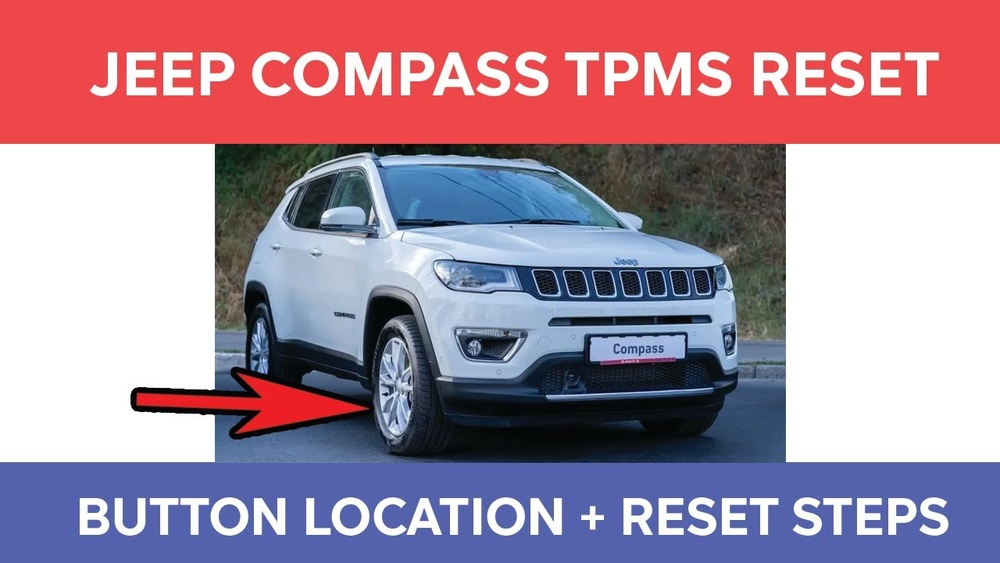
Most Jeep Compass models (2017 and newer) reset the TPMS automatically once all tires are at the correct pressure. Sometimes, a manual reset is needed. Here’s how to do both:
Automatic Reset
- Fill all tires to the recommended psi.
- Drive above 15 mph for at least 10 minutes.
- The TPMS light should turn off by itself.
Manual Reset Steps
If the light stays on, try these steps:
- Turn the ignition ON but do not start the engine.
- Press the TPMS reset button (usually under the steering wheel). Hold for 3 seconds until the TPMS light blinks three times.
- Start the car and drive for 15-20 minutes above 15 mph.
- The light should turn off. If not, repeat the process once.
Note: Not every Jeep Compass has a TPMS reset button. For some models, resetting can only be done at a dealership or with a scan tool.
Many newer Jeep Compass models don’t have a reset button. In that case:
- Inflate all tires, including the spare.
- Disconnect the positive battery cable for 10 minutes, then reconnect.
- Start the vehicle. The system should reset.
Be careful—disconnecting the battery can reset your radio and clock, so only use this method if needed.
Tpms Reset Procedure Comparison
Here’s a quick look at methods for different model years:
| Model Year | TPMS Reset Button | Automatic Reset | Battery Disconnect Option |
|---|---|---|---|
| 2011-2016 | Yes (some models) | Yes | Yes |
| 2017-2022 | No | Yes | Yes |
| 2023+ | No | Yes | Yes |
Always check your owner’s manual for details for your specific year.
What If The Light Still Won’t Go Off?
Sometimes, the sensor light stays on even after you reset everything. Here’s what to do:
- Check for a spare tire sensor—some models include this.
- Make sure all tires are at the right pressure, not just close.
- Try driving for 20+ minutes at highway speed.
- If all else fails, visit a Jeep dealership. They can scan for sensor problems.
A useful tip: After changing tires or rotating them, always ask the technician to reset the TPMS system.
Cost Comparison: Fixing Vs Replacing Sensors
Wondering if you should fix or replace a sensor? Here’s a quick cost comparison:
| Service | Average Cost (USD) | Time Required |
|---|---|---|
| Reset TPMS at dealership | $50-$100 | 30 minutes |
| Replace one sensor | $70-$250 | 1 hour |
| DIY reset | Free | 15-30 minutes |
For most people, a DIY reset is the best first step. Replacing sensors is only needed if they are broken or their batteries are dead.
Common Mistakes To Avoid
Beginners often miss these points:
- Forgetting the spare tire: Some models include a sensor in the spare. Check and inflate it, too.
- Not using a quality gauge: Cheap gauges can give wrong readings. Spend a little more for accuracy.
- Ignoring the light: Driving too long with the TPMS light on can damage your tires and reduce safety.
Extra Tips For Reliable Tpms
- Check tire pressure every month and before long trips.
- Cold weather lowers pressure, so check more often in winter.
- If you install aftermarket wheels, make sure they support your Jeep’s TPMS sensors.
For more detailed information, the official NHTSA TPMS guide is a great resource.
Frequently Asked Questions
Why Does My Jeep Compass Tpms Light Come On In Cold Weather?
Cold air makes the air inside your tires contract, which lowers tire pressure. Even a small temperature drop can trigger the TPMS light.
Can I Drive With The Tire Pressure Sensor Light On?
It’s best not to. The light means at least one tire is low, which can make your car harder to control and increases the risk of a flat tire.
How Long Do Jeep Compass Tpms Sensors Last?
Most sensors last 5 to 10 years. The battery is built-in and can’t be replaced separately.
Do I Need To Reset The Sensor After Every Tire Change?
Yes, after rotating, repairing, or changing tires, the TPMS may need to be reset so it can read the new positions.
What Should I Do If The Tpms Light Flashes And Then Stays Solid?
A flashing light usually means a sensor or system problem, not just low pressure. Check the tires first, and if the light stays on, visit a professional for a diagnostic.
Taking care of your Jeep Compass’s tire pressure sensor is simple once you know how. Resetting the system helps keep you safe, protects your tires, and saves money in the long run. Don’t ignore the warning—follow these steps and you’ll be back on the road with confidence.