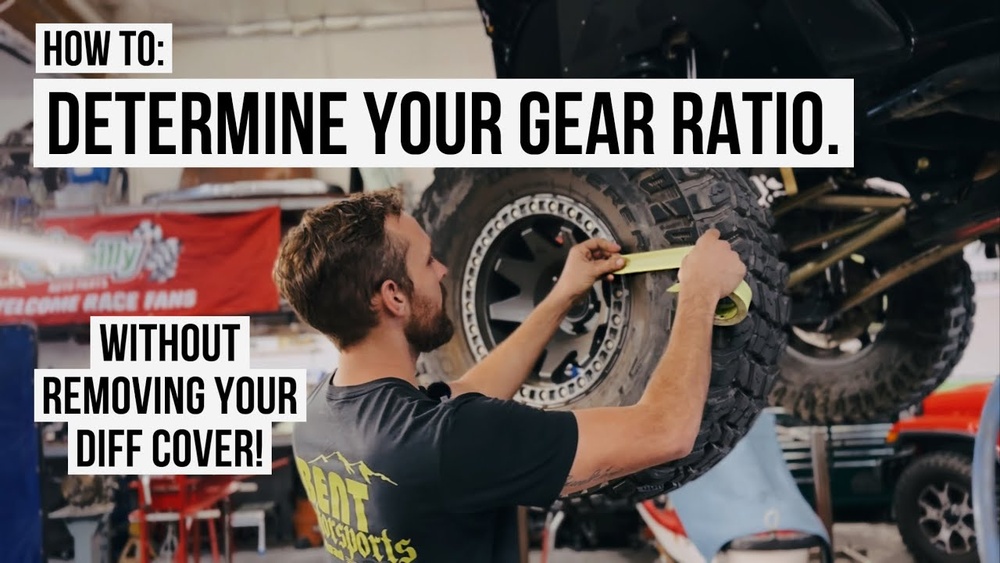
Checking your gear ratio is important for any car or truck owner, especially if you want better performance or plan to upgrade your vehicle. Many people think you must remove the differential cover to see the gear ratio, but that’s not always true.
There are simple ways to check your gear ratio without opening the cover, saving time, money, and effort. With just a few tools and a bit of know-how, you can figure out your ratio accurately.
What Is Gear Ratio And Why Does It Matter?
The gear ratio tells you how many times your driveshaft turns for every full turn of your wheels. For example, a 4.10:1 ratio means the driveshaft turns 4.1 times for each wheel turn. This number affects how your vehicle accelerates, its top speed, and even fuel economy.
A lower ratio like 3.08:1 usually means better fuel efficiency and higher top speed, but slower acceleration. Higher ratios like 4.56:1 give more torque and faster acceleration but may reduce top speed and fuel economy.
Methods To Check Gear Ratio Without Pulling The Cover
You don’t need special tools or advanced skills to check your gear ratio. Here are the most common ways.
1. Tire Rotation Method
This is a tried-and-true method for solid axle vehicles.
- Secure the Vehicle: Park on a flat surface. Engage the parking brake and put the vehicle in neutral. For safety, use wheel chocks.
- Lift One Wheel: Jack up one rear wheel if you have an open differential. If you have a limited slip or locking differential, lift both rear wheels.
- Mark the Tire and Driveshaft: Put a visible mark on the driveshaft and the tire.
- Rotate the Tire: Slowly turn the tire by hand and count how many times the driveshaft spins for one full tire rotation. For open differentials, turn the tire two full revolutions.
Record the driveshaft rotations. The number you get is your gear ratio.
Example Calculation
If the driveshaft turns 3.5 times for two turns of the tire, you likely have a 3.54:1 ratio. If it turns just over four times, you may have a 4.10:1 ratio.
2. Using The Axle Tag Or Sticker
Manufacturers often place a metal tag or sticker on the differential. These tags have codes or numbers indicating the gear ratio.
- Look for a small metal tag under a bolt on the differential cover or a sticker on the axle tube.
- The tag usually has a number like “3 73” (for 3.73: 1) or a part number you can search online.
This method is fast, but sometimes tags are missing or hard to read on older vehicles.
3. Vin Or Build Sheet Decoding
The Vehicle Identification Number (VIN) or the build sheet can provide the gear ratio. You can decode these using the manufacturer’s website or dealership records.
- Find your VIN on the dash or door jamb.
- Use online tools or contact the dealer to decode the axle ratio.
Not all vehicles list the axle ratio in the VIN, so this method is not always reliable.
Table: Comparing Gear Ratio Check Methods
Here is a quick comparison of the most popular methods:
| Method | Tools Needed | Accuracy | Speed |
|---|---|---|---|
| Tire Rotation | Jack, marker | High | Moderate |
| Axle Tag | None | Very High | Fast |
| VIN Decoding | VIN, internet | Medium | Fast |
Common Mistakes To Avoid
Many beginners make small errors that can lead to wrong gear ratio readings. Here are some common mistakes:
- Forgetting to put the transmission in neutral: The wheels won’t turn freely if the vehicle is in gear.
- Not lifting the correct wheels: For open differentials, only one wheel should be off the ground. For limited slip, lift both.
- Miscounting driveshaft turns: Go slowly and mark clearly to avoid confusion.
- Reading the wrong tag or code: Tags can have multiple numbers. Make sure to use the correct one.
Why Not Pull The Cover?
Removing the differential cover is messy and can lead to gasket leaks if not resealed correctly. It also takes much more time and may require new gear oil. Using the above methods avoids these problems and gives reliable results.
Table: Typical Gear Ratios And Applications
Different ratios are used for different vehicle types and uses. Here are some examples:
| Gear Ratio | Common Use | Effect |
|---|---|---|
| 3.08:1 | Highway cars | Better fuel economy |
| 3.73:1 | General trucks/SUVs | Balanced performance |
| 4.10:1 | Towing/off-road | More torque, less speed |

Two Insights Most People Miss
- Limited slip differentials need a different approach. If both wheels spin together, you must rotate both and divide the driveshaft spins by two.
- Aftermarket modifications can change ratios. Previous owners may have changed the gears, so always check physically if exact accuracy is needed.
Practical Tips For Accurate Results
- Always mark both the tire and driveshaft with chalk or tape for clear counting.
- If numbers do not match common ratios (like 3.55, 3.73, 4.10), round to the nearest standard ratio used by your vehicle’s manufacturer.
- It’s normal for the driveshaft count to be slightly over or under due to tire size or slight misalignment. Use a calculator for better accuracy.

When To Check Your Gear Ratio
- Before upgrading tires or wheels
- When buying a used vehicle
- Before towing heavy loads
- If you notice changes in acceleration or fuel economy
External Resource For Further Reading
For more technical details and advanced gear ratio calculations, visit the Wikipedia Gear Ratio page.

Frequently Asked Questions
What If My Driveshaft Turns A Non-whole Number Of Times?
This is normal. Many ratios are not whole numbers. For example, 3.73:1 means nearly 3 and 3/4 turns. Record your result and compare it to the closest common ratio.
Can I Use This Method On Front-wheel-drive Cars?
Usually, this method is for rear-wheel-drive vehicles. Front-wheel-drive cars have transaxles, making it harder to use the tire rotation method.
Does Tire Size Affect My Gear Ratio Reading?
Tire size does not change the actual gear ratio, but oversized or undersized tires can make counting harder. Always use stock-size tires for best accuracy.
How Do I Know If I Have A Limited Slip Differential?
If both wheels turn together when you spin one by hand, you likely have a limited slip. If one spins and the other stays still (or turns the other way), it’s probably open.
Is There A Tool To Make This Easier?
Yes, some shops use driveshaft rotation counters or special jacks, but most home mechanics can do this with basic tools and careful counting.
Checking your gear ratio without pulling the cover is simple with the right steps. This knowledge helps you make smarter choices for upgrades, repairs, and everyday driving.