Jeep Instrument Panel Symbols: What Every Driver Should Know
When you sit behind the wheel of a Jeep, you’re not just controlling a vehicle—you’re managing a smart system designed to keep you informed. The instrument panel symbols on your dashboard are more than just lights; they’re your Jeep’s way of communicating its status, needs, and potential problems.
Understanding these symbols is not only important for your safety but also helps you avoid costly repairs and unexpected breakdowns. Whether you’re driving a Wrangler, Cherokee, Grand Cherokee, or Compass, knowing what each light means can make a big difference during your journey.
Why Jeep Instrument Panel Symbols Matter
Modern Jeeps use advanced electronics to monitor many parts of the vehicle. The dashboard uses symbols to alert you about issues with the engine, brakes, lights, and more. Some symbols warn you about serious problems, while others are just reminders.
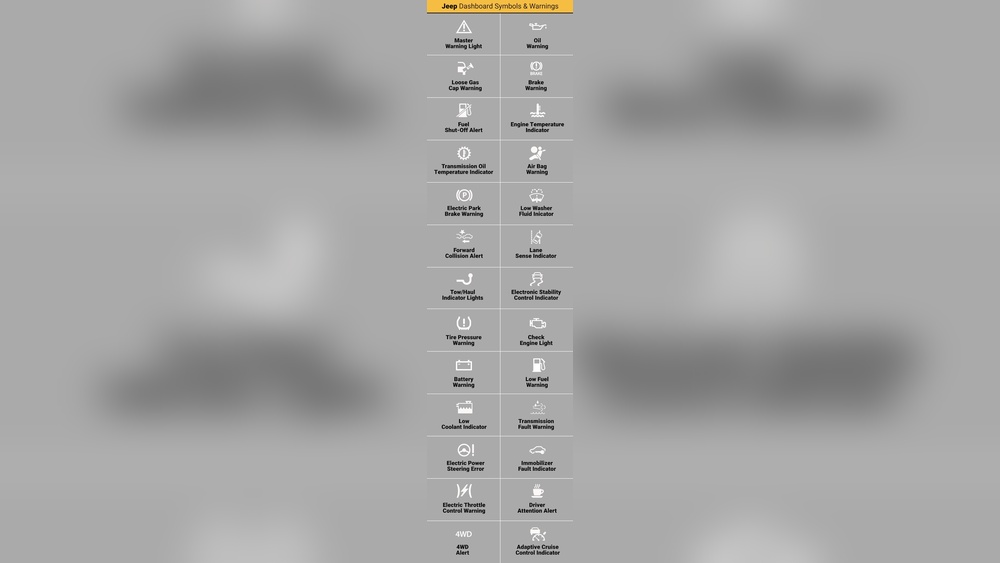
Ignoring these warnings can lead to major damage, so it’s essential to respond appropriately.
Many drivers only learn the meaning of symbols after a problem occurs. However, learning them in advance prepares you for any situation. For example, understanding the difference between a yellow and red warning light can help you know whether to pull over immediately or schedule a service soon.
Common Jeep Instrument Panel Symbols Explained
Let’s break down the most common and important symbols you’ll see in your Jeep.
1. Check Engine Light
This symbol looks like an engine outline, sometimes with the word “CHECK. ” It can come on for many reasons, from a loose gas cap to engine misfires. If it’s steady, you usually have time to check the problem. If it’s flashing, stop your Jeep as soon as possible—this could mean a serious engine issue.
2. Oil Pressure Warning
A red oil can symbol means your oil pressure is low. This is a critical warning—driving with low oil pressure can destroy your engine. Stop the car and check your oil level. If the symbol stays on after adding oil, call for help.
3. Battery Charge Warning
This symbol, shaped like a battery, indicates a charging problem. It may mean your alternator is failing, your battery is dead, or there’s a wiring issue. If you see this light, your Jeep could lose power soon. Avoid shutting off the engine until you reach a safe place.
4. Brake Warning
A red exclamation mark inside a circle, or the word “BRAKE,” signals a brake system problem or that your parking brake is engaged. If you see this symbol and your parking brake isn’t on, your brakes may be unsafe. Check your brake fluid and get service immediately.
5. Abs Warning
The ABS symbol tells you that your anti-lock braking system isn’t working. Your brakes still work, but you lose the added safety of ABS. Drive carefully and have the system checked.
6. Tire Pressure Monitoring System (tpms)
This symbol looks like a horseshoe with an exclamation point. It means one or more tires are under-inflated. Low tire pressure can lead to poor handling and increased tire wear. Check and fill your tires as soon as possible.
7. Airbag Warning
A figure with a circle in front of it, or the word “AIRBAG,” means there’s a problem with the airbag system. Airbags may not deploy in a crash if this light is on. This is a safety risk that needs professional attention.
8. Coolant Temperature Warning
A thermometer symbol in liquid warns that your engine is overheating. Stop the car and let the engine cool. Driving with an overheated engine can cause severe damage.
9. Transmission Temperature Warning
A thermometer inside a gear shape means your transmission is too hot. This usually happens when towing or driving in extreme conditions. Let the vehicle rest and cool down.
10. Traction Control Warning
A car with squiggly lines behind it signals a problem with your traction control system. This system helps you stay in control on slippery roads. If the light stays on, have it checked soon.

Color Codes: What Do They Mean?
Not all dashboard lights are equally urgent. Jeep uses different colors to signal the importance of each warning.
| Color | Meaning | Action |
|---|---|---|
| Red | Critical problem or immediate danger | Stop vehicle immediately |
| Yellow/Amber | Caution or service needed soon | Check as soon as possible |
| Green/Blue | System active or information only | No action needed |
This color system helps you decide how quickly you need to act. For example, a red oil pressure warning needs immediate attention, while a green cruise control symbol is just informational.
Less-known Jeep Dashboard Symbols
Some symbols are less obvious but still important. Many drivers are surprised when they see these lights:
1. Electronic Throttle Control (etc) Warning
A lightning bolt inside two curved lines means there is a problem with your throttle system. Your Jeep might run rough or enter “limp mode,” where power is reduced. Do not ignore this light.
2. Electronic Stability Control (esc) Indicator
A car with wavy lines and the word “OFF” means the stability control system is turned off. This system helps prevent skids and loss of control.
3. Hill Descent Control Light
A vehicle going downhill signals that hill descent control is active. This feature helps you control speed on steep hills, especially off-road.
4. Service 4wd Indicator
The words “SERV 4WD” mean there is a problem with the four-wheel-drive system. This can affect traction and off-road capability.
5. Key Fob Battery Low
A key symbol with an exclamation mark means your key fob battery is low. Replace the battery soon to avoid getting locked out.
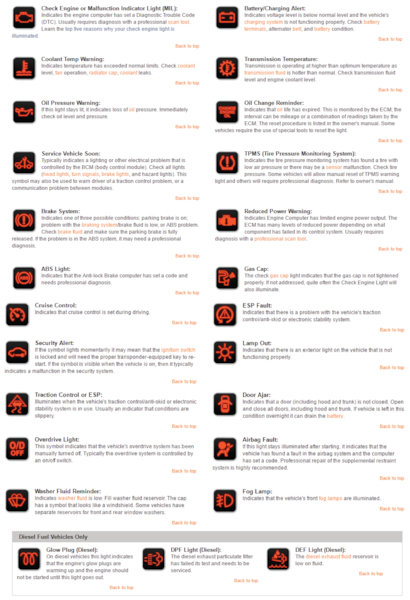
Indicator Lights Vs. Warning Lights
It’s important to know the difference between indicator lights and warning lights. Indicator lights show you when a system is active—like headlights or cruise control. Warning lights alert you to problems or needed maintenance.
Here’s a quick comparison:
| Indicator Lights | Warning Lights |
|---|---|
| Green or Blue | Red or Yellow |
| System is working or active | Problem, malfunction, or danger |
| No action required | Check or stop vehicle |
Many new Jeep owners confuse these two types of lights, leading to unnecessary worry or, worse, ignoring real dangers.
What To Do When A Symbol Lights Up
When you see a symbol on your Jeep’s dashboard, don’t panic. Here’s a step-by-step approach:
- Identify the symbol. Check your owner’s manual or use trusted online resources.
- Check the color. Red means stop immediately; yellow means check soon.
- Listen and observe. Are there strange noises, smells, or driving changes?
- Act appropriately. For red warnings, pull over safely and shut off the engine. For yellow, plan a service visit soon.
- Don’t reset warning lights without fixing the problem. Simply clearing the light can hide a dangerous issue.
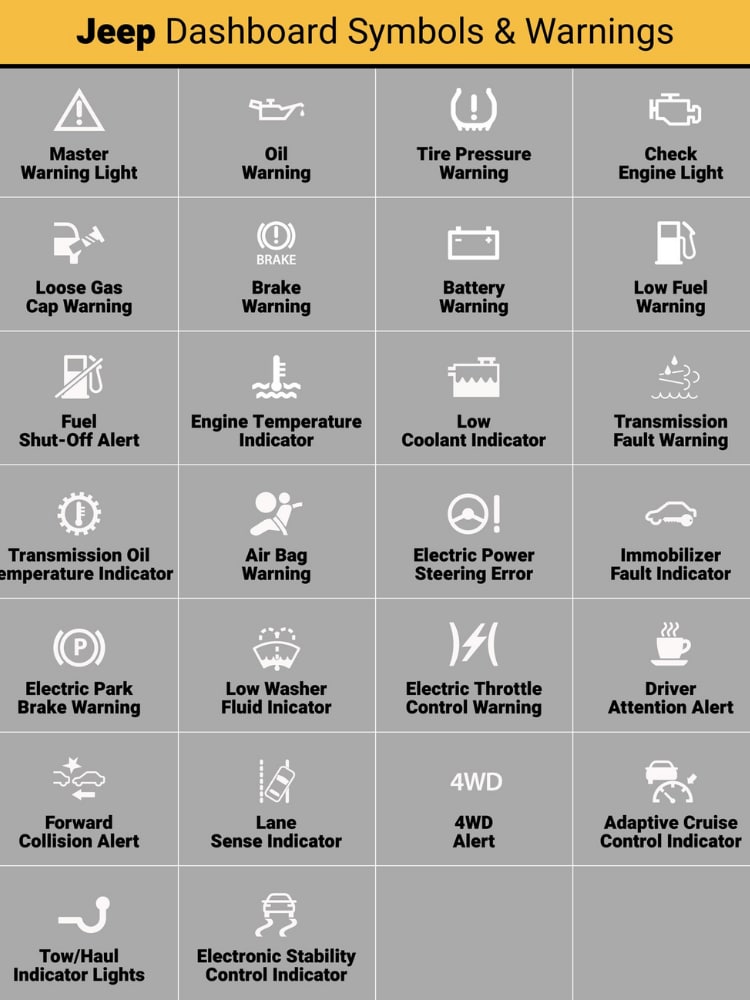
How To Learn Jeep Instrument Panel Symbols
Most Jeep manuals include a section on dashboard symbols. However, many drivers find these guides confusing because the images are small or not in color. Here are better ways to learn:
- Take a photo of your dashboard when a light comes on. You can compare it to images online.
- Use Jeep’s official website or mobile apps for symbol guides.
- Ask a technician during your next service visit to walk you through the most important symbols for your model.
An overlooked tip: Some symbols may look slightly different depending on your Jeep’s year and trim. Always use guides that match your exact model.
While most drivers recognize the check engine and oil lights, they often miss these details:
- Multiple symbols may light up together when there’s a single problem. For example, a faulty alternator can trigger both the battery and ABS warnings.
- Some warnings disappear after restarting the engine, but the problem is still there. Don’t ignore a symbol just because it goes away temporarily.
- Seasonal changes like cold weather can trigger the TPMS light even if your tires aren’t leaking. This is because air pressure drops when temperatures fall.
Understanding these insights can help you avoid confusion and make smarter decisions about your Jeep’s health.
Comparing Jeep Symbols With Other Brands
Jeep uses many standard symbols, but some are unique or have different meanings compared to other brands. Here’s a quick comparison:
| Symbol | Jeep Meaning | Other Brands |
|---|---|---|
| 4WD Indicator | Active four-wheel drive | Some only show “AWD” |
| Hill Descent | Feature active (Jeep) | May not exist on sedans |
| ETC Warning | Throttle system issue | Different symbol for some brands |
If you drive more than one vehicle, take a moment to review each manual—symbols can mean different things even if they look similar.
When To Visit A Mechanic
Some dashboard warnings are safe to check yourself, like low tire pressure or a loose gas cap. However, seek professional help if:
- The symbol is red and stays on after restarting.
- You notice strange noises, smoke, or smells.
- The vehicle drives differently, feels weak, or doesn’t shift gears smoothly.
- Multiple warning lights appear at the same time.
Trying to fix advanced problems without proper tools or knowledge can cause more damage. Technicians have special scanners to read your Jeep’s onboard computer and diagnose the real cause.
Staying Ahead: Preventing Dashboard Warnings
Regular maintenance is the best way to keep your instrument panel clear. Here are some practical tips:
- Check fluid levels monthly—oil, coolant, brake fluid, and transmission fluid.
- Inspect tire pressure at least once a month and before long trips.
- Listen for new sounds or changes in performance.
- Don’t ignore small issues; address them before they become major problems.
- Schedule routine service based on your Jeep’s manual.
Preventive care not only keeps warning lights off but also extends the life of your vehicle.
Frequently Asked Questions
<!– wp:rank-math/faq-block {"questions":[{"id":"faq-question-957479658228","title":"What Should I Do If I See A Red Warning Light On My Jeep’s Dashboard?","content":"If a red warning light appears, safely pull over and stop the engine as soon as possible. Red lights signal serious issues like low oil pressure or overheating. Driving further could damage your Jeep or put you at risk.
“,”visible”:true},{“id”:”faq-question-7864d0098bd3″,”title”:”Why Does My Tire Pressure Light Come On Every Winter?”,”content”:”Cold weather can lower the air pressure in your tires, triggering the TPMS light. Even if there’s no leak, check and inflate your tires to the recommended pressure. The light should go off after adjustment.
“,”visible”:true},{“id”:”faq-question-cea1eed7947c”,”title”:”Can I Drive If The Check Engine Light Is On?”,”content”:”You can usually drive with a steady check engine light, but you should schedule a service soon. If the light is flashing, stop immediately, as this could mean a serious engine problem.
“,”visible”:true},{“id”:”faq-question-8863264a13c1″,”title”:”How Do I Reset A Warning Light On My Jeep?”,”content”:”Some warning lights turn off automatically after fixing the problem (like closing the gas cap). Others may need a diagnostic tool to reset. Never ignore a warning just because you cleared the light—solve the root cause first.
“,”visible”:true},{“id”:”faq-question-4b6f3f2504ef”,”title”:”Where Can I Find Accurate Explanations For Jeep Dashboard Symbols?”,”content”:”The best sources are your owner’s manual and Jeep’s official website. For more visual guides, check Jeep’s official manual library. Avoid guessing from forums, as symbols may change by model year.
Understanding your Jeep’s instrument panel symbols is a smart way to stay safe, avoid costly repairs, and enjoy worry-free driving. Take time to learn what each symbol means—you’ll thank yourself the next time a light comes on.
“,”visible”:true}]} –>What Should I Do If I See A Red Warning Light On My Jeep’s Dashboard?
If a red warning light appears, safely pull over and stop the engine as soon as possible. Red lights signal serious issues like low oil pressure or overheating. Driving further could damage your Jeep or put you at risk.
Why Does My Tire Pressure Light Come On Every Winter?
Cold weather can lower the air pressure in your tires, triggering the TPMS light. Even if there’s no leak, check and inflate your tires to the recommended pressure. The light should go off after adjustment.
Can I Drive If The Check Engine Light Is On?
You can usually drive with a steady check engine light, but you should schedule a service soon. If the light is flashing, stop immediately, as this could mean a serious engine problem.
How Do I Reset A Warning Light On My Jeep?
Some warning lights turn off automatically after fixing the problem (like closing the gas cap). Others may need a diagnostic tool to reset. Never ignore a warning just because you cleared the light—solve the root cause first.
Where Can I Find Accurate Explanations For Jeep Dashboard Symbols?
The best sources are your owner’s manual and Jeep’s official website. For more visual guides, check Jeep’s official manual library. Avoid guessing from forums, as symbols may change by model year.
Understanding your Jeep’s instrument panel symbols is a smart way to stay safe, avoid costly repairs, and enjoy worry-free driving. Take time to learn what each symbol means—you’ll thank yourself the next time a light comes on.