If you own a Jeep, knowing how to put it in 4-wheel drive can make all the difference when tackling rough roads or slippery conditions. You might be wondering how exactly to switch your Jeep into 4-wheel drive safely and smoothly.
Whether you’re driving through mud, snow, or rocky terrain, engaging 4-wheel drive gives you better control and traction. In this guide, you’ll learn step-by-step how to shift your Jeep into 4-wheel drive using the shift lever near your transmission. By the time you finish reading, you’ll feel confident using your Jeep’s 4WD system to handle whatever the road—or off-road—throws at you.
Let’s dive in and get your Jeep ready for any adventure!

Jeep 4wd Basics
Understanding the basics of Jeep 4WD is essential for safe and effective driving. Jeep 4WD lets power go to all wheels for better grip. This feature helps when driving on rough or slippery surfaces.
Different Jeep models may have different 4WD systems. Knowing how these systems work helps you choose the right mode. It also prevents damage to your vehicle.
Types Of 4wd Systems
Jeep offers several types of 4WD systems. Part-time 4WD sends power to two wheels during normal driving. You switch to four wheels when extra traction is needed.
Full-time 4WD powers all four wheels all the time. It works well on dry pavement and rough terrain. Another type is automatic 4WD, which shifts power between wheels automatically.
When To Use 4wd
Use 4WD on loose or slippery surfaces like snow, mud, or gravel. It improves traction and control. Avoid using 4WD on dry, paved roads. It can cause extra wear and make steering difficult.
Engage 4WD before you get stuck or lose control. Shift to 4WD low for steep hills or deep mud. This setting provides more power at low speeds.
Locating The 4wd Controls
Finding the 4-wheel drive controls in your Jeep is the first step to using this feature. These controls are usually easy to spot, located near the main gear shift or on the dashboard. Knowing their exact location helps you shift into 4WD quickly and safely.
Shift Lever Positions
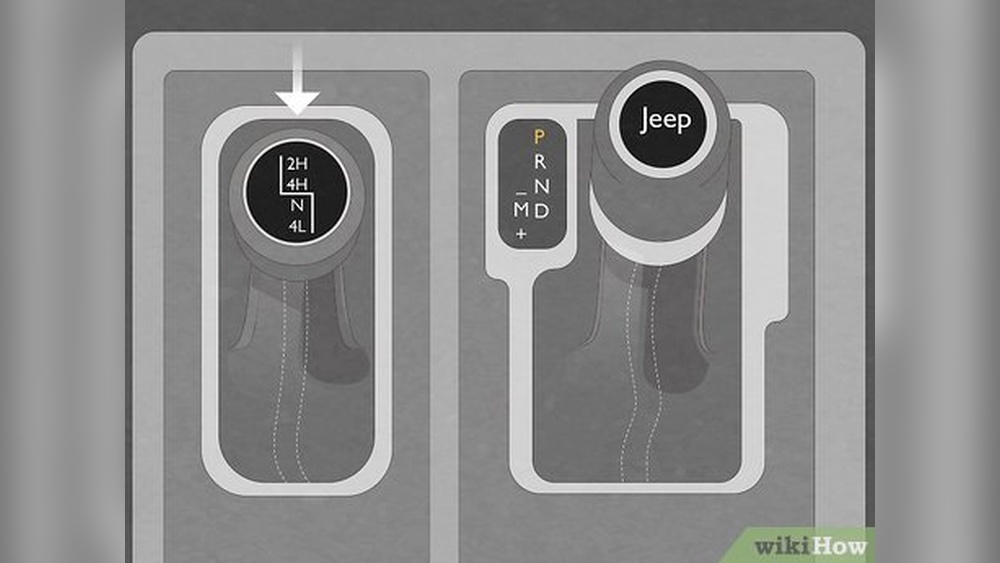
The shift lever near your transmission has several key positions. Each position changes how your Jeep drives and handles different road conditions. Here are the common positions:
- P (Park): Locks the transmission and keeps the Jeep stationary.
- R (Reverse): Moves the Jeep backward.
- N (Neutral): Disconnects the drivetrain from the transmission. This lets the Jeep roll freely and is used for flat-towing.
- D (Drive): Normal driving mode, powers the rear wheels in 2WD.
Transfer Case Lever Functions
The transfer case lever controls the 4WD modes. It is usually a smaller lever next to the main gear shift. This lever has different settings for various driving needs:
- 2H (Two-Wheel High): Powers only the rear wheels for regular driving.
- 4H (Four-Wheel High): Engages four-wheel drive for better traction at normal speeds.
- N (Neutral): Disconnects both front and rear driveshafts. Used for towing.
- 4L (Four-Wheel Low): Provides maximum torque at low speeds for off-road or tough conditions.
To switch between these modes, your Jeep may need to be stopped or moving slowly. Some models require the transmission to be in Neutral before shifting the transfer case lever.
Engaging 4wd High
Engaging 4WD High lets your Jeep handle slippery roads and light off-road trails. It sends power to all four wheels, improving traction. This mode works well at normal driving speeds on surfaces like snow, gravel, or mud.
Using 4WD High is simple but requires a few steps to ensure smooth shifting. Understanding these steps helps protect your Jeep’s drivetrain and keeps the ride safe.
Preparing The Jeep
Start by driving your Jeep at a low speed, under 55 mph. Keep the vehicle moving straight. Avoid sharp turns or sudden stops before shifting. This helps the gears engage without damage.
It is best to shift while the Jeep is on a flat surface. Make sure the transmission is in Drive or Neutral, depending on your Jeep model. Some models require stopping to shift, but many allow shifting on the move.
Step-by-step Shifting Process
- Slow down the Jeep to about 10-15 mph.
- Lightly release the gas pedal to ease the load on the drivetrain.
- Locate the 4WD lever near the main shift lever.
- Pull the 4WD lever straight back from 2WD to 4WD High position.
- You may hear a click or feel the lever lock into place.
- Once engaged, gently press the gas pedal and continue driving.
Some Jeep models have a button to press before shifting. Check your owner’s manual to confirm the exact method.

Engaging 4wd Low
Engaging 4WD Low on your Jeep activates a lower gear ratio. This provides more power and control at low speeds. It is ideal for tough off-road conditions. Using 4WD Low helps your Jeep crawl over obstacles without straining the engine. It also improves traction on slippery or steep terrain.
When To Use 4wd Low
- Driving on rocky or uneven trails
- Climbing or descending steep hills
- Crossing deep sand, mud, or snow
- Maneuvering through heavy mud or water
- Pulling heavy loads up or down steep slopes
4WD Low should not be used on dry, paved roads. It may damage the drivetrain and reduce fuel efficiency.
Steps To Shift Into 4wd Low
- Bring your Jeep to a complete stop.
- Shift the main transmission into Neutral (N).
- Locate the 4WD lever near your transmission.
- Firmly pull the lever straight back into the 4WD Low position.
- Shift the main transmission back into Drive (D) or first gear.
- Press the gas pedal gently to start moving.
Briefly easing off the gas pedal helps the system engage smoothly. Avoid forcing the lever to prevent damage.
Using Neutral In 4wd
Using neutral in 4WD is a key step in some Jeep models. Neutral lets the drivetrain disconnect from the transmission. This allows the Jeep to roll freely without engine power. This feature is useful in flat-towing or shifting between drive modes smoothly.
Purpose Of Neutral Position
The neutral position disconnects the wheels from the engine. This stops power from reaching the wheels. It allows the Jeep to move without engine force. Neutral helps protect the transmission during towing. It also prevents damage when shifting between 2WD and 4WD modes.
How To Shift Into Neutral
First, press the brake pedal firmly. Shift the main transmission to Neutral (N). This disconnects the drivetrain from the wheels. Next, briefly ease off the gas pedal. This helps the 4WD system engage smoothly. After that, shift the transfer case lever or button to the desired 4WD mode. Finally, shift the main transmission back into Drive (D) to begin moving.
Tips For Smooth 4wd Engagement
Engaging 4WD smoothly keeps your Jeep’s drivetrain safe and improves vehicle control. Sudden shifts or incorrect actions can cause damage or wear. Follow simple tips to engage four-wheel drive without issues. These tips help you drive confidently on different terrains.
Using The Gas Pedal
Lightly press the gas pedal before shifting to 4WD. This helps the system synchronize gears smoothly. Avoid pressing the pedal hard, as it can cause jerky movements. A soft, steady throttle makes engagement easier and extends the life of your drivetrain.
Once you start to feel resistance, release the gas pedal slowly. This allows the transfer case to lock in properly. Keep your speed low during engagement. Slow speeds reduce strain on the 4WD system and improve traction.
Avoiding Common Mistakes
Do not try to switch 4WD at high speeds. Rapid shifts can damage internal components. Always bring your Jeep to a slow stop or idle speed before engaging 4WD.
Never force the 4WD lever if it does not move easily. Forcing it can break the shift mechanism. Instead, double-check your vehicle’s gear and speed, then try again gently.
Do not forget to return to two-wheel drive on dry, paved roads. Driving in 4WD on such surfaces increases tire wear and reduces fuel efficiency. Use 4WD only when needed for traction and off-road conditions.
Troubleshooting 4wd Issues
Troubleshooting 4WD issues is key to keeping your Jeep ready for any terrain. Problems may arise even after engaging four-wheel drive correctly. Identifying and solving these issues early helps avoid costly repairs. This guide covers common problems and signs that call for expert attention. Follow along to learn simple fixes and when to get professional help.
Common Problems
One frequent issue is the 4WD not engaging. This may happen if the vehicle is not in neutral before shifting. Another problem is unusual noises when 4WD is active. Grinding or clunking sounds often indicate worn parts or low fluid levels. A stuck 4WD lever can result from dirt or rust buildup. Sometimes, the indicator light fails to turn on, suggesting electrical faults. Leaks in the transfer case or axles also cause 4WD malfunction. Checking these areas regularly helps prevent bigger troubles.
When To Seek Professional Help
Seek expert help if your Jeep’s 4WD system slips out of gear while driving. Difficulty shifting into 4WD after multiple tries needs inspection. Persistent noises or vibrations during 4WD use require a mechanic’s attention. Warning lights on the dashboard that stay lit are a clear sign. If you notice fluid leaks under the vehicle, get a professional check. Complex repairs, such as transfer case or differential issues, demand specialist tools and skills. Early diagnosis saves time and money.

Frequently Asked Questions
How Do I Shift My Jeep Into 4wd?
To shift into 4WD, first put your Jeep’s transmission into Neutral (N). Then, pull the 4WD lever or push the button to engage four-wheel drive. Briefly easing off the gas pedal helps the system engage smoothly.
When Should I Use 4wd In My Jeep?
Use 4WD when driving on slippery, uneven, or off-road surfaces like mud, snow, sand, or rocky terrain. Avoid using 4WD on dry pavement to prevent drivetrain damage.
Can I Shift To 4wd While Driving?
Yes, many Jeep models allow shifting to 4WD High while driving at low speeds (under 55 mph). For 4WD Low, the vehicle must be stopped, and transmission in Neutral.
What Does Neutral (n) Do In A 4wd Jeep?
Neutral disconnects the drivetrain from the transmission, letting your Jeep roll freely. It’s mainly used for flat-towing your Jeep behind another vehicle like an RV.
Conclusion
Engaging your Jeep’s four-wheel drive is simple and effective. Always start by shifting into neutral for smooth engagement. Use the lever near the transmission to select the desired 4WD mode. Remember, this helps improve traction on rough or slippery roads.
Practice this process in a safe place to build confidence. Your Jeep will handle tougher terrains with ease. Drive carefully and enjoy the added control 4WD provides.