If you own or drive a Jeep Cherokee XJ, understanding the fuse box diagram is essential. Fuses protect your vehicle’s electrical system, stopping small problems from becoming big ones.
Many electrical issues—like headlights not working, radio failures, or power window problems—often trace back to the fuse box. Knowing where each fuse is, and what it controls, can save time, money, and headaches.
What Is The Jeep Cherokee Xj Fuse Box?
The Jeep Cherokee XJ was produced from 1984 to 2001. This model is famous for its durability and off-road ability. Its fuse box, sometimes called the Power Distribution Center, houses fuses and relays for many of the car’s electrical systems.
You’ll find two main fuse boxes in the XJ:
- Interior fuse box: Located under the dashboard on the driver’s side.
- Engine bay fuse box: Found near the battery in the engine compartment.
Each fuse box contains fuses with different ratings, usually measured in amperes (amps). Each fuse protects a specific circuit—if there’s too much current, the fuse “blows” and breaks the circuit, preventing damage.
How To Read The Fuse Box Diagram
A fuse box diagram is like a map. It shows the location of each fuse and what system it protects. On most Jeep Cherokee XJs, you’ll find this diagram:
- Printed on the fuse box cover
- In the owner’s manual
- Sometimes as a label near the fuse panel
Let’s look at a simplified diagram for the 1997–2001 Cherokee XJ interior fuse box:
| Fuse Number | Fuse Rating (Amps) | System Protected |
|---|---|---|
| 1 | 15 | Radio, Dome Light |
| 5 | 10 | Instrument Panel |
| 7 | 20 | Heater/AC Blower |
| 12 | 15 | Power Windows |
| 16 | 10 | Back-up Lights |
Not every XJ model year is exactly the same, so always check your vehicle’s specific diagram.
Common Fuse Locations And Their Functions
Understanding which fuse controls each system is critical for quick troubleshooting. Here are the most commonly checked fuses:
- Headlights: Usually found in the engine bay fuse box. If your headlights stop working, always check this fuse first.
- Radio: Managed by a fuse in the interior box. If the radio and interior lights both stop, a single blown fuse could be the cause.
- Power Windows/Locks: These often have separate fuses. Loss of function usually points to a blown fuse, not a major wiring problem.
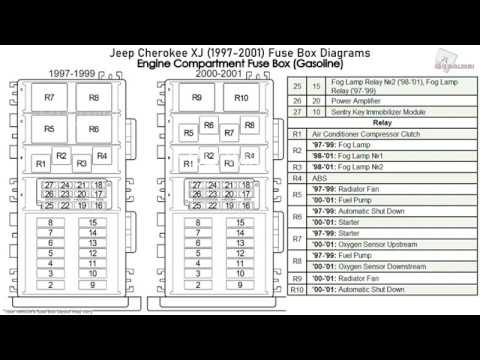
Here’s a look at a typical engine compartment fuse box layout for a late-model XJ:
| Relay/Fuse | Rating | Controls |
|---|---|---|
| Starter Relay | 30A | Starter Motor |
| Fuel Pump Fuse | 15A | Fuel Pump |
| Horn Relay | 20A | Horn Circuit |
| Cooling Fan | 30A | Electric Fan |
How To Replace A Blown Fuse
Replacing a fuse is easy if you follow these steps:
- Turn off the vehicle and remove the keys.
- Locate the correct fuse box (interior or engine bay).
- Check the fuse diagram to find the right fuse.
- Remove the fuse using the puller tool (often included in the fuse box) or a pair of tweezers.
- Check the fuse—a broken wire or dark spot means it’s blown.
- Replace with the same amperage. Never use a higher-rated fuse, as it can damage the electrical system.
Some beginners forget to turn off the ignition, which can cause short circuits or further damage. Always double-check the replacement fuse matches the original in amperage.
Troubleshooting Electrical Problems Using The Fuse Box
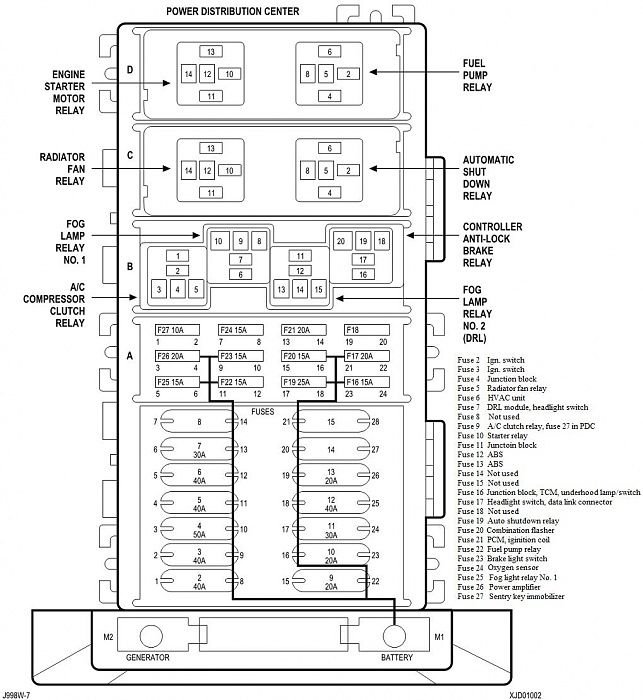
The fuse box diagram makes troubleshooting much faster. For example, if your Jeep Cherokee XJ’s power windows stop working, you can quickly check the diagram, find the relevant fuse, and inspect it.
Here’s another practical example:
- Problem: Dome light and radio stop working together.
- Solution: Both are often on the same fuse. Check the interior box diagram, and you’ll probably find a single blown fuse is the cause.
Some owners miss that multiple systems can share a fuse. This means one blown fuse might cause several things to fail at once.
Differences Between Xj Model Years
Not all Cherokee XJ fuse boxes are identical. There are changes across different years:
| Model Year | Main Fuse Box Location | Notable Differences |
|---|---|---|
| 1984–1996 | Driver’s footwell (interior) | Fewer relays, simpler layout |
| 1997–2001 | Updated panel (interior and engine bay) | More electronic systems, relays added |
Always match your fuse diagram to your model year. Using the wrong chart can lead to replacing the wrong fuse and wasted time.
Tips For Maintaining Your Fuse Box
- Keep the covers on: Dust and moisture can cause corrosion and electrical shorts.
- Check fuses yearly: Especially before long trips or off-road adventures.
- Carry spare fuses: A small kit in your glovebox can be a lifesaver.
- Label your fuses: If the diagram is missing or worn, use stickers or a diagram from your manual.
Many drivers overlook the need for periodic fuse checks, especially after water crossings or heavy off-road use.
When To Seek Professional Help
Some electrical issues are more complex. If you replace a fuse and it blows again immediately, there may be a short circuit or wiring problem. In these cases, it’s best to see a certified mechanic. Electrical fires and battery drains can start from unresolved fuse issues.
For deeper information about vehicle fuses, visit the official Wikipedia page on automotive fuses.
Understanding your Jeep Cherokee XJ fuse box diagram is a simple way to keep your SUV running smoothly. A little knowledge and a few minutes with the diagram can prevent long waits and expensive repairs.
Frequently Asked Questions
<!– wp:rank-math/faq-block {"questions":[{"id":"faq-question-e9c552fb5cc8","title":"What Happens If I Use The Wrong Fuse Amperage?","content":"Using a fuse with higher amperage than recommended can damage your wiring or start a fire. Always match the replacement to the original rating.
“,”visible”:true},{“id”:”faq-question-ff23864af54d”,”title”:”Where Do I Find The Exact Fuse Diagram For My Jeep Cherokee Xj?”,”content”:”Check the owner’s manual, the inside of the fuse box cover, or reliable Jeep forums. The diagram must match your model year.
“,”visible”:true},{“id”:”faq-question-1f5665ae08ab”,”title”:”Why Do Multiple Systems Stop Working When One Fuse Blows?”,”content”:”Some fuses protect more than one system. For example, one fuse might control both the radio and interior lights. This is normal in many cars.
“,”visible”:true},{“id”:”faq-question-4fa7c3fe0872″,”title”:”How Can I Tell If A Fuse Is Bad Without Removing It?”,”content”:”Some fuses have a small window to see the wire inside. If it’s broken or burnt, the fuse is bad. A multimeter can also check continuity without removing the fuse.
“,”visible”:true},{“id”:”faq-question-cdf7406c2bb6″,”title”:”Can I Drive My Jeep Cherokee Xj With A Blown Fuse?”,”content”:”It depends on the system. A blown fuse for non-essential systems (like the radio) is safe, but never drive without working lights, signals, or wipers. Repair those before driving.
“,”visible”:true}]} –>What Happens If I Use The Wrong Fuse Amperage?
Using a fuse with higher amperage than recommended can damage your wiring or start a fire. Always match the replacement to the original rating.
Where Do I Find The Exact Fuse Diagram For My Jeep Cherokee Xj?
Check the owner’s manual, the inside of the fuse box cover, or reliable Jeep forums. The diagram must match your model year.
Why Do Multiple Systems Stop Working When One Fuse Blows?
Some fuses protect more than one system. For example, one fuse might control both the radio and interior lights. This is normal in many cars.
How Can I Tell If A Fuse Is Bad Without Removing It?
Some fuses have a small window to see the wire inside. If it’s broken or burnt, the fuse is bad. A multimeter can also check continuity without removing the fuse.
Can I Drive My Jeep Cherokee Xj With A Blown Fuse?
It depends on the system. A blown fuse for non-essential systems (like the radio) is safe, but never drive without working lights, signals, or wipers. Repair those before driving.