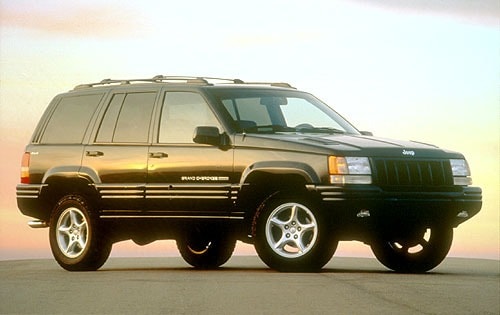
The allure of the 1998 Jeep Grand Cherokee is undeniable, especially for those who cherish its robust capabilities and classic SUV charm. Among its most celebrated features is its four-wheel-drive system, a hallmark of Jeep's off-road heritage.
Understanding how to engage and utilize this system effectively is paramount for unlocking the full potential of this iconic vehicle, whether you're navigating challenging trails, facing adverse weather conditions, or simply seeking enhanced traction on slippery surfaces.
This guide is dedicated to demystifying the process of engaging 4WD in a ’98 Grand Cherokee, ensuring you can confidently put its legendary prowess to work.

This comprehensive exploration will cover the nuances of the Grand Cherokee’s 4WD systems, detailing the operational procedures, maintenance considerations, and troubleshooting tips. We aim to provide an authoritative resource for owners and enthusiasts, drawing on a deep understanding of the vehicle’s mechanics and practical, real-world experience.
By the end of this article, you’ll possess the knowledge to properly engage 4WD, maintain its components, and address common issues, thereby maximizing your driving experience and the longevity of your ’98 Grand Cherokee.
Key Takeaways
- The 1998 Jeep Grand Cherokee typically offered two primary 4WD systems: Command-Trac and the more advanced Selec-Trac, each with distinct engagement methods.
- Proper engagement involves understanding your specific transfer case lever or buttons and selecting the appropriate mode for conditions, from 2WD for normal driving to 4WD Low for extreme traction needs.
- Regular maintenance of the transfer case, driveshafts, and differentials is crucial for the longevity and reliable operation of the 4WD system.
- Common issues can range from worn U-joints and vacuum leaks to faulty sensors or transfer case actuator problems, often indicated by noises or improper engagement.
- Always consult your owner’s manual for specific instructions and understand the limitations of each 4WD mode to prevent damage to the drivetrain.
Understanding The ’98 Grand Cherokee’s 4wd Systems
The 1998 Jeep Grand Cherokee, a pivotal model in the ZJ generation, came equipped with sophisticated four-wheel-drive systems designed to cater to a wide spectrum of driving demands. Jeep offered two main configurations for this model year, each providing different levels of driver control and automatic engagement: the Command-Trac system and the Selec-Trac system. Understanding the fundamental differences and operational characteristics of each is the first step toward effectively engaging your vehicle’s 4WD.
Command-trac: Part-time Simplicity
The Command-Trac system is a robust, part-time 4WD system that offers straightforward engagement. It is designed for situations where full-time 4WD is not necessary, such as off-road driving, snow, or mud. This system typically features a traditional transfer case lever located on the floor between the driver and passenger seats.
- 2WD (Two-Wheel Drive): This is the default setting for normal on-road driving. Power is sent only to the rear wheels, maximizing fuel efficiency and reducing drivetrain wear.
- 4WD High (4H): This setting engages all four wheels for increased traction. It’s ideal for slippery conditions like rain, snow, ice, or light off-roading. In 4H, the front and rear driveshafts are locked together, meaning they must rotate at the same speed. This is why it’s crucial not to use 4H on dry, paved surfaces, as the difference in tire rotation speed between the front and rear axles can cause binding and damage to the drivetrain components.
- 4WD Low (4L): This setting also engages all four wheels but through a lower gear ratio in the transfer case. This provides significantly more torque at the wheels, which is essential for crawling over obstacles, steep inclines, or pulling heavy loads in low-traction environments. Like 4H, 4L should only be used on loose or slippery surfaces where wheel slippage is expected. Engaging 4L typically requires the vehicle to be stopped or moving very slowly, with the transmission in neutral.
The engagement of Command-Trac is a manual process. The driver actively shifts the transfer case lever to select the desired mode.
This direct control allows for precise application of power based on the prevailing conditions.
Selec-trac: Full-time Versatility
The Selec-Trac system, often found on higher trim levels or as an optional upgrade, offers a more advanced, full-time 4WD capability with an automatic mode. This system provides greater flexibility and convenience, especially for drivers who encounter a mix of on-road and occasional off-road or slippery conditions.
- 2WD (Two-Wheel Drive): Similar to Command-Trac, this mode sends power to the rear wheels for normal on-road driving and optimal fuel economy.
- 4WD Full-Time (4FT) or 4WD Auto: This is the standout feature of Selec-Trac. In this mode, the system automatically distributes power between the front and rear axles as needed. Sensors detect wheel slippage, and the transfer case adjusts power delivery to maintain traction without driver intervention. This mode can be used on any surface, including dry pavement, making it incredibly versatile for unpredictable weather or mixed driving conditions.
- 4WD High Lock (4H Lock): This setting locks the front and rear driveshafts together, similar to 4H in Command-Trac. It’s used for situations requiring maximum traction, such as off-roading, deep snow, or mud. When engaged, it essentially turns the Selec-Trac into a part-time system. It should not be used on dry pavement.
- 4WD Low Lock (4L Lock): Similar to 4WD Low in Command-Trac, this mode provides maximum torque through a lower gear ratio. It’s used for extreme off-road situations, steep inclines, and rock crawling. Engagement typically requires the vehicle to be stopped or moving very slowly, with the transmission in neutral.
The Selec-Trac system often utilizes a selector dial or buttons on the dashboard rather than a floor lever, although some variations might exist. The primary advantage of Selec-Trac is its ability to seamlessly switch between rear-wheel drive and full-time four-wheel drive, offering a balance of efficiency and capability for everyday driving.
Transfer Case Identification
Distinguishing between Command-Trac and Selec-Trac is relatively simple.
- Command-Trac: Look for a manual transfer case lever on the floor. It will typically have markings for 2WD, 4H, and 4L.
- Selec-Trac: Look for a rotary dial or a set of buttons on the dashboard or center console. These will have markings for 2WD, 4FT (or AUTO), 4H (or 4H LOCK), and 4L (or 4L LOCK).
Understanding which system your ’98 Grand Cherokee is equipped with is fundamental to operating it safely and effectively. Always refer to your owner’s manual for the most accurate and specific instructions for your vehicle.
Engaging 4wd In Your ’98 Grand Cherokee: Step-by-step
The process of engaging four-wheel drive in your 1998 Jeep Grand Cherokee depends on whether you have the Command-Trac or Selec-Trac system. While both aim to provide enhanced traction, their operational nuances differ.
Adhering to the correct procedure is crucial to avoid drivetrain damage and ensure the system engages properly.
Engaging Command-trac
The Command-Trac system is a manual, part-time 4WD system that requires driver input via a floor-mounted transfer case lever.
- Prepare the Vehicle: Ensure your vehicle is in Park (P) if it’s an automatic transmission, or in gear if it’s a manual. For some shifts, especially into 4L, it’s recommended to have the engine running and the transmission in Neutral.
- Shifting to 4H (4WD High):
- From 2WD: While stopped or moving at a slow speed (typically under 50 mph, check your owner’s manual), firmly pull the transfer case lever rearward from the 2WD position to the 4H position. You should feel a distinct engagement.
- Returning to 2WD: Push the lever forward from 4H to 2WD while stopped or moving slowly.
- Shifting to 4L (4WD Low):
- Crucial Step: Come to a complete stop.
- Place the transmission in Neutral (N).
- Firmly pull the transfer case lever all the way rearward to the 4L position. You will likely need to apply a bit more force than for shifting into 4H.
- Once engaged, return the transmission to Drive (D) or your desired gear.
- Returning to 4H or 2WD from 4L: Come to a complete stop, place the transmission in Neutral (N), move the transfer case lever to the desired position (4H or 2WD), and then return the transmission to Drive (D).
Pro Tip: Always listen for a “clunk” or feel a positive engagement when shifting. If you experience resistance or grinding, do not force the lever. Stop and re-evaluate. For shifts into 4L, ensuring the vehicle is perfectly still and the transmission is in neutral is critical.
Engaging Selec-trac
The Selec-Trac system offers more automatic and selectable modes, often controlled by a rotary dial or buttons. The specific labels may vary slightly between models, but the general operation is consistent.
- Prepare the Vehicle: For most shifts, the vehicle can be in Park or in gear while moving at low to moderate speeds. However, engaging 4L Lock always requires specific steps.
- Shifting to 4WD Full-Time (4FT or AUTO):
- If your vehicle is in 2WD, simply rotate the dial or press the button for 4FT or AUTO. The system will automatically engage 4WD as needed. You may see an indicator light on the dashboard confirming engagement.
- This mode is safe for use on all surfaces, including dry pavement.
- Shifting to 4WD High Lock (4H LOCK):
- This mode is for off-road or slippery conditions where a locked 4WD is desired.
- While stopped or moving slowly, select 4H LOCK via the dial or buttons. The system will lock the front and rear driveshafts.
- Important: This mode should only be used on slippery surfaces or off-road. Do not use 4H LOCK on dry, paved roads, as it can cause drivetrain binding and damage.
- Return to 4FT/AUTO or 2WD when no longer needed.
- Shifting to 4WD Low Lock (4L LOCK):
- Crucial Step: Come to a complete stop.
- Place the transmission in Neutral (N).
- Rotate the dial or press the button for 4L LOCK.
- Once engaged, return the transmission to Drive (D) or your desired gear.
- Returning from 4L LOCK: Come to a complete stop, place the transmission in Neutral (N), select the desired mode (e.g., 4FT/AUTO or 2WD), and then return the transmission to Drive (D).
Pro Tip: The Selec-Trac system’s automatic mode (4FT/AUTO) is designed for convenience and safety in variable conditions. For most drivers encountering rain, light snow, or gravel roads, this mode is the most practical and recommended choice. Always pay attention to the dashboard indicator lights for confirmation of system engagement.
General Engagement Tips For Both Systems
- Owner’s Manual is Key: Always consult your specific owner’s manual. It provides the most accurate information for your vehicle, including speed limitations for shifting and specific procedures.
- Listen and Feel: Pay attention to auditory cues (clunks, whirs) and tactile feedback (lever movement, dashboard lights) to confirm engagement.
- Avoid Binding: Never use part-time 4WD modes (4H, 4L, 4H LOCK) on dry, high-traction surfaces. This can cause the tires, driveshafts, and transfer case to bind up, leading to expensive repairs.
- Regular Use: It’s good practice to engage 4WD periodically (e.g., once a month) and drive a short distance (e.g., a few hundred feet) on a loose surface to keep the system lubricated and components moving.
- Maintenance: Ensure your transfer case fluid is at the correct level and changed according to the maintenance schedule.
By following these steps and understanding the specific system in your ’98 Grand Cherokee, you can confidently engage 4WD for enhanced traction and capability.

When To Use Each 4wd Mode
The effectiveness and longevity of your 1998 Jeep Grand Cherokee’s 4WD system depend heavily on using the correct mode for the given conditions. Misusing 4WD can lead to drivetrain damage, poor handling, and reduced fuel efficiency. Here’s a breakdown of when to utilize each mode:
2wd (two-wheel Drive)
- When to Use: This is your default setting for normal on-road driving on dry, paved surfaces.
- Why: It directs power only to the rear wheels, which:
- Maximizes fuel economy.
- Reduces wear and tear on the 4WD components (transfer case, front driveshaft, front differential).
- Provides optimal handling characteristics for everyday driving.
- When NOT to Use: Avoid 2WD in conditions where consistent grip is compromised, such as snow, ice, mud, sand, or off-road trails.
4wd High (4h) / 4wd Full-time (4ft) / 4wd Auto
- When to Use:
- Slippery Roads: Rain, wet roads, light snow, packed snow, ice (though dedicated winter tires are always recommended).
- Gravel Roads: Provides better stability and control on loose surfaces.
- Light Off-Roading: Trails with moderate traction, dirt paths.
- Towing in Adverse Conditions: Provides extra stability when towing in rain or on slick surfaces.
- Why:
- 4H (Command-Trac): Engages all four wheels, providing a 50/50 power split (front/rear). This offers significantly more traction than 2WD. However, because the front and rear driveshafts are locked together, it should NOT be used on dry pavement where tire slippage is minimal. The speed difference between the front and rear tires will cause binding.
- 4FT/AUTO (Selec-Trac): This mode automatically distributes power between the front and rear axles as needed. It can be used on any surface, including dry pavement, because it allows for speed differentials between the front and rear axles. It provides enhanced traction when slip is detected and reverts to rear-wheel drive (or a more rear-biased split) when not needed, offering a blend of capability and efficiency.
- When NOT to Use:
- 4H (Command-Trac): Never on dry, paved roads.
- 4FT/AUTO (Selec-Trac): While safe for all surfaces, it may not provide the absolute maximum locked-in traction that 4H LOCK or 4L LOCK offers for extreme off-road situations.
4wd Low (4l) / 4wd Low Lock (4l Lock)
- When to Use:
- Extreme Off-Roading: Rock crawling, navigating very rough terrain, steep inclines or descents.
- Deep Mud or Sand: When you need maximum torque to power through soft, low-traction environments.
- Pulling Heavy Loads at Low Speed: In situations requiring immense pulling power from a standstill.
- Why: This mode engages all four wheels through a lower gear ratio in the transfer case. This multiplies engine torque significantly, allowing the vehicle to climb, crawl, or pull with much greater force at very low speeds. It also provides engine braking on descents.
- When NOT to Use:
- Never on dry, paved roads. The locked nature and low gearing will cause severe drivetrain stress and binding.
- At high speeds. This mode is designed for low-speed operation only. Driving too fast in 4L can be dangerous and damage the vehicle.
4wd High Lock (4h Lock) – Selec-trac Only
- When to Use:
- Severe Off-Roading: When maximum traction is needed, but the extreme gearing of 4L is not required. This is often used for faster off-road conditions like sand dunes or slippery, uneven trails where more speed is involved than typical rock crawling.
- Deep Snow or Mud: When you need a locked 50/50 power split for maximum grip.
- Why: It locks the front and rear driveshafts together, providing a fixed 50/50 power distribution, similar to 4H in Command-Trac. This ensures both axles receive equal rotational force, preventing one from spinning freely while the other is stuck.
- When NOT to Use: Never on dry, paved roads. Like 4H in Command-Trac, using 4H LOCK on high-traction surfaces will cause drivetrain binding and potential damage.
In summary: For daily driving, stick to 2WD. For unpredictable weather or slippery roads, use 4FT/AUTO (Selec-Trac) or 4H (Command-Trac). For extreme situations requiring maximum torque at low speeds, use 4L/4L LOCK. Use 4H LOCK (Selec-Trac) when a locked 4WD is needed at speeds higher than typically associated with 4L. Always prioritize safety and consult your owner’s manual.
Maintaining Your Grand Cherokee’s 4wd System
The four-wheel-drive system in your 1998 Jeep Grand Cherokee is a complex assembly of mechanical components that requires regular attention to ensure reliable performance and prevent costly failures. Neglecting maintenance can lead to premature wear, reduced capability, and inconvenient breakdowns.
Adhering to a consistent maintenance schedule is key to keeping your ZJ’s 4WD system in top condition.
Transfer Case Fluid
The transfer case is the heart of the 4WD system, distributing power to the front and rear axles. It relies on a specific type and level of fluid for lubrication and cooling.
- Fluid Type: The recommended fluid for the NP242 (Selec-Trac) and NP231 (Command-Trac) transfer cases in the ’98 Grand Cherokee is typically ATF+4 (or equivalent Mopar specification). Always verify this with your owner’s manual or a reliable service manual, as using the wrong fluid can cause damage.
- Level Check: The fluid level should be checked periodically, ideally every oil change. Locate the fill plug on the transfer case (usually on the driver’s side). With the vehicle on a level surface, remove the fill plug. The fluid should be right up to the bottom edge of the fill plug hole. If it’s low, add the correct fluid until it reaches this level.
- Fluid Change: Transfer case fluid should be changed at regular intervals. A common recommendation is every 30,000 to 50,000 miles, or sooner if the vehicle is used frequently for off-roading or towing. Draining and refilling the transfer case involves removing the drain plug (usually at the bottom of the case), letting the old fluid out, and refilling through the fill plug.
Driveline Components (u-joints And Cv Joints)
The driveshafts connect the transfer case to the differentials, and they incorporate universal joints (U-joints) or constant velocity (CV) joints to allow for the movement of suspension components.
- U-Joints: These are found on both the front and rear driveshafts. They allow the driveshaft to transmit power while operating at an angle.
- Maintenance: Many U-joints are sealed and non-serviceable. However, some may have grease fittings (zerks). If yours does, grease them periodically (e.g., every oil change or every other oil change) with a good quality chassis grease.
- Inspection: Listen for clunking noises when shifting into gear, accelerating, or decelerating. Worn U-joints can develop play, causing a knocking sound and potentially leading to catastrophic failure if left unaddressed. Visually inspect for torn rubber boots (if applicable) and signs of excessive wear or rust.
- CV Joints: Found on the front driveshaft of 4WD models, CV joints allow for smooth power transfer even at steeper angles and under suspension articulation.
- Maintenance: CV joints are typically protected by rubber boots filled with grease. The primary maintenance is to ensure these boots are intact. If a boot tears, dirt and moisture can enter, quickly destroying the joint.
- Inspection: Check the CV boots for cracks, tears, or signs of grease leakage. Any leakage indicates the joint is compromised and likely needs replacement.
Differentials
The front and rear differentials allow the wheels on each axle to rotate at different speeds when turning.
- Fluid Type: Front and rear differentials typically use gear oil, usually a 75W-90 or