Elevating Your 1998 Jeep Cherokee: A Comprehensive Guide To Suspension Lift Kits
The 1998 Jeep Cherokee, often affectionately called the "XJ," is a legendary off-road icon. Its compact size, robust engineering, and legendary 4.
0L inline-six engine make it a favorite for enthusiasts looking for a capable and relatively affordable platform. One of the most popular modifications for the XJ is a suspension lift kit.
Installing a lift kit does more than just make your Jeep look tougher; it significantly enhances its off-road capabilities by increasing ground clearance, allowing for larger tires, and improving suspension articulation.
Choosing the right lift kit can be a complex decision. There are numerous options available, ranging from simple budget kits to comprehensive, high-end systems.
Each type offers different benefits and drawbacks, impacting everything from ride quality to trail performance and even on-road handling.
This guide will walk you through everything you need to know about 1998 Jeep Cherokee suspension lift kits, helping you make an informed choice for your specific needs and budget. We’ll explore the different types of kits, what components they typically include, the benefits of lifting your XJ, and important considerations before you buy and install.
Understanding Suspension Lift Kits For The 1998 Cherokee
A suspension lift kit is designed to raise the body of your vehicle off the frame, thereby increasing the distance between the axles and the ground. For the 1998 Jeep Cherokee, this typically involves modifying or replacing the factory suspension components. The primary goals of a lift kit are to:
- Increase Ground Clearance: This is crucial for off-roading. More clearance means your differential, transfer case, and undercarriage are less likely to get snagged on rocks, logs, or other obstacles.
- Allow for Larger Tires: Bigger tires provide a larger contact patch with the ground, improving traction. They also further increase ground clearance.
- Improve Suspension Travel and Articulation: Some lift kits are designed to allow the suspension to flex more, keeping all four tires on the ground over uneven terrain. This is vital for maintaining traction and control.
- Enhance Aesthetics: Many owners choose lift kits simply because they give the Jeep a more aggressive and purposeful stance.
It’s important to distinguish between a suspension lift and a body lift. A suspension lift alters the vehicle’s suspension components to raise the body. A body lift, on the other hand, uses spacers to lift the body *away* from the frame, without affecting the suspension geometry. While body lifts are cheaper and simpler, they don’t improve suspension performance and can sometimes lead to driveshaft angle issues. This guide focuses exclusively on suspension lift kits for the 1998 Jeep Cherokee.
Common Types Of Suspension Lift Kits
The 1998 Jeep Cherokee XJ is most commonly lifted using a few different approaches, each with its own advantages and complexity.
2-3 Inch Budget Boost Kits
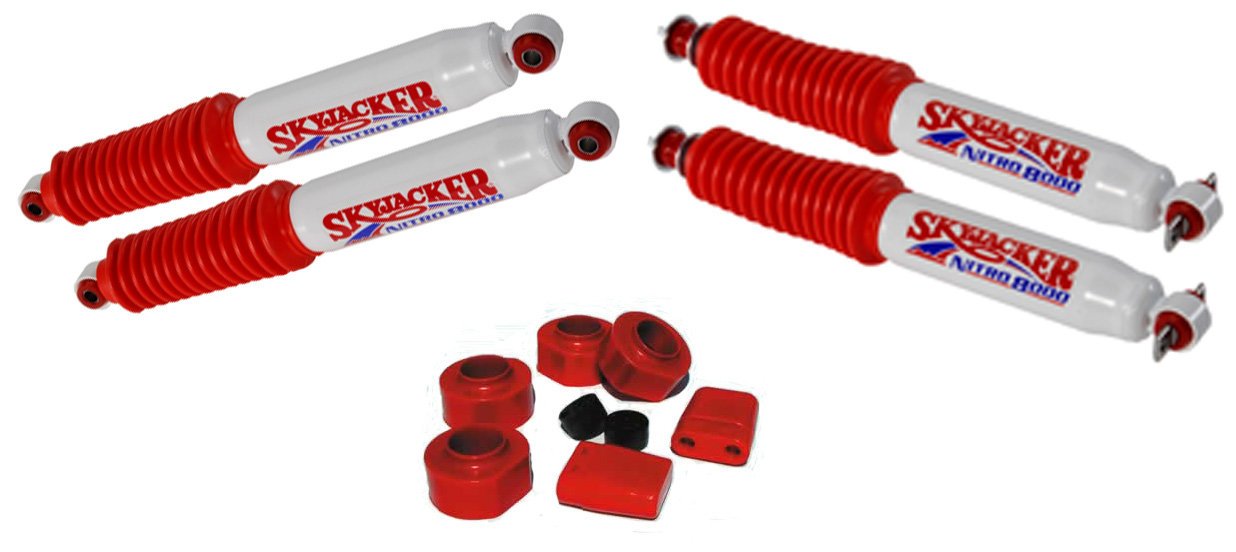
These are often the simplest and most affordable entry point into lifting an XJ. They typically consist of spring spacers that are added to the top of the existing coil springs in the front and shackle extensions or add-a-leafs for the rear leaf springs.
- Front: Coil spring spacers are installed above the front coil springs. These are usually made of durable polyurethane or aluminum.
- Rear: Shackle extensions replace the stock shackles on the rear leaf springs, effectively lengthening them and lifting the rear. Alternatively, an “add-a-leaf” kit involves adding an extra leaf spring to the existing pack.
Pros:
- Cost-effective: The cheapest way to gain some lift.
- Simple installation: Can often be done with basic tools and mechanical knowledge.
- Minimal impact on ride quality: Generally preserves a comfortable ride.
Cons:
- Limited lift height: Typically offers only 2 to 3 inches of lift.
- Potential for driveline vibration: May require adjustments to pinion angles if the lift is too high or components aren’t properly addressed.
- Doesn’t improve articulation: Doesn’t enhance off-road performance beyond clearance.
4-4.5 Inch Short-arm Kits
These kits offer a more substantial lift and are a popular choice for moderate off-roading. They involve replacing or modifying key suspension components to correct geometry.
- Front: New coil springs are installed to achieve the desired lift height. Adjustable lower control arms (short arms) are typically included to correct caster angle and front axle alignment. Extended sway bar links are also common to maintain proper sway bar function.
- Rear: New leaf springs are usually part of the kit, providing lift and improved flex. Extended shackles might be used in conjunction with the new springs.
Pros:
- Good balance: Offers significant lift for larger tires and improved clearance without extreme complexity.
- Corrects geometry: Adjustable control arms help maintain proper alignment and reduce driveline vibrations.
- Improved off-road performance: Better clearance and the potential for improved articulation.
Cons:
- More expensive: Higher cost due to more components.
- More complex installation: Requires more mechanical skill and potentially specialized tools.
- Ride quality can be firmer: Depending on the spring rates chosen.
6+ Inch Long-arm Kits
These are the most comprehensive and capable lift kits, designed for serious off-roading and rock crawling. They fundamentally alter the suspension geometry for maximum performance.
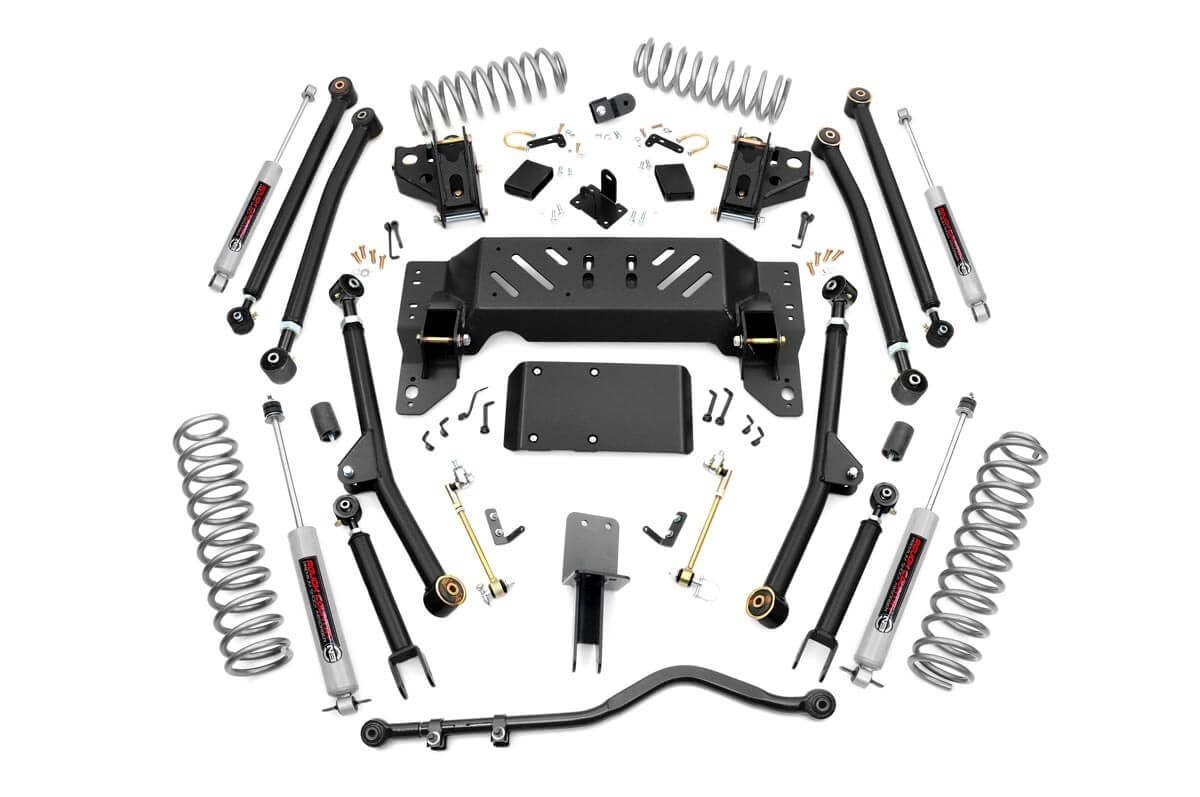
- Front: Taller coil springs, long-arm control arms (which mount further back on the frame, providing a better control arm angle), and often adjustable track bar and drag link to center the axle.
- Rear: Leaf springs designed for significant lift and flex, along with longer shocks and potentially extended brake lines.
Pros:
- Maximum off-road capability: Excellent ground clearance and superior articulation.
- Corrects geometry significantly: Long arms provide superior control over axle movement.
- Improved on-road stability: When properly installed, can offer good on-road manners despite the height.
Cons:
- Most expensive: The highest cost due to the complexity and number of components.
- Most complex installation: Requires significant mechanical expertise, fabrication, and potentially welding.
- Can negatively impact ride quality: If not set up correctly, can be stiff or harsh.
Key Components Of A Suspension Lift Kit
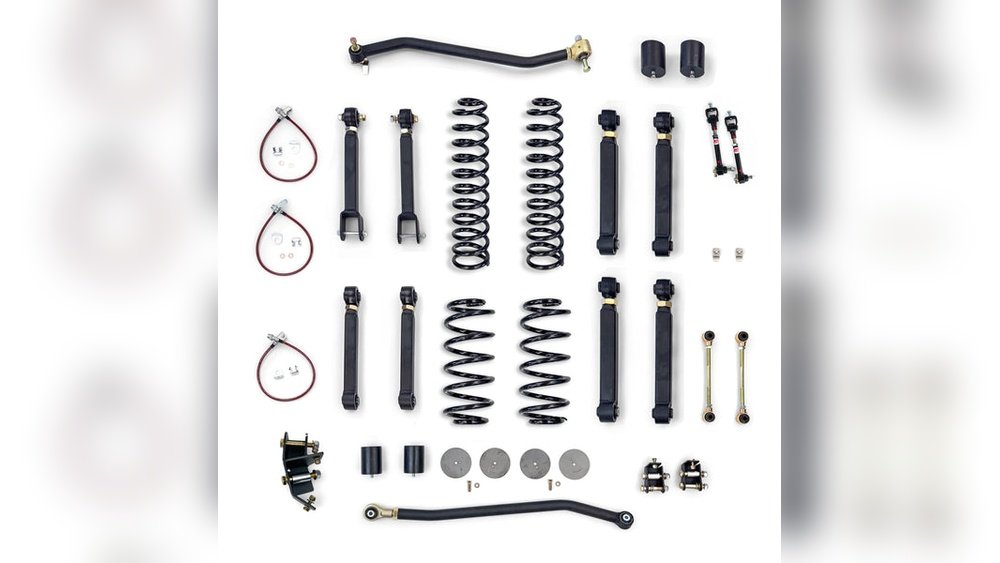
Regardless of the type of kit, most suspension lifts for a 1998 Jeep Cherokee will include several core components. Understanding what each part does is essential.
- Coil Springs (Front): These replace the stock front springs. Lifted springs are taller and often have different spring rates to accommodate the increased ride height and potentially added weight from larger tires or accessories.
- Leaf Springs (Rear): For the XJ, the rear suspension uses leaf springs. Lifted kits will include new, taller leaf spring packs or components like add-a-leafs and extended shackles to achieve rear lift.
- Shocks/Struts: Longer shocks are necessary to match the extended travel of the suspension at a lifted height. Without longer shocks, the suspension’s range of motion will be limited, and you risk damaging the shocks.
- Control Arms: These connect the axle to the frame and control its position and movement.
- Short Arms: Typically adjustable arms that replace the stock ones. They are crucial for correcting caster angle (the angle of the steering axis) after a lift, which affects steering and alignment.
- Long Arms: A more advanced setup where the control arms mount further back on the frame. This provides a much better control arm angle, reducing axle wrap and improving articulation.
- Track Bar (Panhard Bar): This bar connects the axle to the frame and keeps the axle centered under the vehicle. With a lift, the stock track bar becomes angled, shifting the axle off-center. Adjustable track bars are often included in kits above 4 inches to recenter the axle.
- Sway Bar Links: These connect the sway bar (anti-roll bar) to the suspension. With a lift, the stock links become too short. Extended links are needed to maintain proper sway bar function and geometry. Quick disconnects are also popular for off-roading, allowing the sway bar to be disconnected for increased articulation.
- Shackles: These are used in the rear leaf spring setup. Extended shackles increase the lift height and can alter the spring rate slightly.
- Bump Stops: These limit suspension travel to prevent components from damaging each other or the chassis. Longer bump stops or extensions might be needed to prevent tire-to-fender contact at full compression.
- Brake Line Extensions: As the axle drops with a lift, the brake lines can become stretched. Extended or braided stainless steel brake lines are often necessary for safety.
- U-Bolts: These secure the rear leaf springs to the axle. Longer U-bolts are typically required when installing new leaf springs or add-a-leafs.
- Steering Components: For higher lifts, modifications to the steering linkage, such as an adjustable drag link or raised steering arm, might be needed to correct steering geometry and prevent bump steer.
Benefits Of Lifting Your 1998 Jeep Cherokee
Installing a suspension lift kit on your 1998 Cherokee offers tangible advantages, especially if you plan to take it off the beaten path.
Enhanced Off-road Capability
This is the primary reason most people lift their XJs.
- Increased Ground Clearance: The most direct benefit. Higher clearance means you can drive over obstacles that would otherwise get hung up on the undercarriage. This is critical for protecting your differentials, transfer case, and oil pan.
- Ability to Fit Larger Tires: Larger tires offer a multitude of benefits off-road. They provide a larger contact patch for better traction on loose surfaces like mud, sand, and rocks. They also significantly increase approach, departure, and breakover angles, allowing you to tackle steeper obstacles.
- Improved Articulation: While not all kits focus on this, many higher-end kits are designed to allow the suspension to flex more. This keeps your tires in contact with the ground over uneven terrain, maximizing traction and stability.
Improved Approach, Departure, And Breakover Angles
These angles determine how steep an obstacle your Jeep can climb over, descend, or traverse without its bumpers or body getting stuck.
- Approach Angle: The angle of the ground you can drive up onto without the front bumper hitting.
- Departure Angle: The angle of the ground you can drive down off of without the rear bumper hitting.
- Breakover Angle: The angle of the ground you can drive over in the middle without the chassis getting hung up.
A lift kit, especially when combined with larger tires, dramatically improves all three of these critical off-road metrics.
Aesthetic Appeal
Let's be honest, a lifted Jeep just looks more aggressive and capable. The increased stance and the ability to fit larger, more aggressive tires give the 1998 Cherokee a commanding presence on and off the road.
Many owners lift their vehicles primarily for the visual impact, and it's a modification that undeniably transforms the vehicle's look.
Considerations Before You Buy And Install
Choosing and installing a lift kit is not a decision to be taken lightly. Several factors should be carefully considered to ensure you get the right kit for your needs and avoid potential problems.
Intended Use: Road Vs. Trail
Your primary use case for the Jeep is the most important factor.
- Daily Driver with Occasional Light Trails: A 2-3 inch budget boost or a mild 4-inch kit might be sufficient. These kits generally have a smaller impact on on-road comfort and drivability.
- Serious Off-Roading/Rock Crawling: Higher lifts (4.5 inches and up), especially those with long-arm setups, are better suited for aggressive trail use. These kits prioritize articulation and ground clearance.
Budget
Lift kits vary wildly in price.
- Budget Boosts: Can range from $100 to $400.
- Mid-Range Kits (4-4.5″): Typically cost between $500 and $1500, depending on the brand and components.
- High-End Kits (6″+ Long-Arm): Can easily exceed $2000 and go up to $5000 or more for top-tier systems.
Remember to factor in the cost of installation if you’re not doing it yourself, as well as potential additional costs like longer shocks, brake lines, or even re-gearing differentials if you opt for very large tires.
Tire Size
The primary goal of lifting is often to fit larger tires.
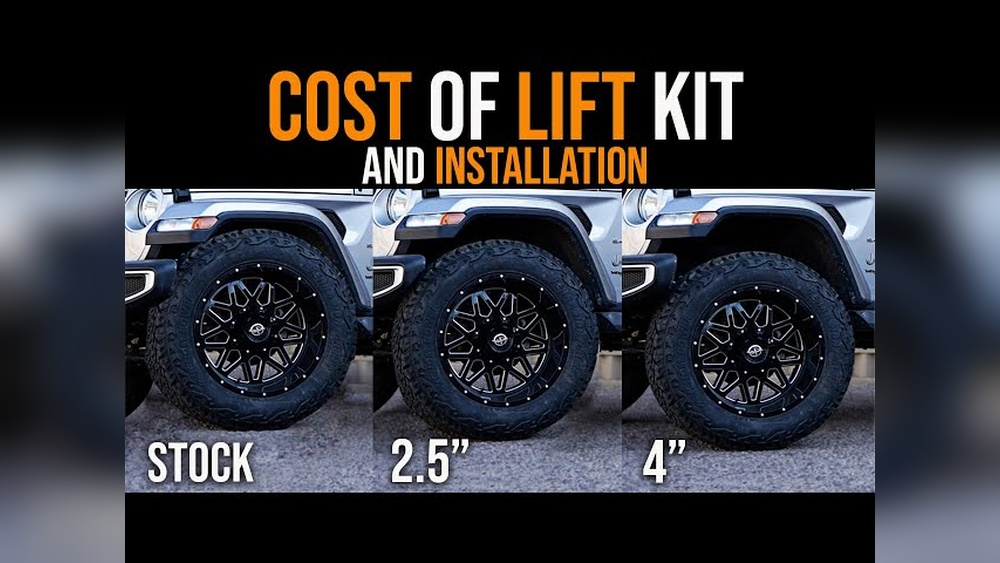
- 2-3 Inch Lift: Typically allows for 31-inch tires with minimal or no fender trimming.
- 4-4.5 Inch Lift: Can accommodate 33-inch tires, often requiring some fender trimming or “trimming the fender flares.”
- 6 Inch+ Lift: Can fit 35-inch tires, and sometimes even larger, depending on the specific kit and other modifications.
Pro Tip: Always check the tire-to-fender clearance at full suspension compression and steering lock to ensure you won’t rub excessively.
Ride Quality
Lift kits, especially those with stiffer springs or less sophisticated geometry correction, can negatively impact ride quality.
- Budget Boosts: Tend to have the least impact on ride comfort as they retain stock springs.
- Spring-Based Lifts: The ride quality heavily depends on the spring rates chosen. Stiffer springs provide better support for heavier loads but can result in a harsher ride on rough roads.
- Long-Arm Kits: Can sometimes offer a surprisingly compliant ride if designed well, as the longer arms allow for smoother suspension movement.
Installation Complexity
- DIY Potential: Budget boosts and some 2-3 inch kits can be installed by a moderately skilled DIYer with common tools.
- Professional Installation Recommended: Kits that involve replacing control arms, track bars, or require welding should ideally be installed by experienced mechanics or off-road shops. Incorrect installation can lead to poor handling, vibrations, and safety issues.
Driveline Angles And Vibrations
Lifting a vehicle changes the angles of the driveshafts. If these angles become too extreme, it can cause driveline vibrations, especially at certain speeds.
- Transfer Case Drop: A common solution for mild lifts is to install a transfer case drop kit, which lowers the transfer case to improve the rear driveshaft angle.
- Adjustable Control Arms/Track Bar: Crucial for correcting axle alignment and pinion angles on higher lifts.
- Shorter Rear Driveshaft