The 1994 Jeep Wrangler YJ is a rugged icon, a vehicle built for adventure and freedom. For many owners, customizing their Jeep is as important as the driving itself.
Among the most popular and impactful modifications are black wheels. They offer a dramatic visual upgrade, transforming the look of the Wrangler from utilitarian to aggressive and stylish.
But choosing the right black wheels for your '94 Wrangler involves more than just picking a color. It's about understanding materials, styles, sizes, offsets, and how these choices affect your Jeep's performance and aesthetics.
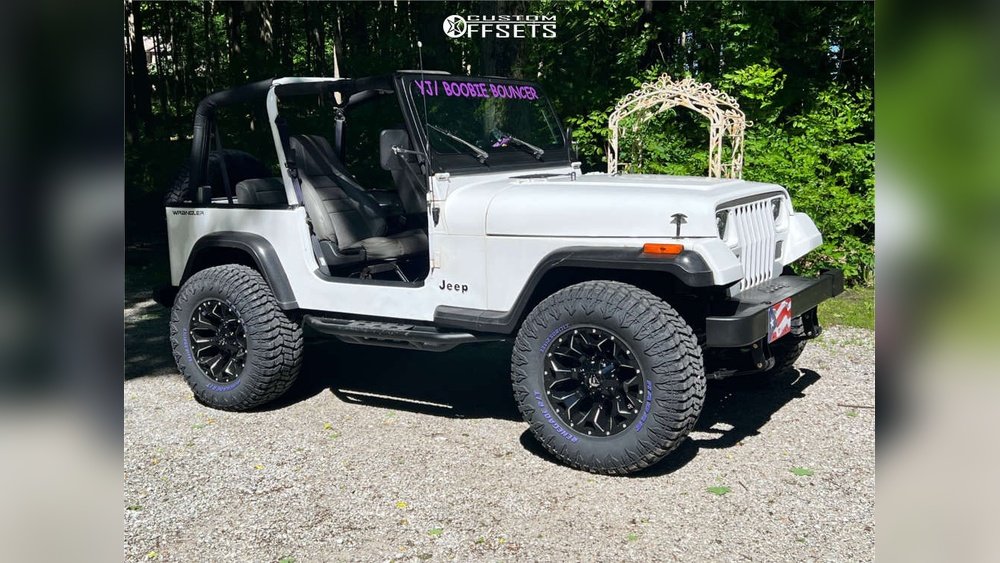
This guide will dive deep into the world of 94 Jeep Wrangler black wheels. We'll explore the different types available, the pros and cons of each, and what factors you should consider before making your purchase.
Whether you're aiming for a stealthy, all-black look or a striking contrast, this comprehensive overview will help you find the perfect set of black wheels to make your '94 Wrangler stand out.
We’ll cover everything from the basic design elements to the technical specifications that matter most for this specific generation of Jeep.
The Appeal Of Black Wheels On A ’94 Wrangler
Black wheels have become a staple in the automotive customization world, and for good reason. On a vehicle like the 1994 Jeep Wrangler YJ, known for its boxy design and off-road prowess, black wheels offer a powerful aesthetic statement.
They can make a Jeep look tougher, more modern, and more personalized.
One of the primary reasons for their popularity is the versatility of the color black. It pairs well with virtually any Jeep color, from classic forest green and fiery red to understated beige and the iconic black itself. Black wheels create a cohesive, monochromatic look when paired with a black Jeep, or they can provide a sharp, eye-catching contrast against brighter paint schemes. This visual impact is often the first thing people notice, and it sets a distinct tone for the vehicle.
Beyond aesthetics, black wheels can also contribute to a more aggressive stance. Larger diameter black wheels, often paired with wider tires, can make the Jeep appear lower and wider, even if the suspension remains stock. This visual cue speaks to performance and capability, aligning perfectly with the Wrangler’s inherent nature.
Finally, black wheels are often associated with performance modifications. While the wheels themselves don’t inherently increase horsepower, they are frequently chosen by owners who are upgrading other components like suspension, tires, and engines. This association creates a perception of a more capable and performance-oriented vehicle. For the ’94 Wrangler, which is a beloved platform for off-road enthusiasts, the choice of black wheels often signals a commitment to enhancing its already formidable capabilities.
Types Of Black Wheels For Your ’94 Wrangler
When you start looking for black wheels, you'll quickly realize there isn't just one type. The material, manufacturing process, and design all play a role in the final product.
Understanding these differences is crucial for making an informed decision that balances looks, durability, and cost.
1. Alloy Wheels (aluminum Alloy)
Alloy wheels are the most common type of aftermarket wheel. They are made from a mixture of aluminum and other metals. This composition makes them lighter and stronger than traditional steel wheels, which can improve handling and fuel efficiency.
- Manufacturing Process: Alloy wheels are typically made using casting or forging.
- Casting: This is the most common and cost-effective method. Molten alloy is poured into a mold. While generally strong, cast wheels can be more susceptible to cracking under extreme impact compared to forged wheels.
- Forging: This process involves heating a solid block of aluminum alloy and then forging it under immense pressure. Forged wheels are incredibly strong, lightweight, and resistant to cracking. However, they are significantly more expensive.
- Finishes: Black alloy wheels come in various finishes:
- Gloss Black: Offers a shiny, reflective surface that can look very premium. It’s eye-catching but can show dirt and brake dust more readily.
- Matte Black: Provides a non-reflective, satin finish that gives a stealthy, aggressive look. It tends to hide dirt better than gloss black.
- Satin Black: A middle ground between gloss and matte, offering a subtle sheen.
- Textured Black: Often found on more rugged, off-road oriented wheels, this finish has a slightly rough texture that can add to the rugged appeal and hide minor imperfections.
- Machined Face with Black Accents: These wheels feature a machined (polished or brushed) surface on parts of the wheel, with the rest being black. This creates a two-tone effect that can be very stylish.
Pro Tip: For a ’94 Wrangler, especially if you plan on off-roading, consider alloy wheels with a more durable, textured black finish. These are often designed to withstand impacts and abrasions better than smooth gloss finishes.
2. Steel Wheels
While less common for aftermarket upgrades today, steel wheels are known for their extreme durability and affordability. They are made from pressed steel, making them heavy but incredibly resistant to bending and cracking, especially on rough terrain.
- Pros:
- Toughness: Excellent for serious off-roading where impacts are common.
- Repairability: Often easier and cheaper to repair dents or bends.
- Cost: Generally the least expensive option.
- Cons:
- Weight: Significantly heavier than alloy wheels, which can negatively impact fuel economy, acceleration, and suspension wear.
- Corrosion: Prone to rusting, especially in areas with harsh weather or salt on the roads, unless they have a high-quality coating.
- Aesthetics: Traditionally offer a more basic, utilitarian look, though black finishes can improve their appearance.
If you opt for black steel wheels on your ’94 Wrangler, look for models with premium powder coating to enhance rust resistance and maintain their appearance.
3. Beadlock Wheels
Beadlock wheels are a specialized type of wheel designed for serious off-roading. They feature a mechanical ring that bolts onto the wheel’s rim, clamping the tire’s bead to the wheel.
- Functionality: This clamping action allows you to safely run very low tire pressures off-road. Lower tire pressure increases the tire’s contact patch with the ground, providing significantly better traction on rocks, sand, mud, and other loose surfaces. It also helps absorb impacts from rough terrain.
- Types:
- Internal Beadlock: The clamping ring is inside the wheel. These are generally more street-friendly and less prone to damage from rocks.
- External Beadlock: The clamping ring is on the outside of the wheel. These offer maximum security for the tire bead but are more exposed to trail damage and can be illegal for street use in some areas.
- Considerations:
- Cost: Beadlock wheels are considerably more expensive than standard wheels.
- Maintenance: They require more maintenance, including checking the bolts regularly.
- Legality: Many external beadlock wheels are not DOT-approved for street use. Always check local regulations.
While beadlocks offer supreme off-road performance, they are a significant investment and may be overkill unless you are a dedicated off-roader.

Key Factors To Consider When Choosing Black Wheels
Selecting the right black wheels for your ’94 Jeep Wrangler involves more than just picking a style you like. Several technical specifications and practical considerations will impact how the wheels fit, perform, and look on your specific vehicle.
1. Wheel Diameter
The diameter of the wheel refers to the measurement across the center from one edge to the other. Common sizes for the ’94 Wrangler range from 15 inches up to 18 inches or more, depending on the tire size and lift kit.
- 15-inch Wheels: Often the stock or original size for many YJs. They allow for larger sidewalls on the tires, which is beneficial for off-roading as they provide a smoother ride and better shock absorption. They are also generally more affordable.
- 16-inch Wheels: A popular upgrade, offering a good balance between tire sidewall height and wheel size. They can accommodate larger brake upgrades if desired.
- 17-inch and 18-inch Wheels: These larger diameters offer a more modern, aggressive look and allow for lower-profile tires. However, they reduce tire sidewall height, which can make the ride harsher and less ideal for aggressive off-roading where tire flex is crucial.
Example: If you want to maintain a comfortable ride and excellent off-road capability, sticking with 15-inch or 16-inch black wheels is often the best choice for a ’94 Wrangler.
2. Wheel Width
Wheel width is measured from the inner bead seat flange to the opposite inner bead seat flange. Wider wheels can accommodate wider tires, which increase the tire’s contact patch and improve traction and stability.
- Common Widths: For a ’94 Wrangler, common aftermarket wheel widths are 7 inches, 8 inches, or even 10 inches.
- Tire Compatibility: The width of the wheel is critical for proper tire mounting. A tire’s recommended wheel width range is usually listed by the tire manufacturer. Mounting a tire on a wheel that is too narrow or too wide can compromise the tire’s performance, safety, and lifespan.
- Offset and Backspacing: Wheel width, along with offset and backspacing, affects how the wheel sits relative to the fender and suspension components.
Pro Tip: A common and effective setup for many ’94 Wrangler builds is an 8-inch wide wheel, which pairs well with popular tire sizes like 31×10.50 or 33×12.50.
3. Bolt Pattern (pcd)
The bolt pattern, or Pitch Circle Diameter (PCD), specifies the diameter of the circle on which the wheel’s lug holes are centered. For the 1994 Jeep Wrangler YJ, the standard bolt pattern is 5×4.5 inches (or 5×114.3mm).
- Importance: It is absolutely essential to match the wheel’s bolt pattern to your Jeep’s hub. Using the wrong bolt pattern will prevent the wheel from mounting correctly and is extremely dangerous.
- Verification: Always double-check your Jeep’s bolt pattern and the specifications of any wheels you are considering.
4. Offset
Wheel offset is the distance from the centerline of the wheel to the mounting surface (where the wheel bolts to the hub). It determines whether the wheel sits further inward or outward from the hub assembly.
- Positive Offset (+): The mounting surface is outboard of the wheel’s centerline. This pulls the wheel inward towards the suspension.
- Negative Offset (-): The mounting surface is inboard of the wheel’s centerline. This pushes the wheel outward towards the fender.
- Zero Offset (0): The mounting surface is exactly at the wheel’s centerline.
For the ’94 Wrangler YJ, stock wheels typically have a slightly positive or zero offset. Aftermarket wheels often have negative offsets (e.g., -12mm, -25mm) to push the wheels out, creating a wider stance and accommodating larger tires.
Impact of Offset:
- Too much negative offset: Can cause the tires to rub against the fenders or bodywork, especially when turning or going over bumps. It can also increase stress on wheel bearings.
- Too much positive offset: Can cause the tires to rub against suspension components like control arms or brake calipers.
5. Backspacing
Backspacing is another measurement related to wheel position. It’s the distance from the back of the wheel (mounting surface) to the outer lip of the wheel.
- Relationship with Offset: Backspacing and offset are related but not the same. A wheel with a negative offset will generally have less backspacing than a wheel with a positive offset of the same width.
- Importance: Backspacing is often easier to understand than offset when determining clearance. Less backspacing (meaning the wheel sits further out) is generally needed for larger tires and off-road applications to clear suspension components.
Example: A common backspacing for aftermarket wheels on a lifted ’94 Wrangler running 33-inch tires might be around 4 inches. This helps push the wheel outward, providing clearance for suspension and fenders.
6. Material And Construction Quality
As discussed earlier, the material (alloy vs. steel) and manufacturing process (cast vs. forged) significantly impact durability and weight.
- For Off-Roading: Forged alloy or high-quality cast alloy wheels are preferable for their strength-to-weight ratio. Steel wheels are the most robust against bending but are heavy.
- For Street Use: Cast alloy wheels are usually sufficient and offer a good balance of looks, performance, and cost.
- Finish Durability: Look for wheels with durable finishes like powder coating, which is generally more resistant to chipping, scratching, and corrosion than painted finishes.
7. Load Rating
The load rating indicates the maximum weight a wheel can safely support. This is a critical specification, especially for an off-road vehicle like the Wrangler that might carry heavy loads or endure significant stress.
- Check Requirements: Ensure the wheels you choose have a load rating that exceeds the Gross Vehicle Weight Rating (GVWR) of your ’94 Wrangler, considering any added weight from modifications or cargo. Most aftermarket wheels designed for trucks and SUVs will have adequate load ratings.
8. Style And Design
Beyond the technical aspects, the visual design of the black wheels is paramount. For the ’94 Wrangler YJ, popular styles include:
- Five-Spoke: Classic and clean, often seen on many OEM and aftermarket wheels.
- Multi-Spoke: Offers a more intricate and technical look.
- Mesh/Grid Design: Popular for a modern, sporty appearance.
- Simulated Beadlock: Wheels designed to look like beadlocks without the functional ring, offering the aggressive aesthetic at a lower cost.
- Off-Road Specific Designs: Often feature thicker spokes, protective lips, and textured finishes for a rugged appearance.
Consider how the wheel’s design complements the iconic YJ body style. Simple, strong designs often work best.
Popular Black Wheel Styles For The ’94 Wrangler
The ’94 Jeep Wrangler YJ has a distinct aesthetic, and certain black wheel styles complement its rugged charm perfectly. Here are some of the most popular and suitable designs:
1. Matte Black Five-spoke Wheels
This is a timeless and incredibly popular choice. The simple, robust five-spoke design is reminiscent of classic off-road wheels, and the matte black finish gives it a modern, aggressive edge.
- Why it works: The clean lines of the spokes contrast well with the