The Jeep Cherokee XJ is an iconic vehicle, celebrated for its rugged capability and compact size, making it a favorite for off-road enthusiasts and daily drivers alike. Its leaf-spring rear suspension, while robust, can become a limiting factor when seeking enhanced articulation, ride comfort, and on-road manners.
This is where the 4-link suspension kit for the Jeep XJ emerges as a transformative upgrade. By fundamentally altering the rear suspension geometry, a 4-link setup replaces the traditional leaf springs with a system of control arms, offering a significant leap in performance and adjustability.
This article will explore the intricacies of 4-link suspension kits for the Jeep XJ, detailing their benefits, components, installation considerations, and what to expect from this popular modification.
Key Takeaways
- A 4-link suspension kit replaces the Jeep XJ’s leaf springs with control arms for improved articulation, on-road comfort, and adjustability.
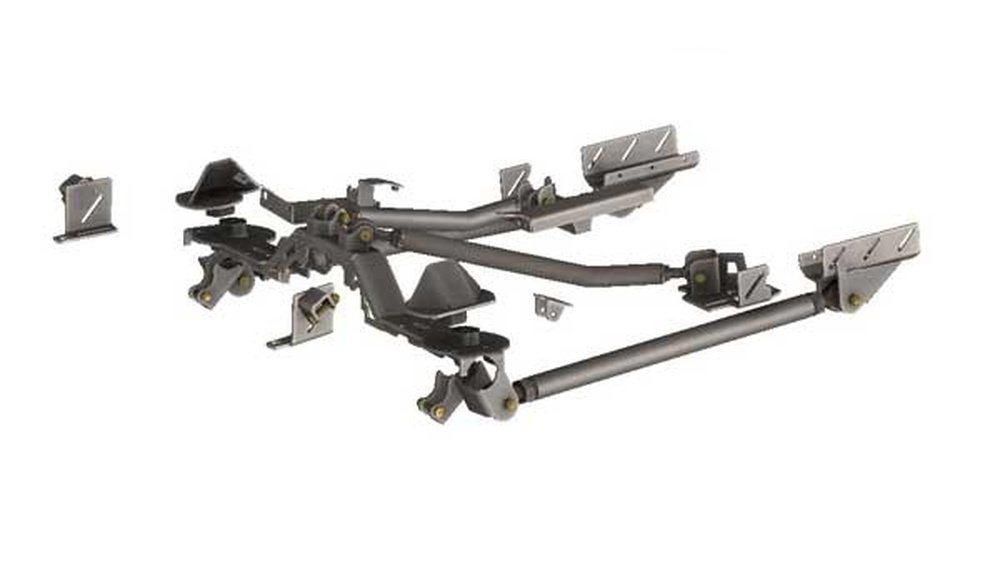
- The primary components include upper and lower control arms, a track bar (or panhard rod), and often a new mounting system for the differential.
- Benefits include superior off-road traction, a smoother highway ride, and the ability to fine-tune suspension characteristics.
- Installation requires mechanical expertise and careful attention to geometry to avoid binding and ensure proper alignment.
- Common kits offer adjustable arms, allowing for precise caster and pinion angle correction, especially crucial after lifting the vehicle.
- Considerations include cost, installation complexity, potential for binding if not set up correctly, and the need for compatible shocks and other components.
Understanding The Jeep Xj’s Stock Suspension
Before diving into the advantages of a 4-link system, it’s essential to understand the limitations of the Jeep Cherokee XJ’s factory rear suspension. The XJ utilizes a leaf spring suspension design. Leaf springs are essentially long, flexible bars made of multiple layers of steel. In the XJ’s rear setup, they serve a dual purpose: they locate the rear axle and provide the spring rate to absorb road imperfections.
While durable and cost-effective, leaf springs have inherent drawbacks, particularly when modifying the vehicle for off-road use or improved on-road comfort.
Limitations Of Leaf Springs
- Limited Articulation: Leaf springs tend to bind under extreme articulation, meaning the suspension can’t flex as much as desired when one wheel is at full extension and the other is compressed. This reduces tire contact with the ground in uneven terrain, hindering traction.
- Axle Wrap: Under acceleration, especially with increased power or larger tires, leaf springs can twist. This phenomenon, known as axle wrap, can lead to a loss of traction and put significant stress on the driveshaft and U-joints.
- Stiffness and Ride Quality: To prevent axle wrap and provide adequate support, leaf springs are often quite stiff. This can result in a harsh ride, transmitting more bumps and vibrations into the cabin, especially on pavement.
- Alignment Issues with Lifts: As the XJ is lifted, the rear leaf springs can cause the rear axle to shift forward and the pinion angle to change, leading to alignment issues and potential driveline vibrations.
These limitations are precisely what a 4-link conversion aims to address, offering a more sophisticated and adaptable solution for the XJ’s rear end.
The 4-link Suspension System Explained
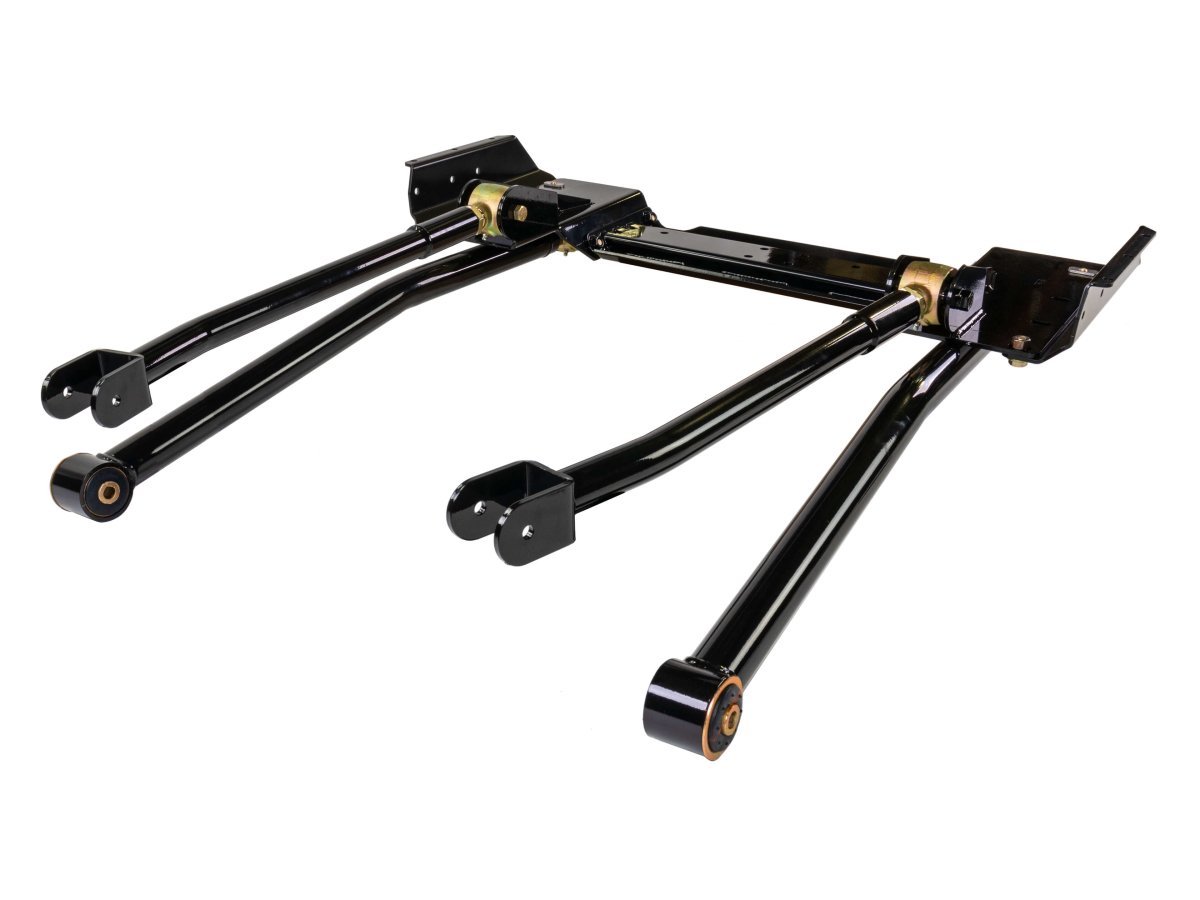
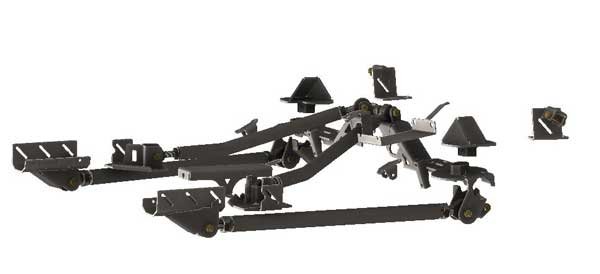
A 4-link suspension is a type of multi-link suspension that uses four control arms to locate the rear axle. Two upper control arms and two lower control arms connect the axle housing to the vehicle’s frame. This setup completely replaces the function of the leaf springs in locating the axle, allowing for dedicated springs (like coil springs) and dampers (shock absorbers) to handle suspension duties.
The arrangement of these four arms dictates the axle's movement. Typically, the upper arms are shorter and angled inwards, while the lower arms are longer and run more parallel to the driveshaft.
This configuration allows the axle to pivot around an imaginary point, providing controlled movement and significantly improved articulation.
Core Components Of A 4-link Kit
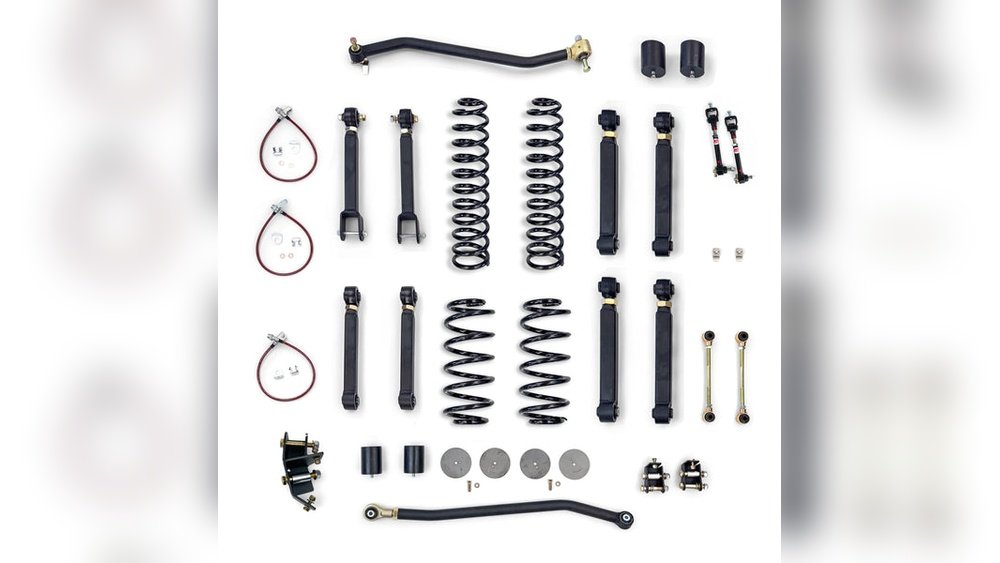
A comprehensive 4-link kit for the Jeep XJ will usually include the following essential parts:
- Upper Control Arms: These connect the upper portion of the axle housing to the frame. They are critical for controlling the axle’s fore-aft and rotational movement. Many kits feature adjustable upper control arms which are crucial for fine-tuning pinion angle and wheelbase.
- Lower Control Arms: These connect the lower portion of the axle housing to the frame. They are generally longer than the upper arms and help control the axle’s side-to-side and rotational movement. Adjustable lower control arms are also common and allow for wheelbase adjustments.
- Coil Spring Brackets/Mounts: Since the leaf springs are removed, the kit will provide new mounts for coil springs. This often involves welding brackets to the axle and the frame.
- Shock Mounts: New mounts for shock absorbers are also typically included, designed to work with the new suspension geometry and desired lift height.
- Track Bar (Panhard Rod) or Watts Linkage: To prevent the axle from shifting side-to-side, a locating device is necessary. Most 4-link kits use a track bar (also known as a Panhard rod), which is a diagonal bar connecting the axle to the frame. Some high-end kits might opt for a Watts linkage, which uses a central pivot and two short arms to provide more precise lateral location without the slight side-to-side movement inherent in a Panhard rod.
- Hardware: All necessary bolts, nuts, bushings, and sometimes specialized joints (like Johnny Joints or Heim joints) are included for a complete installation.
How The 4-link System Works
The magic of the 4-link system lies in its geometry. By triangulating the control arms, the system creates a stable pivot point for the axle.
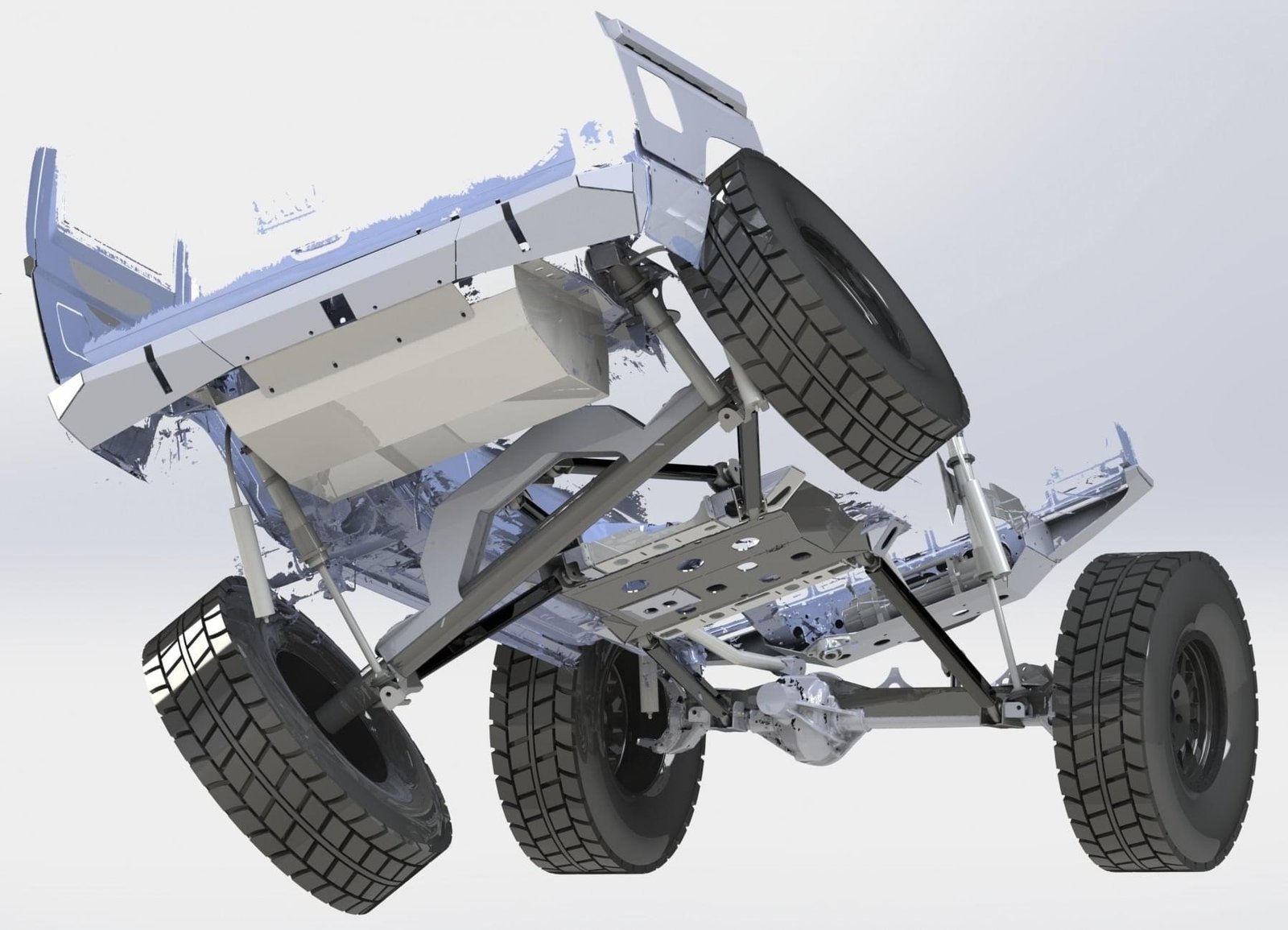
- Articulation: When one wheel encounters an obstacle, the control arms allow the axle to articulate smoothly. The arms pivot, enabling the suspension to flex without the binding often experienced with leaf springs. This keeps more tires on the ground, maximizing traction.
- Control: The four arms precisely control the axle’s movement in all directions. They prevent excessive fore-aft travel, side-to-side sway, and, crucially, axle wrap. The triangulation of the arms resists the twisting force that causes axle wrap under acceleration.
- Ride Comfort: By separating the functions of locating the axle and providing spring support, a 4-link system allows for the use of more compliant coil springs and tuned shock absorbers. This leads to a significantly smoother and more comfortable ride on-road, absorbing bumps and road imperfections more effectively than stiff leaf springs.
Benefits Of A 4-link Suspension Kit On A Jeep Xj
Upgrading to a 4-link suspension system offers a multitude of advantages for the Jeep XJ, impacting both its off-road prowess and daily driving experience. These benefits are the primary drivers for enthusiasts choosing this modification.
Enhanced Off-road Performance
The most significant improvements are often seen off-road. The ability of the suspension to articulate freely is paramount when tackling challenging terrain.
- Superior Articulation: A well-designed 4-link system allows the rear axle to flex dramatically. This keeps all four tires in contact with the ground over rocks, ruts, and uneven surfaces, providing consistent traction and stability. You can expect a noticeable improvement in climbing capability and navigating obstacles.
- Reduced Axle Wrap: Axle wrap is a common issue for lifted XJs with leaf springs, especially when applying power. The rigid, triangulated structure of a 4-link system effectively eliminates axle wrap. This means more consistent power delivery to the wheels and reduced stress on driveline components like the U-joints and driveshaft.
- Improved Stability: The precise control over axle movement provided by the 4-link system enhances stability, especially at speed over rough terrain. The axle is less likely to shift or wander, giving the driver more confidence.
Improved On-road Comfort And Handling
While often associated with off-roading, a 4-link conversion can dramatically improve the XJ’s on-road manners.
- Smoother Ride: By replacing stiff leaf springs with coils and shocks, the suspension can absorb road imperfections much more effectively. This translates to a significantly more comfortable ride, reducing the jarring impacts common with leaf-sprung vehicles.
- Better Handling: The precise control over axle location and reduced body roll contribute to improved on-road handling. The vehicle feels more planted and responsive, with less tendency to wallow or sway in corners.
- Corrected Alignment: After lifting an XJ with leaf springs, pinion angles and caster can become problematic. Adjustable control arms in a 4-link kit allow for precise correction of these angles, minimizing driveline vibrations and ensuring proper tire wear.
Adjustability And Tunability
A key advantage of a 4-link system is its inherent adjustability.
- Wheelbase Adjustment: Many kits feature adjustable control arms, allowing you to lengthen or shorten the wheelbase slightly. This can be used to fine-tune the vehicle’s handling characteristics or accommodate different tire sizes and body modifications.
- Pinion Angle Correction: As mentioned, adjustable arms are crucial for setting the correct pinion angle, especially after significant lifts. This is vital for driveline longevity and smooth operation.
- Spring and Shock Tuning: With dedicated coil springs and shocks, you have a wide range of options for tuning the suspension’s stiffness, damping, and ride height to suit your specific needs and driving style.
Durability And Longevity
When properly designed and installed, a 4-link system can be incredibly durable.
- Robust Components: High-quality kits use strong steel tubing for control arms and robust joints, designed to withstand the rigors of off-road abuse.
- Reduced Driveline Stress: By eliminating axle wrap, the system reduces stress on U-joints and driveshafts, potentially increasing their lifespan.
Types Of 4-link Kits For Jeep Xj
While the core concept of a 4-link system remains the same, kits can vary in design, complexity, and the specific components offered. Understanding these variations is crucial when selecting the right kit for your needs and budget.
Basic 4-link Conversion Kits
These kits typically provide the essential components needed to convert from leaf springs to a coil-sprung 4-link setup. They often include:
- Fixed-length control arms: These are usually less expensive but offer less adjustability.
- New coil spring mounts: Brackets for the frame and axle.
- Basic hardware: Bolts, nuts, and bushings.
These kits are a good entry point for those looking for the fundamental benefits of a 4-link without the higher cost of adjustable components. However, they may require more precise initial measurement and cutting/welding for optimal alignment.
Adjustable 4-link Conversion Kits
These are the most popular and recommended type of kit for the Jeep XJ. They incorporate adjustable control arms, offering significant advantages:
- Adjustable Upper and Lower Arms: This allows for fine-tuning of pinion angle, caster, and wheelbase. This is invaluable for correcting driveline angles after lifting and for optimizing suspension geometry.
- Easier Installation and Alignment: The adjustability makes it much easier to achieve correct alignment and pinion angles, reducing the guesswork and potential for errors during installation.
- Greater Tuning Potential: You can experiment with different suspension geometries to optimize for specific off-road conditions or on-road handling.
Most reputable manufacturers offer adjustable kits as their primary offering, recognizing the benefits for both installation and performance.
Radius Arm Vs. Triangulated 4-link
The primary difference in design lies in how the control arms are arranged.
- Triangulated 4-Link: This is the most common setup. The upper and lower control arms are angled inwards, forming a triangle on each side when viewed from the front or rear. This triangulation provides lateral axle location, often eliminating the need for a separate track bar. However, a track bar is still often included in kits for added stability and to prevent any minor side-to-side axle shift.
- Radius Arm (2-Link): While not technically a “4-link,” some systems use two long radius arms that mount to a central crossmember. These arms are often angled to provide some triangulation. This setup is less common for XJ rear conversions and is more typical for front suspensions. For the XJ rear, the triangulated 4-link is the standard.
Kits With Integrated Shock/coilover Mounts
Some advanced kits go a step further by integrating mounts for coilover shocks.
- Coilover Shocks: These combine the coil spring and shock absorber into a single unit. They offer superior damping control, a wider range of adjustability (ride height and spring preload), and often a more compact design.
- Integrated Mounts: Kits designed for coilovers will have robust, precisely positioned mounting points for these units, ensuring optimal performance and shock life. These kits are generally more expensive but offer the highest level of performance and customization.
Example: A popular manufacturer might offer a basic 4-link kit with fixed arms and another premium kit with fully adjustable Johnny Joint-equipped arms and provisions for high-end coilovers. The choice depends on budget, desired performance level, and installation capabilities.
Installation Considerations And Best Practices
Installing a 4-link suspension kit on a Jeep XJ is a significant undertaking that requires mechanical aptitude, specialized tools, and careful attention to detail. It’s not a simple bolt-on modification and often involves cutting, grinding, and welding.
Professional Installation Vs. Diy
- DIY Installation: If you have a well-equipped garage, welding skills, and a good understanding of suspension geometry, a DIY installation is achievable. However, it’s a time-consuming process that demands precision. Mistakes in welding or geometry can lead to dangerous handling characteristics, binding, or premature component failure.
- Professional Installation: For most enthusiasts, having a reputable off-road shop install the kit is the safest and most reliable option. Experienced technicians will ensure correct geometry, welding integrity, and proper alignment. The cost of professional installation should be factored into the overall budget.
Essential Tools And Equipment
- Welder: A quality MIG or TIG welder is essential for attaching frame and axle brackets.
- Grinder: For cleaning metal surfaces and removing old leaf spring mounts.
- Drill and Drill Bits: For creating mounting holes.
- Measuring Tools: Tape measure, angle finder, and potentially a string alignment setup.
- Standard Mechanic’s Tools: Sockets, wrenches, pry bars, jack stands, and a floor jack.
- Safety Gear: Welding helmet, gloves, safety glasses, and appropriate personal protective equipment.
Key Installation Steps And Geometry
- Remove Old Leaf Springs: Carefully unbolt and remove the factory leaf springs and associated hardware.
- Prepare Mounting Surfaces: Grind away any rust or old mounting hardware from the frame and axle.
- Position Axle and Mock-up Arms: Place the axle in its approximate desired location. Temporarily attach the control arms to the axle and frame brackets.
- Weld Brackets: This is the most critical step. Brackets must be welded in precise locations and orientations to achieve the correct geometry. Incorrect placement can lead to binding, poor handling, or interference. Pro Tip: Many kits come with detailed instructions and diagrams specifying exact mounting locations and angles. Always follow these meticulously.
- Install Control Arms: Bolt the control arms to the brackets, ensuring all bushings and hardware are correctly installed.
- Set Up Springs and Shocks: Install the new coil springs and shock absorbers.
- Install Track Bar (if applicable): Mount the track bar to ensure proper lateral axle location.
- Check for Clearance: Rotate the axle through its range of motion (or as much as possible) to check for any interference with the frame, driveshaft, or other components.
- Final Alignment: After installation, a professional alignment is crucial to set caster, camber, and toe correctly.
Example: When setting up the control arm lengths and angles, you’re essentially defining the arc the axle will travel. If the upper and lower arms are too short or angled incorrectly, the suspension can bind, especially at full droop or compression. This is where adjustable arms shine, allowing you to dial in the geometry.
Choosing The Right 4-link Kit For Your Jeep Xj
With several manufacturers offering 4-link kits, selecting the best one for your Jeep XJ involves considering your budget, intended use, and desired performance level.
Factors To Consider
- Budget: Kits range from a few hundred dollars for basic components to over $2,000 for premium systems with high-end joints and shock provisions.
- Adjustability: As discussed, adjustable control arms are highly recommended for proper alignment and tuning.
- Joints: Control arm joints are critical wear items. Kits with Johnny Joints, Heim joints, or similar high-quality, serviceable spherical bearings offer better articulation and durability than basic rubber bushings.
- Material and Construction: Look for kits made from strong steel tubing (e.g., DOM – Drawn Over Mandrel) with robust welds.
- Included Components: Does the kit include everything you need, or will you need to source springs, shocks, or other components separately? Some kits are designed to work with specific shock absorber lengths or coil spring rates.
- Brand Reputation and Support: Research manufacturers known for quality Jeep components and good customer support. Reading reviews from other XJ owners can be invaluable.
Popular Kit Options And Brands
While specific product availability changes, some reputable brands consistently offer quality 4-link kits for the Jeep XJ. These often include:
- Clayton Off Road: Known for robust, well-engineered suspension components.
- Iron Rock Off Road: Offers a variety of suspension solutions, including popular 4-link kits.
- Rubicon Express: A long-standing name in Jeep suspension, offering various upgrade options.
- TNT Customs: Provides high-quality, fabrication-focused Jeep parts.
Comparison Table: Typical 4-Link Kit Features
| Feature | Basic Kit | Mid-Range Kit | Premium Kit |
|---|---|---|---|
| Control Arms | Fixed Length | Adjustable | Fully Adjustable (e.g., Johnny Joints) |
| Joints | Basic Bushings | High-durometer Rubber or Polyurethane | Spherical Bearings (e.g., Johnny Joints) |
| Coil Spring Mounts | Included | Included | Included |
| Shock Mounts | Basic | Standard | Integrated for Coilovers |
| Track Bar | Often Included | Often Included | Often Included (or designed for no track bar) |
| Material | Standard Steel | DOM Steel | High-Strength DOM Steel |
| Price Range (Approx.) | $500 – $1000 | $1000 – $1800 | $1800+ (excluding shocks) |
| Installation Complexity | High (requires precise welding) | Moderate (adjustable arms ease alignment) | Moderate to High (depending on shocks) |
Example: If your XJ is primarily a trail rig that sees moderate to heavy off-road use, a mid-range kit with adjustable DOM control arms and quality spherical joints would be a wise investment. For a daily driver that sees occasional off-road excursions, a more budget-friendly kit might suffice, provided installation is done correctly.
Real-world Examples And Case Studies
To illustrate the impact of a 4-link suspension, consider these hypothetical yet representative scenarios of Jeep XJ owners.
Case Study 1: The Weekend Warrior
Vehicle: 1998 Jeep Cherokee XJ, 4.5-inch lift, 31-inch tires, mostly stock suspension.
Problem: Experienced significant axle wrap on moderate trails, harsh ride on washboard roads, and limited articulation leading to frustrating wheel-lift situations.
Solution: Installation of a Clayton Off Road 4-link kit with adjustable control arms and Fox 2.0 shocks.
Outcome: Post-installation, the owner reported a dramatic reduction in axle wrap, allowing for more consistent power delivery on climbs. The ride on washboard roads was significantly smoother, and articulation on rocky terrain improved noticeably, allowing the XJ to “crawl” over obstacles with greater ease. On-road comfort was also a pleasant surprise, with less jarring over bumps.
Case Study 2: The Daily Driver With Off-road Aspirations
Vehicle: 2000 Jeep Cherokee XJ, 2-inch lift, 30-inch tires, used for daily commuting and occasional light trails.
Problem: The stock leaf springs felt stiff and uncomfortable on daily commutes, and the owner desired a more planted feel. While not an extreme off-roader, they wanted better capability for exploring forest service roads.
Solution: Installation of an Iron Rock Off Road budget 4-link kit using factory shocks initially, with plans to upgrade later.
Outcome: The owner experienced a much-improved on-road ride quality, describing it as “night and day” compared to the leaf springs. The vehicle felt more stable and less prone to harsh jolts. While articulation wasn’t drastically increased due to the modest lift and tire size, the improved control and reduced harshness made it a worthwhile upgrade for their usage. They noted that a track bar