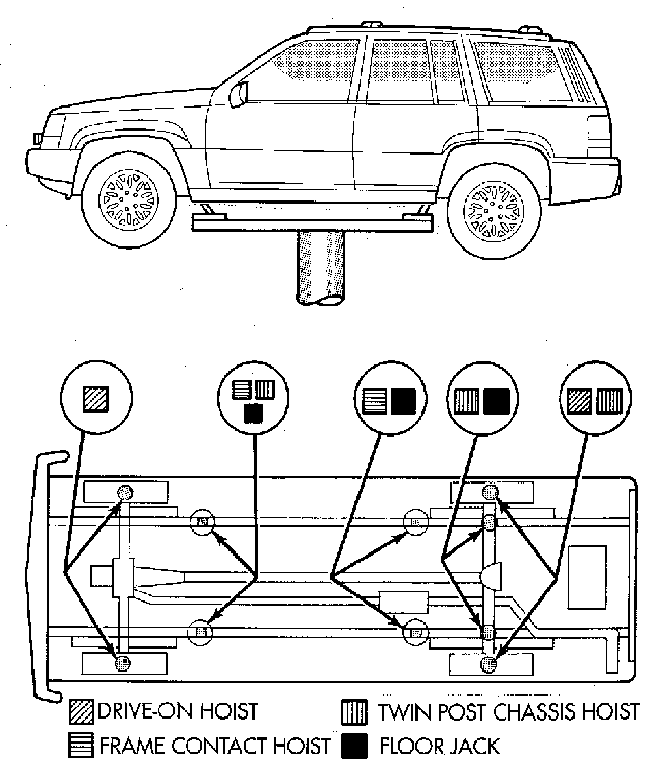
Jacking up your Jeep Grand Cherokee might sound simple, but doing it wrong can damage your SUV or even put you in danger. Whether you’re changing a flat tire, rotating your tires, or working on your suspension, knowing the right jack points is critical.
Many owners make mistakes that can bend the frame, break plastic trim, or cause the car to fall off the jack. This guide will show you the correct places to lift your Grand Cherokee, step-by-step instructions, and safety tips you might not expect.
Let’s make sure your next DIY job is safe and stress-free.
Understanding Your Jeep Grand Cherokee’s Jack Points
Every vehicle has specific spots designed to handle the weight when you use a jack. These are called jack points. On the Jeep Grand Cherokee, using the correct points helps avoid damage to the unibody structure or suspension.
Main Jack Points
- Front Jack Points:
- Located just behind the front wheels.
- Look for the reinforced pinch welds or a small notch in the rocker panel.
- Some models have a small arrow stamped into the metal to show the spot.
- Rear Jack Points:
- Found just in front of the rear wheels.
- Like the front, use the reinforced area of the pinch weld.
- Never place the jack on the thin metal or plastic side skirts.
Here’s a quick comparison of safe and unsafe jack points:
| Area | Safe to Jack? | Notes |
|---|---|---|
| Pinch Welds (front/rear) | Yes | Factory reinforced; best spot |
| Center of Frame (rear differential) | Yes (for lifting rear only) | Use only if using jack stands after |
| Floor Pan or Plastic Panels | No | Can bend or break under weight |
| Suspension Arms | No | May slip or damage components |
Using The Rear Differential
You can use the rear differential (the large round part in the center of the rear axle) as a lifting point for the back of your Grand Cherokee. This is especially helpful for placing two jack stands under both rear pinch welds at once. However, never leave the car supported by the jack alone—always use jack stands.
How To Jack Up Your Jeep Grand Cherokee Safely
Before you start, gather your tools:
- Hydraulic floor jack (2-ton minimum)
- Two jack stands
- Wheel chocks
Follow these steps:
- Park on a flat, solid surface. Avoid gravel or uneven ground.
- Engage the parking brake. Place wheel chocks on the wheels not being lifted.
- Locate the jack point. Check your owner’s manual for the exact spot.
- Position the jack. Line up the jack’s pad with the pinch weld or differential.
- Lift slowly. Stop if you hear metal bending or see the car shifting.
- Place jack stands. Slide them under the reinforced jack points, then lower the car onto them.
- Test stability. Gently push the car to make sure it’s secure.
A common mistake is using the factory scissor jack for jobs other than tire changes. These are meant for emergencies only and not for working under the vehicle.
What To Avoid When Jacking Up Your Jeep Grand Cherokee
It’s easy to make costly errors if you’re in a hurry or not paying attention. Here are some risks to watch out for:
- Never jack on the floor pan. The thin metal can bend, causing expensive damage.
- Don’t use control arms or sway bars. These parts are not designed to support the vehicle’s weight.
- Avoid uneven surfaces. The jack can slip, especially on gravel or sloped driveways.
- Do not rely on a jack alone. Always use jack stands for safety.
This table highlights the most common mistakes and their possible results:
| Mistake | Possible Damage |
|---|---|
| Wrong jack point | Bent frame, damaged trim |
| No jack stands | Vehicle falls, injury |
| Jacking on slope | Jack slips, car rolls |
Extra Tips For A Smooth And Safe Lift
- Use rubber pads or a block of wood between the jack and pinch weld. This prevents scratching or crushing the weld.
- Double-check the manual. Jeep sometimes changes jack point designs between models or years.
- Inspect the jack and stands before use. Look for rust, cracks, or leaks.
- If unsure, ask for help. Many repair shops or Jeep forums can show you the correct spots with photos or videos.
A non-obvious insight: The factory pinch welds can get rusty or bent over time, especially in snowy areas. If your welds look damaged, use extra caution or talk to a professional before jacking.

When To Use A Professional Lift
Sometimes, a standard jack and stands are not enough. If you need to lift the entire vehicle or work on major suspension parts, it’s safer to use a professional-grade lift at a repair shop. These lifts engage multiple points and spread the weight evenly.
According to the National Highway Traffic Safety Administration, improper lifting leads to hundreds of injuries each year. Don’t take chances if you’re unsure.
Frequently Asked Questions
Where Are The Jack Points On A Jeep Grand Cherokee?
The main jack points are behind the front wheels and in front of the rear wheels along the reinforced pinch welds. You can also use the rear differential for lifting the back, but always use jack stands afterward.
Can I Jack Up My Grand Cherokee On The Frame?
Most modern Grand Cherokees have a unibody design, not a traditional frame. Always use the pinch welds or differential as recommended in the manual.
Is It Safe To Use The Factory Scissor Jack For Repairs?
The factory scissor jack is only for emergency tire changes. For any repairs or work under the vehicle, use a hydraulic floor jack and jack stands for safety.
What Should I Do If I Can’t Find The Jack Point?
Check your owner’s manual or look for a small arrow stamped into the metal near the wheels. If you’re still unsure, ask a mechanic or look for guides with photos online.
Can I Use Ramps Instead Of A Jack?
Ramps are useful for oil changes or work at the front or rear, but not for tire changes or suspension repairs. Always use ramps on a flat surface and double-check stability before working.
Jacking up your Jeep Grand Cherokee doesn’t have to be stressful. With the right technique, tools, and attention to detail, you can lift your SUV safely every time.
Remember, good preparation and safe habits protect both your vehicle and your health.