When your 2004 Jeep Grand Cherokee’s turn signals start acting strangely, it can be a real head-scratcher. One moment they’re blinking merrily, the next they’re either stuck on, flashing too fast, or not working at all.
This is often a sign that the flasher relay is on its way out. But knowing where to find this small but crucial component can save you a lot of time and frustration.
Unlike some vehicles where the flasher relay is a single, easily accessible unit, the 2004 Grand Cherokee has a system that can be a bit more complex.
The hazard lights and the turn signals on your 2004 Jeep Grand Cherokee are controlled by separate circuits, though they often share some components. Understanding this distinction is key to diagnosing and fixing issues. When a turn signal bulb burns out, you’ll typically notice the corresponding signal on the dashboard blinking much faster than normal. This is a built-in diagnostic feature. However, if both signals on one side (front and rear) fail, or if the signals flash erratically or not at all, the problem often points to the flasher relay itself, or a related issue within the interior fuse box.
Locating the correct flasher relay for your turn signals on a 2004 Jeep Grand Cherokee requires a bit of detective work, as it’s not always as straightforward as pulling out a single module. The system is integrated into the vehicle’s electronics, meaning you might need to access the fuse box located inside the cabin.
This guide will walk you through the likely locations and steps to help you pinpoint and potentially replace the faulty flasher relay, getting your signals back in working order.
Understanding The Jeep Grand Cherokee’s Signal System
The electrical system in a 2004 Jeep Grand Cherokee is designed with safety and functionality in mind. The turn signals and hazard lights are critical safety features, alerting other drivers to your intentions on the road. The system relies on a flasher relay (also known as a thermal flasher or electronic flasher) to create the characteristic blinking pattern. Without this relay, the turn signals would simply stay illuminated when activated.
In many vehicles, the flasher relay is a single component that handles both turn signals and hazard lights. However, for the 2004 Grand Cherokee, the situation is a little different. The hazard switch itself often contains the flasher mechanism for the hazard lights. The turn signals, on the other hand, are typically controlled by a separate flasher relay, which is usually integrated within or associated with the interior fuse box. This separation means that if your hazard lights work but your turn signals don’t, the problem is almost certainly with the turn signal flasher relay. Conversely, if your turn signals work but your hazards don’t, the issue is likely with the hazard switch itself.
The Role Of The Flasher Relay
The flasher relay is essentially a timing device. When you activate your turn signal or hazard lights, power is sent to the relay.
Inside the relay, a bimetallic strip or an electronic circuit interrupts the flow of electricity intermittently, causing the bulbs to flash on and off.
The speed of this flashing is determined by the design of the relay and the resistance of the bulbs. If a bulb burns out, the resistance in the circuit changes, causing the remaining bulb to flash faster, a common symptom that points to a faulty bulb rather than a faulty relay.
However, a failing relay can cause erratic flashing, slow flashing, or no flashing at all for both signals.
Differentiating Turn Signals And Hazard Lights
It’s important to distinguish between the operation of your turn signals and your hazard lights.
- Turn Signals: These are activated by the turn signal lever on your steering column. They only activate the lights on the side you are turning towards.
- Hazard Lights: These are activated by a separate hazard switch, usually a button with a red triangle symbol, located on the dashboard. When activated, they flash all four turn signal lights simultaneously, regardless of whether you are moving or turning.
If your turn signals are malfunctioning but your hazard lights are working perfectly, the flasher relay specifically for the turn signals is the most likely culprit. If the hazard lights are the issue, the problem might be with the hazard switch itself or a different flasher unit associated with it.
Locating The Turn Signal Flasher Relay
For the 2004 Jeep Grand Cherokee, the flasher relay responsible for the turn signals is typically located within the interior fuse box. This box is usually found on the driver’s side of the dashboard, often tucked away to the left of the steering wheel, behind a small panel or cover. You might need to remove a plastic trim piece or a small door to access the fuse box and its relays.
Accessing The Interior Fuse Box
To access the interior fuse box:
- Locate the panel: Look on the driver’s side dashboard, near the steering column. It might be a removable panel or a small compartment door.
- Remove the cover: Gently pry off the cover or open the compartment door. Some panels might have clips or require a small screwdriver to release them. Be careful not to force anything, as you could break the plastic.
- Identify the fuse box: Once the panel is removed, you should see a collection of fuses and relays. The fuse box is usually labeled or can be identified by its arrangement of components.
Identifying The Correct Relay
Once the fuse box is accessible, you’ll need to identify the specific relay for the turn signals. This can be the trickiest part, as the layout can vary slightly.
- Consult your owner’s manual: The most reliable way to identify the correct relay is to refer to your 2004 Jeep Grand Cherokee owner’s manual. It will have a diagram of the fuse box and clearly label the function of each fuse and relay.
- Look for labels: Sometimes, the fuse box cover itself will have a diagram or labels indicating the function of each slot. Look for terms like “Turn Signal,” “Hazard,” or “Blinkers.”
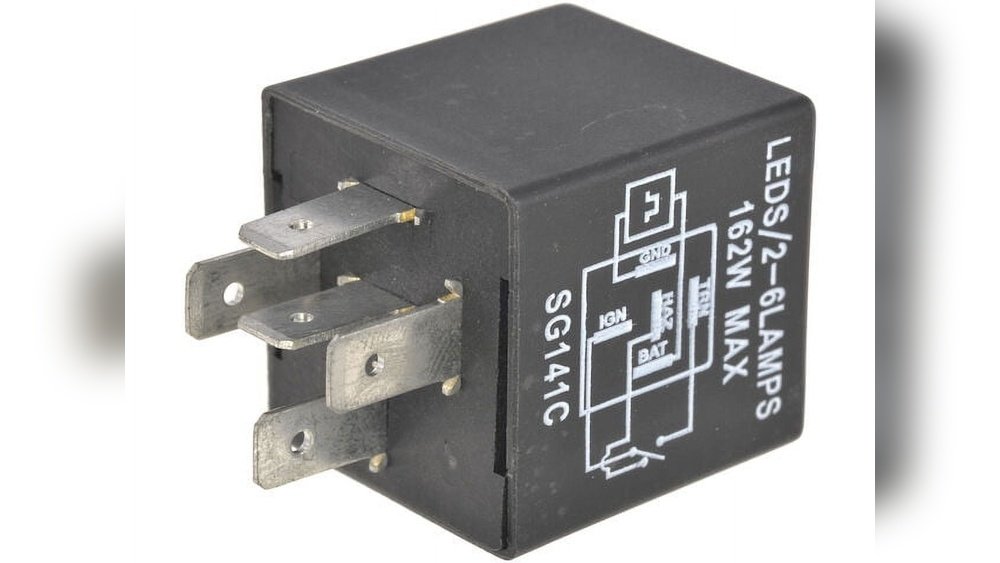
- Common relay positions: In many Jeep Grand Cherokees of this era, the turn signal flasher relay is often a silver or black cube-shaped component. It might be located in a specific row or column of relays.
It’s important to note that while the hazard lights might use the hazard switch as their flasher, the turn signals typically use a separate relay within the fuse box. Sometimes, the hazard switch itself contains a flasher module, but for turn signals, you’re usually looking for a discrete relay.

Common Symptoms Of A Failing Flasher Relay
A failing flasher relay can manifest in several ways, all of which disrupt the normal operation of your turn signals. Recognizing these symptoms is the first step toward diagnosing the problem.
Erratic Blinking Speed
One of the most common signs of a failing flasher relay is an inconsistent blinking speed.
- Too fast: While a single burnt-out bulb often causes rapid flashing, a relay that’s starting to fail might also cause this symptom, especially if it’s struggling to maintain a consistent current flow.
- Too slow: If the relay is weakening, it might take longer to heat up or cycle, resulting in a slower-than-normal blink rate.
- Intermittent operation: The signals might work sometimes and not others, or they might flash for a short period and then stop.
No Blinking At All
In some cases, a completely failed flasher relay will result in no blinking whatsoever when you activate the turn signal lever. The lights might illuminate dimly or not at all, depending on the nature of the failure.
This is different from a burnt-out bulb, where the opposite side's signal would blink rapidly.
If both front and rear turn signals on one side, or even both sides, fail to blink, the relay is a prime suspect.
Turn Signals Not Working, But Hazard Lights Do
As mentioned earlier, the 2004 Grand Cherokee often separates the flasher mechanisms for turn signals and hazard lights. If your hazard lights are functioning correctly (all four turn signals flashing in unison), but your turn signals are completely dead or behaving erratically, it strongly suggests that the turn signal flasher relay is the component that needs attention. This is a key diagnostic clue.
Clicking Sound From The Relay
A functioning flasher relay often makes an audible clicking sound as it operates, which can be heard faintly inside the cabin. If you no longer hear this click when you activate your turn signals, or if the clicking becomes irregular or stops altogether, it’s a strong indicator that the relay has failed.
You might be able to isolate the sound to the fuse box area.
How To Replace The Flasher Relay
Replacing the flasher relay on your 2004 Jeep Grand Cherokee is generally a straightforward DIY repair. It involves accessing the fuse box, identifying the relay, and swapping it out.
Step-by-step Replacement Guide
- Gather your tools: You’ll likely need a small flathead screwdriver or a trim removal tool to access the fuse box cover, and possibly a pair of needle-nose pliers if the relay is difficult to pull out by hand.
- Locate the interior fuse box: As described earlier, this is typically on the driver’s side of the dashboard.
- Access the fuse box: Remove the cover or panel to expose the fuses and relays.
- Identify the turn signal flasher relay: Use your owner’s manual or fuse box diagram to pinpoint the correct relay. It’s often a cube-shaped component.
- Remove the old relay: Gently pull the relay straight out of its socket. If it’s stuck, use needle-nose pliers to grip the plastic housing and carefully wiggle it free. Avoid pulling on the wires.
- Install the new relay: Make sure you have the correct replacement relay. It should match the specifications of the old one (usually indicated by part numbers or a diagram on the relay itself). Push the new relay firmly into the empty socket until it’s fully seated.
- Test the signals: Reinstall the fuse box cover. Turn on your ignition and test both the left and right turn signals, as well as the hazard lights, to ensure they are now functioning correctly.
Sourcing The Correct Replacement Relay
It’s crucial to use the correct replacement relay. Using one with the wrong specifications can lead to improper function or even damage to the electrical system.
- Part Number: The easiest way to ensure you get the right part is to find the part number on the old relay and order an exact match.
- Vehicle-Specific: Auto parts stores can help you find the correct relay based on your vehicle’s make, model, and year. You can also find them online from reputable auto parts retailers.
- Quality Matters: Opt for a reputable brand. While cheaper aftermarket relays exist, they may not last as long or perform as reliably as OEM (Original Equipment Manufacturer) or high-quality aftermarket options.
Important Considerations During Replacement
- Disconnect the Battery (Optional but Recommended): For added safety, you can disconnect the negative terminal of your car battery before working on any electrical components. This prevents any accidental short circuits. However, for a simple relay swap, it’s often not strictly necessary, but it’s always a good practice.
- Check Fuses: Before assuming the relay is bad, it’s wise to check the associated fuses. Sometimes, a blown fuse can mimic relay failure. Your owner’s manual will indicate which fuse corresponds to the turn signals.
- Double-Check Installation: Ensure the new relay is oriented correctly and fully seated. A loosely installed relay won’t function properly.
Troubleshooting Beyond The Flasher Relay
If replacing the flasher relay doesn’t solve your turn signal problems, the issue might lie elsewhere in the electrical system. Several other components can affect turn signal operation.
Burnt-out Bulbs
This is the most common cause of turn signal issues and is easy to check.
- Symptom: One side’s turn signals (front and rear) flash rapidly, while the other side works normally. Or, one or more bulbs simply don’t light up.
- Troubleshooting: Visually inspect all turn signal bulbs (front, rear, and side markers if applicable). If you find a burnt-out bulb, replace it with one of the correct wattage and type.
Wiring Issues
Damaged or corroded wiring can interrupt the electrical current needed for the signals to work.
- Symptoms: Intermittent operation, flickering, or complete failure on one side, often accompanied by other electrical gremlins.
- Troubleshooting: Inspect the wiring harnesses leading to the front and rear turn signal assemblies. Look for any signs of fraying, corrosion, melting, or loose connections. Pay close attention to the connectors at the bulb sockets and where the harness enters the body.
Turn Signal Switch (stalk)
The lever on your steering column controls the turn signals. If this switch fails internally, it can prevent the signals from activating.
- Symptoms: Turn signals won’t activate at all when the lever is moved, or they might activate intermittently. Hazard lights will likely still work.
- Troubleshooting: This is a more complex repair, often requiring the removal of the steering wheel shroud. Testing the switch usually involves using a multimeter to check for continuity and voltage at specific pins when the lever is operated.
Grounding Problems
Proper grounding is essential for all electrical components. A poor ground connection can cause a variety of issues, including turn signal malfunctions.
- Symptoms: Dim lights, flickering, or lights not working at all. This can affect one or both sides.
- Troubleshooting: Locate the ground points for the turn signal circuits (usually indicated in a service manual). Ensure they are clean, free of corrosion, and securely attached to the vehicle’s chassis.
Combination Flasher Unit (less Common For Turn Signals)
While the 2004 Grand Cherokee typically separates the turn signal flasher, some vehicles integrate it with other functions into a larger “combination flasher” module. If your owner’s manual or a detailed wiring diagram suggests such a unit, and the relay swap didn’t work, this module could be the issue.
However, for this specific model year, a separate relay in the interior fuse box is the most common setup for turn signals.
Comparing Flasher Relay Types
Flasher relays have evolved over the years, and understanding the different types can be helpful, though for a 2004 Jeep Grand Cherokee, you’re most likely dealing with one specific type.
| Relay Type | Description | Common Application |
|---|
| Thermal Flasher | Uses a bimetallic strip that heats up and bends, breaking the circuit. Cooled down, it straightens, closing the circuit. | Older vehicles; creates the classic audible click; sensitive to bulb wattage.